
General News
Kenya Confirms Second Ebola Death as 65-Year-Old Woman Succumbs


Health | Africa | 25 October 2026
Kenya has recorded its second death from Ebola, following the death of a 65-year-old woman who was receiving treatment for the infection, according to the country’s Ministry of Health.
The woman was the third confirmed case of Bundibugyo virus disease in Kenya and a close family member of the country’s first Ebola victim, a man who died earlier in October after travelling from the Democratic Republic of Congo (DR Congo).
Health officials said the woman was under quarantine when she developed symptoms on October 13. She was subsequently admitted to an infectious disease unit, where medical teams provided supportive treatment before she died on Friday, October 23.

Health workers prepare protective equipment at an Ebola isolation facility in Nairobi.
Seven patients remain under treatment
The latest death brings Kenya’s reported Ebola fatalities to two among nine confirmed cases. The remaining seven patients were receiving treatment at two isolation facilities, according to health authorities.
Officials said the confirmed infections remained within a single cluster of known contacts, with no evidence of community transmission at the time of the announcement.
The authorities have been tracing people who may have been exposed to the virus and placing identified contacts under monitoring or quarantine to reduce the risk of further infections.

Health officials conduct screening measures at a Kenya–Uganda border crossing.
Health officials urge the public to remain vigilant
Kenya’s health authorities have urged the public to observe precautionary measures, including regular handwashing and avoiding direct contact with the blood and other bodily fluids of people suspected of having Ebola.
Members of the public have also been advised not to touch or handle the bodies of people who die from suspected infectious illnesses, and to seek medical attention promptly if symptoms such as fever, weakness, muscle pain, vomiting or diarrhoea develop.
The Ministry of Health said arrangements for the woman’s burial were being made in consultation with her family, with trained teams expected to follow public health protocols while respecting the family’s wishes.

Red Cross personnel demonstrate protective procedures during an Ebola response exercise in Nairobi.
Regional concerns remain
The outbreak has drawn wider regional attention as health authorities monitor possible cross-border transmission. Kenya’s response includes surveillance, contact tracing and isolation of confirmed patients.
Although the second death underscores the seriousness of the outbreak, officials’ assessment that the confirmed Kenyan cases remain within one known cluster provides important context. The situation requires continued monitoring as health teams work to prevent further transmission.

Ebola alert notices and infection-control measures form part of hospital preparedness.
Conclusion: Kenya’s second Ebola death highlights the ongoing public health challenge facing the country. The immediate priorities remain caring for infected patients, monitoring exposed contacts, strengthening surveillance and communicating accurate information to the public.
















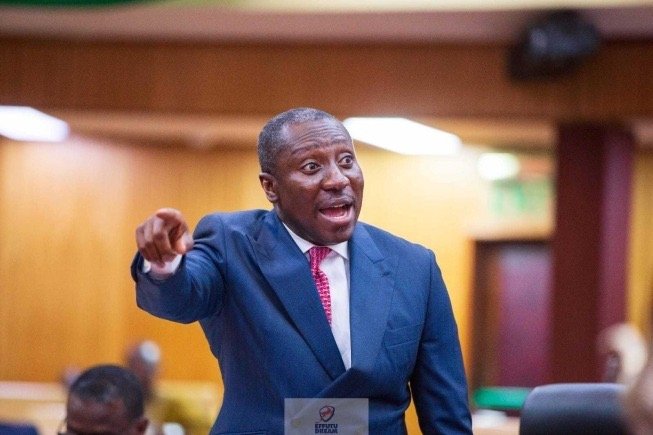
The New Patriotic Party (NPP) has reaffirmed its confidence in Alexander Afenyo-Markin as Minority Leader, signalling continued support for his leadership and role in steering the party’s business in Parliament.
The New Patriotic Party (NPP) has reiterated its confidence in Alexander Afenyo-Markin, reaffirming his position as Minority Leader in Parliament amid the party’s continued focus on its parliamentary leadership and responsibilities.
The reaffirmation underscores the party’s position on the leadership of its parliamentary caucus and its support for Afenyo-Markin’s continued role in representing the Minority in the House.
As Minority Leader, Afenyo-Markin occupies a central position in coordinating the caucus, articulating the party’s position on national issues and leading its engagement with the Majority on legislative and parliamentary matters.
The NPP’s reaffirmation also highlights the importance of leadership continuity within the parliamentary caucus as the party seeks to advance its agenda, scrutinise government policies and represent the interests of its supporters in Parliament.
The development comes against the backdrop of the demanding responsibilities associated with minority leadership, including holding the government accountable, participating in legislative debates and ensuring effective representation of the party’s position on matters of national importance.
Afenyo-Markin is expected to continue leading the caucus in its parliamentary engagements, with the party’s position reinforcing his standing within its parliamentary leadership structure.
The reaffirmation places the spotlight on the NPP’s commitment to its existing parliamentary leadership arrangement and the role of the Minority caucus in Ghana’s legislative process.
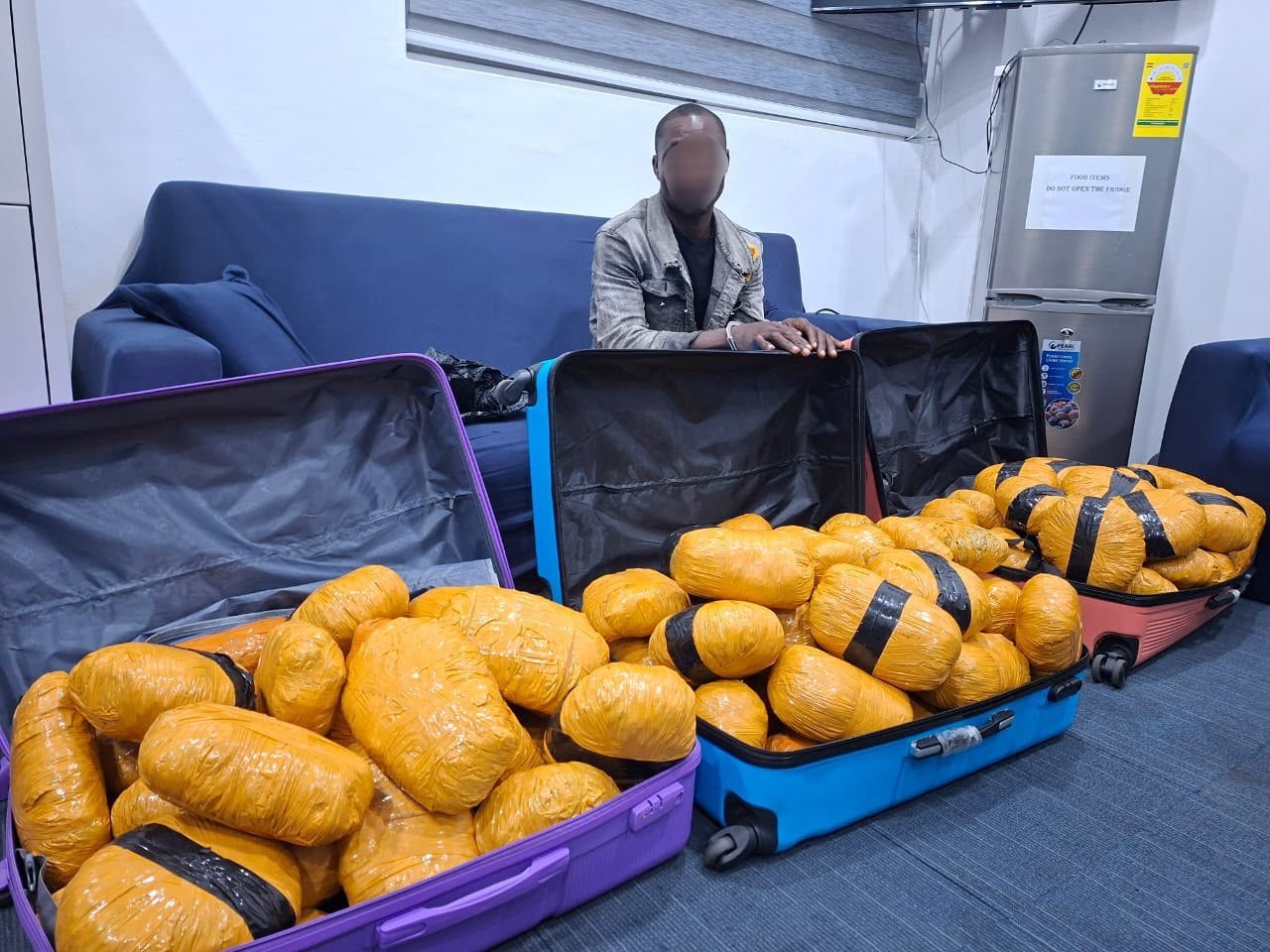
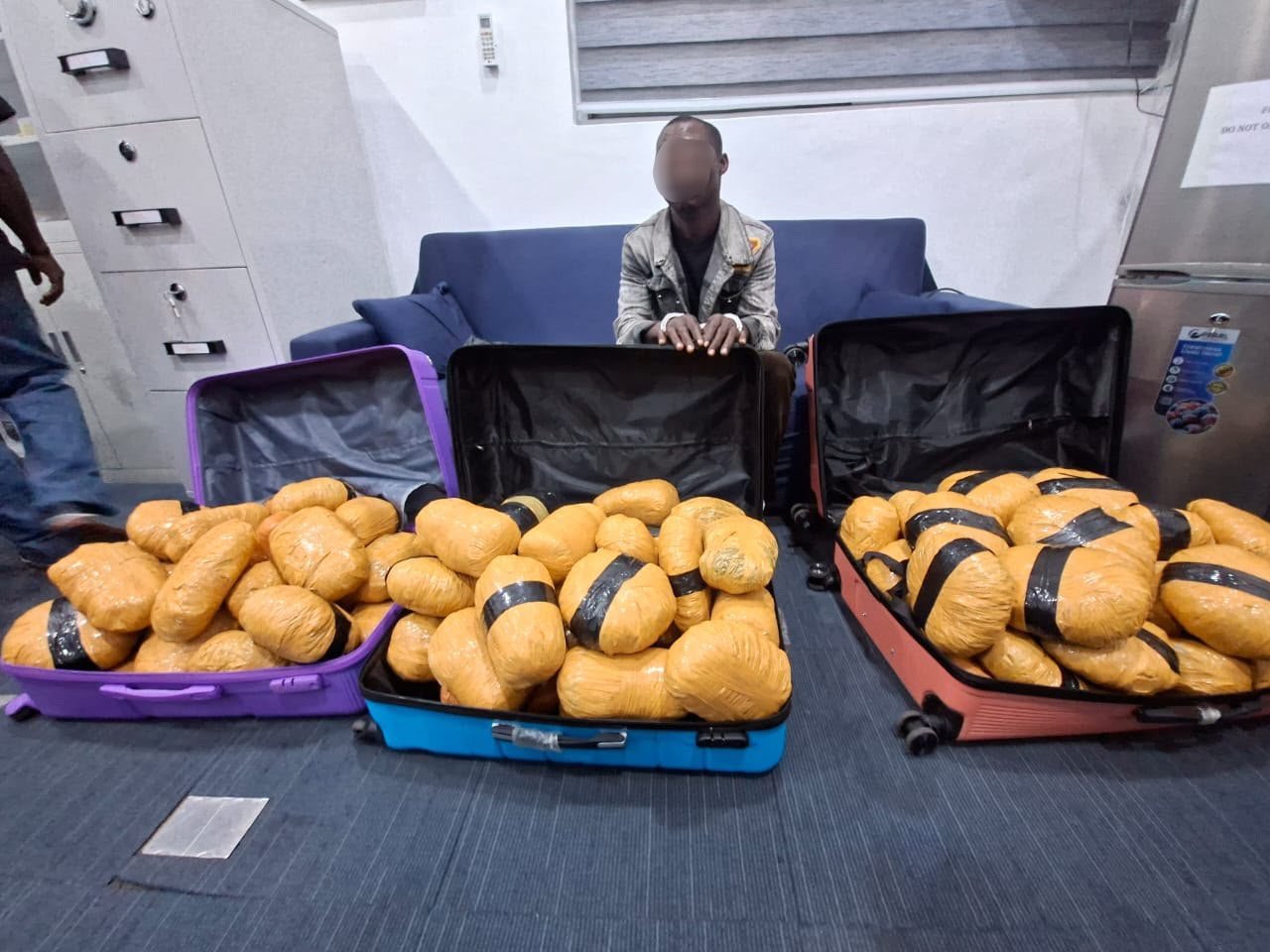
Ghana Police Service says the suspect was arrested with suspected narcotic substances packed in travel bags as investigations continue.
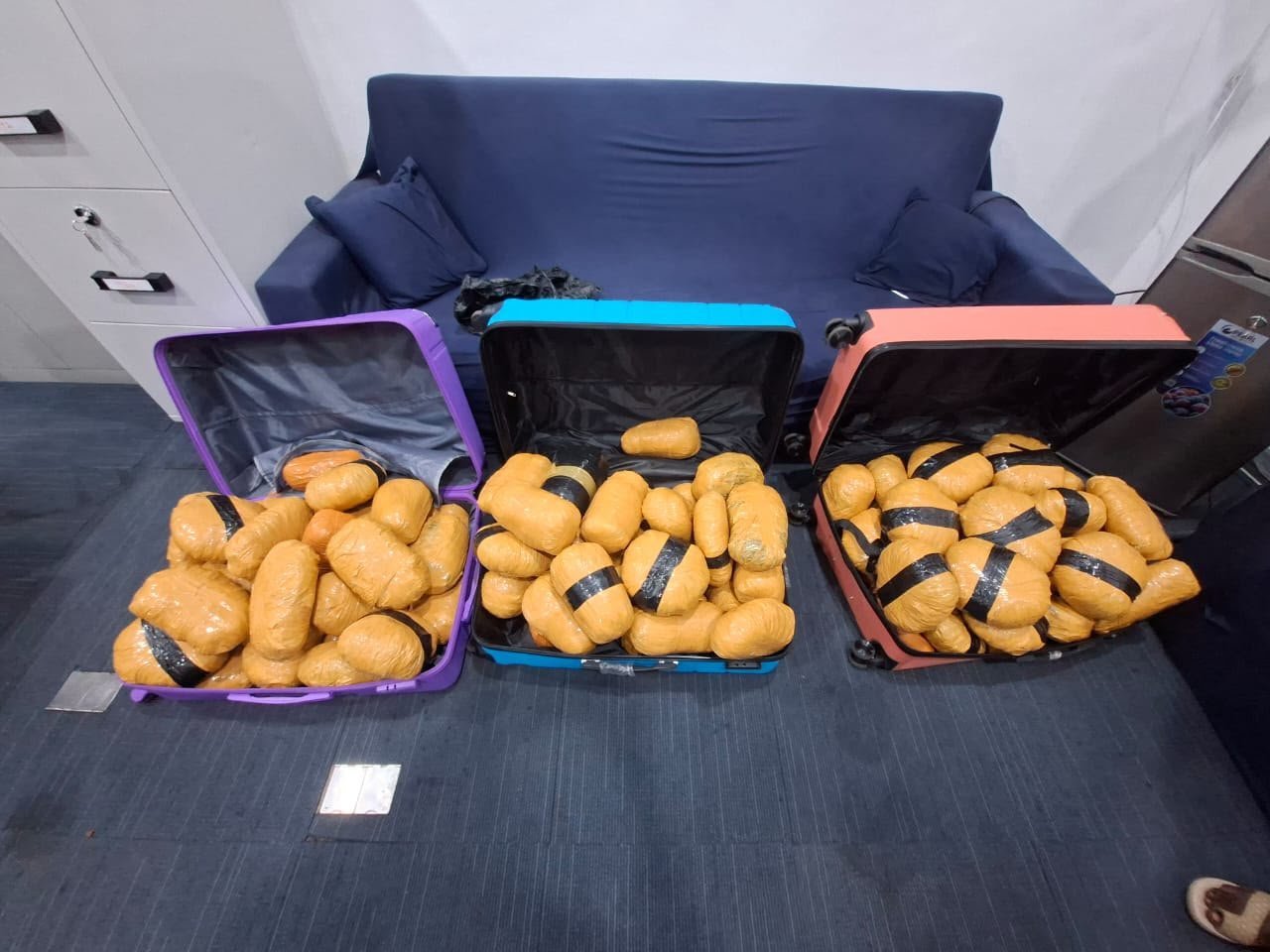
The Ghana Police Service has arrested a 40-year-old man after allegedly discovering 91 parcels of suspected Indian hemp in his possession at Circle in Accra.
The arrest was announced by the Police Service in a social media post on Friday, October 30, 2026, accompanied by photographs of the suspect and the parcels reportedly seized during the operation.
According to the police, the man was apprehended with 91 parcels of a substance suspected to be Indian hemp, commonly known as cannabis. The items were shown packed inside travel bags, including a purple suitcase and a blue bag.
The police post identified the location of the arrest as Circle, a busy transport and commercial area in Accra that serves as a major transit point for commuters and travellers.
The arrest forms part of police efforts to clamp down on suspected drug-related activities and the movement of prohibited substances.
Suspected narcotics seized
Photographs released alongside the announcement show numerous yellow-wrapped packages arranged inside open suitcases, as well as an image of the man in police custody.
However, the brief public announcement did not provide details about the suspect’s identity, the precise circumstances leading to his arrest, or whether the substance had been tested to confirm its composition.
The police also did not disclose the estimated weight or street value of the 91 parcels, nor did the post indicate where the suspected substance was allegedly obtained or its intended destination.
Further details about the operation, including whether other individuals are being investigated in connection with the seizure, were not included in the announcement.
Investigations expected to continue
The arrest is expected to be followed by further investigations to establish the circumstances surrounding the possession of the suspected narcotic substance and determine whether any additional offences may have been committed.
The seizure also highlights the importance of law enforcement operations targeting the possession and transportation of suspected illegal drugs in major urban centres.
The suspect’s arrest does not, by itself, establish guilt. Any criminal liability will depend on the evidence gathered by investigators and the outcome of the applicable legal process.
The Ghana Police Service had not provided further information on possible charges or the suspect’s court appearance in the post shown.
Authorities are expected to provide additional updates as investigations progress and more information becomes available.
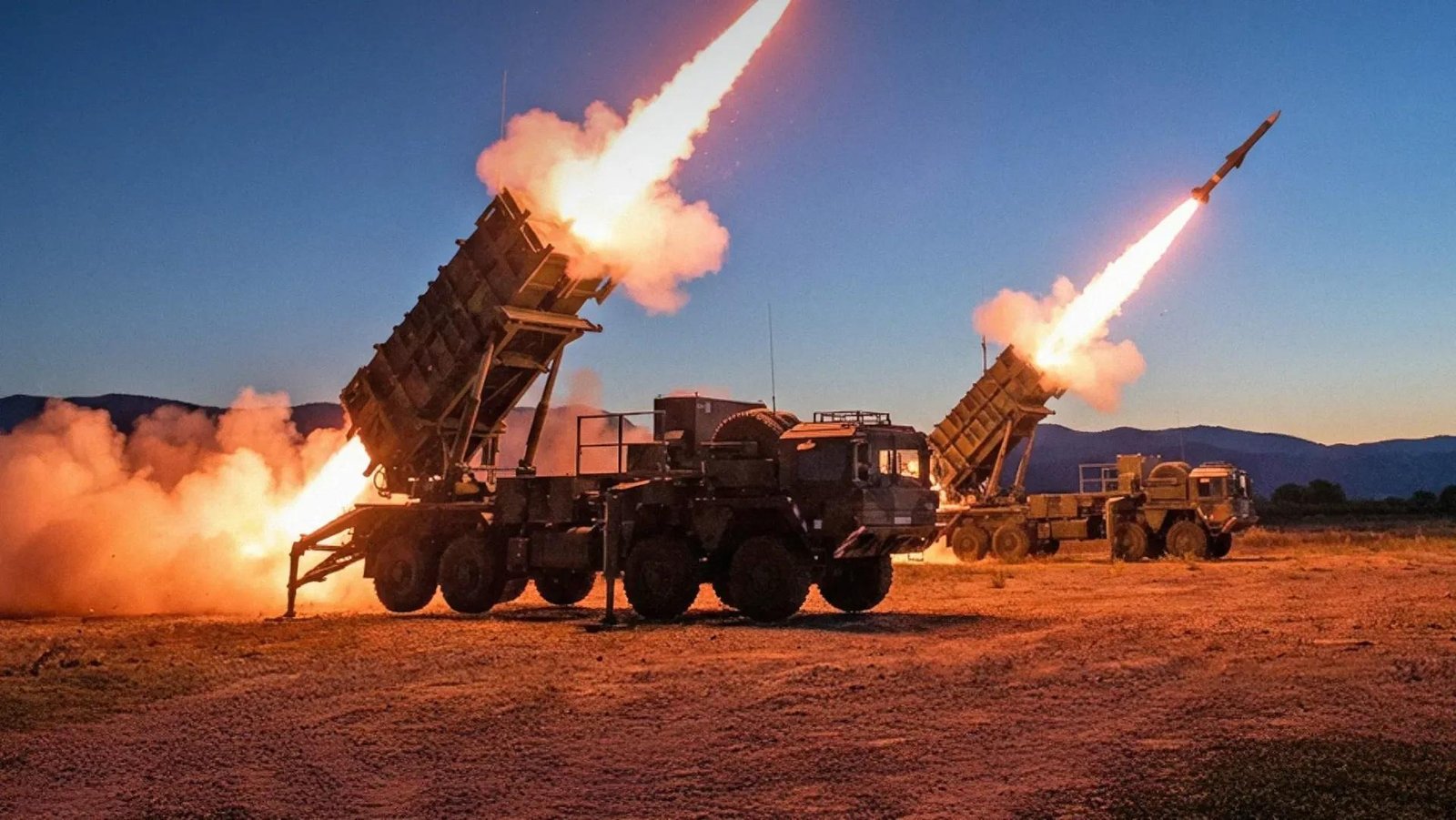
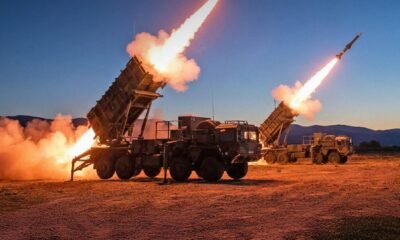
The United States has approved a proposed $2.1 billion sale of 500 Patriot air defence interceptor missiles to Ukraine, marking a significant development in Kyiv’s efforts to strengthen its defences against Russian aerial attacks.
The US State Department announced the approval on October 30, 2026, confirming that the proposed package includes Patriot Advanced Capability-3 Missile Segment Enhancement (PAC-3 MSE) interceptors, spare parts and related logistical support.

US Approves Major Patriot Missile Sale to Ukraine
The purchase is expected to be financed through contributions from Canada, Germany and Norway under a US-supported programme, alongside funding linked to the European Union’s Ukraine Support Loan. US officials said American government funds would not be used to finance the purchase.
Ukraine seeks to strengthen its air defences
The approval comes as Ukraine continues to face Russian missile and drone attacks targeting infrastructure and other locations across the country. Ukrainian President Volodymyr Zelenskyy has repeatedly called for increased supplies of air defence interceptors, warning that shortages could weaken the country’s ability to protect its population and critical facilities.

Zelenskyy Seeks Stronger Air Defences for Ukraine
Patriot systems are an important part of Ukraine’s air defence network, particularly in countering certain ballistic missile threats. However, the effectiveness of the planned purchase will depend on when the missiles become available and how quickly they can be delivered and integrated into existing operations.
Approval does not mean immediate delivery
Although Washington has approved the proposed sale, the announcement does not establish a confirmed delivery date for all 500 missiles. The package also involves further procurement arrangements, and the missiles remain part of a wider international effort to meet Ukraine’s defence requirements.
The approval follows public complaints from Zelenskyy that Ukraine had been waiting for weeks for authorisation concerning critical missile supplies. The development highlights the continuing importance of US decisions and European financial support to Ukraine’s military needs.

European Allies Back Ukraine’s $2.1 Billion Missile Purchase
European allies take on the financial burden
The arrangement reflects a continued role for European partners in financing US-made military equipment for Ukraine. Canada, Germany and Norway are expected to contribute through the JUMPSTART programme, with additional support linked to EU-backed financing.
Lockheed Martin has been identified as the principal contractor for the proposed sale. The transaction is intended to strengthen Ukraine’s integrated air and missile defence capabilities, although the timing of deliveries remains a key unanswered question.

Ukraine Seeks Greater Protection Against Russian Missile Attacks
What happens next?
Attention will now turn to the implementation of the approved sale, including contract arrangements, production capacity and delivery schedules. Ukraine’s immediate defence needs will continue to be shaped by the intensity of Russian attacks and the availability of interceptor missiles from its international partners.
The approval represents a major financial commitment to Ukraine’s air defence, but its practical impact will depend on how quickly the planned supplies can reach the country.

The Confederation of African Football (CAF) has reversed its earlier decision to stage the Africa Cup of Nations (AFCON) every four years, confirming that the continent’s flagship national team competition will return to its traditional two-year cycle.
The decision was unanimously approved by CAF’s Executive Committee on Thursday, October 29, 2026, marking a significant shift in the governing body’s long-term competition strategy.
CAF President Dr Patrice Motsepe confirmed the development in an official statement, explaining that the organisation had reconsidered its previous arrangement following concerns about the proposed Africa Nations League.
The four-year AFCON format was announced in December 2025 as part of a broader restructuring of African football competitions. Under that arrangement, the proposed Africa Nations League was expected to become the continent’s major biennial national team competition.
However, CAF has now acknowledged that the new competition would require several years before generating sufficient financial resources to support football development and strengthen the organisation’s competitions.
Motsepe said the reversal was intended to protect the interests of African football, the continent’s 54 member associations and African players representing clubs outside the continent.
Africa Nations League plans influence decision
The proposed Africa Nations League was initially designed to provide a major continental competition every two years while allowing AFCON to move to a four-year schedule.
CAF’s latest assessment, however, indicated that the proposed league would take considerable time to deliver the financial and developmental benefits originally anticipated.
The governing body therefore opted to restore AFCON’s biennial format rather than wait several years for the new competition to become financially sustainable.
The decision also reflects CAF’s intention to maintain the commercial and developmental importance of its flagship tournament.
AFCON 2027 remains on schedule
Despite the changes, the next Africa Cup of Nations will proceed in 2027, with Kenya, Tanzania and Uganda serving as joint hosts.
According to Motsepe, subsequent editions are scheduled for 2028, 2031 and 2033.
There will be no AFCON tournament in 2030 because of the FIFA World Cup scheduled for that year. CAF says its scheduling arrangement will avoid holding the final stages of its national team competitions during the World Cup year.
What the decision means for African football
The return to a two-year AFCON cycle means national teams, players, supporters, sponsors and football associations can continue to anticipate the continent’s biggest international football tournament at more frequent intervals.
For African football associations, the decision also preserves AFCON’s importance as a major source of competition exposure, commercial opportunities and international recognition.
Motsepe further described the tournament as an important platform for celebrating Africa’s diverse cultures and bringing together people from the continent, the African diaspora and beyond.
With the revised arrangement now confirmed, attention will turn to preparations for the 2027 tournament in East Africa and the implementation of CAF’s updated competition calendar.
The reversal brings an end to the proposed four-year AFCON arrangement, restoring the competition’s traditional biennial identity while CAF continues to assess its wider football development plans.
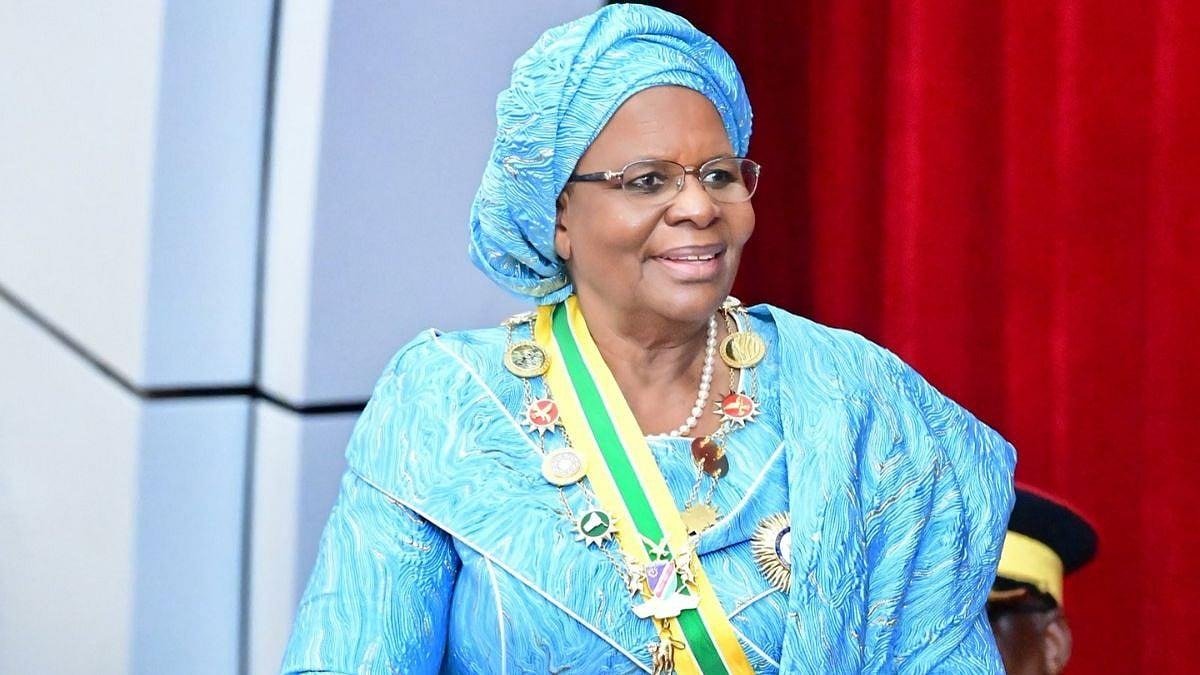
Namibia’s President has urged African countries to make better use of their natural resources and youthful population to strengthen the continent’s influence in global affairs.
The call highlights the importance of economic self-reliance, investment in human capital and stronger cooperation among African nations as the continent seeks a greater role in shaping the global economy.
Africa is home to significant deposits of minerals, oil, gas and other natural resources that are increasingly important to global industries, particularly in the energy transition, technology and manufacturing sectors.
However, the challenge for many African countries remains how to translate these resources into long-term economic benefits through local processing, industrial development, job creation and improved infrastructure.
The President’s remarks also draw attention to Africa’s youthful population, which represents an important source of innovation, entrepreneurship and economic growth.
With millions of young Africans entering the labour market, investment in education, technical training, digital skills and business opportunities will be essential to harnessing this demographic potential.
The call further reinforces discussions about Africa’s position in international negotiations, trade partnerships and global economic decision-making.
African countries have increasingly advocated for greater value addition to their natural resources rather than relying heavily on the export of unprocessed commodities.
The President’s message places emphasis on the need for African nations to work together, strengthen their economies and build the capacity to participate more meaningfully in global affairs.
Key Details of the President’s Remarks
The comments were made by Namibian President Netumbo Nandi-Ndaitwah during an interview on Diplomatic Affairs with Harriet Nartey on Joy Prime, aired on Ghanaian television.
She called for:
-
Stronger implementation of the African Continental Free Trade Area (AfCFTA).
-
Increased trade among African countries.
-
Greater African control over economic priorities and trade negotiations.
-
Better use of the continent’s natural resources and population as sources of economic strength.
- Trade policies that reflect Africa’s interests rather than depending entirely on externally developed frameworks.

‘We Don’t Hate Ablakwa; We Demand Accountability’ – NPP Youth Organiser Fires Back

NPP Fires Fresh Salvo at Mahama Over ECG Outages: ‘If There Is No Dumsor, Why the Constant Power Interruption Announcements?’

NPP Throws Weight Behind Afenyo-Markin, Reaffirms Confidence in Minority Leadership

IRAWMA 2025: Shatta Wale Wins 3 Major Awards Including Best Music Video

Samini Secures Promotional Deal with Audiomack for Upcoming Album “THE ORIGIN8A”

AirtelTigo losing GH₵20m monthly; total debts exceed $200million – Sam George


-

 Entertainment1 week ago
Shatta Wale Cake Tells Story of Growth, Identity and African Dancehall Influence
-

 General News5 days ago
GTA Staff Demand Answers on World Cup Visa Slots, Staff Dismissals and Unpaid Allowances
-

 General News1 week ago
FOKLEX MEDIA AWARDS COMMENDS PRINCE KWAW GYIMAH AND OWASS FM TEAM FOR PROFESSIONALISM DURING KWAME DZOKOTO INCIDENT
-
 Entertainment1 week ago
Ghana Unveils December in GH 2026 Calendar With Over 150 Events Nationwide
-
 Politics1 week ago
OB UASI HEADMASTER IN SEXUAL MISCONDUCT CONTROVERSY EYES NDC CONSTITUENCY CHAIRMANSHIP
-
 General News1 week ago
PROFOUND GRATITUDE FOR YOUR DECISIVE INTERVENTION IN FAST-TRACKING THE COMPLETION OF THE MUMFORD FISHING HARBOUR
-

 General News5 days ago
Nicki Minaj Throws Her Support Behind Trump Ahead of US Midterm Elections
-

 General News1 week ago
SAMMY GYAMFI’S “MINE WITHOUT LICENCE” REMARK SPARKS FRESH GALAMSEY DEBATE