
Technology
Apple Unveils First-Ever Touchscreen MacBook Pro in Major Shift for the Mac Lineup


Apple has officially unveiled its first-ever touchscreen MacBook, marking a major change in the company’s approach to laptop design after years of resisting the introduction of touch-enabled displays on its Mac computers.

The new device, called the MacBook Pro with PROLED XDR Display, was announced on October 28, 2026. It introduces touchscreen functionality to the MacBook Pro lineup, allowing users to interact directly with the display using familiar gestures such as swiping, pinching, zooming and dragging.
The announcement represents a significant development for Apple, which has traditionally maintained a distinction between its MacBook laptops and touchscreen products such as the iPhone and iPad.

The new MacBook Pro will be available in 14-inch and 16-inch versions and powered by Apple’s M5 Pro and M5 Max processors. The company says the touchscreen technology is integrated directly into the display panel to improve responsiveness and reduce delays during interaction.

New touchscreen features target creative professionals
Apple says the touchscreen is designed to improve productivity, particularly for creative professionals, graphic designers, musicians and software developers.

Users will be able to draw directly on the display, manipulate images, move presentation slides and interact with applications without relying entirely on the trackpad.
The laptop also introduces a new tandem OLED display branded PROLED XDR, offering improved brightness, contrast and colour accuracy. Apple says the screen supports a refresh rate of up to 120Hz and peak brightness of up to 2,000 nits.

Apple introduces major design changes
Beyond the touchscreen, the new MacBook Pro features several design improvements, including a slimmer and lighter body and the return of the illuminated Apple logo on the back of the laptop.

Another notable addition is the Dynamic Island, previously associated with Apple’s iPhone lineup. The feature will provide access to information, notifications, Live Activities and Siri AI.
Apple is positioning the new device as a powerful workstation for professionals who require advanced computing performance and improved creative tools.
Price and availability
The new touchscreen MacBook Pro is positioned at the premium end of Apple’s laptop range.
-
14-inch model: Starting at $2,899.
-
16-inch model: Starting at $3,399.
-
Higher-end configurations: M5 Max versions start at $4,499 for the 14-inch model and $4,799 for the 16-inch model.
Pre-orders opened on October 28, with retail availability scheduled for November 6, 2026.

A new chapter for Apple’s MacBook range
Apple’s decision to introduce touchscreen technology to its MacBook lineup could reshape expectations for future laptops.
Although touchscreen computers have been available from competing manufacturers for years, Apple’s entry into this market could increase competition in the premium laptop segment.
However, the device’s high starting price may limit its appeal to some consumers, particularly when compared with other touchscreen laptops already available.
The launch will ultimately test whether Apple’s loyal MacBook customers are ready to embrace a more touch-focused computing experience.

















Google’s parent company, Alphabet, has suffered one of the biggest single-day losses in stock market history after investors reacted negatively to its latest financial results and growing concerns about the financial risks of artificial intelligence investments.
Alphabet’s shares fell approximately 12.6% on Thursday, October 29, wiping out nearly $500 billion in market value. The decline followed the company’s latest quarterly earnings announcement, which raised questions about the sustainability of its growth and the impact of AI on its traditional search advertising business.
Although Alphabet reported revenue of approximately $127.6 billion, representing a 25% increase compared with the same period last year, its profits declined by 25%. Investors were particularly concerned about slower growth in search advertising and the enormous costs associated with developing and expanding AI infrastructure.
One major concern is the growing use of AI-generated summaries and conversational search tools. These features provide users with direct answers rather than requiring them to visit multiple websites, potentially reducing opportunities for Google to display advertisements alongside traditional search results.
Google executives have acknowledged that AI-powered search experiences are changing advertising performance. The company has indicated that it is exploring ways to introduce more advertising opportunities into its AI-powered services.
Meanwhile, Alphabet continues to invest heavily in artificial intelligence as competition intensifies across the technology industry. Its Google Cloud division recorded strong growth, with quarterly revenue reaching approximately $30.7 billion, demonstrating that the company’s AI and cloud businesses continue to attract demand.
However, investors are increasingly demanding evidence that these massive investments will generate sustainable profits. Concerns over rising expenditure and weaker-than-expected financial performance have also placed pressure on other major technology companies, including Microsoft and Amazon.
The latest market reaction highlights a growing challenge for major technology firms: balancing the enormous costs of developing artificial intelligence with the need to protect existing revenue streams.
For Alphabet, the question is no longer simply whether it can compete in the AI race, but whether it can maintain its dominance in online search while turning its growing AI investments into long-term financial returns.
Microsoft has reported a sharp rise in quarterly profits, highlighting the technology giant’s strong financial performance even as it moves to reduce its workforce amid growing investment in artificial intelligence (AI).
The company’s reported profit of more than $36.6 billion for the three months ending in September came just days after it announced plans to offer voluntary buyouts to approximately 60,000 eligible employees, according to reports published on October 28, 2026.
The development has drawn attention to the growing tension between Big Tech companies’ financial success, workforce restructuring and the enormous cost of developing AI technology.
Microsoft also recorded quarterly revenue of $92.3 billion, representing a 19% increase compared with the same period a year earlier. Growth in its cloud computing business was a major contributor to the results, with Microsoft Cloud revenue rising by 30%.
The strong performance comes as the company continues to direct substantial resources towards AI infrastructure, including data centres and computing systems needed to support its expanding range of AI services.
AI investment drives business transformation
Microsoft is among the major technology companies competing to expand their AI capabilities. Its investments are aimed at strengthening cloud services, improving existing software products and increasing the use of AI-powered tools by businesses and consumers.
However, the scale of spending required to develop and operate these systems has raised questions about how technology companies will balance investment, profitability and employment.
Microsoft’s latest workforce initiative is intended to give eligible employees the option to leave through voluntary redundancy packages. The programme reportedly covers workers in the United States, Canada, the United Kingdom and India, subject to eligibility requirements.
The company has described the initiative as a way to create greater flexibility and adjust its workforce to changing business needs. Eligible employees are expected to receive financial support and career-planning resources.
Although the programme could affect a substantial number of workers, the offers are voluntary and should not be interpreted as confirmation that all eligible employees will leave the company.
Strong earnings contrast with employment uncertainty
The announcement highlights a wider debate about the relationship between corporate profitability and job security in the technology sector.
Microsoft’s growing cloud business and expanding AI operations have helped support its financial performance. At the same time, changes in business priorities are prompting the company to reconsider its workforce structure and how resources are allocated across its operations.
For employees, voluntary buyouts may offer an opportunity to leave with financial support, but they can also create uncertainty about future roles and career prospects. For investors, the central question is whether continued investment in AI will generate sustainable returns over the long term.
Microsoft’s latest results suggest that demand for its cloud and enterprise services remains strong. Nevertheless, the company faces the challenge of maintaining that growth while managing the costs and organisational changes associated with its AI strategy.
As competition in artificial intelligence intensifies, Microsoft’s financial results and workforce decisions are likely to remain part of a broader discussion about the future of employment in the global technology industry.
By KPD News Online | Technology and Health
Microsoft has developed an artificial intelligence system designed to diagnose medical conditions through a step-by-step process similar to the way doctors investigate illnesses, raising new possibilities for the use of AI in healthcare.
The system, known as the Microsoft AI Diagnostic Orchestrator (MAI-DxO), coordinates multiple AI-based clinical reasoning processes to assess patients’ symptoms, request relevant medical information, recommend tests and refine potential diagnoses as new evidence becomes available.
The findings, published in the scientific journal Science on October 22, 2026, suggest that the technology could help improve diagnostic accuracy while reducing the cost of medical investigations. However, its performance in real-world clinical settings still needs to be established.
How Microsoft’s AI System Works
Unlike conventional AI systems that receive a collection of symptoms and medical results before producing an answer, MAI-DxO follows a more gradual diagnostic process.
The system begins with limited information about a patient’s condition. It then determines which questions to ask, considers physical examination findings, selects potentially useful tests and updates its working diagnosis as additional evidence emerges.
Microsoft designed the system to coordinate a simulated panel of clinical experts, allowing different diagnostic approaches to contribute to the investigation.
The approach is intended to reflect the uncertainty doctors encounter when treating patients, where the correct diagnosis may not be immediately apparent and further investigations are often necessary.
The system also considers the cost of medical tests, aiming to identify an effective route to diagnosis without unnecessarily increasing expenditure.
Study Reports Higher Diagnostic Accuracy
Microsoft researchers evaluated the system using more than 300 challenging medical cases drawn from published clinical case reports, alongside cases based on emergency department admissions.
According to the company’s findings, MAI-DxO achieved 83 per cent diagnostic accuracy on the complex cases, compared with 36 per cent for general physicians who had access to textbooks and online resources.
On cases based on emergency department admissions, the system achieved approximately 80 per cent accuracy, compared with 47 per cent for the physicians included in the comparison.
The researchers also reported that the AI system could reach diagnoses using less costly investigative approaches in the evaluated scenarios.
The results are significant because medical diagnosis involves more than identifying a disease from a list of symptoms. Doctors must gather information, evaluate competing explanations, determine which investigations are appropriate and revise their conclusions when new evidence emerges.
However, the findings should be interpreted with caution. Performance on selected historical cases does not necessarily predict how an AI system will perform with real patients, whose symptoms, medical histories and circumstances can be more unpredictable.
Could AI Change the Future of Healthcare?
If further studies demonstrate that the technology is safe and effective in clinical practice, systems such as MAI-DxO could potentially help healthcare professionals investigate complicated illnesses, identify possible diagnoses and decide which tests may be most useful.
Such tools could be particularly valuable in settings where access to experienced specialists is limited or where clinicians face heavy workloads.
AI-assisted diagnosis could also provide additional support when doctors are dealing with rare conditions that are difficult to identify through routine assessments.
Nevertheless, diagnostic accuracy alone is not enough to establish that an AI system is suitable for medical use. Its performance must also be evaluated across different patient populations and healthcare environments, with appropriate safeguards for patient privacy, accountability and clinical decision-making.
Microsoft Plans Further Clinical Evaluation
Microsoft has announced plans to work with Beth Israel Deaconess Medical Center in Boston to investigate the technology’s potential role in emergency department triage.
The planned work is intended to help researchers assess how the system performs in clinical environments and whether its capabilities can support patient assessment in practice.
The proposed evaluation represents an important step beyond testing the technology on existing medical cases. Real-world assessment will be necessary to determine whether its reported advantages translate into better patient care.
Doctors Still Have a Critical Role
Despite the promising results, the technology should not be regarded as a replacement for qualified medical professionals.
Doctors do more than identify diseases. They assess individual circumstances, communicate with patients, consider treatment preferences and make decisions that require professional judgment and accountability.
An AI diagnostic system may eventually help clinicians make better-informed decisions, but its recommendations need appropriate clinical oversight.
Conclusion
Microsoft’s diagnostic AI represents a notable development in the effort to apply artificial intelligence to complex medical reasoning. Its ability to work through cases step by step and consider the cost of investigations could offer benefits if validated in real healthcare settings.
For now, the key question is whether the encouraging results from research evaluations can be reproduced safely and consistently in everyday medical practice.
Business | Technology | United States | 25 October 2026
Meta Platforms has reached an agreement with its chief executive, Mark Zuckerberg, that could help him pay a proposed California billionaire wealth tax without sacrificing his control over the technology company.

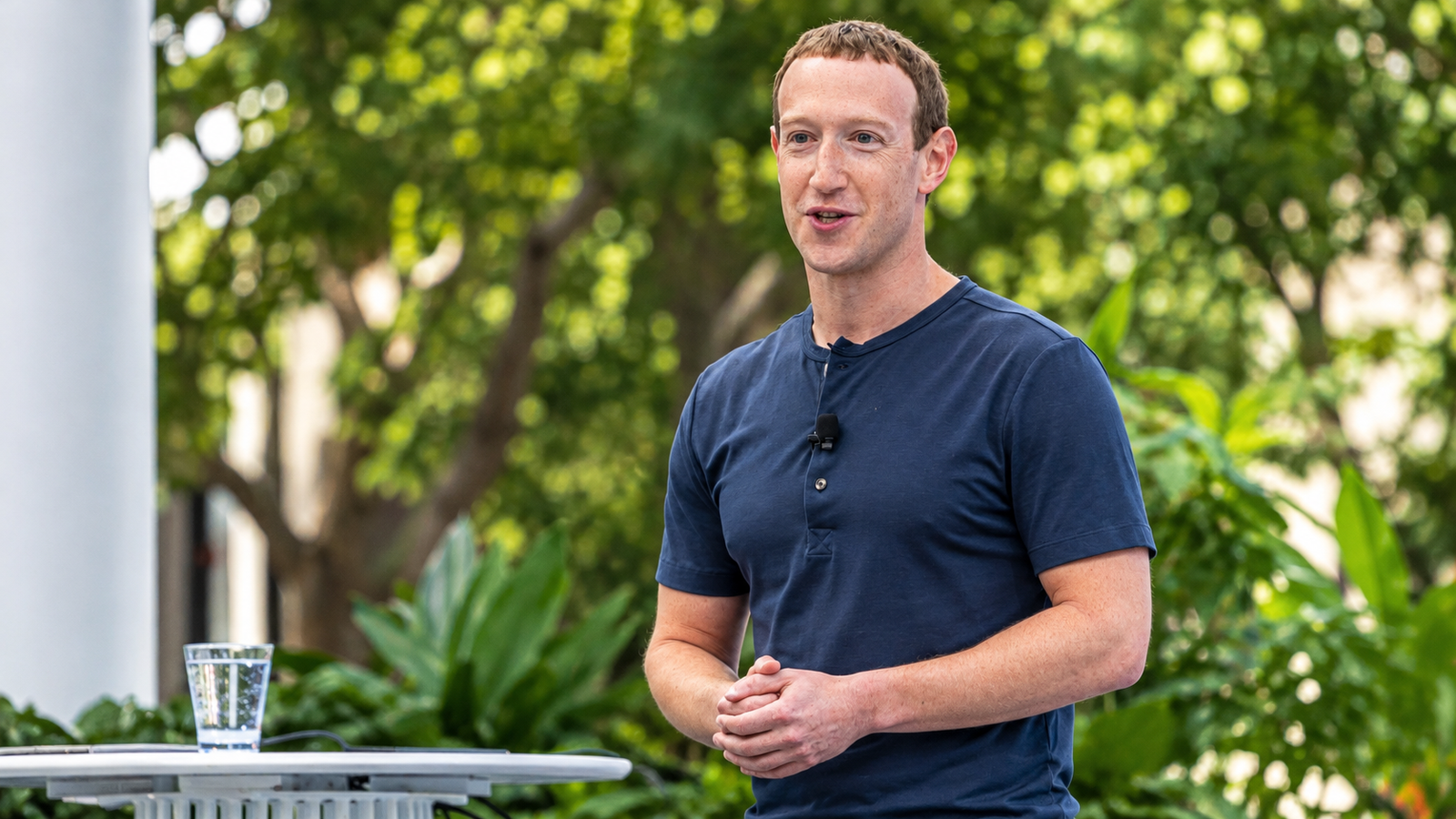
Meta CEO Mark Zuckerberg is at the centre of a deal addressing potential tax liabilities under California’s proposed wealth levy.
The agreement, disclosed in a regulatory filing this week, follows concerns that Zuckerberg could face a multibillion-dollar tax liability if California voters approve a proposed one-time levy on the wealth of the state’s richest residents.
Under the arrangement, Meta plans to introduce a new class of non-voting Class C shares that Zuckerberg can sell to raise money if the tax becomes law. The agreement also includes a commitment for him to remain a resident of California, or another jurisdiction where Meta maintains its headquarters, for eight years, subject to certain exceptions.

Meta’s headquarters in California, where the company is working to retain its chief executive.
How the proposed tax could affect Zuckerberg
The proposed measure, identified in reports as Proposition 40, would impose a one-time tax of 5% on the net worth of qualifying billionaires residing in California if approved by voters.
Zuckerberg’s estimated wealth of approximately $240 billion means his potential liability could run into billions of dollars. However, the final amount would depend on the measure’s provisions and how his taxable assets are assessed.
Much of Zuckerberg’s wealth is tied to his ownership of Meta, the parent company of Facebook, Instagram and WhatsApp. A substantial sale of his existing voting shares to meet a tax bill could reduce his voting power within the company.
The new share arrangement is designed to provide an alternative source of liquidity while helping him preserve his control over Meta.

ZUCKERBERG SECURES META TAX DEAL
Meta introduces a new share structure
Meta plans to issue the new Class C shares beginning in January 2027 as part of a restructuring that will also give the company additional flexibility for employee compensation, acquisitions and other corporate purposes.
Under the reported agreement, Zuckerberg can immediately sell 20% of the Class C shares allocated to him. Those shares represent approximately 10% of his overall economic stake in Meta, according to Reuters.
Meta’s board has described retaining Zuckerberg’s leadership as important to the company’s future, particularly as it expands its artificial intelligence operations and faces growing competition in the technology industry.
The arrangement therefore addresses both Zuckerberg’s potential personal tax exposure and Meta’s interest in maintaining continuity in its leadership.

California’s proposed wealth tax has prompted debate over public funding, taxation and the potential relocation of wealthy residents.
California’s wealth tax proposal sparks debate
The proposal has drawn opposing views from supporters and critics.
Supporters argue that taxing the wealth of billionaires could generate substantial funding for public services, including healthcare. Opponents have warned that wealthy residents could move elsewhere, potentially affecting investment, business activity and state revenues.
The debate also raises questions about how governments should tax wealth held in company shares, particularly when selling those assets could affect control of major businesses.
Zuckerberg had reportedly considered moving his primary residence outside California if the proposal advanced, prompting negotiations with Meta over the new share arrangement.
What happens next?
The tax proposal is scheduled to go before California voters on November 3, 2026. Until the result is known, the potential liability remains conditional.
Meta’s agreement provides Zuckerberg with a possible way to raise funds should the measure pass, while also committing him to remain in the state under the stated terms.
Conclusion: The agreement highlights the intersection of personal wealth, corporate governance and taxation in the technology sector. Its wider implications will depend on the ballot outcome and how California ultimately applies any approved wealth tax.

By Angel No Lie | KPDOnline | WASHINGTON, D.C., October 14, 2026
Artificial intelligence company Anthropic has asked a US appeals court to reconsider its decision upholding the Pentagon’s designation of the company as a national security supply-chain risk, escalating a legal dispute over the military use of artificial intelligence and restrictions designed to prevent potential misuse.
The request for a rehearing follows a September ruling by the US Court of Appeals for the District of Columbia Circuit, which upheld the Pentagon’s decision in a 2–1 judgment. The designation allows the US military to exclude Anthropic’s AI systems from its supply chain and restrict their use in defence-related work.
Disagreement over AI safeguards
The dispute centres on Anthropic’s refusal to remove safeguards that prohibit its technology from being used for fully autonomous lethal weapons and mass domestic surveillance.
The Pentagon argued that restrictions built into Anthropic’s Claude AI system could interfere with military operations and create risks when the technology is integrated into defence systems.
Anthropic, however, has challenged the government’s approach, arguing that the law used to designate the company as a supply-chain risk was not intended to be applied in this manner to a domestic technology provider.
In its rehearing petition, the company also argued that the government acted without an adequate process before applying the designation and that the decision amounted to retaliation for its position on AI safety, according to Reuters.
Conflicting court outcomes
The latest development follows a separate legal battle in California, where a federal judge ruled in August that a related government designation against Anthropic was unlawful. That case involved a different legal authority from the one considered by the Washington appeals court.
The contrasting outcomes highlight the complexity of the dispute and the legal questions surrounding the government’s authority to restrict technology companies from defence-related contracts.
The September appeals court ruling nevertheless upheld the Pentagon’s action under the federal supply-chain security law, rejecting Anthropic’s principal challenges in that case.
Wider implications for artificial intelligence
The dispute raises broader questions about how governments should balance national security requirements with technology companies’ efforts to establish limits on the use of their products.
For AI developers, the case could influence how contractual safeguards are negotiated when their systems are supplied to military and government agencies. For policymakers, it highlights the challenge of determining whether restrictions intended to prevent harmful applications could conflict with operational requirements.
The outcome could also shape future relationships between AI companies and defence institutions, particularly as advanced AI systems become increasingly relevant to intelligence, cybersecurity and military planning.
Anthropic’s request for a rehearing represents another step in the legal process; it does not itself overturn the existing ruling. The dispute remains an important test of the boundaries between government procurement powers, national security concerns and the responsibilities of companies developing powerful AI systems.

US Approves $2.1 Billion Sale of 500 Patriot Missiles to Ukraine

MTN Reaffirms Commitment to Network Expansion as Ghana’s Digital Demand Grows

Ghana Faces Growing Youth Employment Challenge as Joblessness Surpasses 32%

IRAWMA 2025: Shatta Wale Wins 3 Major Awards Including Best Music Video

Samini Secures Promotional Deal with Audiomack for Upcoming Album “THE ORIGIN8A”

AirtelTigo losing GH₵20m monthly; total debts exceed $200million – Sam George


-

 Entertainment1 week ago
Shatta Wale Cake Tells Story of Growth, Identity and African Dancehall Influence
-

 General News5 days ago
GTA Staff Demand Answers on World Cup Visa Slots, Staff Dismissals and Unpaid Allowances
-

 General News1 week ago
FOKLEX MEDIA AWARDS COMMENDS PRINCE KWAW GYIMAH AND OWASS FM TEAM FOR PROFESSIONALISM DURING KWAME DZOKOTO INCIDENT
-

 Politics1 week ago
OB UASI HEADMASTER IN SEXUAL MISCONDUCT CONTROVERSY EYES NDC CONSTITUENCY CHAIRMANSHIP
-

 Entertainment1 week ago
Ghana Unveils December in GH 2026 Calendar With Over 150 Events Nationwide
-

 General News1 week ago
PROFOUND GRATITUDE FOR YOUR DECISIVE INTERVENTION IN FAST-TRACKING THE COMPLETION OF THE MUMFORD FISHING HARBOUR
-

 General News5 days ago
Nicki Minaj Throws Her Support Behind Trump Ahead of US Midterm Elections
-

 General News7 days ago
SAMMY GYAMFI’S “MINE WITHOUT LICENCE” REMARK SPARKS FRESH GALAMSEY DEBATE