
Entertainment
GTA Targets Taxi Drivers in ‘Know Ghana’ Campaign to Boost Tourism


The Ghana Tourism Authority (GTA) has begun sensitising taxi drivers on their role in promoting the country’s tourism attractions, cultural heritage and local experiences as part of its “Know Ghana” campaign under the government’s flagship Black Star Experience programme.
The exercise, which commenced on Saturday, October 3, 2026, engaged drivers’ unions at Osu RE, Shoprite and Papaye in Accra, with the aim of equipping commercial drivers with relevant information to help promote Ghana as a preferred tourism destination.

The initiative, being implemented under the leadership of GTA Chief Executive Officer Maame Efua Houadjeto, forms part of efforts to involve key stakeholders in the tourism value chain in marketing Ghana to both domestic and international visitors.
The Know Ghana campaign is designed to empower citizens to become ambassadors of the country by encouraging them to promote its cultural identity, tourism attractions and distinctive experiences.
The special edition targeting commercial drivers seeks to engage transport unions across the country in support of the GTA’s domestic tourism marketing agenda, guided by the slogans See Ghana, Eat Ghana, Wear Ghana, Feel Ghana and Experience Ghana.
According to the Authority, taxi drivers occupy an important position in the tourism industry because of their frequent interactions with tourists and other visitors travelling between destinations.
Their interactions with visitors can influence how tourists experience Ghana, from their arrival in the country to their visits to tourist attractions, restaurants, entertainment centres and cultural sites.
The GTA believes that equipping drivers with accurate information about the country’s tourism offerings will enable them to provide useful recommendations and encourage visitors to explore more destinations beyond their immediate places of stay.

The drivers were therefore encouraged to introduce passengers to Ghana’s historical sites, tourist attractions, local cuisine, traditional and contemporary fashion, music, nightlife and other cultural experiences.
The sensitisation exercise also highlighted the importance of ensuring that visitors have memorable experiences that reflect Ghana’s hospitality, cultural diversity and heritage.
The programme focused on the messages See Ghana, Eat Ghana, Wear Ghana and Feel Ghana, Experience Ghana and the broader Black Star Experience initiative.
Through these messages, the Authority seeks to encourage visitors to discover Ghana through its tourism attractions, food, fashion, music, history and people.

The campaign also emphasised the need for commercial drivers to support the promotion of Ghanaian culture by incorporating local experiences into their interactions with passengers.
Highlife music, one of Ghana’s distinctive musical traditions, received particular attention during the exercise. Drivers were encouraged to play Ghanaian music and help introduce visitors to the country’s musical heritage, especially during the December in GH season.
December in GH forms part of the broader Black Star Experience programme, which seeks to position Ghana as a destination for cultural activities, entertainment, tourism and other experiences.
The GTA considers commercial drivers important partners in ensuring that visitors encounter Ghanaian culture not only at tourist sites and entertainment events but also during their everyday movements around the country.
The GTA Chief Executive Officer, Maame Efua Houadjeto, was represented at the sensitisation exercise by Kofi Atta Kakra Kusi and Francisca Boakye, Deputy Directors of Corporate Affairs; Judith Kelly, Principal Corporate Affairs Officer; and Elvis Bruce Wallace, a tour guide representing the Tour Guides Association of Ghana (TORGAG).
The team engaged the drivers on the objectives of the campaign and the contribution they could make to promoting the country’s tourism industry.
Participants were encouraged to become active ambassadors of Ghana by sharing reliable information about tourism attractions and directing visitors towards local businesses and experiences that showcase the country’s cultural identity.

The initiative is expected to encourage greater patronage of local tourism attractions, products and services while strengthening cooperation between the GTA and transport operators.
Speaking to the media, GTA Deputy Director of Corporate Affairs Kofi Atta Kakra Kusi reiterated the Chief Executive Officer’s call for similar sensitisation exercises to be organised at strategic taxi stations in Accra and across all 16 regions of Ghana.
He indicated that the initiative would not be limited to taxi drivers but would also be extended to other transport operators and digital transport platforms.
These include drivers affiliated with the Ghana Private Road Transport Union (GPRTU), as well as Uber and Yango drivers.
The planned expansion is intended to reach more transport operators whose daily activities bring them into contact with tourists, business travellers and other visitors.
Kusi also appealed to media organisations to support the campaign by giving it the necessary publicity to reach a wider audience.
He stressed the importance of public awareness in strengthening efforts to promote and market Ghana’s tourism attractions and cultural offerings.
As part of the exercise, the GTA team distributed branded T-shirts, vehicle stickers and flyers to participating drivers.
The materials are expected to help amplify the campaign’s messages and increase public awareness of the Know Ghana initiative.
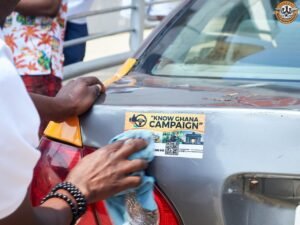
The branded items will also help make the campaign more visible as drivers go about their daily activities, allowing them to serve as mobile promoters of Ghana’s tourism agenda.
The sensitisation exercise forms part of the Authority’s broader efforts to encourage both domestic and international visitors to explore and support Ghana’s tourism and cultural heritage.
By involving commercial drivers and other transport operators, the GTA hopes to increase awareness of tourism destinations, stimulate demand for local products and services, and encourage Ghanaians to appreciate and patronise attractions within the country.
The initiative is also expected to support local businesses, create economic opportunities and contribute to Ghana’s ability to attract international visitors, generate foreign exchange earnings and encourage tourism-related investment.

Through the Know Ghana campaign, the slogans See Ghana, Eat Ghana, Wear Ghana, Feel Ghana and Experience Ghana, and the wider Black Star Experience programme, the Authority is seeking to make tourism promotion a shared responsibility among citizens and industry stakeholders.
The programme positions taxi drivers and other transport operators as important links between visitors and the experiences Ghana has to offer, with the ultimate goal of strengthening the country’s image as a destination for history, culture, cuisine, fashion, music, nightlife and hospitality.











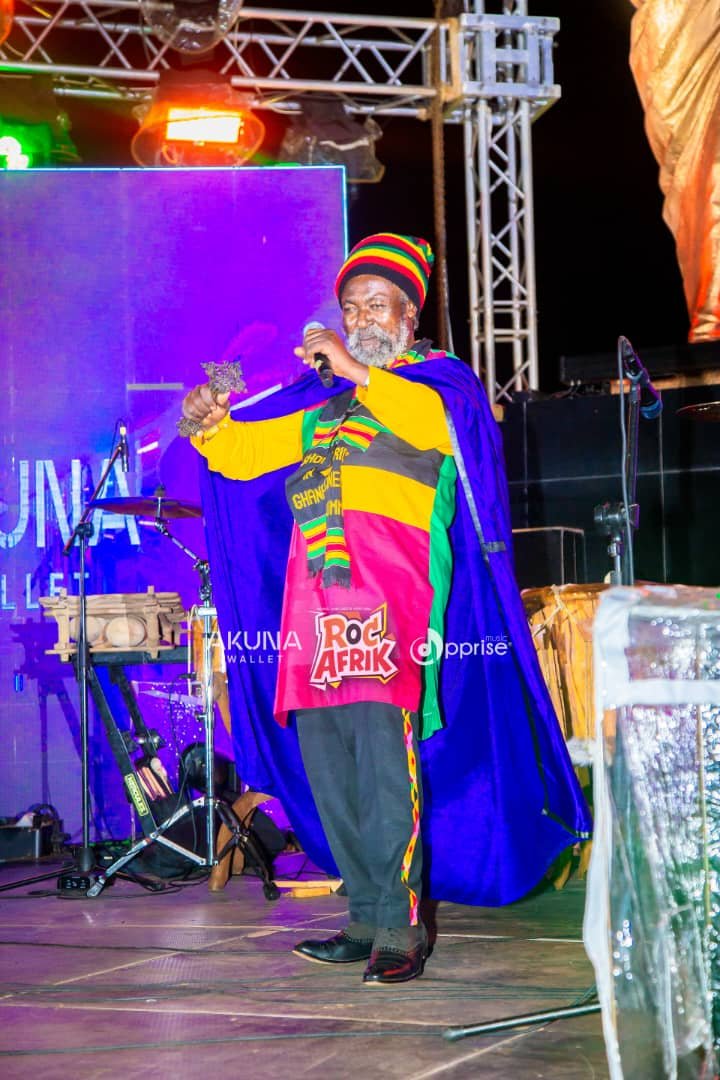
Ras Caleb Appiah-Levi of PanAfrica-Ghana (PAG) has reflected on the difference between intelligence and wisdom, arguing that although the two are often confused, they represent distinct qualities that influence how people live, make decisions and relate to others.
In a write-up titled “I May Not Be Wise, But I Am Very Intelligent. Trust Me,” he explained that intelligence involves acquiring knowledge, understanding information, analysing issues, arguing, passing examinations and remembering facts.
According to him, intelligence can fill a library, build a machine and help someone win a debate, but wisdom goes beyond the ability to gather and apply knowledge.
He described wisdom as the ability to know when to speak and when to remain silent, recognise that winning an argument could mean losing a brother, understand that knowledge without love becomes noise, and appreciate that not everything a person is capable of doing should necessarily be done.
“I may not be wise, but I am very intelligent. Trust me,” he declared, using the statement to highlight the distinction between being intellectually capable and possessing the judgement needed to navigate life’s challenges.
Appiah-Levi noted that he had seen intelligent men destroy their homes because they lacked wisdom, intelligent women lose good relationships for the same reason, and intelligent leaders lead their people into difficult situations because they failed to exercise sound judgement.
He also cited pastors who preach about heaven but live contrary to the values they promote, arguing that intelligence alone does not guarantee the ability to make the right choices.
The PanAfrica-Ghana figure further illustrated the difference between the two qualities by explaining that intelligence may tell someone they have 10 hours of life remaining, while wisdom helps them determine what to do with those hours.
Similarly, he said intelligence teaches people how to make money, whereas wisdom helps them understand how to make meaning out of life. While intelligence can provide Google Maps, he argued, wisdom helps people identify where they actually need to go.
He observed that many people are preoccupied with acquiring academic qualifications, certificates and titles to demonstrate their intelligence, often neglecting the need to develop wisdom.
To support his argument, Appiah-Levi pointed to people whose experiences have equipped them with valuable life lessons despite their limited access to formal education.
He cited elderly people in villages who may not know how to operate computers but understand how to sustain marriages for 50 years, describing their experience as an example of wisdom.
He also referred to market women who may not speak sophisticated English but know how to manage limited resources to feed five children while still saving money.
Additionally, he highlighted Rasta elders who may never have attended university but understand the importance of finding peace within themselves while living in harmony with Jah.
For him, these examples demonstrate that wisdom is not necessarily determined by academic achievement, social status or the ability to communicate in sophisticated language.
Despite describing himself as intelligent, Appiah-Levi acknowledged that he was still learning to become wise.
He said he continued to learn patience and humility while coming to terms with the fact that being right does not always mean being righteous.
“If intelligence is the candle, wisdom is the hand that protects it from the wind,” he wrote, using the comparison to explain how wisdom protects and guides intelligence.
He further argued that intelligence could take a person to the top, but wisdom was necessary to remain there without falling.
Appiah-Levi concluded by saying that rather than boasting about his intelligence, he prayed for wisdom and encouraged others to join him in that pursuit.
“I may not be wise, but I am very intelligent. Trust me — and pray with me, that one day I may be wise too. Blessed times,” he stated.
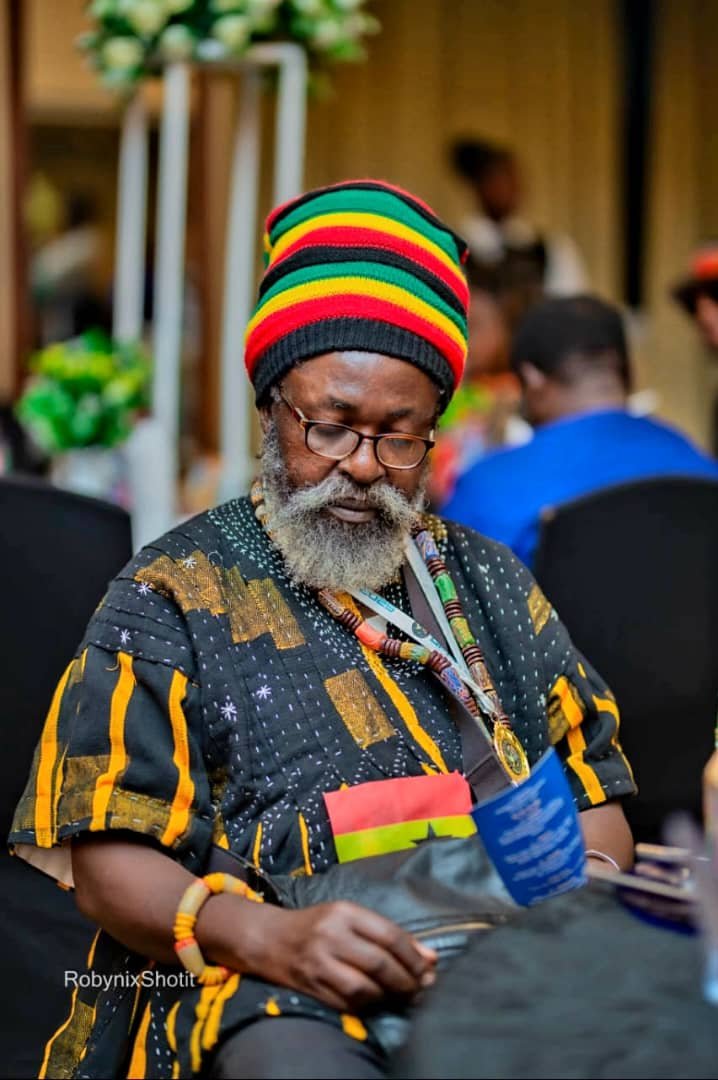
Ras Caleb Appiah-Levi of PanAfrica-Ghana (PAG) has argued that personal development is an individual responsibility, maintaining that leaders, teachers, parents and institutions can create growth opportunities but cannot force people to develop themselves.
In the second part of his commentary titled “You Don’t Develop People, People Develop Themselves,” he challenges the widely held belief that governments, non-governmental organisations (NGOs), religious leaders and companies directly develop the people they serve.
According to him, although these institutions frequently describe their work as people development, genuine growth ultimately depends on an individual’s willingness to learn, change and take responsibility for personal progress.
“The deeper truth of life is this: You don’t develop people. People develop themselves,” he stated.
Ras Caleb explained that development begins with an internal decision rather than external assistance, arguing that even the most gifted teacher cannot force knowledge into a student who refuses to learn.
Similarly, he noted that a visionary leader cannot compel a follower to grow when that individual remains committed to comfort. He added that money, opportunities and training alone cannot produce meaningful growth without a personal willingness to improve.
To illustrate his point, he referred to the popular saying that a horse can be led to water but cannot be forced to drink.
He drew similar comparisons with education and religion, stating that providing a classroom does not guarantee understanding, just as providing the Bible does not automatically bring about personal transformation.
Having argued that people cannot be developed by others, Ras Caleb said the responsibility of leaders and other influential individuals should be to facilitate growth by creating the conditions that enable people to develop themselves.
He outlined three key responsibilities for anyone seeking to support the development of others.
Creating the right environment
Ras Caleb said leaders must establish environments characterised by truth, justice, love, opportunity and accountability to make personal growth possible.
Using farming as an example, he explained that a farmer does not directly make a seed grow but provides the necessary conditions, including suitable soil, water and sunlight.
He maintained that the same principle applies to human development, warning that even good seeds can die when planted in toxic soil.
Providing exposure
He also identified exposure as an important factor in personal development, arguing that many people are limited not necessarily by bad intentions but by the experiences and possibilities they have encountered.
According to him, exposing people to broader visions, higher standards and better examples can awaken their desire to improve themselves
Exposure triggers self-development,” he stated.
Presenting challenges
The third responsibility, he said, is to challenge people to move beyond their comfort zones, solve problems and take responsibility for their actions.
Ras Caleb argued that excessive comfort can hinder growth, particularly when individuals are shielded from difficulties that could help them learn and develop.
He cautioned that leaders who protect their followers from every challenge may unintentionally limit their progress rather than help them.
To further explain his position, Ras Caleb cited the example of two brothers raised in the same household, with the same parents and access to the same school fees, who eventually take different paths in life.
He observed that while one may become successful, the other may struggle to make meaningful progress.
According to him, the difference cannot always be attributed to the efforts of their parents but also to how each individual responds to the support, opportunities and experiences available to them.
His argument places emphasis on personal choices and the willingness to make use of available opportunities as important factors in determining individual outcomes.
Ras Caleb further warned that believing one has the power to develop another person can encourage pride and a desire to control others.
He explained that such a mindset may lead individuals to believe that others owe their success to them.
Conversely, he said recognising that people ultimately develop themselves encourages humility and a spirit of service.
He maintained that the role of leaders, teachers, parents and elders should be to guide rather than control, serve rather than claim ownership, and provide the necessary support without expecting to dictate the outcome.
“Let us stop saying, ‘I developed that man.’ No, you did not. He developed himself. You were simply privileged to be part of his environment,” he stated.
He therefore urged people in positions of influence to focus less on claiming credit for the achievements of others and more on becoming positive influences who inspire personal growth.
Ras Caleb also connected his argument to faith, stating that even God does not force personal development on human beings.
He explained that God provides life, grace and truth, but the decision to change and become a better person ultimately remains an individual’s responsibility.
He concluded his commentary by encouraging leaders, teachers, parents and elders to create environments that inspire people to take ownership of their growth, describing this as a more meaningful ambition than claiming to have developed others.

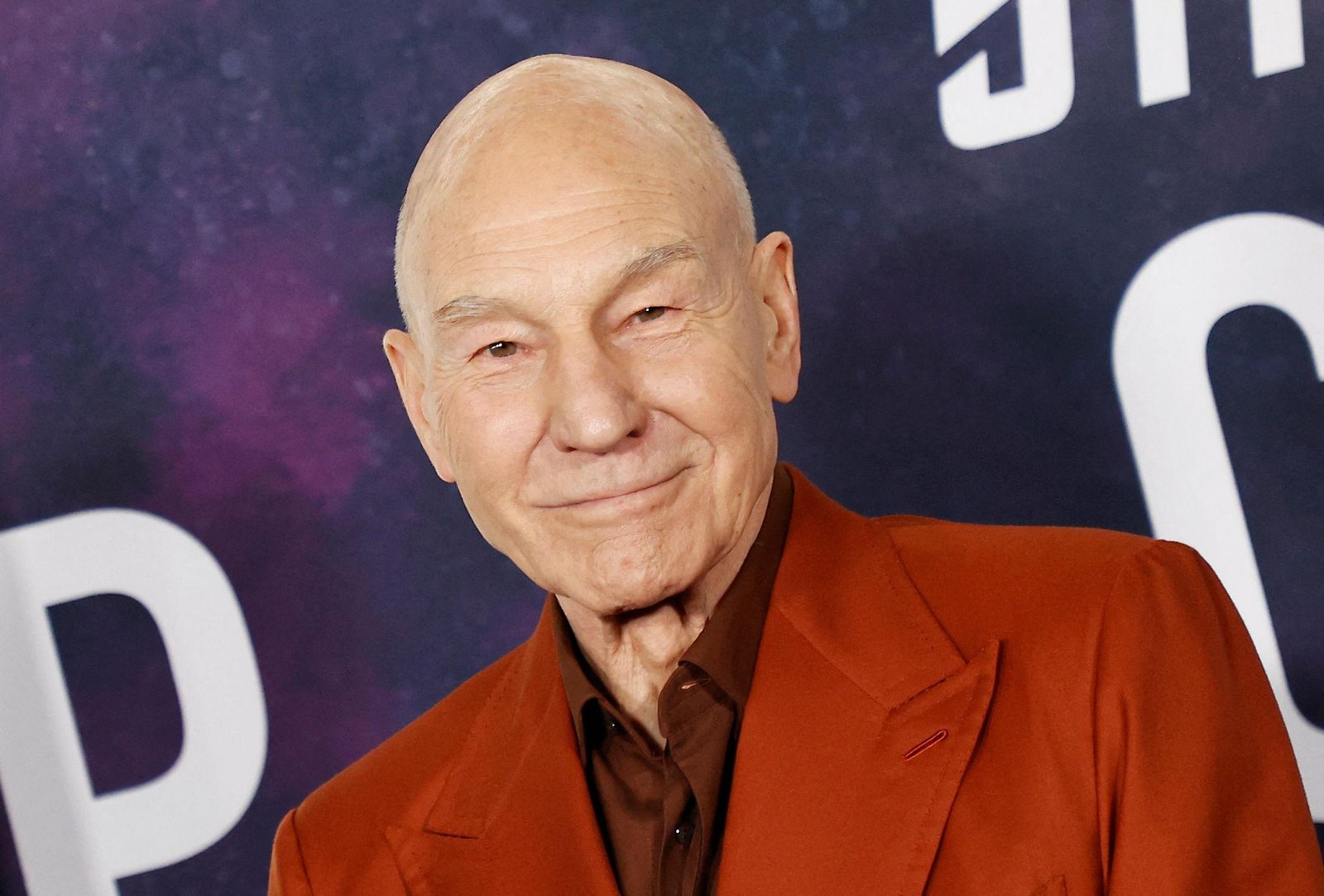
Sir Patrick Stewart, the acclaimed British actor who became a global entertainment icon through his roles in Star Trek and X-Men, has died at the age of 86.
Stewart died at his home in Los Angeles on Wednesday, October 28, 2026, according to a statement shared by his longtime spokesperson, Kelly Bush Novak. The announcement said he had experienced a brief period with Alzheimer’s disease and Lewy body dementia, with his wife, singer-songwriter Sunny Ozell, by his side.
His death marks the passing of one of the most recognisable actors of his generation, whose career successfully bridged classical theatre, television, blockbuster films and voice acting.
A defining role in ‘Star Trek’

Stewart achieved international recognition in 1987 when he began portraying Captain Jean-Luc Picard in Star Trek: The Next Generation. His thoughtful and commanding performance helped establish Picard as one of science fiction’s most celebrated television characters.
The series ran for seven seasons, from 1987 to 1994, and Stewart later returned to the role in several films and the series Star Trek: Picard. His portrayal became closely associated with intelligence, diplomacy and principled leadership.
Remembered as Professor X in ‘X-Men’

Beyond science fiction television, Stewart won another generation of fans through his portrayal of Professor Charles Xavier in the X-Men film franchise.
As the mentor and leader of the X-Men, he brought authority and compassion to the character, becoming a central figure in the film series. His performances alongside fellow actor Ian McKellen, who portrayed Magneto, were among the franchise’s memorable elements.
Marvel Studios and fellow performers have paid tribute to Stewart, recognising his contribution to the franchise and the wider entertainment industry.
A distinguished career in theatre

Although millions knew him for his screen performances, Stewart spent a substantial part of his professional life on stage. He joined the Royal Shakespeare Company in the 1960s, building a reputation through performances in classical productions, including works by William Shakespeare.
His theatre career demonstrated a range that extended well beyond science fiction and superhero films. He also performed on Broadway and London’s West End, earning critical acclaim and major industry honours. Stewart received multiple Olivier Awards and was knighted in 2010 for his services to drama.
Tributes from colleagues and fans

News of Stewart’s death prompted tributes from colleagues across film and television. William Shatner, his fellow Star Trek star, remembered him as a gifted actor whose portrayal of Captain Picard reflected intelligence, grace and humanity.
Hugh Jackman, who worked alongside Stewart in the X-Men films, also expressed his grief, remembering him as both a remarkable performer and a friend.
Stewart was also known for supporting causes involving human rights, refugees, veterans and survivors of domestic abuse. His advocacy added another dimension to a career that extended beyond entertainment.
A legacy that will endure
Patrick Stewart leaves behind a body of work spanning decades, from Shakespearean theatre to internationally successful film and television franchises. His distinctive voice, commanding screen presence and thoughtful character portrayals helped him connect with audiences across generations.
For Star Trek fans, he will remain Captain Jean-Luc Picard. For X-Men audiences, he will be remembered as Professor Charles Xavier. For theatre lovers, his legacy also rests on his lifelong commitment to classical acting.
His death represents a significant loss for the international entertainment industry, but his performances will continue to introduce new audiences to one of Britain’s most distinguished actors.

The investigation into the death of American actress Hayden Panettiere has been concluded by police in Greenville, South Carolina, following an official ruling that her death was accidental.
The Greenville Police Department announced on October 28 that its investigation had ended after considering the medical examiner’s determination and the findings gathered during the inquiry. The announcement brings the local police investigation to a close, although the status of any separate federal investigation has not been confirmed publicly.
Panettiere, who was 36, was found unresponsive at an apartment in Greenville on August 16, 2026. Emergency responders attempted to revive her, but she was pronounced dead at the scene.
In September, the Greenville County Coroner’s Office determined that her death resulted from the toxic effects of multiple substances, including fentanyl and several medications. The coroner classified the death as accidental and reported that the autopsy found no trauma that contributed to her death.
The police investigation had continued after the coroner’s findings while authorities examined the circumstances surrounding her death. Police had previously reported no initial indications of foul play or suspicious circumstances. The department’s latest announcement confirmed that its investigation was complete.
Panettiere was widely recognised for her performances in the television series Heroes and Nashville. Her work also included appearances in the Scream film franchise. Beyond her acting career, she had spoken publicly about personal challenges, bringing greater attention to the difficulties she experienced outside the screen.
Her death has drawn renewed attention to the risks associated with accidental drug toxicity and the importance of access to appropriate support for people facing substance-related difficulties.
With Greenville police confirming the closure of their investigation, the principal outstanding question is whether any separate federal inquiry remains active. Authorities have not publicly confirmed the final status of any such investigation.
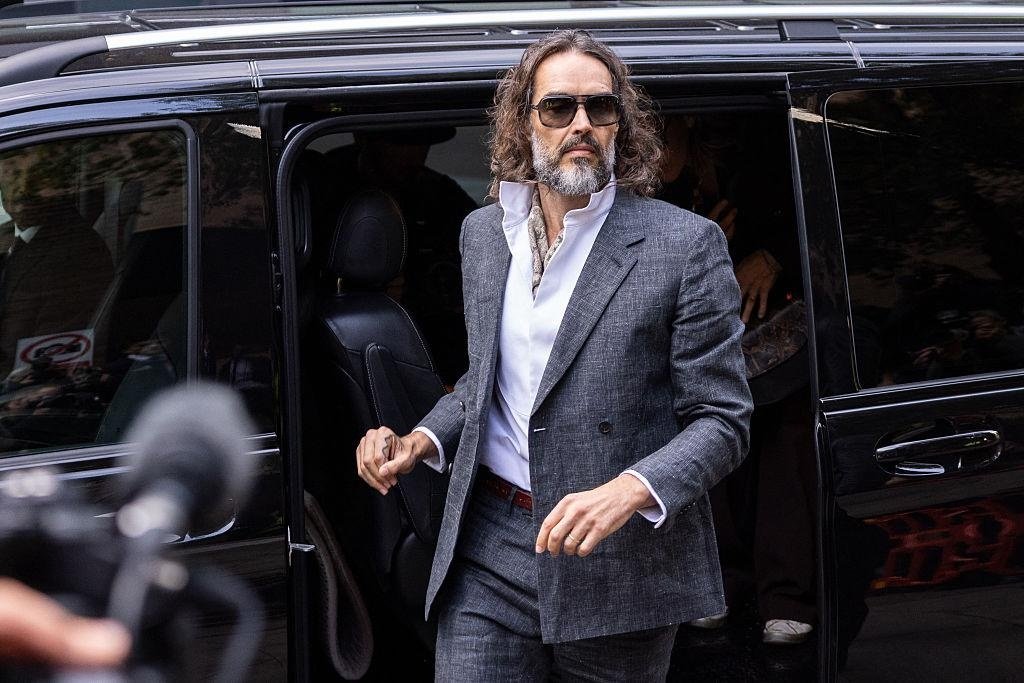
British comedian and actor Russell Brand has told police that he has never engaged in non-consensual sexual activity, as details of his interviews with detectives were presented during his ongoing criminal trial in London.
The 51-year-old made the statements during four police interviews conducted between November 2023 and July 2025. His responses were read to jurors at Southwark Crown Court, where he is facing allegations of rape and sexual assault involving six women.
According to evidence presented in court, Brand acknowledged that he had lived a very promiscuous lifestyle in the past but insisted that his sexual encounters had always been consensual.
In statements to investigators, he also challenged media reports that preceded the criminal investigation, describing the allegations against him as false and arguing that publicity had encouraged further accusations.
The prosecution has presented allegations relating to incidents said to have occurred between 1999 and 2009. Brand denies the charges.
He faces three counts of rape, three counts of sexual assault and one count of attempted indecent assault. The allegations include claims of forced sexual activity and unwanted physical contact.
During the proceedings, the court also heard that a judge directed a not-guilty verdict on one original indecent-assault allegation after finding insufficient evidence to proceed with that charge. An amended charge of attempted indecent assault was subsequently brought in connection with the same incident.
In a further development reported on October 29, Brand took the witness stand and denied all the charges, telling the court that consent was essential in his sexual relationships.
The trial remains a significant legal case, with the jury expected to consider the evidence presented by both the prosecution and the defence before reaching a verdict.
Brand remains entitled to the presumption of innocence unless and until he is convicted.
Latest development
Brand’s testimony on October 29 included an acknowledgement that he had previously been obsessed with sex and had engaged in reckless behaviour, while maintaining that he did not force anyone into sexual activity. His wife, Laura Brand, also gave evidence on October 30, describing their relationship and marriage.

‘I May Not Be Wise, But I Am Very Intelligent’ – Ras Caleb Appiah-Levi

You Don’t Develop People, People Develop Themselves – Ras Caleb Appiah-Levi

Salary Finished in One Week? The Spending Habits Keeping Young Ghanaians Broke

IRAWMA 2025: Shatta Wale Wins 3 Major Awards Including Best Music Video

Samini Secures Promotional Deal with Audiomack for Upcoming Album “THE ORIGIN8A”

AirtelTigo losing GH₵20m monthly; total debts exceed $200million – Sam George


-
 Entertainment1 week ago
Shatta Wale Cake Tells Story of Growth, Identity and African Dancehall Influence
-

 General News4 days ago
GTA Staff Demand Answers on World Cup Visa Slots, Staff Dismissals and Unpaid Allowances
-

 General News7 days ago
FOKLEX MEDIA AWARDS COMMENDS PRINCE KWAW GYIMAH AND OWASS FM TEAM FOR PROFESSIONALISM DURING KWAME DZOKOTO INCIDENT
-

 Politics1 week ago
OB UASI HEADMASTER IN SEXUAL MISCONDUCT CONTROVERSY EYES NDC CONSTITUENCY CHAIRMANSHIP
-

 Entertainment1 week ago
Ghana Unveils December in GH 2026 Calendar With Over 150 Events Nationwide
-
 General News1 week ago
PROFOUND GRATITUDE FOR YOUR DECISIVE INTERVENTION IN FAST-TRACKING THE COMPLETION OF THE MUMFORD FISHING HARBOUR
-

 General News4 days ago
Nicki Minaj Throws Her Support Behind Trump Ahead of US Midterm Elections
-

 General News6 days ago
SAMMY GYAMFI’S “MINE WITHOUT LICENCE” REMARK SPARKS FRESH GALAMSEY DEBATE