General News
Beyond Free SHS and TVET: Why Parents Are Still Being Asked to Support Schools Through PTA Contributions


Ghana’s Free Senior High School (Free SHS) and Free Technical and Vocational Education and Training (Free TVET) policies have eased the financial burden on thousands of families, but concerns remain over the additional contributions parents are expected to make to support the effective running of schools.
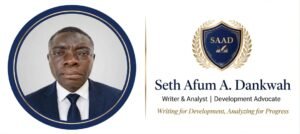
An article authored by Seth Afum A. Dankwah of J. G. Knol Technical Institute in Adukrom, Akuapem, Eastern Region, has highlighted the often-unspoken partnership between schools and parents, arguing that government funding alone cannot meet every infrastructural and operational need of educational institutions.
In the article dated Sunday, October 25, 2026, Mr Dankwah explains that although the Free SHS and Free TVET policies have significantly improved access to second-cycle education, schools continue to face challenges involving inadequate classrooms, dormitories, furniture, laboratories, workshops and other essential facilities.
He notes that many parents become concerned when they receive admission letters for their wards only to be informed weeks later about PTA contributions, levies and other financial commitments.
According to him, such requests often leave parents questioning why they are being asked to make additional payments when the government has repeatedly described the education policies as free.
However, he believes the situation requires a broader understanding of what it takes to operate a school beyond providing tuition, textbooks and meals.
Mr Dankwah acknowledges that the government’s free education policies have provided significant relief to Ghanaian families.
He points out that the initiatives have removed tuition costs from parents, provided meals for students, supplied core textbooks and created opportunities for thousands of young people who might otherwise have been unable to continue their education because of financial difficulties.
For him, these achievements represent an important foundation for Ghana’s educational development.
However, he argues that providing access to education does not automatically guarantee that students will have the necessary facilities and comfortable learning environments.
He describes a school as a living community that requires continuous investment in infrastructure, maintenance and essential learning resources.
To illustrate the challenges confronting some schools, Mr Dankwah refers to reported conditions at Esiama Technical Senior High School in the Western Region.
He cites a situation where 641 female students are competing for only 240 dormitory beds, forcing some students to carry their mattresses into classrooms and the assembly hall at night before packing them away at dawn to allow academic activities to continue.
He also highlights the school’s furniture shortage, indicating that its entire student population of 1,642 shares fewer than 700 pieces of furniture.
According to the article, the situation reflects broader infrastructural challenges within Ghana’s second-cycle education system.
Mr Dankwah further points to concerns about inadequate furniture, overcrowded classrooms, insufficient laboratory equipment, poorly equipped technical workshops and inadequate washroom facilities.
He references figures from Africa Education Watch indicating that nearly 10,600 schools across the country continue to operate under trees, sheds or unapproved structures.
He also observes that enrolment in several senior high schools has increased significantly since the introduction of Free SHS, while the expansion of dormitories, laboratories, workshops and washrooms has not kept pace with the growing student population.
Mr Dankwah argues that Parent-Teacher Associations (PTAs) have become important partners in addressing some of the infrastructural and operational challenges facing schools.
He explains that parents, teachers, old students, churches, private companies and philanthropists have continued to support schools through contributions and donations.
These interventions, he notes, have helped provide classroom furniture, repair facilities, improve sanitation and support the construction of essential infrastructure.
As examples, he mentions Wesley Grammar School in Accra, where more than 3,000 tables and chairs were recently donated to ease congestion.
He also cites a private company’s donation of 400 mono desks to Esiama Technical SHS to help address the furniture shortage.
According to him, such interventions demonstrate how collective efforts can improve conditions in schools while government works towards addressing larger infrastructural gaps.
He maintains that PTA contributions, when properly managed and transparently accounted for, should not automatically be regarded as extortion.
Rather, he describes them as an important source of support that can help schools provide students with decent environments for learning and development.
The article also references an infrastructure intervention announced by the Minister of Education, Haruna Iddrisu.
Mr Dankwah points to a GH¢2.5 billion plan for second-cycle educational infrastructure between 2026 and 2027, with support from the World Bank.
The initiative is expected to target the construction and improvement of classrooms, science laboratories, ICT centres and libraries.
He argues that the government’s infrastructure plans demonstrate an acknowledgement of the challenges confronting schools, although the benefits may take time to reach every institution.
In the meantime, schools continue to require resources for routine maintenance and practical learning activities.
These include cement, wood, plumbing materials, laboratory chemicals, sewing machines, welding rods, electrical fittings, replacement of damaged desks and other materials needed by technical and vocational institutions.
He also identifies practical and departmental requirements as areas that may demand additional support to ensure students receive the necessary training.
While defending the importance of parental involvement, Mr Dankwah stresses that transparency and accountability must remain central to the collection and management of PTA contributions.
He argues that parents should be able to see how their contributions are being used, with clear records and visible improvements in school facilities.
He identifies completed dormitory blocks, adequate classroom furniture, functional laboratories and improved sanitation facilities as examples of the results parents should expect from properly managed contributions.
He further believes that schools should communicate their needs clearly to parents to prevent confusion, resentment and unnecessary disagreements.
According to him, the discussion should move beyond blaming parents or school authorities and focus instead on establishing a practical partnership that supports students.
He maintains that the government has an important responsibility to provide educational infrastructure, but parents, old students, communities and other stakeholders also have roles to play in supporting schools.
In concluding his argument, Mr Dankwah emphasises that Ghana’s educational ambitions should go beyond enrolling more children in schools.
He believes that access to education must be accompanied by quality facilities, adequate teaching and learning materials, and an environment that allows students to develop their full potential.
He argues that the ultimate beneficiaries of the education system are the children whose futures depend on the decisions and investments being made today.
He therefore calls for an honest conversation among parents, teachers, school authorities and government about the financial realities of running schools under the Free SHS and Free TVET programmes.
His central message is that government funding and community support should complement each other, provided that contributions are properly managed and do not become an unfair burden on parents.
He maintains that political administrations may change and educational policies may be reviewed, but the responsibility to provide children with a meaningful education remains a collective one.
The article was authored by Seth Afum A. Dankwah of J. G. Knol Technical Institute, Adukrom, Akuapem, in the Eastern Region.