
Lifestyle
The Wonder of Things We Can’t Explain


For all our science, progress, and logic, there are still moments in life that simply defy explanation. The shiver down your spine when someone you love is about to call you. The way a song from years ago suddenly plays just when you need it. The instant connection you feel with a stranger you’ve never met before.
We try to reason these things away coincidence, probability, brain chemistry. But deep down, part of us knows: not everything in life is meant to be solved. Some things are meant to be felt.
Mystery keeps us alive
Imagine if we had an answer for everything, if the universe was just a neat equation we could solve. Life would lose its sparkle. It’s the unexplainable that keeps us curious, humble, and awake. It reminds us that the world is bigger than our logic and richer than our routines.
- Love itself is a mystery. Why do we care so deeply for one person and not another?
- Dreams are mysteries. Whole worlds bloom behind our eyelids each night worlds that vanish when we open our eyes.
- Timing is a mystery. The right words, right places, and right people often show up when we least expect them.
Why it matters to leave space for wonder
Our culture teaches us to demand proof, to seek certainty, to label everything. But when you let yourself live in the gray areas the things you can’t prove or explain you open yourself to magic. You make room for awe. And awe is what expands the soul.
How to invite the unexplainable into your life
- Stay open. Instead of dismissing odd coincidences, notice them. Smile at them. Let them remind you you’re connected to something bigger.
- Release control. You don’t have to understand everything to experience it. Let yourself be surprised.
- Celebrate mystery. Instead of fearing the unknown, let it soften you. Mystery is proof that life still has secrets worth exploring.
A life larger than logic
Some people live only in what can be measured, predicted, or explained. But those who leave room for wonder get to live twice once in the visible world, and once in the invisible threads that weave everything together.
You don’t have to name it. You don’t have to prove it. Just let yourself be humbled by it. The truth is, some of the most extraordinary parts of life are the ones that science, reason, and words cannot fully touch.
And maybe that’s the point. Maybe the mystery is what makes life worth living.

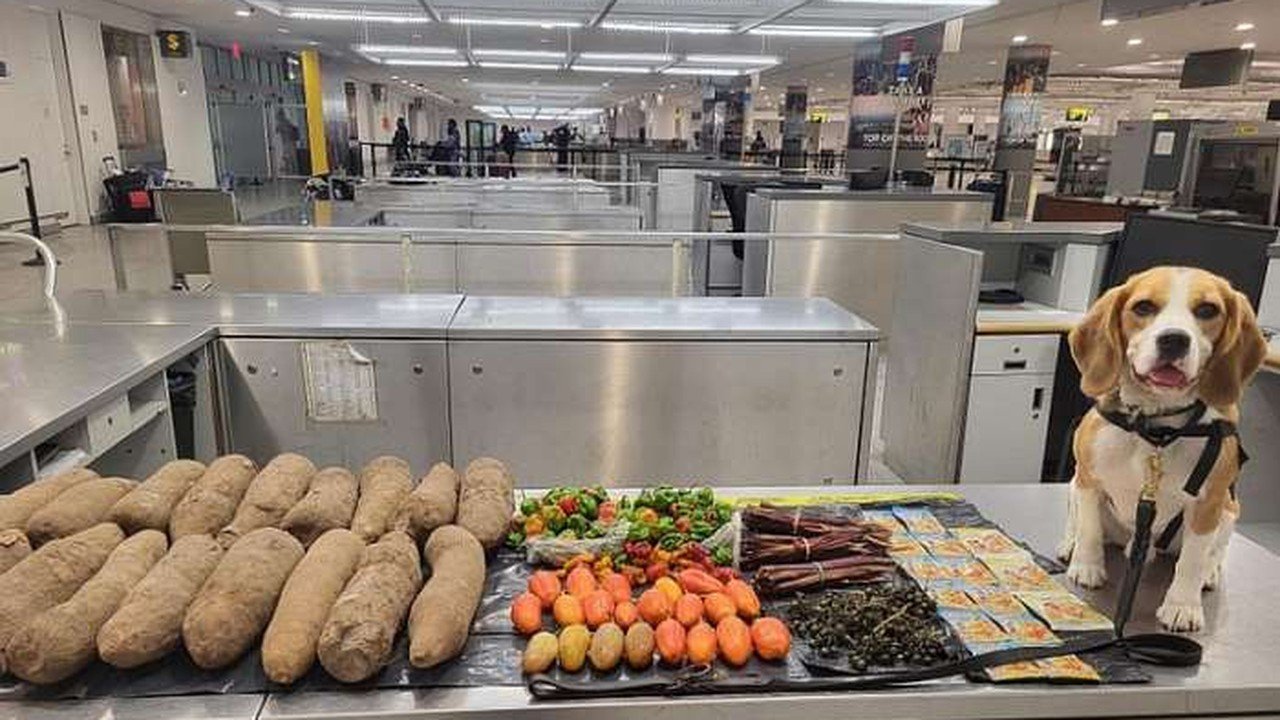
A K9 detection dog at John F. Kennedy International Airport (JFK) has helped authorities uncover approximately 72 pounds of prohibited Ghanaian food items, highlighting ongoing efforts to prevent restricted agricultural and food products from entering the United States.
The shipment was identified during an inspection at the New York airport after the specially trained dog alerted officers to the contents of luggage or a consignment arriving from Ghana.
Authorities subsequently examined the items and determined that they included food products that are restricted or prohibited under U.S. import regulations.
Airport inspection teams routinely screen international baggage and cargo for agricultural products that could introduce pests, diseases or other risks to U.S. agriculture. Certain meat, plant and animal-derived products are subject to strict entry requirements.
The discovery demonstrates the role of detector dogs in assisting customs and agricultural inspection officers at major international gateways. K9 teams are trained to identify specific odors and can help officers locate undeclared or restricted products more efficiently.
Passengers arriving in the United States are required to declare agricultural and food products they are carrying. Depending on the product and its origin, items may be permitted, restricted or prohibited.
Authorities have continued to remind international travelers to check U.S. entry requirements before bringing food products into the country.
The seizure at JFK serves as another example of the screening measures in place to protect U.S. agriculture while enforcing import regulations on food and agricultural products.
October 2, 2026 — Sports
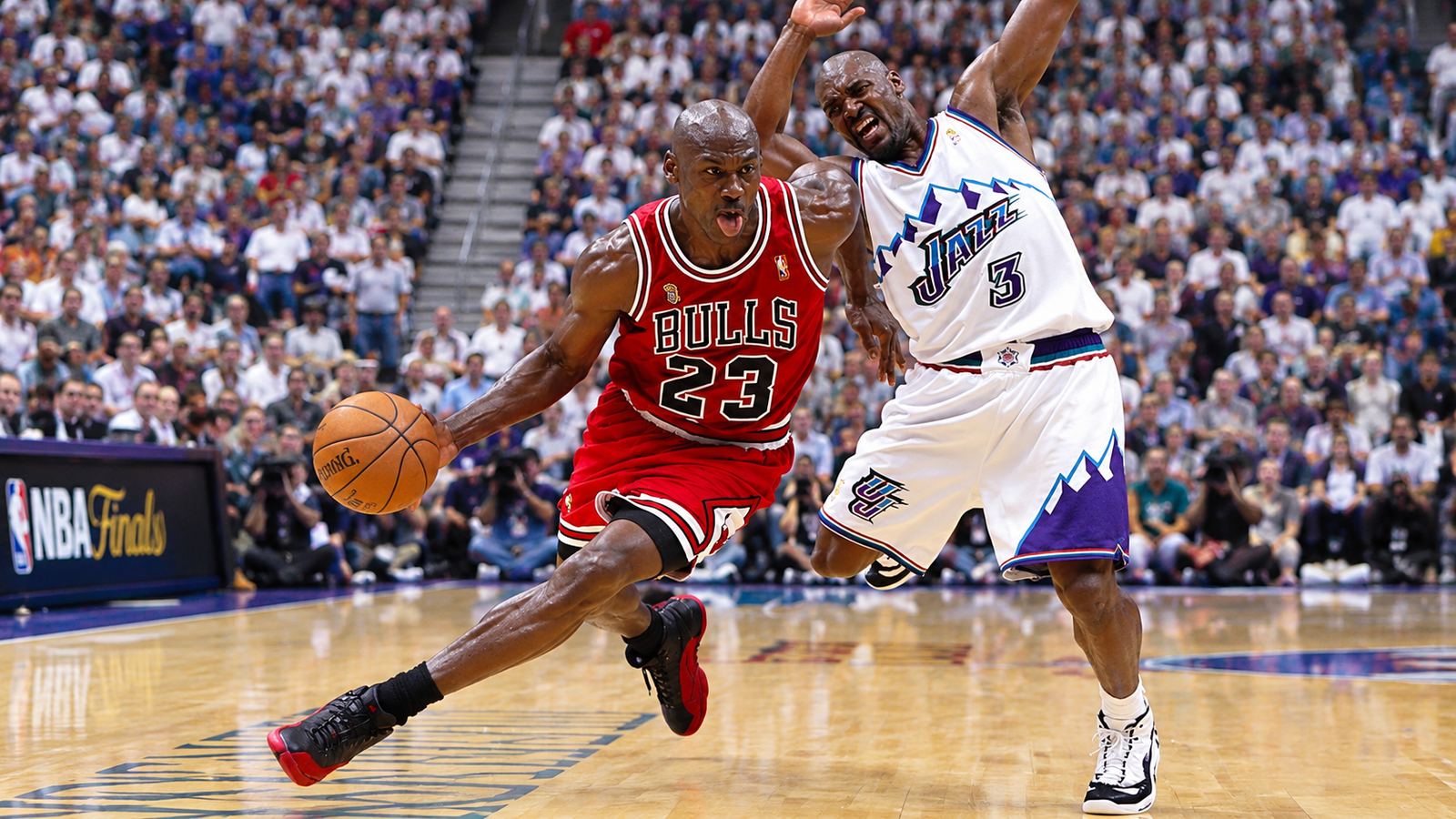
A game-worn Michael Jordan jersey from the Chicago Bulls’ celebrated 1998 championship season has sold for $12.3 million (£9.3 million), setting a new auction record for Jordan memorabilia.
The jersey was worn by Jordan during Game 3 of the 1998 NBA Finals, when the Bulls faced the Utah Jazz during what became known as Jordan’s “Last Dance” season.
The sale was conducted through Joopiter, the digital auction platform founded by Pharrell Williams. Entrepreneur Ryan Gough had put the jersey on the market, with Joopiter estimating before the auction that it could fetch between $10 million and $15 million.

Image: Michael Jordan in his Chicago Bulls jersey during Game 3 of the 1998 NBA Finals against Utah Jazz. Image title: “Michael Jordan in Action During the 1998 NBA Finals” Caption: Jordan wore the jersey during Game 3 of the 1998 NBA Finals, part of his final championship season with the Chicago Bulls.
A record for Jordan memorabilia
The final price surpassed the previous record for a piece of Jordan memorabilia: $10.091 million, paid in 2022 for the jersey he wore during Game 1 of the same 1998 NBA Finals.
Jordan and the Bulls eventually defeated the Jazz 4-2 in the Finals, giving the superstar his sixth NBA championship. He was also named Finals MVP, as he had been for each of his six championship-winning series.
The 1997-98 campaign was Jordan’s final season with the Bulls and became one of the defining chapters of his career. The team won its second three-peat before Jordan retired from the NBA for a second time.

Image: Clear photograph of the actual red Chicago Bulls No. 23 jersey. Image title: “The £9.3m ‘Last Dance’ Jersey” Caption: The game-worn jersey has become the most expensive piece of Michael Jordan memorabilia sold at auction.
More than a jersey
The auction reflects the continued demand for memorabilia connected to Jordan’s final championship season with Chicago.
Joopiter described the Game 3 jersey as a particularly significant piece of sporting history, pointing to its connection with the end of the Bulls’ championship era and Jordan’s influence on basketball’s global popularity.
Another Jordan collectible was also sold alongside the jersey. His 1997 Ferrari 550 Maranello reportedly fetched about $2.7 million (£2 million), around four times the previous auction record for that model.

Image: Jordan celebrating with the Bulls during the 1998 championship run. Image title: “The Final Championship Era” Caption: Jordan led Chicago to its sixth NBA championship during the 1997-98 season.
It is not the overall sports-memorabilia record
Despite the enormous price, Jordan’s jersey does not hold the record for the most expensive game-worn sports item.
That distinction remains with Babe Ruth’s 1932 World Series jersey, which sold for $24.12 million (£18.2 million) in 2024.
For Jordan collectors, however, the latest sale establishes a new benchmark for memorabilia associated with one of the most significant seasons of his career.

By Angel No Lie | KPD Online | September 30, 2026
Nigerian dancer Benjamin Daniel Gabriel, popularly known as Ben Dancer, has completed his seven-day dance marathon in Lagos, ending an endurance challenge aimed at securing a new Guinness World Records title.
Daniel began the challenge at Freedom Park in Lagos and set an initial target of 168 hours. He reached the seven-day mark at about 3 a.m. on Tuesday, September 29, before continuing for several more hours. His team said the final timer recorded 7 days, 8 hours, 32 minutes and 59 seconds, equivalent to more than 176 hours.
The 33-year-old dancer was attempting to surpass the existing Guinness World Records mark for the longest dance marathon by an individual, which is listed at 127 hours, achieved by Indian dancer Srushti Sudhir Jagtap in 2023.
Guinness verdict still pending
Despite completing the marathon, Daniel has not yet been officially declared a Guinness World Records holder.
Guinness World Records has confirmed that his application is active and that evidence from the attempt must go through its review and verification process before a record can be officially recognised.
This means the completion of the physical challenge and the official recognition of a new record are separate stages.
A celebration of Nigerian dance and culture
Throughout the marathon, Daniel incorporated different Nigerian dance styles and musical genres, including Afrobeats, Fuji, jazz and zouk.
He also wore traditional Nigerian clothing during portions of the performance as part of an effort to highlight the country’s cultural diversity. Supporters gathered at Freedom Park to watch the marathon, while videos of the challenge circulated widely online.
Daniel has reportedly spent about 18 years working professionally in dance and has worked as a dancer, choreographer, creative director, dance consultant and fitness instructor. He is also associated with Bendancer Academy International, which focuses on developing dancers.
Medical check-up after the challenge
Following the demanding performance, Daniel was taken to hospital for a medical check-up, according to reports. His team had incorporated rest periods, hydration, food and medical support into the challenge as he attempted to sustain the prolonged performance.
For now, the record remains subject to Guinness World Records’ verification process. If the evidence satisfies the organisation’s requirements, Daniel’s attempt could result in a new official record.
General News
Don’t Wait for the President Before Cleaning Your Environment – Amasaman MP Sedem Afenyo Leads Major Drain Desilting Exercise

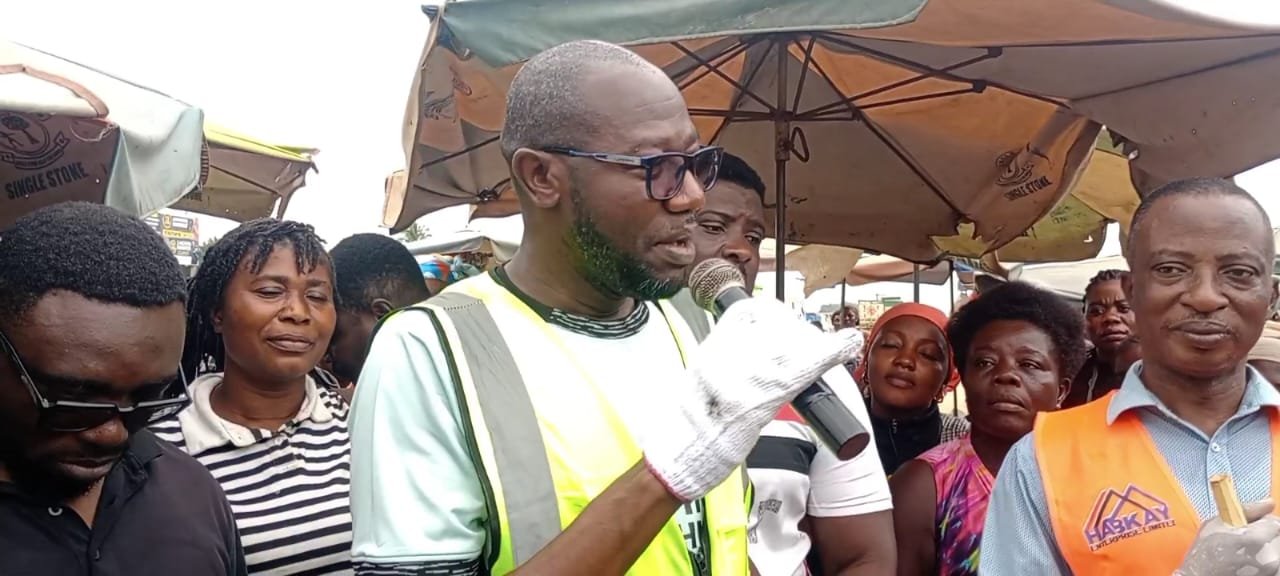
Member of Parliament for Amasaman Constituency, Sedem Afenyo, joined residents, market women and community leaders in a massive clean-up exercise aimed at clearing choked drains and removing refuse as part of the government’s nationwide sanitation campaign.
The exercise, undertaken with Nii Sowah, the Ga West Municipal Chief Executive, forms part of President John Dramani Mahama’s directive to improve sanitation and clear refuse following the recent devastating floods across parts of the country.
Rather than only supervising the exercise, the Amasaman MP personally entered the choked drains to help desilt sections that had been blocked with silt and waste, underscoring his commitment to improving sanitation in the constituency.
Addressing market women who actively participated in the exercise, Mr. Afenyo commended their efforts and urged them to embrace the National Sanitation Day initiative as a daily responsibility rather than an occasional event.
He noted that maintaining clean markets helps prevent food contamination and promotes the health and well-being of customers and the wider community.
The lawmaker further encouraged residents not to wait for directives from the President before cleaning their surroundings.
“We do not have to wait for the President to come and instruct us before we clean our environment,” he said.
Hon. Afenyo also assured the market women of the government’s commitment to improving drainage systems in the area while urging everyone to play their part by keeping the market and its surroundings clean.
He concluded by stressing that the renewed campaign for environmental cleanliness must not become a “nine-day wonder,” adding that if every Ghanaian consistently kept their homes and frontages clean, the nation would become cleaner, healthier, and better protected against flooding and disease outbreaks

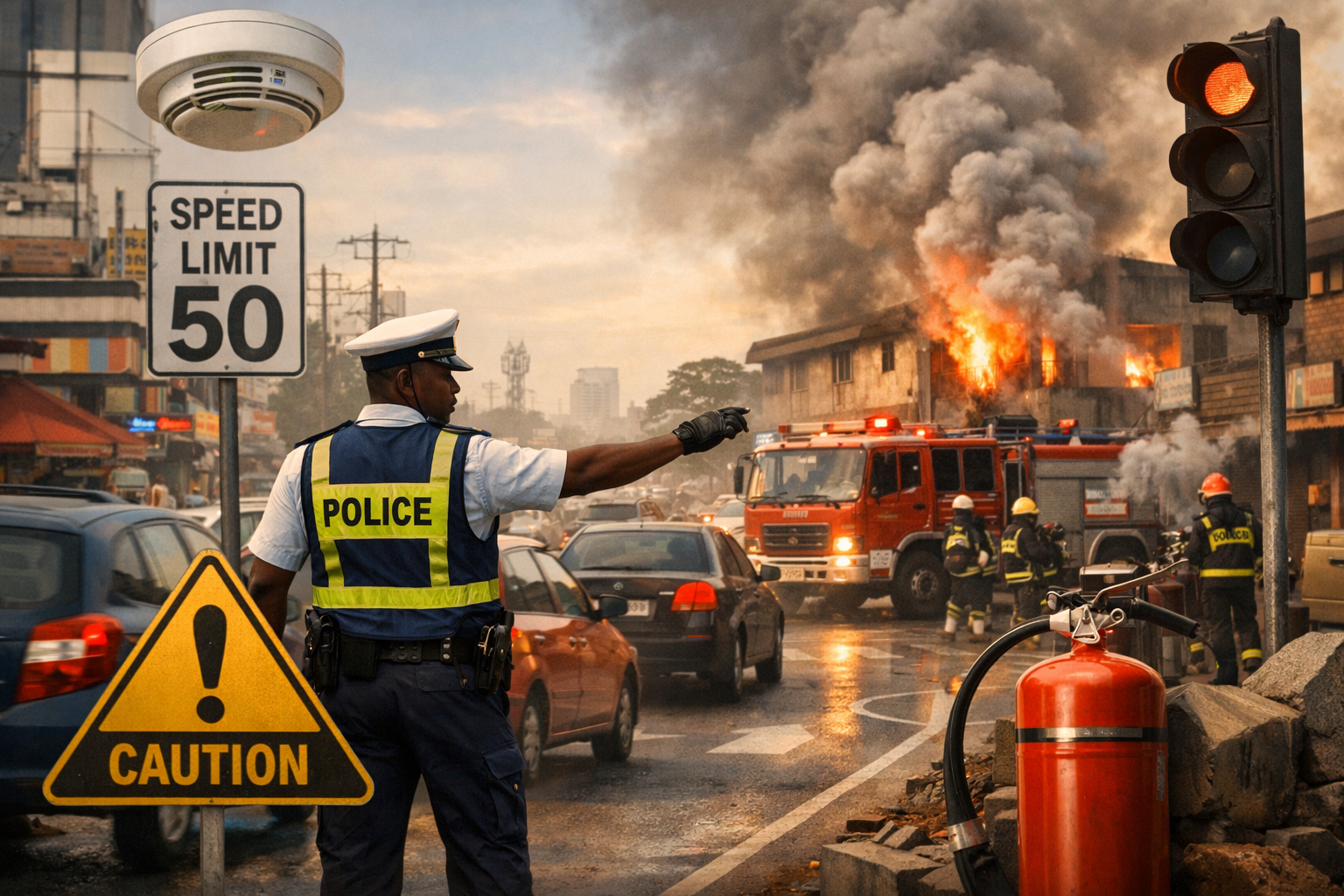
Across Ghana, the rising toll of road accidents and fire outbreaks has moved beyond occasional headlines to become a pressing national concern. These crises do not merely affect numbers on a page; they affect real people. Mothers burying children, families watching homes engulfed in flames, entire livelihoods erased in moments of chaos.
According to recent reports from the National Road Safety Authority, almost 2,000 people lost their lives in road accidents from January to August 2025, with over 10,000 others injured and thousands more vehicles involved in collisions. Speeding, reckless behaviour, and gaps in enforcement all contribute to these staggering figures, painting a stark picture of lives cut short and futures disrupted.
Motorcycle accidents, particularly involving “okada” riders and passengers, continue to claim lives at an alarming rate. The Ghana Institution of Engineering reported that road crashes killed an average of 10 people every single day, illustrating just how deep this issue has become.
Even within the nation’s formal statistics, there are regional differences that underscore the scale of the challenge. The Ashanti Region alone has recorded tens of thousands of road crashes over recent years, with fatalities numbering in the thousands.
At the same time, fire outbreaks are destroying homes and businesses across the country at an alarming pace. The Ghana National Fire Service recorded more than 5,500 fire incidents by late 2024, a figure that reflects a growing trend rather than a one‑off spike. These included domestic fires, industrial fires, electrical faults, and other emergencies that broke out in every corner of the nation.
Even more concerning are the economic and human costs that accompany these disasters. In the first half of 2025 alone, the financial toll of fire outbreaks was estimated at over GH¢188 million in losses, with hundreds of lives lost and thousands more affected by injuries and property damage.
Positioned against these harsh realities is the urgent need for systemic solutions. A causal thread runs through much of this suffering: weak enforcement, inadequate infrastructure, and public unpreparedness. There are practical steps that can make a difference. On the roads, consistent traffic enforcement, effective driver education, safer road design, proper vehicle inspection regimes, and swift emergency response can all help reduce fatalities. Citizens must respect speed limits, avoid risky driving practices, and make every journey a safety‑first decision.
Fire safety requires equal diligence. Basic precautions such as installing fire alarms, ensuring safe electrical wiring, proper storage of flammable materials, and community fire education can stop many outbreaks before they spread. Mobile and accessible firefighting resources, stronger building regulations, and routine inspections of public and private spaces would further strengthen prevention.
Beyond structural and policy changes, there is a moral and spiritual dimension to these crises. Each life lost serves as a painful reminder of the fragility of human existence. Valuing life should be more than a phrase; it should inform how drivers treat fellow commuters, how families prepare their homes, and how leaders prioritise safety over convenience.
This is not an issue for the government alone, nor is it something the public can solve by itself. Genuine progress demands collaboration — government, communities, and individuals working together with urgency and accountability. Safety must be treated as an everyday responsibility, not a reactive response after tragedy strikes.
Ghana’s strength is measured not only by its growth but by how it protects its people. Lives are precious, and the cost of letting these twin crises go unaddressed is far too high.

South Korea Pledges US$4.5 Million to Preserve Ghana’s Forts and Castles

Kojo Antwi Presents Signed Memoir to US Embassy

Defender Eugene Appiah ready to represent Ghana at the international level

IRAWMA 2025: Shatta Wale Wins 3 Major Awards Including Best Music Video

AirtelTigo losing GH₵20m monthly; total debts exceed $200million – Sam George

Samini Secures Promotional Deal with Audiomack for Upcoming Album “THE ORIGIN8A”


-
 Politics2 weeks ago
Asiedu Nketiah to Chair Launch of Six NDC Historiographies on Ghana’s Political Journey
-

 General News1 week ago
World Cup Visa Storm: Kojo’s GTA Questions Resurface as Minority Demands Action
-

 General News2 weeks ago
SSNIT Unveils Big Plans to Transform Labadi, La Palm Beachfront into Tourism Hub
-
 Sports2 weeks ago
“I Leave With Respect, Gratitude and Pride” – Carlos Queiroz Bids Farewell to Ghana
-

 General News2 weeks ago
Putin Warns Russia Could Use Full Arsenal if Kaliningrad Is Attacked
-

 Sports2 weeks ago
Real Madrid Send Major Dossier to UEFA Over Barcelona Payments Case
-

 Entertainment2 weeks ago
Rick Ross Arrested in Miami Beach on Domestic Violence-Related Charges
-
 General News1 week ago
Political communicators must prepare before speaking on teachers’ strike – Seth Afum Dankwah