Connect with us

Politics

Coalition Of Civil Society Organizations Calls For Fail Trail On Adu Boahen Ghc 49b Case

Published

on

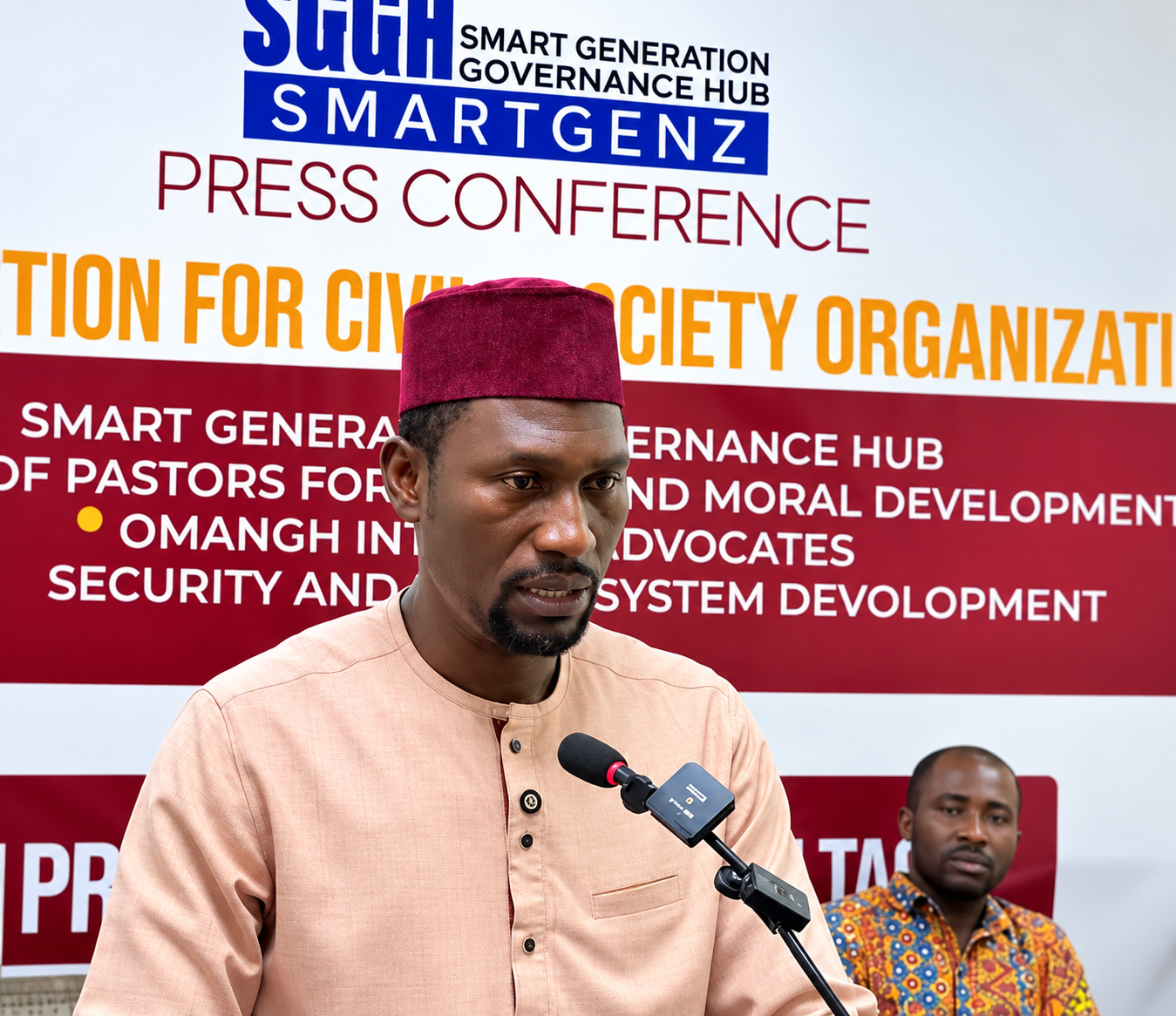
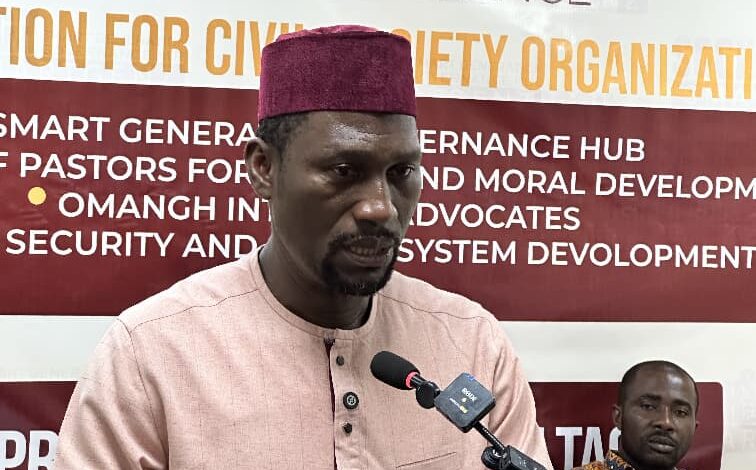
The Convener of the Coalition of Civil Society Organisations, Rev. DK Odei-Appiah, has called for the protection of judicial independence in the ongoing criminal proceedings involving former National Signals Bureau Director-General, Kwabena Adu-Boahene and two other accused persons, insisting that the trial judge, Justice Francis Apangabuno Achibonga, must be allowed to perform his judicial responsibilities without political pressure, intimidation, public coercion or improper influence from any quarter.on October 27, 2026, on behalf of the coalition, which comprises SMART Generation Governance Hub (SMARTGENZ), OmanGh Interest Advocates, Alliance of Pastors for Social and Moral Development, and Agenda for Security and Social Systems.

Ghanalegal services

The coalition said its intervention was motivated by concerns about judicial independence, the presumption of innocence, prosecutorial responsibility and public confidence in Ghana’s criminal justice system as the case proceeds before the Accra High Court, Specialised Jurisdiction Division.

According to Rev. DK Odei-Appiah, the coalition’s position is not intended to undermine the prosecution or defence, pronounce the accused persons guilty or innocent, or influence the court towards a predetermined outcome.

“Our interest is justice, not a predetermined outcome,” Rev. DK Odei-Appiah stated, stressing that the determination of criminal liability rests exclusively with the courts exercising their constitutional jurisdiction.


He said the prosecution must prove its case with credible evidence, the defence must enjoy every protection guaranteed under the law, and the trial judge must determine the matter strictly on the evidence and the applicable legal principles.

Rev. DK Odei-Appiah maintained that the seriousness of the allegations in the case, including claims concerning financial impropriety involving a national security institution, must not become a substitute for the evidence required to establish criminal responsibility.

He further stated that nobody should be above the law and nobody should be denied the protection of the law.

Rev. DK Odei-Appiah expressed concern about the circumstances surrounding the public presentation of allegations against Adu-Boahene and his wife at a press conference by the Attorney-General in March 2025.


He recalled that the public had been informed of allegations that Adu-Boahene had acquired more than 50 houses in locations including Accra, Oyarifa, Kumasi and London, alongside claims that approximately GH¢49.1 million had gone missing from the Bureau of National Communications.


BuyMaps

According to Rev. DK Odei-Appiah, while the allegations were serious and understandably attracted public attention, their magnitude did not relieve the prosecution of its responsibility to prove them in court.

He argued that public statements by officials before the conclusion of criminal proceedings must be handled with restraint to avoid creating the impression that an accused person’s guilt has already been determined.

“A criminal prosecution must not become a public conviction before it becomes a judicial determination,” Rev. DK Odei-Appiah stated.

He urged public officials to exercise caution in their commentary on pending cases, emphasising that the constitutional presumption of innocence must be respected regardless of the nature of the allegations or the public interest they generate.

The coalition drew attention to the ongoing legal proceedings following the conclusion of the prosecution’s case and the accused persons’ submission of no case to answer.

Rev. DK Odei-Appiah said the accused persons had challenged the sufficiency of the evidence presented by the prosecution, while the prosecution had filed its response for consideration by the court.

He stressed that the coalition was not seeking to determine whether the prosecution had established a sufficient case but wanted the court to examine the evidence impartially and apply the appropriate legal standards.

Among the issues identified by Rev. DK Odei-Appiah were reports concerning whether an official of the National Security establishment had testified to lodging a complaint about the alleged loss of funds.

He said that, if the court record confirmed the reported absence of such testimony, the circumstances in which the alleged loss was identified and the evidential basis for the claim would require careful judicial consideration.


Rev. DK Odei-Appiah also referred to reported testimony from the Head of Finance, who was said to have indicated that she would have known if funds had gone missing.


He further cited reported testimony concerning the department’s budget of GH¢13.8 million in 2020 and the absence of an audit report indicating the alleged loss.

According to Rev. DK Odei-Appiah, these matters raise questions about the institution’s financial administration, the monitoring of its accounts and the evidential basis for attributing the alleged loss to the accused persons.

He emphasised, however, that these observations should not be interpreted as judicial findings that the prosecution’s case had failed.

“The prosecution must be judged by the evidence it has presented, not by the seriousness of the allegations it announced at the beginning of the case,” Rev. DK Odei-Appiah stated.

He added that the court must carefully assess whether the evidence establishes the alleged unlawful diversion of public funds, connects each accused person to the alleged transactions and demonstrates the criminal character of the conduct charged.

Rev. DK Odei-Appiah further argued that the existence of an account, the movement of funds through it, the legal character of the funds and proof of unlawful appropriation are separate matters that must be established through evidence.

He also pointed to the reported absence of a demonstrated link between any of the houses allegedly acquired and the GH¢49.1 million said to have gone missing, urging the court to assess the relevant evidence on its merits.

Rev. DK Odei-Appiah expressed particular concern about a defence application reportedly challenging portions of the prosecution’s written submissions opposing the no-case submission.


According to him, counsel for the accused persons, Samuel Atta Akyea, Esq., had questioned whether certain statements attributed to prosecution witnesses in the prosecution’s submissions were actually reflected in the court record.


He said the defence had reportedly asked the prosecution to identify where the disputed statements appeared in the proceedings and was seeking orders to have the challenged portions expunged from the submissions.

Rev. DK Odei-Appiah noted that the State Attorney representing the Attorney-General’s Department had informed the court that the prosecution did not intend to file an affidavit in opposition and would instead argue on points of law.

He added that the court had adjourned the application to Thursday, October 29, 2026.


The convener cautioned that the defence’s allegations remained unproven and that the application must be determined by the court on its merits.

He nevertheless maintained that the accurate presentation of witness testimony was fundamental to the integrity of criminal proceedings.

Rev. DK Odei-Appiah said written submissions should analyse and interpret the evidence on record without misrepresenting what witnesses had said or attributing statements to them without a proper basis.

He added that if the court established that testimony had been improperly attributed to witnesses, the matter would raise serious questions about professional responsibility, prosecutorial ethics and the integrity of the judicial process.

He stressed that any appropriate response must follow the law and the applicable disciplinary procedures.


“Our appeal is therefore directed to the judicial process itself: let the record speak for itself, let the parties address the issues fully, and let the court determine the application independently on its merits,” Rev. DK Odei-Appiah stated.


The coalition also warned against drawing conclusions about the entire National Security establishment from allegations against individual officials.

Rev. DK Odei-Appiah acknowledged that accountability within national security institutions was essential and that such institutions must not be used as shields for corruption, financial misconduct or abuse of office.

However, he argued that allegations against an individual should not automatically translate into a presumption of institutional wrongdoing.

According to Rev. DK Odei-Appiah, attributing criminal responsibility to an individual requires evidence establishing that person’s alleged conduct and connection to the offence, rather than reliance solely on institutional association.


He warned that unjustified conclusions could undermine public confidence in national security institutions, affect the morale of personnel who perform their duties lawfully and weaken the credibility of legitimate security operations.

He maintained that the integrity of national security depended on both accountability for wrongdoing and protection against unsupported allegations.

“Ghana’s security institutions must be subject to the law, but they must not be condemned by association,” Rev. DK Odei-Appiah stated.

Central to the coalition’s statement was a call for the protection of Justice Francis Apangabuno Achibonga from any form of improper influence as he considers the issues before the court.

Rev. DK Odei-Appiah invoked Articles 125 and 127 of the 1992 Constitution of Ghana, which establish the constitutional position of judicial power and safeguard the independence of the Judiciary.


He said these constitutional protections were essential to ensuring that judicial decisions were based on the law and evidence rather than political interests or public pressure.

Rev. DK Odei-Appiah urged political actors, public officeholders and all interested parties to refrain from conduct that could compromise the actual or perceived independence of the trial judge.

He also called on the public to distinguish between legitimate scrutiny of the justice system and attempts to dictate the outcome of a pending criminal case.

According to Rev. DK Odei-Appiah, judicial independence does not place judges beyond public accountability but ensures that their decisions are guided by the Constitution, the law and the evidence properly presented before them.

He stressed that the trial judge owed no allegiance to either the prosecution or the defence and that his responsibility was to uphold the Constitution and the law.

“The public interest is not served by a conviction secured at any cost, nor by an acquittal unsupported by the law. It is served when the judicial process is fair, impartial and credible,” Rev. DK Odei-Appiah stated.

The Coalition of Civil Society Organisations outlined a series of demands aimed at safeguarding the integrity of the proceedings and reinforcing public confidence in the administration of justice.

First, Rev. DK Odei-Appiah called on Justice Apangabuno Achibonga to discharge his constitutional mandate with courage, independence and fidelity to the law.

He urged the judge to determine every application and issue strictly on the evidence and applicable law, resisting improper influence from political, institutional or public sources.

Second, he called on the President, members of the Executive, political party officials and all public officeholders to respect judicial independence and refrain from actions or statements that could influence, or appear to influence, the outcome of the trial.

Third, Rev. DK Odei-Appiah demanded that the case be determined without regard to the political affiliation, party membership or public popularity of the accused persons.

He argued that every accused person was entitled to equal protection of the law and a fair hearing before an independent and impartial court.

Fourth, he urged the court to consider the evidence presented by the prosecution and the submissions of both parties before applying the appropriate legal standards to the no-case submission and other matters before it.

Rev. DK Odei-Appiah said the court must act in accordance with the law if the evidence satisfied the applicable threshold and must equally give effect to the law if that threshold was not met.

Fifth, he called for the transparent and judicial resolution of the dispute over the alleged attribution of statements to prosecution witnesses.

He urged the court to determine the defence application by reference to the record of proceedings and the applicable law, ensuring that both parties had a fair opportunity to present their arguments.

Sixth, Rev. DK Odei-Appiah called on the Attorney-General’s Department to uphold the highest standards of prosecutorial responsibility by ensuring that its submissions accurately reflected the evidence on record.

He maintained that the prosecution’s responsibility extended beyond securing convictions to assisting in the proper administration of justice.

Finally, he urged public officials, political parties, media organisations and commentators to avoid presenting allegations as established guilt or making pronouncements that could prejudice the fair determination of the case.

He said public discussion of judicial proceedings was legitimate, but it must not become an attempt to replace judicial determination with public opinion.

Rev. DK Odei-Appiah said the Republic v. Kwabena Adu-Boahene & Others proceedings represented an important test of public confidence in the fairness, impartiality and independence of Ghana’s criminal justice system.

Ghanalegal services

He reiterated that the coalition was not asking the court to acquit or convict the accused persons but was calling for the constitutional principles of judicial independence, due process and equal protection of the law to be respected.

“Our message to the Government is clear: respect the judicial process. Our message to the prosecution is clear: let the evidence speak. Our message to the Judiciary is clear: determine the matter independently, in accordance with the law,” Rev. DK Odei-Appiah stated.

He added that the rule of law was protected not when courts delivered verdicts that satisfied particular interests but when judges were free to deliver the decisions required by the law.

Rev. DK Odei-Appiah maintained that Ghana deserved a justice system in which every accused person received a fair hearing, every prosecutor was accountable for the accuracy of the case presented, every judge was protected from improper influence, and every judgment was grounded in the law.

He said the coalition would continue to defend these principles in the interest of constitutional democracy, accountability, transparency and good governance.

Continue Reading
Click to comment

Leave a Reply

Your email address will not be published. Required fields are marked *

Politics

Talensi Assembly explains GH¢181,170 cash payments for meeting refreshments

Published

on

The Assembly says local suppliers rejected cheque payments because of processing delays, while auditors also flagged GH¢251,778.81 in expenditure lacking supporting documents.

The Talensi District Assembly has explained that cash payments totalling GH¢181,170, questioned by the Auditor-General in its 2024 audit report, were used to pay for refreshments and other food-related expenses for meetings and official activities.

An official representing the Assembly gave the explanation on Thursday, October 29, 2026, when the matter was discussed before Parliament’s Select Committee on Local Government and Rural Development.

According to the official, the Assembly resorted to cash transactions because some local suppliers were unwilling to accept cheques due to delays in processing payments.

The representative said the amount covered expenses incurred throughout 2024, particularly purchases of refreshments and other items required for meetings. The explanation was provided in response to the auditors’ concerns about the Assembly’s reliance on cash payments.

Suppliers’ refusal to accept cheques

The Assembly’s explanation centred on the difficulties it said it faced in paying local suppliers through the banking system.

The official indicated that delays in processing cheques had affected transactions with suppliers in the district, prompting the Assembly to make payments in cash to meet its operational needs.

The disclosure brought attention to the payment methods used by local government authorities and the importance of maintaining appropriate financial controls when public funds are spent.

The Assembly’s explanation, however, did not remove the need to address the audit concerns surrounding its transactions.

GH¢251,778.81 expenditure also flagged

Separately, the Auditor-General identified GH¢251,778.81 in expenditure from the District Assemblies Common Fund and other statutory funds allocated to the Talensi Assembly in 2024 for which the required supporting documents were unavailable.

The auditors recommended that the officials responsible for the expenditure refund the amount, according to reports on the parliamentary hearing.

The amount relates to a separate audit finding and should not be confused with the GH¢181,170 in cash payments for refreshments and other food expenses.

The lack of supporting documentation raises questions about the Assembly’s ability to adequately account for the use of public funds and demonstrate that expenditure complied with the applicable financial requirements.

Accountability in local government spending

The parliamentary committee’s examination of the findings forms part of broader scrutiny of the financial management of Metropolitan, Municipal and District Assemblies.

The Talensi case highlights the need for public institutions to maintain clear records, use transparent payment procedures and provide adequate documentation to support expenditure.

While the Assembly has attributed its cash payments to difficulties with cheque processing, the audit findings underline the importance of ensuring that operational challenges do not undermine accountability in the management of public resources.

Continue Reading

Politics

Make vote-buying costly in party elections — Bernard Mornah

Published

on

PNC leader proposes strict campaign spending limits, transparent financial disclosures and tough sanctions to protect the integrity of internal party elections.

The leader of the People’s National Convention (PNC), Bernard Anbataayela Mornah, has called on political parties in Ghana to introduce stronger measures to discourage vote-buying and make financial inducements in internal elections costly for offenders.

Mr Mornah said political parties must move beyond appeals to candidates’ conscience and adopt enforceable rules that promote transparency, accountability and merit in the selection of party leaders and parliamentary candidates.

In a statement reported by the Daily Graphic on Friday, October 30, 2026, he warned that when access to political leadership depends largely on financial strength, competence and commitment to public service risk being overshadowed by money.

Ban on financial inducements

Mr Mornah proposed that party rules explicitly prohibit candidates from offering cash, goods, mobile-money transfers or payments through intermediaries to influence delegates’ votes.

He argued that candidates should be held accountable for inducements they authorise or knowingly finance through agents, provided responsibility is established through credible evidence.

He also called for realistic campaign spending limits and mandatory declarations of donations, funding sources and expenditure, including contributions made in goods and services.

To strengthen accountability, he proposed independent checks of campaign finances and the publication of accessible summaries of candidates’ financial compliance after elections.

Regulate election-day support

The PNC leader further suggested that political parties organise transport and refreshments centrally on election days, with costs published and all candidates treated equally.

According to him, such arrangements would help prevent personal payments to delegates from being disguised as transport allowances or other legitimate support.

“Candidates should not give personal allowances to delegates,” he said.

Mr Mornah also advocated compulsory candidate forums where aspirants would explain their records, understanding of the positions they seek and practical plans for their respective parties.

He said equal access to party members through official communication platforms would help ensure that a candidate’s wealth did not determine whose message received the most attention.

Tougher sanctions and lower campaign costs

The PNC leader proposed an impartial complaints panel, confidential reporting channels, clear evidential standards and fixed deadlines for resolving allegations of electoral misconduct.

He said proven violations should attract proportionate sanctions, potentially including disqualification or annulment of results, subject to established rules and appeal procedures.

He also recommended moderate nomination fees, shorter campaign periods, shared campaign platforms and stronger political education to reduce the financial barriers facing capable members without wealthy sponsors.

PNC to adopt safeguards

Mr Mornah said the PNC should adopt clear safeguards before its next internal elections, appoint a credible enforcement committee and require every candidate to submit a campaign finance declaration.

He stressed that the proposals were recommendations for party reform, not a claim that every measure was already required by Ghanaian law.

“Our parties must reward service, integrity and ability,” he said.

His proposals come amid renewed calls for political-financing reforms as Ghana’s major parties reorganise ahead of the 2028 general elections.

Continue Reading

Politics

La Dadekotopon NDC chairman pledges best-administered constituency

Published

on

Samuel Sowah Oblejumah promises innovative leadership, sound financial management and grassroots development after securing 806 votes in the constituency executive elections.

The newly elected Chairman of the National Democratic Congress (NDC) in the La Dadekotopon Constituency, Samuel Sowah Oblejumah, has pledged to make the constituency one of the best-administered in the country through effective leadership, prudent financial management and stronger grassroots organisation.

Mr Oblejumah made the commitment after winning the constituency chairmanship in the party’s 2026 executive elections held on Saturday, October 24, 2026.

He secured 806 votes to defeat four other contenders in a keenly contested race, with his closest challenger, Prince Okoe Addo, polling 457 votes. Husna Ako Sowah received 362 votes, Stephen Okoe polled 217, while the incumbent chairman, Magnus Sowah Odoi, obtained 29 votes.

Speaking after his victory, Mr Oblejumah said his administration would adopt sound corporate governance principles to improve the party’s organisational capacity and financial performance.

“I will run the constituency to make it one of the best-administered constituencies in the country,” he stated.

Focus on resource mobilisation

The new chairman said his leadership would explore innovative approaches to mobilising funds and managing available resources to ensure that branches and wards received adequate support to carry out their activities.

He identified administrative efficiency and financial sustainability as key priorities for building a strong constituency structure capable of supporting the party’s political activities.

Mr Oblejumah’s vision centres on strengthening the party’s grassroots structures and improving coordination among constituency executives, branch officers and ward coordinators.

Call for unity after elections

Following his election, Mr Oblejumah thanked delegates for the confidence they had placed in him and called on members to unite behind the new leadership.

He also extended an olive branch to his defeated opponents, stressing that the contest was over and that the collective interest of the party should take precedence over individual ambitions.

He pledged to work with his former challengers and other stakeholders to strengthen the NDC’s structures and advance its interests in the constituency.

New constituency executives

Other elected officers include Edward Atsu Dela-Seshie as Vice-Chairman, Jeffrey Addokwei Tetteh as Secretary, and Mathias Nii Odartey Lamptey as Deputy Secretary.

Joseph Baba Yakubu was elected Organiser, with Beatrice Mawusi Ladzekpo as Deputy Organiser. The executive team also includes officers responsible for communications, finance, youth, women and the Zongo Caucus.

The new leadership is expected to coordinate party activities at the constituency level as the NDC continues its internal reorganisation ahead of the 2028 general election.

Continue Reading

Politics

Don’t Destroy Okudzeto Ablakwa Over Past Mistakes — Citizen Ato Dadzie Fires Back At Critics

Published

on

General Secretary of the Great Consolidated Popular Party (GCPP), Citizen Ato Dadzie, has called for fairness, accountability and restraint in political criticism, warning against attempts to destroy the reputation of individuals over mistakes made in the past.

In a zoom meeting on Kessben Maakye show in Accra, Ato Dadzie defended Samuel Okudzeto Ablakwa, describing him as one of the young ministers performing well in government.

According to him, everyone is bound to make mistakes, and political leaders should be judged fairly rather than subjected to personal attacks.
“Where there is justice, you can also get injustice,” he stated, stressing that the minister has demonstrated openness to accountability.

Ato Dadzie further argued that individuals should not be quick to dismiss the good work of public officials because of past controversies.
He also referenced the minister’s reported intervention to save a Ghanaian facing execution in Saudi Arabia, describing it as an achievement worthy of recognition.
“We should not be in a rush to rubbish all the wonderful things he has done so far,” he cautioned.
The GCPP General Secretary also took aim at what he described as coordinated attempts to undermine individuals performing well in governance.

He insisted that responsible opposition should focus on presenting superior ideas rather than searching for weaknesses to tarnish the image of political opponents.
“As a responsible opposition, I don’t need to look for your flaws to tarnish one’s image but would rather raise my best ideas to surpass you,” he noted.

Ato Dadzie concluded by urging Ghanaians not to personalise issues involving Okudzeto Ablakwa simply to revisit mistakes made in the past.
His comments add to the ongoing conversation about political accountability, constructive opposition and the need to recognise achievements while holding public officials responsible for their actions.

Continue Reading

Politics

Okudzeto Ablakwa’s Downfall Is His Arrogance Of Power – NPP Fires Back Over Chartered Flight Saga

Published

on

The New Patriotic Party”s (NPP) Deputy National Communication Director, Gordon Asare Bediako, has launched a scathing attack on Foreign Affairs Minister Samuel Okudzeto Ablakwa, accusing him of displaying arrogance of power amid the ongoing controversy surrounding the use of chartered flights.

Speaking at Kessben Maakye show in Accra, Gordon Asare-Bediako, questioned the minister’s commitment to accountability and transparency.
According to him, the Minority has not accused Ablakwa of committing any crime but is demanding clarity over issues surrounding the use and cost of chartered aircraft.
Asare-Bediako alleged that the Majority had indicated that Nana Asafu-Agyei was seeking for some help for his Godfather Nana Boakye from the Foreign Affairs Ministry but could not obtain it, prompting the press conference
.
He further accused the Minister of attempting to rubbish the work of the multimedia committee despite alleged discrepancies between documents presented to the NPP and multimedia materials.

Touching on the cost of chartered flights, Asare-Bediako questioned claims that previous arrangements cost approximately US$300,000 per flight through Ethiopian Airlines, but the Minister claimed it costed US$750,000.

He argued that the figures raise serious questions that require public clarification.
“He who was calling for accountability is now running away from accountability,” Asare-Bediako stated.

The NPP communicator further insisted that Okudzeto Ablakwa must be held accountable if he maintains that issues surrounding chartered flights constitute a national security matter.
The allegations and cost figures remain claims attributed to Asare-Bediako and have not been independently verified.

Continue Reading

Trending