
General News
Galamsey: One dead, four arrested following armed encounter in Atiwa Forest Reserve

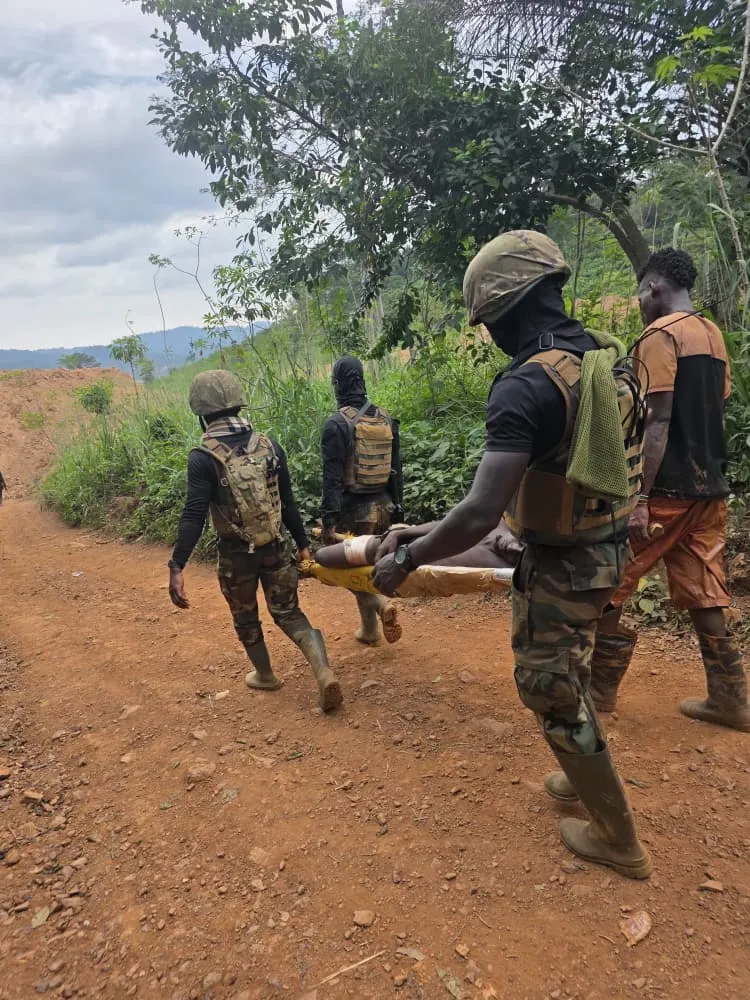
A suspected illegal miner has been killed and another injured after an exchange of gunfire between anti-galamsey operatives and suspected miners during Operation GREEN SHIELD in the Atiwa Forest Reserve.
One suspected illegal miner has died, another has sustained injuries, and four others have been arrested following an armed confrontation between security operatives and suspected illegal miners in the Atiwa Forest Reserve in the Eastern Region.
The incident occurred on Monday, November 2, 2026, during an enforcement operation under Operation GREEN SHIELD, an initiative aimed at combating illegal mining and protecting forest reserves.
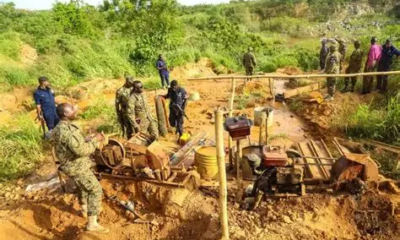
According to an operational account reported by 3News, operatives from the Army Special Operations Brigade (ASOB) advanced approximately 10 kilometres deeper into the forest to a suspected illegal mining site identified through drone surveillance.
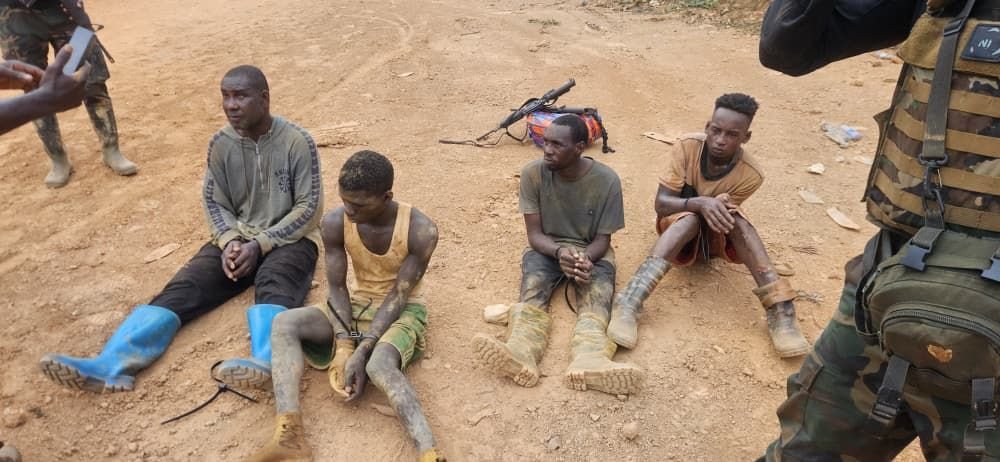
The foot patrol took place between 11 a.m. and 5 p.m., during which the team encountered about 50 suspected illegal miners reportedly engaged in mining activities at the site.
Gunfire erupts during operation
The operational account indicated that some of the suspected miners attempted to flee upon seeing the security team, while others allegedly opened fire on the operatives.
The team returned fire, resulting in the death of one suspected miner and injuries to another.
Two pump-action guns and six rounds of ammunition were reportedly recovered during the encounter.
The injured suspect was given first aid by the operatives before being transported to the Kyebi Government Hospital for further medical attention.
No casualties were recorded among the security personnel involved in the operation.
Four suspects handed over to NAIMOS
The four people arrested comprise three Malian nationals and one Ghanaian.
They were subsequently handed over to the National Anti-Illegal Mining Operations Secretariat (NAIMOS) for further action.
Authorities have not disclosed further details about the identities of the suspects or the status of any potential charges.
Operation GREEN SHIELD intensifies
The latest incident comes as authorities intensify efforts to remove illegal miners from the Atiwa Forest Reserve and prevent them from returning after enforcement operations.
Operation GREEN SHIELD was launched in the reserve in late October as part of a military-backed effort to disrupt illegal mining, secure affected areas and eventually transfer responsibility for maintaining protection to the Forestry Commission.
The operation has included drone surveillance, targeted patrols and arrests of suspected illegal miners.
The latest armed encounter highlights the security risks facing personnel conducting anti-galamsey operations, as authorities seek to protect forest ecosystems and water resources from the effects of illegal mining.










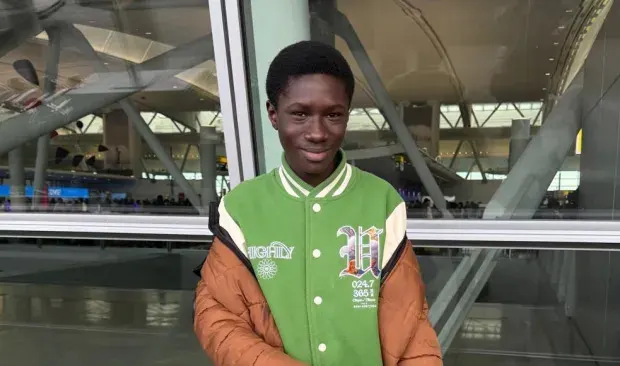
The United States Embassy in Ghana has expressed sadness over the death of 15-year-old Javits Frimpong, a Ghanaian student who was fatally shot in New York City.
In a statement shared on its official X page, the Embassy said it was deeply saddened by the teenager’s tragic death and extended its condolences to his family, friends and everyone mourning his loss in Ghana and the United States.
The Embassy also expressed sympathy to all those affected by the incident, saying they remained in its thoughts during the difficult period.
“The U.S. Embassy is deeply saddened by the tragic death in New York City of Javits Frimpong, a 15-year-old student of Ghanaian descent. We hold Javits’ family, friends, and all who mourn him in Ghana and the United States in our thoughts,” the statement read.
Javits Frimpong was reportedly shot on Thursday, October 29, 2026, while walking to school in the Bronx, New York. Following the incident, he was rushed to a nearby hospital, where he was pronounced dead.
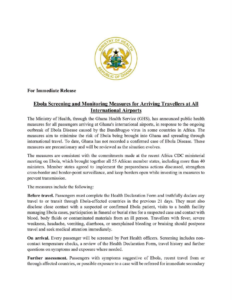
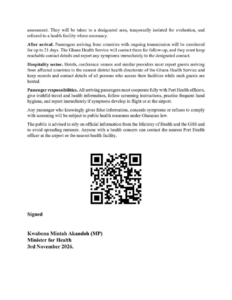
The Ministry of Health has introduced a 21-day monitoring programme for travellers arriving in Ghana from countries experiencing active transmission of the Bundibugyo strain of Ebola, as part of efforts to prevent the disease from entering and spreading within the country.
Under the new directive, the Ghana Health Service (GHS) will maintain contact with affected travellers throughout the monitoring period to check on their health. Travellers are expected to remain reachable and promptly report any symptoms they experience.
In a statement released on Tuesday, November 3, the Ministry explained that the measure forms part of additional public health measures being enforced at Ghana’s international airports to guard against the importation and spread of the virus.
“Passengers arriving from countries with ongoing transmission will be monitored for up to 21 days. The Ghana Health Service will contact them for follow-up, and they must keep reachable contact details and report any symptoms immediately to the designated contact,” the statement indicated.
The Ministry further disclosed that all passengers entering Ghana would be subjected to health screening by Port Health officers. The exercise will include temperature checks, examination of health declaration forms and assessments of passengers’ travel histories.
Travellers must also provide information about any visits to or transit through countries affected by Ebola within the previous 21 days. They are equally required to disclose any contact with individuals suspected or confirmed to have contracted the disease.
Passengers who exhibit symptoms including fever, vomiting, diarrhoea, extreme weakness or unexplained bleeding will be referred for further medical evaluation. Depending on their condition, they may be temporarily isolated and provided with the necessary medical care.
The Ministry cautioned that providing inaccurate information, hiding symptoms or refusing to comply with the screening process could attract public health measures in accordance with Ghanaian laws.
It has also instructed hotels, conference centres and other similar facilities to notify the nearest district health directorate whenever they accommodate guests arriving from Ebola-affected countries. Such establishments are also expected to keep the guests’ contact information for follow-up purposes.
Despite the additional precautions, the Ministry emphasised that Ghana has not recorded any confirmed case of Ebola, describing the interventions as preventive measures aimed at protecting public health.
It urged Ghanaians to obtain information about the disease from official channels, particularly the Ministry of Health and the Ghana Health Service, while cautioning against the circulation of unverified reports.
The announcement comes amid concerns over the spread of Ebola in parts of Africa, where the latest outbreak has reportedly resulted in more than 5,300 deaths, with the Democratic Republic of Congo (DRC) accounting for the majority.
According to the Africa Centres for Disease Control and Prevention (Africa CDC), more than 10,400 cases have been confirmed since the outbreak was declared in May, with the fatality rate exceeding 50 per cent.
Beyond the DRC, the outbreak has also affected other African countries, including Uganda and Kenya, which reportedly recorded their first-ever Ebola infections in October.
General News
Ghana Faces Very Strong El Niño Threat as GMet Warns of Extreme Heat, Drought and Possible Flooding


Ghana could experience unusually hot, dry and dusty weather conditions between November 2026 and April 2027 as a very strong El Niño phenomenon develops in the Pacific Ocean, prompting concerns over water security, food production, public health and the country’s preparedness for potential disasters.
The Ghana Meteorological Department (GMet), in a six-page advisory released on October 30, 2026, warned that the developing El Niño is intensifying, citing data from the National Oceanic and Atmospheric Administration (NOAA), the World Meteorological Organisation (WMO) and the International Research Institute for Climate and Society (IRI).
According to the advisory, there is a 96 per cent probability that the phenomenon will reach very strong intensity between November 2026 and January 2027. It is expected to peak within the same period before gradually weakening during the first half of 2027.
The development is expected to influence Ghana’s weather patterns, particularly during the dry season, with hotter temperatures, reduced rainfall and increased dust and harmattan conditions anticipated from late November 2026 through March 2027.
GMet also projects below-normal rainfall across most parts of Ghana between October and December 2026. However, the reduced rainfall outlook does not eliminate the possibility of sudden heavy downpours and localised flooding, particularly in southern Ghana and parts of the inland Greater Accra, Central, Volta, Eastern, Bono, Savannah, North East and Upper West regions.
The advisory further identifies February to April 2027 as the period when heat stress could become particularly severe, especially in northern Ghana.
Forecast temperatures include 38°C in Bolgatanga, 36°C in Tamale and 34°C in Kumasi, raising concerns about the impact of prolonged heat on vulnerable populations, agricultural activities and livestock.
Other anticipated risks include bushfires, water shortages, pressure on crops and livestock, increased dust and harmattan conditions, as well as a heightened seasonal risk of meningitis in northern Ghana.
Beyond the immediate dry-season concerns, the outlook for Ghana’s 2027 rainy season remains uncertain.
The advisory indicates that rainfall could arrive late or remain weak if El Niño weakens slowly. However, a possible transition to La Niña conditions around the middle of 2027 could trigger heavier rainfall, increasing the risk of flooding and potential spillage from the Volta Lake.
The current situation has been compared with previous strong El Niño episodes recorded in 1982/83, 1997/98 and 2015/16, highlighting the need for early preparation and effective disaster management.
Reacting to the warning, Emmanuel Duah, Executive Director of Radiant Media and Intelligence Hub, has called for urgent national action, warning that Ghana has a limited window to prepare for both the expected dry conditions and the possible return of heavy rainfall.
In a statement titled How Prepared Will We Be?, Mr Duah argued that the country must use the period before the rains return to address weaknesses in water management, sanitation, agriculture, healthcare and disaster preparedness.
He outlined seven proposed measures divided into preparations for the hot, dry and dusty season and measures to address potential flooding.
Activate a National El Niño Task Force
Mr Duah called for the immediate activation of a National El Niño Task Force, as recommended by GMet.
He proposed that the team should include representatives from GMet, the National Disaster Management Organisation (NADMO), Volta River Authority (VRA), Ghana Water Limited, the Ministry of Food and Agriculture, Ghana Health Service and the Energy Commission.
The task force, he said, should monitor developments weekly, particularly Akosombo Dam water levels and national food buffer stocks, to ensure that potential challenges are identified early.
Strengthen Water Security
He urged Ghana Water Limited to publish a water rationing plan ahead of the anticipated dry conditions rather than wait until shortages become severe.
He also proposed the rehabilitation of boreholes in northern Ghana to improve access to water for communities that could be affected by prolonged dry weather.
Additionally, he called on the VRA to carefully manage water retention at the Akosombo and Kpong dams to reduce the possibility of emergency spillage when rainfall patterns change.
Introduce Public Health Protection Measures
On health, Mr Duah urged the Ghana Health Service to pre-position meningitis vaccines in the Upper East, Upper West, North East and Savannah regions in anticipation of increased seasonal risks.
He also called on Metropolitan, Municipal and District Assemblies (MMDAs) to issue heat advisories to residents, recommending that people avoid strenuous outdoor activities between 12 noon and 3 p.m.
Particular attention, he said, should be given to protecting schoolchildren, market women and other people whose daily activities expose them to prolonged heat.
Protect Food Production and Livestock
The Executive Director also called on the Ministry of Food and Agriculture to provide farmers with timely guidance on planting schedules, including advising them to delay planting until GMet provides clearer information on the 2027 rainfall outlook.
He further recommended the distribution of drought-tolerant seeds and livestock feed support, particularly to farmers in northern Ghana, where prolonged dry conditions could affect agricultural production.
Measures Needed Before the Rains Return
Mr Duah stressed that preparations should not end with the management of the dry season, warning that the return of rainfall could bring another round of flooding if the necessary preventive measures are not implemented.
Desilt Drains and Enforce Building Regulations
He called on MMDAs in Accra, Kumasi, Tamale and Sekondi to begin desilting major drainage systems, including the Odaw and Korle drains, as well as other primary drains, before March 2027.
He also urged authorities to enforce existing restrictions against building on waterways immediately instead of waiting until flooding occurs before taking action.
Strengthen NADMO and VRA Early Warning Systems
The statement further called on NADMO to pre-position relief supplies, boats and life jackets in flood-prone areas across the Volta, Greater Accra, Central and Eastern regions.
Mr Duah also urged the VRA to provide at least 72 hours’ warning before any planned spillage from the Volta Lake, drawing lessons from the 2023 spillage and its impact on affected communities.
Improve Public Communication and Early Warnings
As part of efforts to ensure that communities understand the potential risks, he proposed translating GMet’s advisory into 12 local languages and distributing the information through radio stations across the country.
He also called on telecommunications companies to use SMS alerts to notify residents about extreme heat conditions and sudden heavy rainfall, particularly in vulnerable communities.
In its concluding assessment, Radiant Media and Intelligence Hub maintained that although El Niño is a natural climate phenomenon, the disasters associated with its effects can be reduced through proper planning and effective governance.
Mr Duah argued that GMet had fulfilled an important responsibility by issuing an early warning, but the real test would be whether government institutions, particularly District Assemblies, translate the forecasts into practical preventive measures.
He warned that Ghana risks repeating a cycle of experiencing extreme heat and dry conditions in the early part of the year, followed by devastating floods when the rains return.
“We cannot afford to burn in February and drown in June of the same year,” the statement cautioned, urging authorities to use the four-month preparation window to strengthen the country’s resilience against the anticipated weather conditions.
https://web.facebook.com/share/p/19Xz6q5zaH/?mibextid=wwXIfr
General News
JUSAG strike still on despite progress in talks with Chief Justice and Judicial Service management
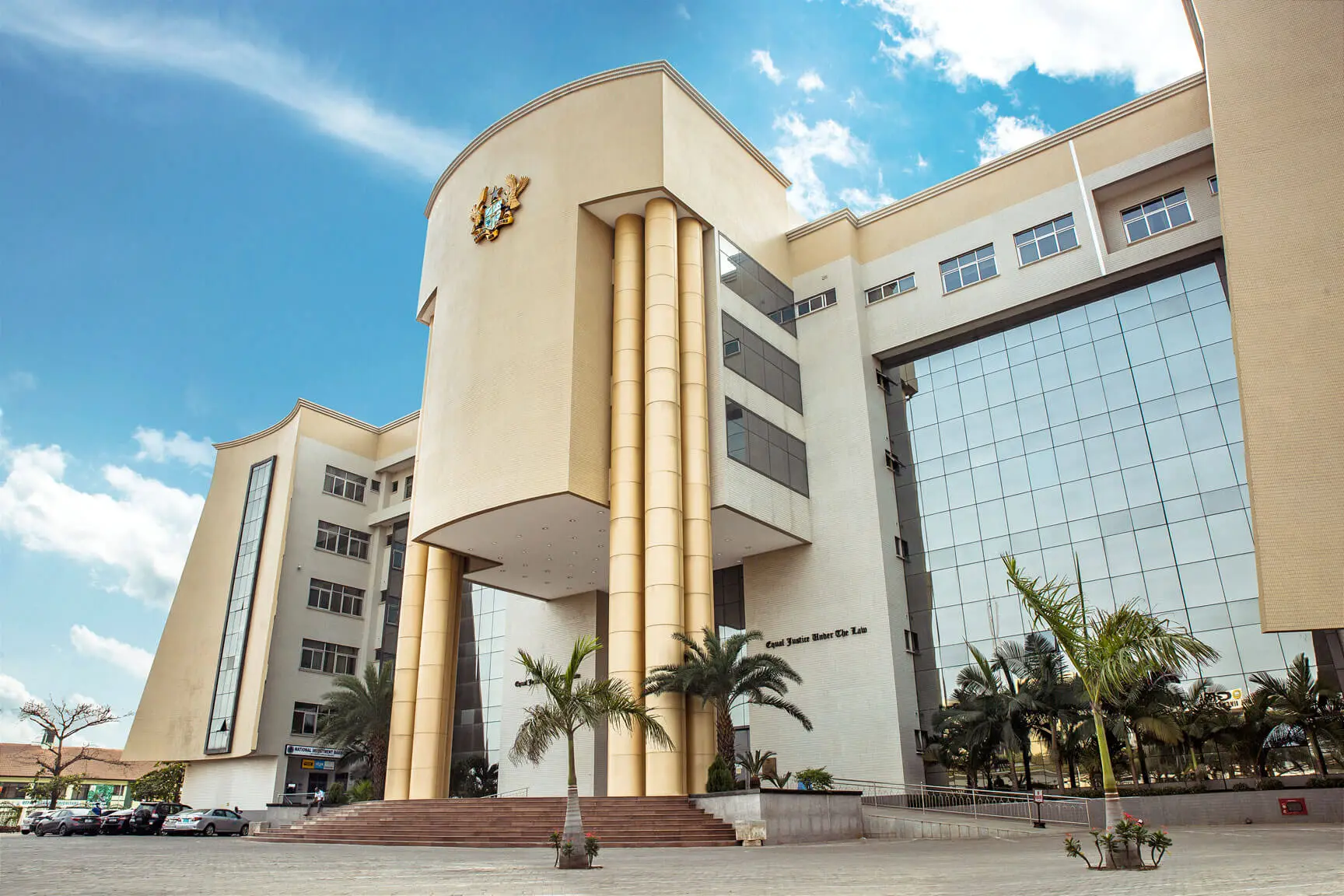
The Judicial Service Staff Association of Ghana says it will maintain its nationwide industrial action until it receives revised government approval that addresses its demands over salaries and allowances.
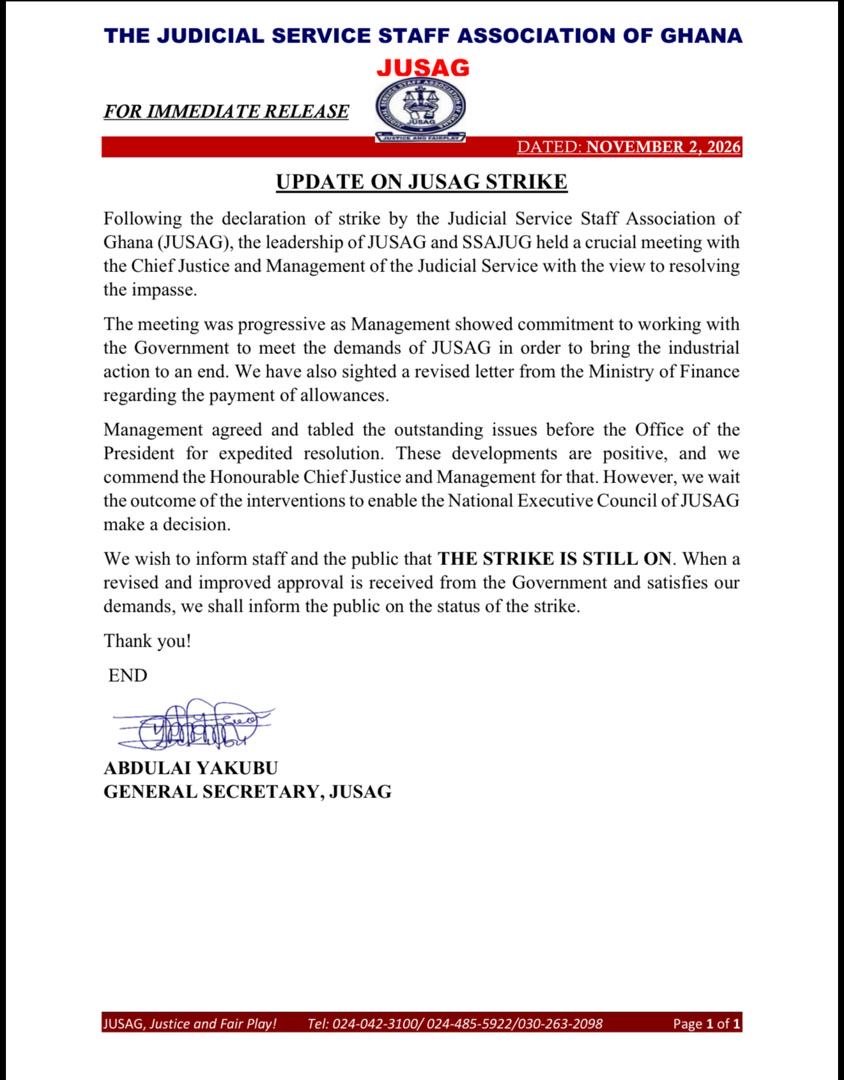
The Judicial Service Staff Association of Ghana (JUSAG) has confirmed that its indefinite nationwide strike remains in force despite what it describes as progress in discussions with the Chief Justice and management of the Judicial Service.
In an update dated November 2, 2026, and signed by its General Secretary, Abdulai Yakubu, the Association said its leadership and that of the Senior Staff Association of the Judicial Service of Ghana (SSAJUG) had held a crucial meeting with the Chief Justice and Judicial Service management to find a resolution to the impasse.
JUSAG described the meeting as progressive, explaining that management had demonstrated its commitment to working with the government to address the Association’s demands and bring the industrial action to an end.
The Association also disclosed that it had sighted a revised letter from the Ministry of Finance concerning the payment of allowances.
Outstanding issues referred to Presidency
According to the statement, management had agreed to table the outstanding issues before the Office of the President for expedited resolution.
JUSAG commended the Chief Justice and management for their interventions, describing the developments as positive.
However, it said its National Executive Council (NEC) would await the outcome of the engagements before deciding on the next course of action.
The Association stressed that the discussions and the revised communication from the Finance Ministry had not yet met the conditions required for the suspension of the strike.
Strike remains in force
In a firm notice to members and the general public, JUSAG declared that the industrial action was still ongoing.
It said it would announce any change in the status of the strike only after receiving a revised and improved government approval that satisfactorily addressed its demands.
The strike, which began on Monday, November 2, followed the Association’s call for approval and implementation of the 2026 salary review, including payment of outstanding arrears.
The industrial action has affected court operations, with Judicial Service staff directed not to report for work, while security personnel were instructed to remain at post to protect the Service’s property.
JUSAG’s latest update indicates that although engagements are continuing, the resumption of normal operations will depend on whether the government’s revised approval meets the Association’s expectations.
General News
Journalists must be able to report on matters of public interest without fear of violence – NAPO
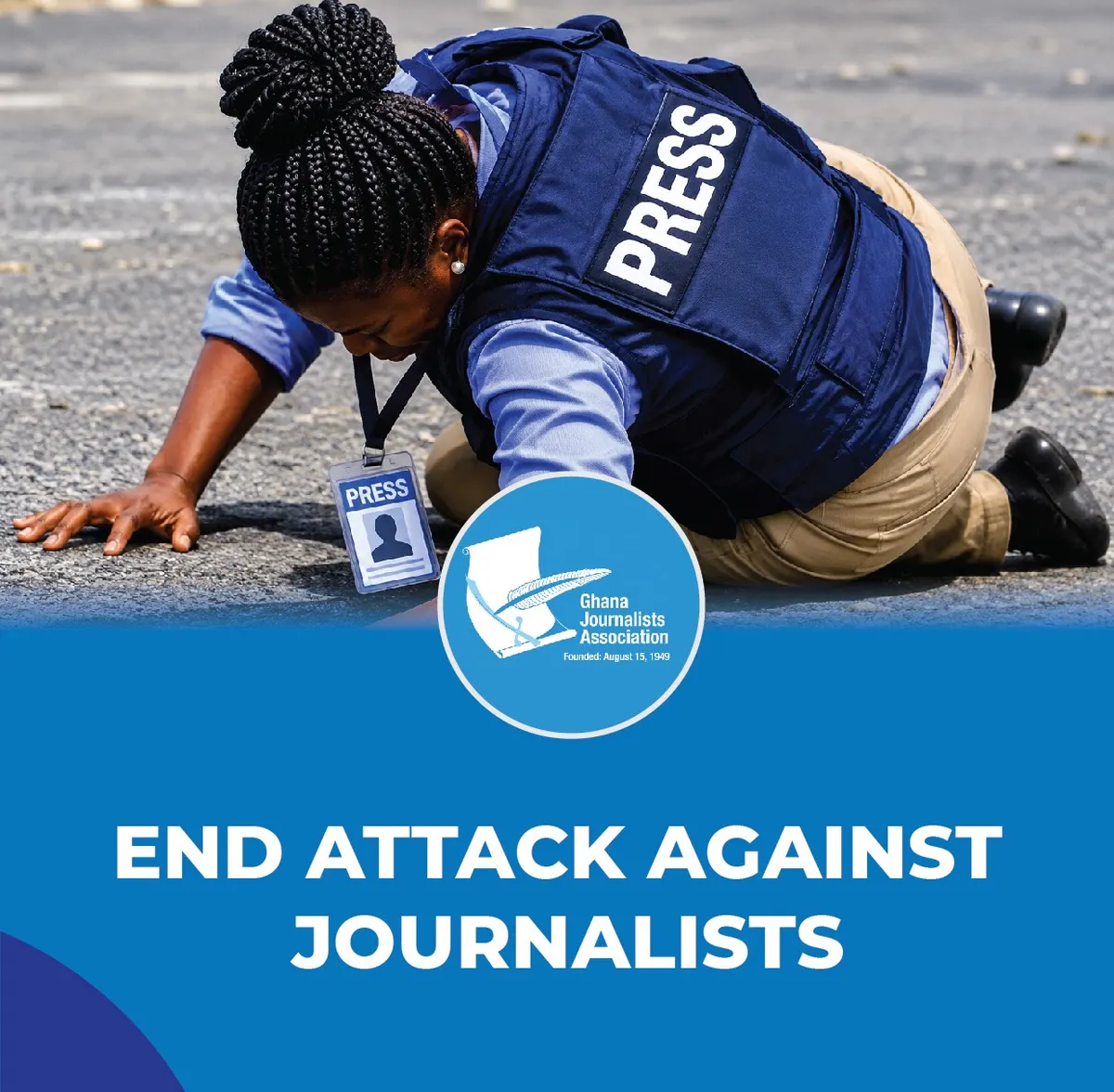
Former Vice-Presidential candidate Dr Matthew Opoku Prempeh has called for stronger action against attacks on journalists, insisting that media practitioners must be able to ask difficult questions and perform their duties without intimidation.
Former New Patriotic Party (NPP) running mate Dr Matthew Opoku Prempeh, popularly known as NAPO, has called on stakeholders to demonstrate a firm commitment to ending impunity for crimes against journalists in Ghana.
In a statement posted on his Facebook page on Monday, November 2, 2026, to mark the International Day to End Impunity for Crimes Against Journalists, he expressed concern that the country was increasingly experiencing impunity for offences committed against journalists and other media practitioners.
He said journalists must be allowed to investigate issues, ask difficult questions and report on matters of public interest without fear of violence or intimidation.
Dr Opoku Prempeh noted that disagreements over media reports should not lead to threats or attacks against journalists, adding that individuals and institutions have legitimate ways of challenging inaccurate reporting.
Attacks must be investigated
He urged authorities to ensure that attacks against journalists are thoroughly investigated and that those responsible are held accountable.
He also called for victims and their families to have access to justice, stressing that the safety of media practitioners should not depend on whether their reporting favours or offends particular individuals, political parties or institutions.
According to him, political leaders and other public figures have a responsibility to uphold press freedom, particularly when journalists scrutinise their actions or those of their political organisations.
GJA calls for accountability
NAPO’s comments came as the Ghana Journalists Association (GJA) renewed calls for accountability in cases involving assaults on media practitioners.
GJA President Albert Kwabena Dwumfour urged the Attorney-General and prosecutorial authorities to prioritise cases involving attacks on journalists. He also called on security institutions to cooperate with investigations and ensure that personnel found culpable are sanctioned.
The Association has maintained that journalists perform an important public service and should not be treated as adversaries by state institutions.
International focus on ending impunity
The International Day to End Impunity for Crimes Against Journalists is observed annually on November 2 to draw attention to attacks on media workers and the need to bring perpetrators to justice.
In a joint statement marking the 2026 observance, the African Union Commission and the Federation of African Journalists highlighted threats including physical attacks, arbitrary detention, intimidation, legal harassment and digital abuse.
They urged governments to strengthen protection mechanisms, investigate attacks and ensure that those responsible face justice.
NAPO’s appeal adds to renewed calls in Ghana and across the continent for journalists to work safely and independently, without violence or reprisals for carrying out their professional responsibilities.

Empress Gifty Defends Florence Obinim Over BBL Criticism

US Embassy Mourns 15-Year-Old Ghanaian Student Shot Dead in New York

Edem Reveals Reason for Last-Minute Postponement of Edemfest 2026

IRAWMA 2025: Shatta Wale Wins 3 Major Awards Including Best Music Video

Samini Secures Promotional Deal with Audiomack for Upcoming Album “THE ORIGIN8A”

AirtelTigo losing GH₵20m monthly; total debts exceed $200million – Sam George


-

 General News1 week ago
GTA Staff Demand Answers on World Cup Visa Slots, Staff Dismissals and Unpaid Allowances
-

 Entertainment2 weeks ago
Shatta Wale Cake Tells Story of Growth, Identity and African Dancehall Influence
-

 General News2 weeks ago
FOKLEX MEDIA AWARDS COMMENDS PRINCE KWAW GYIMAH AND OWASS FM TEAM FOR PROFESSIONALISM DURING KWAME DZOKOTO INCIDENT
-

 General News1 week ago
SAMMY GYAMFI’S “MINE WITHOUT LICENCE” REMARK SPARKS FRESH GALAMSEY DEBATE
-

 General News1 week ago
Nicki Minaj Throws Her Support Behind Trump Ahead of US Midterm Elections
-
 Entertainment2 weeks ago
Ghana Unveils December in GH 2026 Calendar With Over 150 Events Nationwide
-

 Entertainment1 week ago
GTA Targets Taxi Drivers in ‘Know Ghana’ Campaign to Boost Tourism
-
 General News2 weeks ago
PROFOUND GRATITUDE FOR YOUR DECISIVE INTERVENTION IN FAST-TRACKING THE COMPLETION OF THE MUMFORD FISHING HARBOUR