
Entertainment
Pete Edochie: The Life, Career and Legacy of a Nollywood Legend

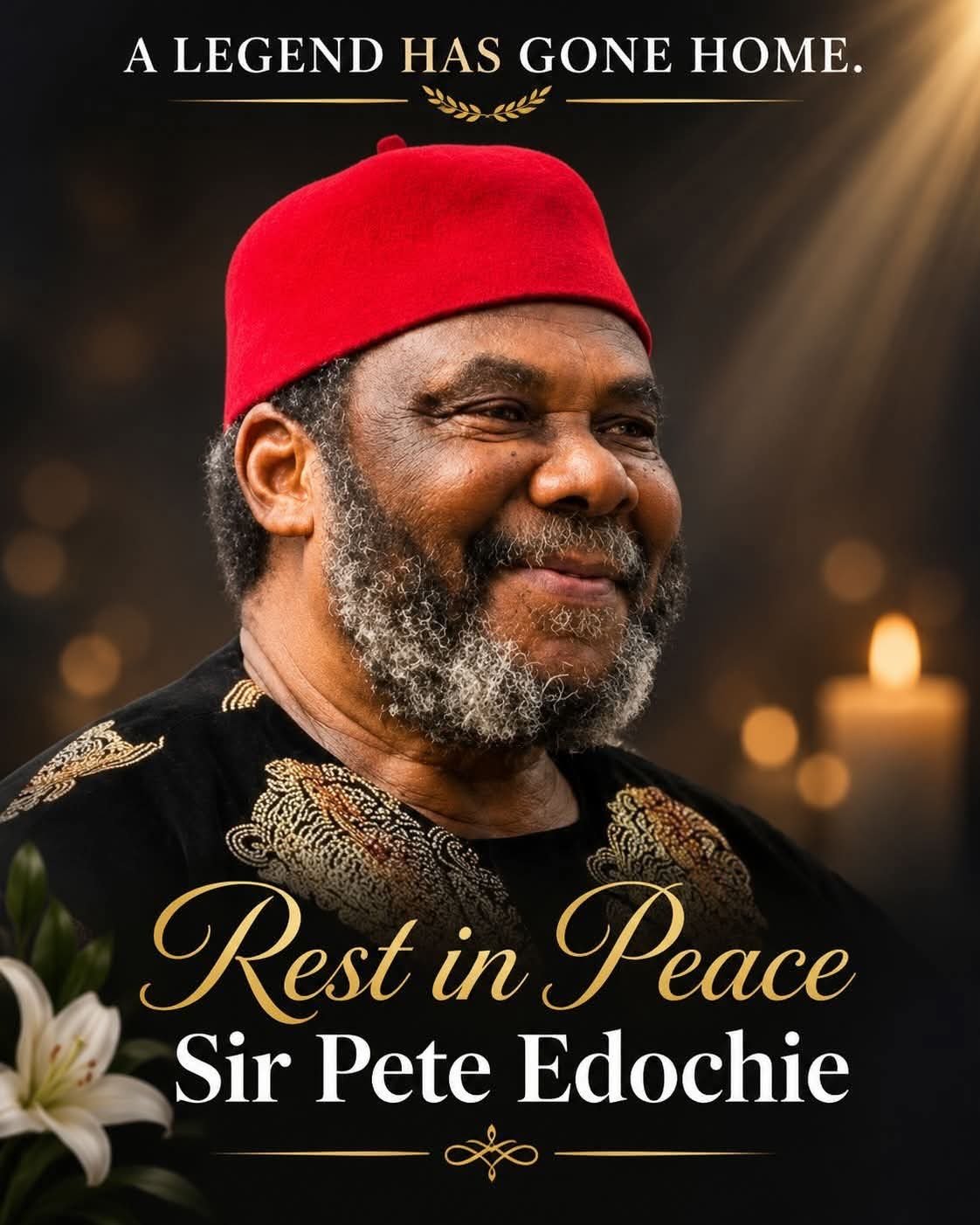
Veteran Nollywood actor Pete Edochie made headlines shortly before his death after defending his son, Yul Edochie, amid the controversy surrounding his marriage to actress Judy Austin, in what has emerged as one of his final public interviews.
The legendary actor, who died on Wednesday, November 25, 2026, at the age of 79, reportedly spoke about the criticism his son had faced since announcing his marriage to Judy Austin, insisting that Yul remained strong despite the public backlash.
The interview with Ugo Nwokolo TV was scheduled to be released on the same day Pete Edochie died, while an excerpt had already circulated on social media on Sunday, November 22.
Speaking about his son, the veteran actor described Yul as a strong-willed individual who could not easily be intimidated by public opinion.
“Look at my son, Yul. Yul is a very tough guy. You can never subdue him, no matter how much you try,” he said.
Pete also commended Yul for not publicly insulting his first wife, May Edochie, despite the controversy and criticism surrounding their marriage and subsequent separation.
The actor’s comments have renewed conversations about the highly publicised family dispute, which has remained one of the most discussed issues in Nigeria’s entertainment industry since Yul announced his relationship with Judy Austin in 2022.
According to Pulse Ghana, the final interview offered a glimpse into Pete’s thoughts about his son’s personal life, public image and the criticism he had endured over the years.
Pete Edochie was born on March 7, 1947, in Zaria, Kaduna State, Nigeria, but hailed from Akamnato, Ifite Nteje, in Anambra State.
He spent his childhood and early educational years in northern Nigeria, attending St Patrick’s and St James Primary Schools in Zaria before continuing his education at St John’s College in Kaduna.
His interest in media and communication later took him to the School of Journalism and Television in England, where he pursued studies in journalism and television.
Before becoming one of Africa’s most celebrated actors, Edochie had a lengthy career in broadcasting, beginning in 1967 when he joined the Eastern Nigerian Broadcasting Corporation as a junior programmes assistant.
His entry into broadcasting marked the beginning of a journey that would see him rise through the ranks and establish himself as an experienced media professional.
He eventually became Director of Programmes at the Anambra Broadcasting Service, where he also served as Deputy Managing Director and occasionally assumed the responsibilities of Managing Director.
His years in broadcasting gave him experience in programme production, presentation, administration and storytelling, skills that would later prove valuable when he transitioned into acting.
In a 2022 interview with Vanguard, he recalled his broadcasting experiences, including presenting a classical music programme known as Music from the Masters.
Although Pete Edochie had established himself in broadcasting, his breakthrough into mainstream entertainment came through his portrayal of Okonkwo in the Nigerian Television Authority’s adaptation of Chinua Achebe’s literary masterpiece Things Fall Apart.
The television adaptation brought Achebe’s celebrated character to life, with Edochie delivering a performance that captured the strength, pride, fear, traditional values and tragic struggles of the fictional Igbo warrior.
His interpretation of Okonkwo earned him widespread acclaim and made him a household name in Nigeria and across several African countries.
The production also attracted international attention, with the BBC reportedly sending a delegation to interview him following the success of the role.
During a 2023 interview with The Nation, Edochie reflected on the recognition he received from the performance at a time when the Nigerian film industry had not yet become widely known as Nollywood.
His portrayal of Okonkwo remains one of the most iconic performances in African television, with the character becoming closely associated with his name and acting career.
Following the success of Things Fall Apart, Pete Edochie became one of the most sought-after actors in Nigeria’s emerging film industry.
He featured in numerous productions, including Igodo, Rituals, Billionaire’s Club and Lionheart, the 2018 film directed by Genevieve Nnaji.
In Lionheart, he played Chief Ernest Obiagu, further demonstrating his ability to portray influential and authoritative figures.
Over the years, he became particularly popular for playing traditional rulers, wealthy businessmen, fathers, family heads and community leaders.
His distinctive deep voice, commanding presence, measured delivery and frequent use of African proverbs became trademarks of his performances.
He was often cast in roles that demanded wisdom, authority, discipline and strong personality, making him one of the most recognisable faces in Nollywood.
His performances helped establish a unique screen identity that many younger actors admired and attempted to emulate.
Before fully embracing acting, Edochie spent years working in broadcasting, where he developed a professional reputation and gained considerable experience in the media industry.
His career in broadcasting was not merely a stepping stone but a significant part of his professional life, as he held senior positions and contributed to the development of Nigerian radio and television programming.
His transition into acting opened a new chapter in his career, allowing him to become one of the most influential personalities in Nigerian entertainment.
His ability to combine traditional expressions, cultural knowledge and dramatic delivery made him particularly effective in roles that reflected African customs and values.
He became known for bringing depth and authenticity to characters who represented traditional authority, family leadership and cultural identity.
Pete Edochie’s influence also extended to Ghana, where he worked with several Ghanaian actors and participated in cross-border film productions.
He featured in the 2011 film Lonely Walk, alongside Ghanaian actor Van Vicker, Mercy Johnson and Ngozi Ezeonu.
In 2017, he also starred in the Ghanaian comedy-drama John and John, directed by Kofi Asare Brako, popularly known as Kofi Asare.
The production brought him together with several Ghanaian entertainers, including Lil Win, Kalybos, Nana Ama McBrown, Joselyn Dumas, John Dumelo, Grace Omaboe and Grace Nortey.
His involvement in Ghanaian productions reflected the longstanding relationship between Ghana’s and Nigeria’s film industries and the popularity of Nollywood actors across the West African region.
His presence in Ghanaian movies also helped attract audiences who were familiar with his performances in Nigerian films.
Pete Edochie’s contributions to the entertainment industry earned him several honours and recognitions throughout his career.
In 2003, former Nigerian President Olusegun Obasanjo conferred on him the Member of the Order of the Niger (MON), one of Nigeria’s prestigious national honours.
He also received the Industry Merit Award from Africa Magic, a Lifetime Achievement Award from the Africa Film Academy and the African Film Legend Award at the African Film Festival in 2020.
These recognitions reflected his contributions to African cinema, television and storytelling over several decades.
His career made him one of the actors whose influence extended beyond individual film roles to the broader development and international recognition of Nollywood.
Pete Edochie was married to Barrister Josephine Edochie, with whom he had six children, including actors Yul Edochie and Linc Edochie.
His family largely maintained a private life, although the controversies surrounding Yul’s marriage to Judy Austin and his separation from first wife May Edochie brought the family into the public spotlight.
Yul’s decision to take Judy Austin as a second wife in 2022 generated widespread reactions, with many fans and social media users expressing different opinions about the development.
The controversy also affected discussions surrounding Yul’s public image and career, with his father’s final interview drawing attention to how the actor had handled the criticism.
Pete’s defence of his son, particularly his comments about Yul’s strength and his refusal to publicly attack May, became one of the final public discussions surrounding the veteran actor.
Pete Edochie’s career spanned broadcasting, television drama and film, making him one of the most enduring figures in Nigerian entertainment.
From his early years as a broadcaster to his iconic portrayal of Okonkwo and the numerous films he featured in afterwards, he established a legacy that transcended generations.
His deep voice, memorable expressions, commanding performances and fondness for African proverbs helped make him a cultural icon whose influence extended beyond the screen.
He was admired for his ability to portray African traditions, family values, authority and cultural identity through his characters, while his performances continued to entertain audiences across Africa and beyond.
His death marks the loss of one of Nollywood’s most distinguished veterans, but the characters he portrayed, the stories he helped tell and the impact he made on African cinema remain an important part of the industry’s history.
Credit: Pulse Ghana









Speaking in an interview on Okay FM with host Nana Romeo, Lasmid explained that his desire to build an orphanage stems from the difficulties he experienced growing up and the challenges he encountered throughout his journey in the music industry.
According to Lasmid, fulfilling the dream would be one of the greatest achievements of his life because it would allow him to make a meaningful difference in the lives of vulnerable children.
“Since I was a child, I have always wanted to build an orphanage. It is my dream, and if I am able to fulfil it, I will know that I have made it in life,” he said.
During the interview, Lasmid disclosed that he had experienced several hardships from childhood through his rise in the music industry, although he could not remember every difficult moment he encountered while growing up.
“I have suffered a lot in life, even in the music industry. I know I went through a lot growing up, although I do not remember everything I experienced,” he stated.
The musician explained that his personal experiences had made him more conscious of the struggles faced by people who lack the support and opportunities needed to navigate life.
He noted that although he had certain people around him who offered assistance, he still went through difficult moments, prompting him to reflect on the situation of children who have nobody to turn to.
“Those experiences have made me realise that even I, who had certain people around me, still went through a lot. So, imagine those who do not have anyone to help them,” he added.

Nigerian singer Tomi Thomas has expressed gratitude for the overwhelming love and acceptance he continues to receive from Ghanaians, saying the support has made his relationship with the country particularly special.
The singer, who is married to Ghanaian musician Efya, said the warmth and affection shown to him by Ghanaians have exceeded his expectations, with fans treating him like a member of their own family.
Speaking on TV3’s Afternoon Show, Tomi Thomas described the reception he has received as overwhelming, adding that he feels honoured and blessed by the kindness of the Ghanaian community.
“Truly, it’s been overwhelming. I feel so honoured and so blessed to receive such love and compassion from the community,” he said.
He explained that the growing affection became particularly evident on social media, where his TikTok following increased significantly within a short period as Ghanaians showed interest in his personality and music.
“My TikTok went, you know, parabolic, literally overnight. Everyone coming in and telling me, ‘Oh, you need to, you need to, you need to,’ and, you know, it’s such love, truly such love. And I’m so grateful,” he stated.
According to the singer, the admiration has extended beyond social media, with fans now recognising him whenever he goes out in public.
He recalled how people frequently stop him on the streets and even from their vehicles to greet him affectionately as their “in-law”, a reference to his marriage to Efya.
“Even when I’m walking, like before I used to be, I tried to be low-key, just doing my thing. I can’t do that anymore. Just walking down the street, people stopping their cars. ‘Ah, in-law, in-law!'” he recounted.
Despite the increased public attention, Tomi Thomas said he welcomes the affection and makes a conscious effort to return the kindness shown to him.
“I’m grateful for it though, you know, and I always make sure I show them love. Whatever they need from me, I’m here,” he said.
He further expressed his love for Ghana and its people, emphasising that the affection he receives is mutual.
“I love them too. I love them,” he added.
Beyond his personal relationship with Ghana through Efya, Tomi Thomas has also strengthened his connection to the country’s entertainment industry through musical collaborations with several Ghanaian artistes.
His creative partnerships include works with dancehall star Stonebwoy, rapper M.anifest and his wife, Efya. He described his experiences working with Ghanaian musicians as welcoming and stress-free, noting that the collaborations have helped him establish meaningful relationships within the local music scene.
Tomi Thomas and Efya celebrated their wedding in November 2026, further cementing his personal ties to Ghana.
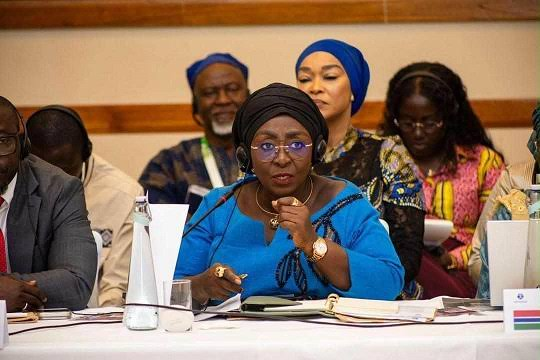
The country polled 19 votes against Argentina’s 14 during a competitive election held at the 127th Session of the UN Tourism Executive Council in Abu Dhabi, securing the coveted leadership position.
The successful bid was led by the Minister for Tourism, Culture and Creative Arts, Abla Dzifa Gomashie, who headed Ghana’s delegation to the international gathering.
The victory marks a significant milestone in Ghana’s efforts to strengthen its influence in international tourism governance and position itself as a key player in shaping policies and decisions affecting the global tourism industry.
Deputy Chief Executive Officer of the Ghana Tourism Authority (GTA), Abeiku Santana, celebrated the achievement in a post on X, describing it as a landmark diplomatic triumph for the country.
“This remarkable achievement positions Ghana at the forefront of global tourism leadership, reinforcing the country’s growing influence in international tourism diplomacy,” he wrote.
Ghana’s election to the chairmanship comes amid renewed efforts by the country to expand its presence in the global tourism industry and contribute more actively to discussions on tourism development, international cooperation and policy direction.
The latest victory also follows Ghana’s successful bid in July 2026 to host the 70th United Nations Tourism Commission for Africa (CAF) Meeting in 2027.
The hosting of the continental meeting is expected to bring tourism stakeholders, policymakers and industry leaders from across Africa together to deliberate on issues affecting the sector and explore opportunities for growth, investment and collaboration.
With Ghana set to chair the UN Tourism Executive Council and host the Commission for Africa meeting in 2027, the country is expected to occupy a prominent position in international and continental tourism discussions.

The upcoming attempt is scheduled to begin on July 27, 2027, in Ontario, Canada, as she continues her pursuit of the record after her previous attempts in Ghana.
In a statement announcing the new challenge, Afua Asantewaa expressed excitement about the upcoming singing marathon, describing it as another opportunity to push her limits and pursue her dream.
“It is with great pleasure that I announce my third singing marathon attempt, scheduled for July 27, 2027, here in Canada. The journey has been challenging, but as Osibisa’s iconic song Woyaya reminds us, we will get there,” she said.
According to her, the Canada edition will feature a broader international repertoire, with music from different cultures and generations. The initiative is expected to celebrate the diversity of music while highlighting its ability to unite people across geographical and cultural boundaries.
Audiences can look forward to performances of several iconic songs, including Three Little Birds by Bob Marley and the Wailers, Remember Me by Lucky Dube, Soul Makossa and Ghanaian classics.
Afua Asantewaa also expressed gratitude to her supporters, particularly members of the media, for their continued encouragement and support throughout her journey.
The forthcoming singing marathon is being organised in partnership with The ACE Foundation and Bee Connected Academy in Canada.
She explained that the initiative is also intended to inspire individuals, particularly young people, to overcome adversity, recognise their potential and pursue their ambitions with courage, determination and perseverance.
“Through this initiative, she hopes to inspire individuals, particularly young people, to rise above adversity, embrace their potential and pursue their aspirations with courage and determination,” the statement added.
The announcement comes after her previous singing marathon attempts at Akwaba Village in Accra in 2023 and Heroes Park in Kumasi in 2024.
Despite the challenges associated with her earlier attempts, Afua Asantewaa remains committed to pursuing the Guinness World Records title, with the upcoming Canada attempt marking another chapter in her journey to achieve the feat.
Entertainment
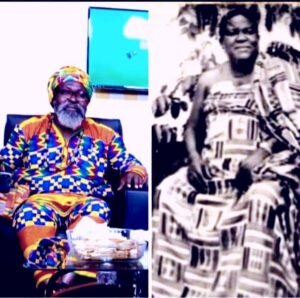
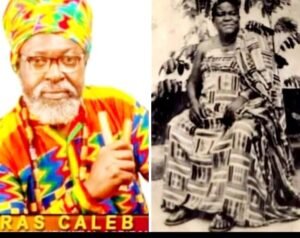
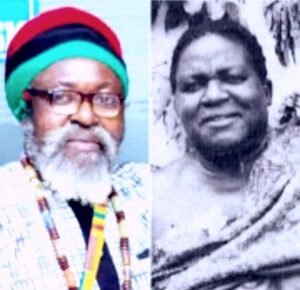
Ras Caleb Appiah-Levi honours late father Cofie Essah Appiah, recounts his life, family and legacy
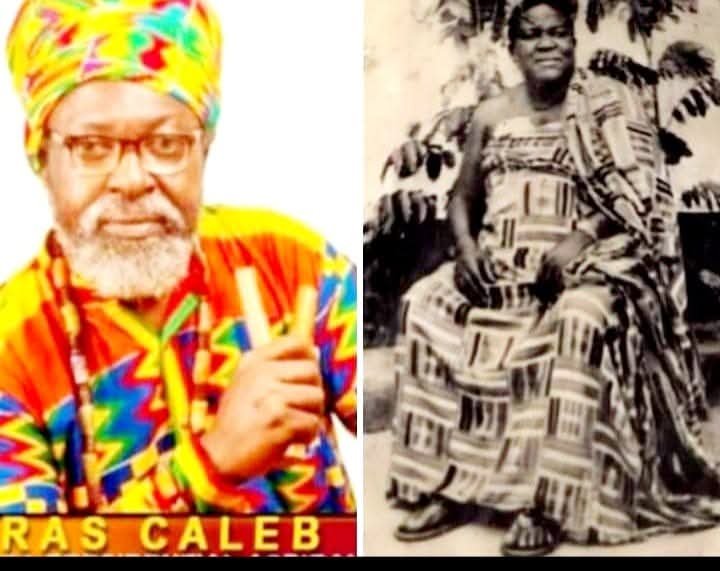
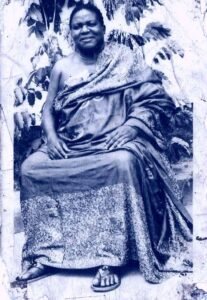
In a detailed tribute titled “Honouring My Noble Father, Cofie Essah Appiah, a Native of Boso-Gua, and of Blessed Memory,” Ras Caleb reflected on the remarkable life of his father, whose influence extended through his family, professional career, religious activities, political affiliation and investments in farming and property.
Opanyin Cofie Essah Appiah was born in 1902 to Nenye Kofi Essah of Boso-Gua, near Anum, and Dora Abena Asamaniwaa of Anum, both of blessed memory.
He was the third of three boys born to his parents. However, his two elder brothers died during infancy, leaving him as the only surviving child of his parents.
At a very young age, he was relocated to Suhum, where he began his education at Suhum Anglican School. His time at the school played a significant role in shaping his Christian faith and devotion to the Anglican Church, values he carried throughout his life.
Opanyin Cofie Essah Appiah began his working life with the United Africa Company (U.A.C.) in Suhum before being transferred to Koforidua.
He subsequently joined the Ghana Cocoa Marketing Board (CMB), where his career took him to Akim Oda, serving as a Cocoa Buyer.
Despite his employment, he remained committed to farming and was described by his son as a very industrious and hardworking farmer who invested in agricultural land and property in several communities.
While working in Akim Oda, he acquired farmlands at Akokoaso, where he built a house and named it Boso Villa.
In 1927, at the age of 25, he expanded his investments by acquiring farms and forest lands at various locations, including Adonkwanta, Ateibu, Abobri, Mameneso, Adobenso near Suhum in the Abuakwa District, Nnam, Abirem, Asuom and Ayirebi, in the Akim Kotoku State.
According to Ras Caleb, his father had a habit of building or purchasing houses wherever he went, leaving behind properties in several parts of the country.
These included Akokoaso, Kwae, near the Ghana Oil Palm Development Company Limited, Akim Oda, Koforidua, Accra and Boso, near Anum, opposite the Boso Anglican Church.
His investments in farmlands, forest lands and residential properties reflected his determination to build a lasting economic foundation for himself and his family.
Beyond his professional and business activities, Opanyin Cofie Essah Appiah was a committed Pan-Africanist and staunch member of the Convention People’s Party (CPP), founded by Ghana’s first President, Osagyefo Dr Kwame Nkrumah.
His political beliefs and admiration for the ideals of Dr Nkrumah influenced his son’s early participation in organised youth activities.
Ras Caleb disclosed that his father assisted him, Emmanuel Obiri, to join the Ghana Young Pioneer Movement in 1963.
The Ghana Young Pioneer Movement was a national youth organisation initiated in 1960 and formally established with parliamentary backing in 1961 under Dr Kwame Nkrumah’s leadership.
The organisation was created to instil patriotism, discipline, civic responsibility and national consciousness in young Ghanaians.
Its membership was structured into age groups, including the African Personality grouping for children aged four to eight, Young Pioneers for those aged nine to 16, and Nkrumah Youth for members between 17 and 25 years.
Activities under the movement included classroom instruction, civic and ideological education, physical drills, marching and recreational activities. Members also wore uniforms featuring light-coloured shirts with shoulder patches, dark trousers and neckerchiefs, and participated in daily flag-raising ceremonies.
The movement’s members were guided by a 12-point code of discipline that emphasised love of country, discipline, honesty, punctuality, protection of state property, reliability, secrecy, comradeship, forbearance, love of work, selflessness and the pursuit of faultlessness.
The Ghana Young Pioneer Movement was abolished in 1966 following the overthrow of Dr Nkrumah’s government.
Opanyin Cofie Essah Appiah’s ambition to raise a large family resulted in 17 children, all of whom he reportedly raised under his roof.
His children, as listed by Ras Caleb, are: Dora Asamaniwaa, Janet Ansaah, George Essah, Edward Appiah, popularly known as Lawyer Appiah of Tamale, Adelaide Asamaniwaa, Felix Essah, Ebenezer Asamani, Edith Biamah, Paul Afum, Gifty Okyerebea, Joyce Okyerebea, Rebecca Ansaah, Margaret Latebea, Emmanuel Obiri, also known as Ras Caleb Appiah-Levi, Emmanuel Abrokwa, Joseph Mireku, Benjamin Hadjor
Among his children is Janet Ansaah, who is the biological grandmother of Samuel Kofi Atta Mills, the son of the late former President of Ghana, Prof. John Evans Atta Mills.
Ras Caleb said his father placed enormous importance on education and was determined to provide his children with quality schooling, encouraging them to pursue education to the highest possible level.
His efforts produced children who went on to become lawyers, teachers, engineers, nurses, bankers, traders, farmers and musicians, reflecting the diversity of professional paths taken by his descendants.
Opanyin Cofie Essah Appiah’s faith in Jesus Christ as his personal Saviour and his commitment to the Anglican Church were evident in his contributions to the establishment and development of the church in Boso.
He co-founded the Anglican Church in Boso and made significant contributions to securing a permanent place of worship for the congregation.
Ras Caleb said his father purchased an unfinished structure and donated it to the church to be converted into a church building.
He also donated an organ to the church, which he personally played every Sunday and during other church occasions.
His commitment to the church also influenced his children, with Ras Caleb himself serving as a Mass Server and Bell Boy at the church during his childhood.
The family’s connection to the Anglican Church in Boso remains a significant part of his father’s religious legacy.
Opanyin Cofie Essah Appiah died on November 22, 1968, leaving behind a family whose numbers and achievements have continued to grow over the decades.
According to Ras Caleb, his father is survived by his last eight children, comprising four females and four males, 63 grandchildren, 108 great-grandchildren and seven great-great-grandchildren.
In honouring his father, Ras Caleb reflected on a life that combined professional service, farming, property ownership, political commitment, Christian devotion and the raising of a large family.
His tribute celebrates not only the life of a man born more than a century ago but also the values of hard work, education, faith, discipline, selflessness and family responsibility that he passed on to generations of descendants.


Lasmid: Building an Orphanage Would Make Me Feel I Have Made It in Life

Tomi Thomas Says Ghanaians Have Made Him Feel Like One of Their Own

Ghana Defeats Argentina to Secure UN Tourism Executive Council Chairmanship for 2027

Afua Asantewaa Announces Third Singing Marathon Attempt in Canada for 2027

Ras Caleb Appiah-Levi honours late father Cofie Essah Appiah, recounts his life, family and legacy

NADFFA 2027: Ghana to Host Pan-African Film and Food Festival in March

Ghana Faces Very Strong El Niño Threat as GMet Warns of Extreme Heat, Drought and Possible Flooding

Avoid excessive taxation that prevents entrepreneurs from creating wealth – Kufuor to Ghana’s leaders

NADFFA 2027 launched in Accra to celebrate African cinema, cuisine and culture

From Sleeping on the Streets to Building a Media Empire: The Kojo Preko Dankwa Story

Illinois’ financial crisis could bring the state to a halt
The final 6 ‘Game of Thrones’ episodes might feel like a full season
New Season 8 Walking Dead trailer flashes forward in time
Mod turns ‘Counter-Strike’ into a ‘Tekken’ clone with fighting chickens
Meet Superman’s grandfather in new trailer for Krypton

-
 Entertainment22 hours ago
Kessben’s Funeral Bans Bloggers, Content Creators and Private Photographers
-
 Entertainment22 hours ago
Abla Dzifa Gomashie Urges Queen Mothers To Protect Ghana’s Cultural Heritage
-
 Entertainment6 hours ago
Ras Caleb Appiah-Levi honours late father Cofie Essah Appiah, recounts his life, family and legacy
-
 Entertainment21 hours ago
He Understood Me Without Words – Uche Edochie’s Heartbreaking Tribute to Late Father Pete Edochie
-

 Culture19 hours ago
Ghana’s Hidden Tourist Treasures: The Buoyem Caves, Where History, Nature and Mystery Meet
-

 Lifestyle18 hours ago
Whatever Happened to Ghana’s Culture of Calling Elders by Their Titles?
-

 Education17 hours ago
Are Students Growing Up Without Knowing Their Own History? Why Local History Matters in Schools
-
 Entertainment2 hours ago
Tomi Thomas Says Ghanaians Have Made Him Feel Like One of Their Own