
Entertainment
Ghana Urged to Establish Convention Bureau, Build 20,000-Capacity Facility to Boost MICE Tourism

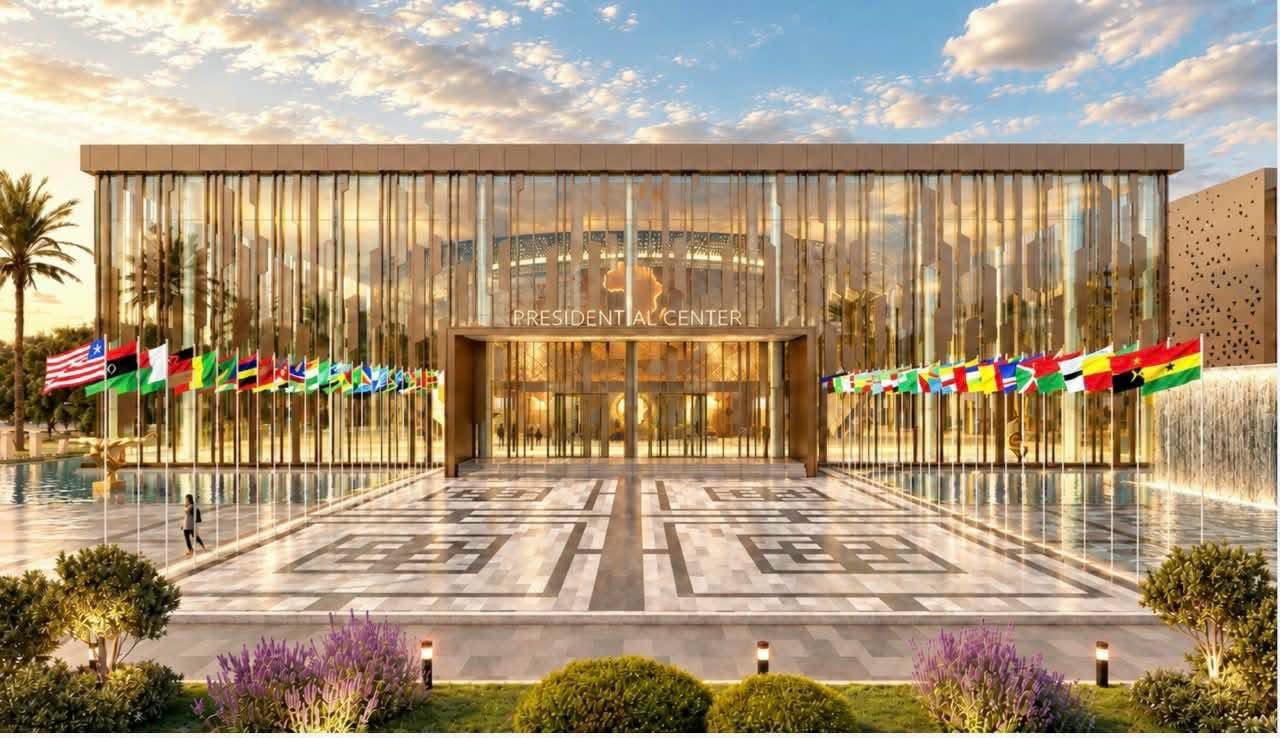
Ghana has been urged to establish a fully operational national Convention Bureau and invest in a world-class convention facility with a minimum capacity of 20,000 participants as part of efforts to position the country as one of Africa’s leading destinations for business events.
The call was made by Architect Ekow Sampson in an article titled A Case for MICE Tourism in Ghana: From Hosting Conferences to Becoming Africa’s Leading Business Events Destination, in which he argued that Ghana must move beyond relying on its traditional tourism attractions and take advantage of the growing global Meetings, Incentives, Conferences and Exhibitions (MICE) tourism market.
According to him, MICE tourism presents a major opportunity to increase tourism revenue, create employment, attract foreign exchange and stimulate economic activities across several sectors.
He noted that MICE tourism is no longer a niche segment but has become a significant component of the global travel economy.
Citing estimates from the Global Business Travel Association (GBTA), Sampson said global business travel spending reached approximately US$1.47 trillion in 2024 and is projected to exceed US$2 trillion by 2028.
He also referenced the 2024 WTM Global Travel Report, which found that international business visits increased by approximately 19 per cent in 2024, compared with about 11 per cent growth in leisure visits.
The report further projects that international business visits could grow by around 50 per cent between 2024 and 2030, significantly outpacing leisure travel.
Sampson believes these developments present an opportunity for Ghana to strengthen its position in the international tourism market.
He pointed to figures from the Ghana Tourism Authority’s (GTA) 2025 Tourism Report, which recorded 1,306,962 international arrivals, with business travel accounting for 31 per cent of the total arrivals.
He further noted that the entertainment and conference segment recorded 14.3 per cent growth, indicating increasing demand for conferences and related events in the country.
According to him, these figures demonstrate that business travel is already a major contributor to Ghana’s international tourism and should be treated as a strategic area for further investment.
He cited events such as the Global Assemblies of God Conference and the 2026 Call to the Ghana Bar ceremony at the IGCC Auditorium as examples of Ghana’s ability to host significant gatherings.
However, he stressed that such achievements should not remain isolated events, arguing that the country must develop a deliberate strategy to attract and compete for major international conferences, conventions and exhibitions.
Explaining the economic importance of the sector, Sampson said the benefits of MICE tourism extend beyond the venues where conferences and exhibitions are organised.
He explained that business visitors spend money on accommodation, international air travel, ground transportation, restaurants, entertainment, shopping and other tourism experiences.
Citing GBTA estimates, he said a business traveller spends an average of approximately US$834 per trip.
This includes about US$312 on accommodation, US$176 on air travel, US$153 on food and beverages, and US$103 on ground transportation.
He said attracting major international conferences could therefore generate economic opportunities for hotels, airlines, restaurants, transport operators, event management companies, tour operators, retailers and local communities.
Sampson also highlighted the potential of what is known as bleisure tourism, a concept in which business travellers extend their trips to enjoy leisure activities.
He observed that Ghana could use international conferences and business events to encourage visitors to explore the country’s cultural heritage, cuisine, festivals, natural attractions and creative industries.
Sampson identified political stability, democratic credentials, international air connectivity, rich cultural heritage, hospitality, strong diaspora connections and the presence of the African Continental Free Trade Area (AfCFTA) Secretariat in Accra as some of Ghana’s major advantages in developing its MICE tourism industry.
He also acknowledged the foundation established by the Ghana Tourism Authority, which is a professional member of the International Congress and Convention Association (ICCA).
However, he argued that Ghana must move beyond participating in international industry platforms and position itself as a leader in attracting major business events to the continent.
One of his major recommendations is the establishment of a fully operational Ghana Convention Bureau to coordinate the country’s efforts to attract international conferences, conventions and exhibitions.
He explained that the proposed institution should be responsible for identifying international events, preparing competitive bids, coordinating hotels, airlines and conference venues, supporting event organisers and promoting Ghana as a business-events destination.
The Bureau would also be expected to measure the economic impact of events hosted in the country.
Sampson said it should work closely with the Ghana Tourism Authority, relevant government institutions, local authorities and private-sector stakeholders to develop a coordinated national business-events strategy.
Beyond institutional arrangements, Sampson called for significant investment in modern infrastructure to enable Ghana to compete for large international gatherings.
He proposed the development of a world-class convention facility with a minimum seating capacity of 20,000 participants.
He also called for the accelerated redevelopment of the Accra International Trade Fair Centre into a modern hub for conventions, exhibitions and international trade events.
According to him, such facilities would enable Ghana to compete for major international congresses, religious conventions, professional association meetings, exhibitions and corporate events that may exceed the capacity of existing venues.
He stressed that institutional capacity must be supported by the necessary infrastructure if Ghana intends to attract larger and more prestigious international events.
Sampson also commended President John Dramani Mahama’s vision to develop an Accra Convention Centre, describing it as a step in the right direction towards strengthening Ghana’s position in the international business-events industry.
He, however, urged the government to translate the vision into concrete action by establishing the proposed national Convention Bureau, developing a world-class convention facility with a minimum capacity of 20,000 participants rather than the proposed 3,000-capacity facility, and accelerating the redevelopment of the Accra International Trade Fair Centre.
He maintained that Ghana could no longer afford to treat MICE tourism as a peripheral activity, particularly when business travel already accounts for 31 per cent of international arrivals.
Sampson argued that the 14.3 per cent growth recorded in the entertainment and conference segment in 2025 further reinforces the need for a more deliberate national approach.
He called for aggressive international marketing, modern convention infrastructure and strong public-private partnerships to help Ghana attract a greater share of the growing global business-events market.
He concluded that Ghana must shift its focus from simply hosting conferences to actively competing for them, insisting that MICE tourism could become a powerful engine for tourism growth, employment generation, foreign exchange earnings and national development.











Ghanaian rapper EL has identified inadequate financial investment as one of the major obstacles preventing Ghanaian musicians from making significant breakthroughs on international music charts such as Billboard.
The award-winning musician believes Ghana has enough talented artistes capable of competing on the global stage, but the financial commitment required to achieve that level of success remains a major challenge.
Speaking in an interview shared on social media by Ameyaw Debrah, EL explained that the country’s music industry was growing but needed to move at a faster pace to maximise its potential.
“I don’t think anything is lacking. I think it’s growing at its own pace,” he said, adding that greater financial support could help accelerate the industry’s development.
Addressing suggestions that musicians need approximately $1 million to push their songs onto major international charts, EL indicated that such an amount could significantly improve an artiste’s chances of achieving the feat.
“If you have a million, you will definitely end up on the Billboard. Yeah, if you want it to,” he remarked.
Beyond financial investment, EL also expressed concern about the growing emphasis on branding, publicity and the entertainment side of the music business.
He argued that the industry has increasingly shifted towards image-building and marketing, sometimes placing less attention on the actual musical contribution of artistes.
“These days it’s become a lot more smoke and mirrors. It’s become a lot more about the showbiz aspects as opposed to what the talent is bringing to the table,” he explained.
Meanwhile, EL revealed that Bow Legge, a song from his collaborative project Dancing Machine with rapper D-Black, is currently his favourite track.
He also spoke about efforts to revive Azonto, explaining that although the popular Ghanaian music genre never completely disappeared, he and D-Black were working to bring it back on a bigger scale.
On his personal music preferences, EL mentioned legendary American entertainer Michael Jackson and British singer Sam Smith as two artists he enjoys listening to.
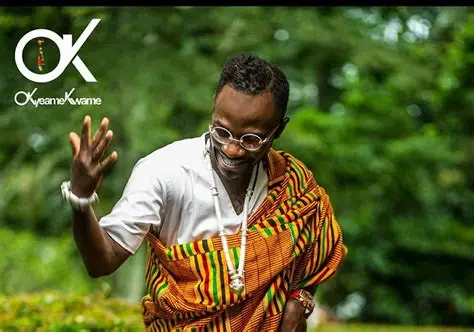
Ghanaian rapper Okyeame Kwame has praised musicians who have managed to attract massive audiences to stadiums as solo performers, describing the achievement as a significant milestone in the music industry.
He noted that filling a stadium as an individual artiste requires an impressive level of popularity and audience loyalty, particularly in an industry where sustaining public interest is not always easy.
Reflecting on the golden era of hiplife, Okyeame Kwame recalled that major concerts such as Loud in Kumasi and Kicking in Accra featured several musicians performing on one platform. This, he explained, helped organisers attract large crowds by bringing together artistes with different fan bases instead of depending on one musician to draw the entire audience.
He, however, observed that the music industry has witnessed a notable shift, with artistes such as Shatta Wale, Sarkodie, Black Sherif and Stonebwoy independently organising and headlining major concerts that attract thousands of fans.
For him, the ability of these musicians to fill such large venues without relying on other performers is an accomplishment that deserves considerable appreciation.
Beyond achieving commercial success and drawing huge crowds, the rapper believes an artiste’s ability to remain relevant over the years is equally important. He attributed long-term success in music to having a unique quality that continually keeps fans interested and eager to experience something different.
“For an artist to sustain a career and hold an audience for 29 years, one thing is indispensable: the X-factor! It’s the ability to keep shocking them. Without that shock factor, artists die in business,” he said.
He further emphasised that musicians cannot afford to remain stuck in one style or approach, stressing that adapting to new trends and evolving audience expectations is essential for survival in the competitive entertainment industry.
“If you don’t evolve, you will dissolve,” he added.
His comments highlight the importance of innovation, consistency and audience connection, while recognising Ghanaian musicians who have built strong enough fan bases to independently stage large-scale concerts and sustain successful careers.
Source: AdomOnline
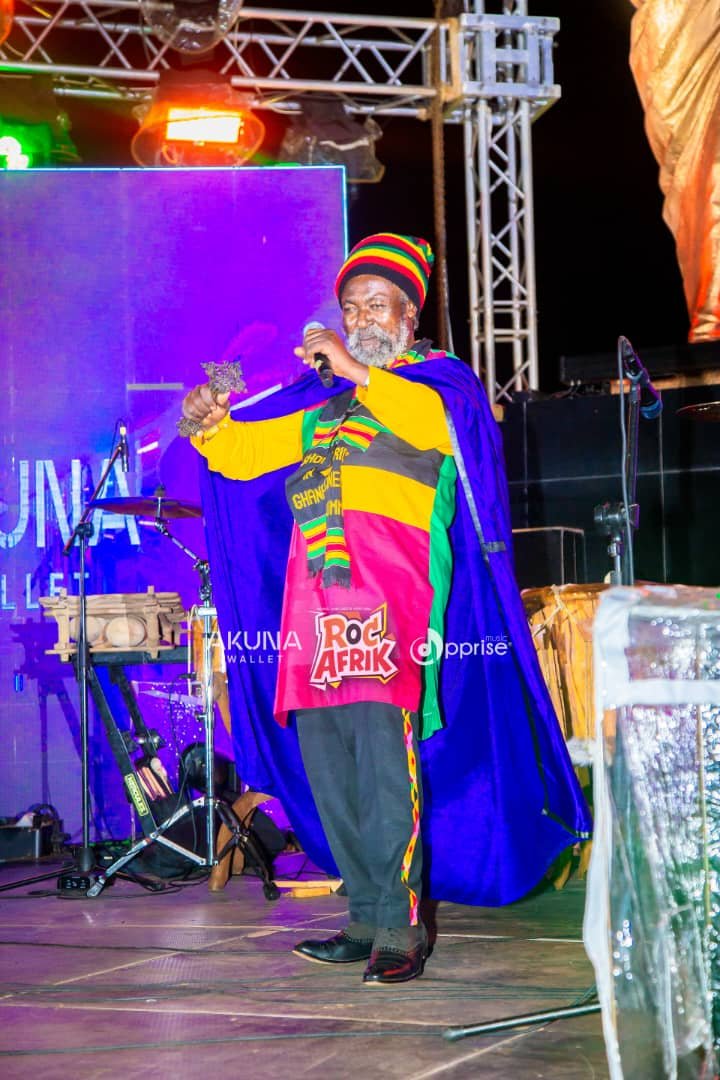
Ras Caleb Appiah-Levi of PanAfrica-Ghana (PAG) has reflected on the difference between intelligence and wisdom, arguing that although the two are often confused, they represent distinct qualities that influence how people live, make decisions and relate to others.
In a write-up titled “I May Not Be Wise, But I Am Very Intelligent. Trust Me,” he explained that intelligence involves acquiring knowledge, understanding information, analysing issues, arguing, passing examinations and remembering facts.
According to him, intelligence can fill a library, build a machine and help someone win a debate, but wisdom goes beyond the ability to gather and apply knowledge.
He described wisdom as the ability to know when to speak and when to remain silent, recognise that winning an argument could mean losing a brother, understand that knowledge without love becomes noise, and appreciate that not everything a person is capable of doing should necessarily be done.
“I may not be wise, but I am very intelligent. Trust me,” he declared, using the statement to highlight the distinction between being intellectually capable and possessing the judgement needed to navigate life’s challenges.
Appiah-Levi noted that he had seen intelligent men destroy their homes because they lacked wisdom, intelligent women lose good relationships for the same reason, and intelligent leaders lead their people into difficult situations because they failed to exercise sound judgement.
He also cited pastors who preach about heaven but live contrary to the values they promote, arguing that intelligence alone does not guarantee the ability to make the right choices.
The PanAfrica-Ghana figure further illustrated the difference between the two qualities by explaining that intelligence may tell someone they have 10 hours of life remaining, while wisdom helps them determine what to do with those hours.
Similarly, he said intelligence teaches people how to make money, whereas wisdom helps them understand how to make meaning out of life. While intelligence can provide Google Maps, he argued, wisdom helps people identify where they actually need to go.
He observed that many people are preoccupied with acquiring academic qualifications, certificates and titles to demonstrate their intelligence, often neglecting the need to develop wisdom.
To support his argument, Appiah-Levi pointed to people whose experiences have equipped them with valuable life lessons despite their limited access to formal education.
He cited elderly people in villages who may not know how to operate computers but understand how to sustain marriages for 50 years, describing their experience as an example of wisdom.
He also referred to market women who may not speak sophisticated English but know how to manage limited resources to feed five children while still saving money.
Additionally, he highlighted Rasta elders who may never have attended university but understand the importance of finding peace within themselves while living in harmony with Jah.
For him, these examples demonstrate that wisdom is not necessarily determined by academic achievement, social status or the ability to communicate in sophisticated language.
Despite describing himself as intelligent, Appiah-Levi acknowledged that he was still learning to become wise.
He said he continued to learn patience and humility while coming to terms with the fact that being right does not always mean being righteous.
“If intelligence is the candle, wisdom is the hand that protects it from the wind,” he wrote, using the comparison to explain how wisdom protects and guides intelligence.
He further argued that intelligence could take a person to the top, but wisdom was necessary to remain there without falling.
Appiah-Levi concluded by saying that rather than boasting about his intelligence, he prayed for wisdom and encouraged others to join him in that pursuit.
“I may not be wise, but I am very intelligent. Trust me — and pray with me, that one day I may be wise too. Blessed times,” he stated.
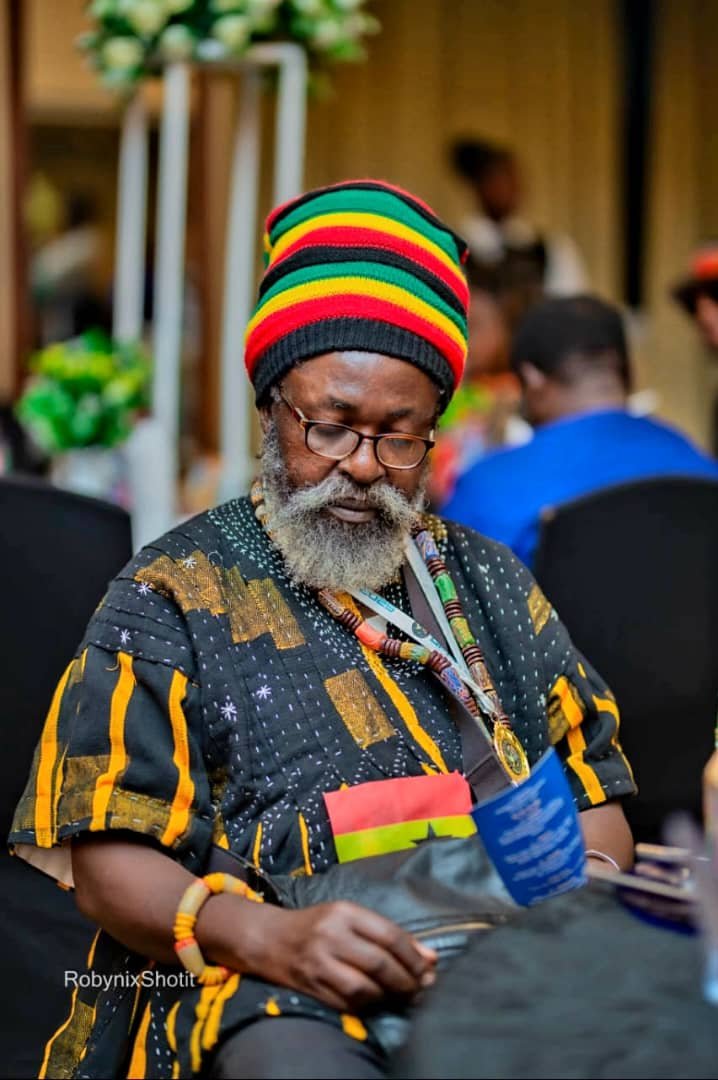
Ras Caleb Appiah-Levi of PanAfrica-Ghana (PAG) has argued that personal development is an individual responsibility, maintaining that leaders, teachers, parents and institutions can create growth opportunities but cannot force people to develop themselves.
In the second part of his commentary titled “You Don’t Develop People, People Develop Themselves,” he challenges the widely held belief that governments, non-governmental organisations (NGOs), religious leaders and companies directly develop the people they serve.
According to him, although these institutions frequently describe their work as people development, genuine growth ultimately depends on an individual’s willingness to learn, change and take responsibility for personal progress.
“The deeper truth of life is this: You don’t develop people. People develop themselves,” he stated.
Ras Caleb explained that development begins with an internal decision rather than external assistance, arguing that even the most gifted teacher cannot force knowledge into a student who refuses to learn.
Similarly, he noted that a visionary leader cannot compel a follower to grow when that individual remains committed to comfort. He added that money, opportunities and training alone cannot produce meaningful growth without a personal willingness to improve.
To illustrate his point, he referred to the popular saying that a horse can be led to water but cannot be forced to drink.
He drew similar comparisons with education and religion, stating that providing a classroom does not guarantee understanding, just as providing the Bible does not automatically bring about personal transformation.
Having argued that people cannot be developed by others, Ras Caleb said the responsibility of leaders and other influential individuals should be to facilitate growth by creating the conditions that enable people to develop themselves.
He outlined three key responsibilities for anyone seeking to support the development of others.
Creating the right environment
Ras Caleb said leaders must establish environments characterised by truth, justice, love, opportunity and accountability to make personal growth possible.
Using farming as an example, he explained that a farmer does not directly make a seed grow but provides the necessary conditions, including suitable soil, water and sunlight.
He maintained that the same principle applies to human development, warning that even good seeds can die when planted in toxic soil.
Providing exposure
He also identified exposure as an important factor in personal development, arguing that many people are limited not necessarily by bad intentions but by the experiences and possibilities they have encountered.
According to him, exposing people to broader visions, higher standards and better examples can awaken their desire to improve themselves
Exposure triggers self-development,” he stated.
Presenting challenges
The third responsibility, he said, is to challenge people to move beyond their comfort zones, solve problems and take responsibility for their actions.
Ras Caleb argued that excessive comfort can hinder growth, particularly when individuals are shielded from difficulties that could help them learn and develop.
He cautioned that leaders who protect their followers from every challenge may unintentionally limit their progress rather than help them.
To further explain his position, Ras Caleb cited the example of two brothers raised in the same household, with the same parents and access to the same school fees, who eventually take different paths in life.
He observed that while one may become successful, the other may struggle to make meaningful progress.
According to him, the difference cannot always be attributed to the efforts of their parents but also to how each individual responds to the support, opportunities and experiences available to them.
His argument places emphasis on personal choices and the willingness to make use of available opportunities as important factors in determining individual outcomes.
Ras Caleb further warned that believing one has the power to develop another person can encourage pride and a desire to control others.
He explained that such a mindset may lead individuals to believe that others owe their success to them.
Conversely, he said recognising that people ultimately develop themselves encourages humility and a spirit of service.
He maintained that the role of leaders, teachers, parents and elders should be to guide rather than control, serve rather than claim ownership, and provide the necessary support without expecting to dictate the outcome.
“Let us stop saying, ‘I developed that man.’ No, you did not. He developed himself. You were simply privileged to be part of his environment,” he stated.
He therefore urged people in positions of influence to focus less on claiming credit for the achievements of others and more on becoming positive influences who inspire personal growth.
Ras Caleb also connected his argument to faith, stating that even God does not force personal development on human beings.
He explained that God provides life, grace and truth, but the decision to change and become a better person ultimately remains an individual’s responsibility.
He concluded his commentary by encouraging leaders, teachers, parents and elders to create environments that inspire people to take ownership of their growth, describing this as a more meaningful ambition than claiming to have developed others.

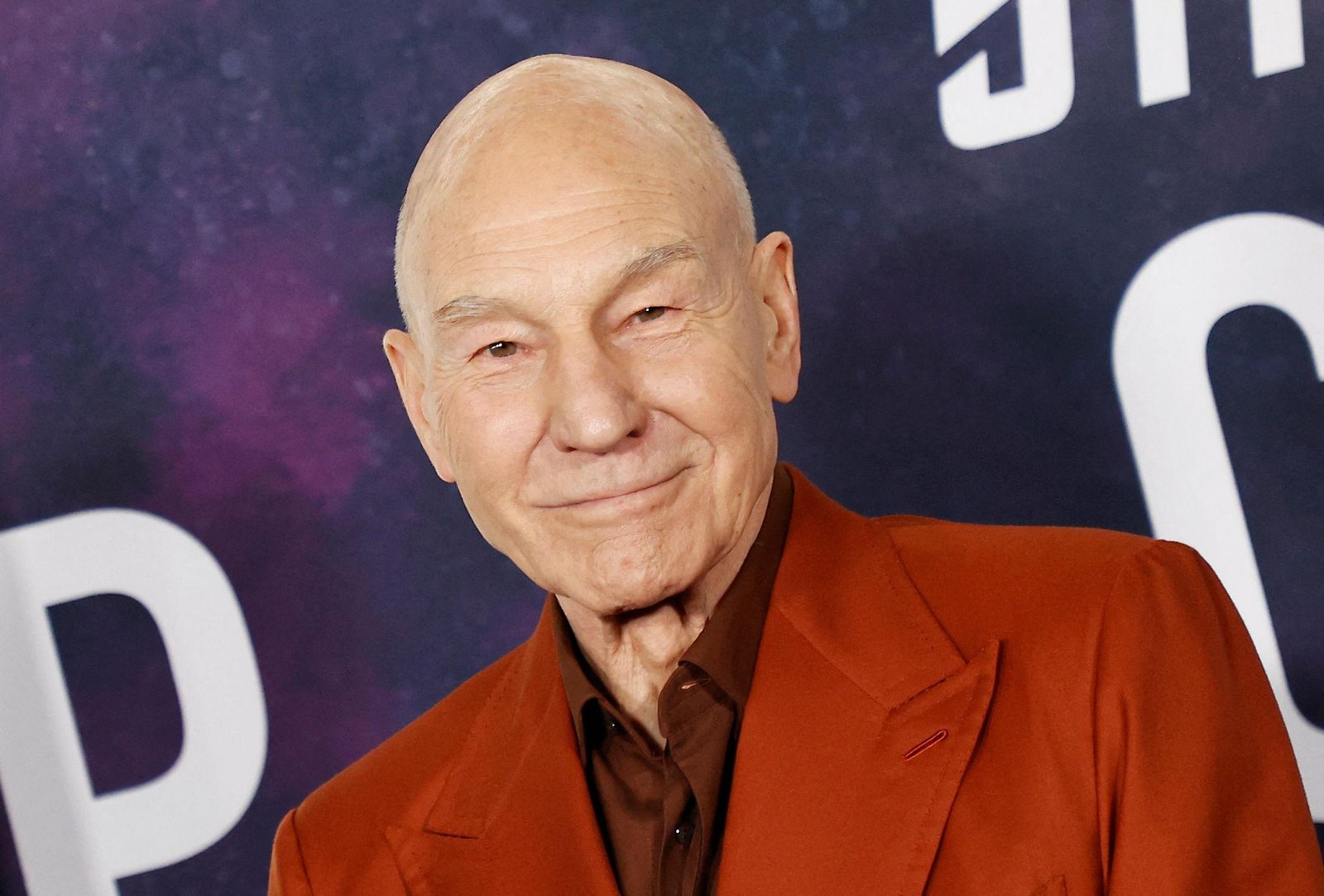
Sir Patrick Stewart, the acclaimed British actor who became a global entertainment icon through his roles in Star Trek and X-Men, has died at the age of 86.
Stewart died at his home in Los Angeles on Wednesday, October 28, 2026, according to a statement shared by his longtime spokesperson, Kelly Bush Novak. The announcement said he had experienced a brief period with Alzheimer’s disease and Lewy body dementia, with his wife, singer-songwriter Sunny Ozell, by his side.
His death marks the passing of one of the most recognisable actors of his generation, whose career successfully bridged classical theatre, television, blockbuster films and voice acting.
A defining role in ‘Star Trek’

Stewart achieved international recognition in 1987 when he began portraying Captain Jean-Luc Picard in Star Trek: The Next Generation. His thoughtful and commanding performance helped establish Picard as one of science fiction’s most celebrated television characters.
The series ran for seven seasons, from 1987 to 1994, and Stewart later returned to the role in several films and the series Star Trek: Picard. His portrayal became closely associated with intelligence, diplomacy and principled leadership.
Remembered as Professor X in ‘X-Men’

Beyond science fiction television, Stewart won another generation of fans through his portrayal of Professor Charles Xavier in the X-Men film franchise.
As the mentor and leader of the X-Men, he brought authority and compassion to the character, becoming a central figure in the film series. His performances alongside fellow actor Ian McKellen, who portrayed Magneto, were among the franchise’s memorable elements.
Marvel Studios and fellow performers have paid tribute to Stewart, recognising his contribution to the franchise and the wider entertainment industry.
A distinguished career in theatre

Although millions knew him for his screen performances, Stewart spent a substantial part of his professional life on stage. He joined the Royal Shakespeare Company in the 1960s, building a reputation through performances in classical productions, including works by William Shakespeare.
His theatre career demonstrated a range that extended well beyond science fiction and superhero films. He also performed on Broadway and London’s West End, earning critical acclaim and major industry honours. Stewart received multiple Olivier Awards and was knighted in 2010 for his services to drama.
Tributes from colleagues and fans

News of Stewart’s death prompted tributes from colleagues across film and television. William Shatner, his fellow Star Trek star, remembered him as a gifted actor whose portrayal of Captain Picard reflected intelligence, grace and humanity.
Hugh Jackman, who worked alongside Stewart in the X-Men films, also expressed his grief, remembering him as both a remarkable performer and a friend.
Stewart was also known for supporting causes involving human rights, refugees, veterans and survivors of domestic abuse. His advocacy added another dimension to a career that extended beyond entertainment.
A legacy that will endure
Patrick Stewart leaves behind a body of work spanning decades, from Shakespearean theatre to internationally successful film and television franchises. His distinctive voice, commanding screen presence and thoughtful character portrayals helped him connect with audiences across generations.
For Star Trek fans, he will remain Captain Jean-Luc Picard. For X-Men audiences, he will be remembered as Professor Charles Xavier. For theatre lovers, his legacy also rests on his lifelong commitment to classical acting.
His death represents a significant loss for the international entertainment industry, but his performances will continue to introduce new audiences to one of Britain’s most distinguished actors.

Ghana Urged to Establish Convention Bureau, Build 20,000-Capacity Facility to Boost MICE Tourism

Don’t Destroy Okudzeto Ablakwa Over Past Mistakes — Citizen Ato Dadzie Fires Back At Critics

Okudzeto Ablakwa’s Downfall Is His Arrogance Of Power – NPP Fires Back Over Chartered Flight Saga

IRAWMA 2025: Shatta Wale Wins 3 Major Awards Including Best Music Video

Samini Secures Promotional Deal with Audiomack for Upcoming Album “THE ORIGIN8A”

AirtelTigo losing GH₵20m monthly; total debts exceed $200million – Sam George


-
 Entertainment1 week ago
Shatta Wale Cake Tells Story of Growth, Identity and African Dancehall Influence
-

 General News4 days ago
GTA Staff Demand Answers on World Cup Visa Slots, Staff Dismissals and Unpaid Allowances
-

 General News1 week ago
FOKLEX MEDIA AWARDS COMMENDS PRINCE KWAW GYIMAH AND OWASS FM TEAM FOR PROFESSIONALISM DURING KWAME DZOKOTO INCIDENT
-
 Politics1 week ago
OB UASI HEADMASTER IN SEXUAL MISCONDUCT CONTROVERSY EYES NDC CONSTITUENCY CHAIRMANSHIP
-
 Entertainment1 week ago
Ghana Unveils December in GH 2026 Calendar With Over 150 Events Nationwide
-
 General News1 week ago
PROFOUND GRATITUDE FOR YOUR DECISIVE INTERVENTION IN FAST-TRACKING THE COMPLETION OF THE MUMFORD FISHING HARBOUR
-

 General News4 days ago
Nicki Minaj Throws Her Support Behind Trump Ahead of US Midterm Elections
-

 General News6 days ago
SAMMY GYAMFI’S “MINE WITHOUT LICENCE” REMARK SPARKS FRESH GALAMSEY DEBATE