
Politics
Kofi Bentil warns against third-term presidential agenda

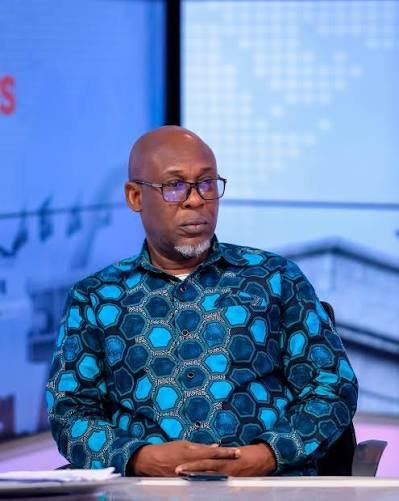
IMANI Africa Vice President says he and others will resist anyone advocating an extension of presidential tenure beyond the constitutionally permitted limit.
Vice President of IMANI Africa, Kofi Bentil, has issued a strong warning to individuals advocating a third-term presidential extension, declaring that he and others will deal with anyone who promotes such an agenda.
Mr Bentil’s comments, shared by TV3 Ghana, come amid renewed public debate over presidential term limits and discussions surrounding the possibility of President John Dramani Mahama seeking to remain in office beyond the constitutionally permitted two terms.
The IMANI Africa executive made it clear that he would not remain silent in the face of efforts to promote a third-term arrangement, signalling his readiness to join others in resisting such moves.
His warning adds to growing concerns among sections of the public and civil society over attempts to extend presidential tenure, an issue that has attracted political and constitutional attention in Ghana.
Debate over presidential term limits
Ghana’s 1992 Constitution provides for a four-year presidential term and prohibits anyone from being elected President for more than two terms.
The debate has resurfaced following comments by some individuals within the governing National Democratic Congress (NDC) suggesting that President Mahama should be given another term beyond his current constitutional limit.
However, the President has repeatedly stated that he is not interested in a third term, according to Government Communications Minister Felix Kwakye Ofosu, who reiterated the position during a TV3 Key Points discussion on October 31, 2026.
The NPP has also taken the matter to the Supreme Court, seeking interpretation of aspects of the constitutional provisions governing presidential term limits and eligibility.
Mr Bentil’s warning comes as political actors, legal practitioners and civil society figures continue to express differing views on the third-term debate.
In September 2026, he backed a separate proposal to extend the length of Ghana’s presidential term from four to five years, arguing that a longer term could improve governance and accountability. That proposal, however, is distinct from allowing a president to serve more than two terms.
His latest comments underline his opposition to any attempt to extend an individual president’s tenure beyond the constitutional limit.
The debate is expected to remain part of Ghana’s national political conversation as stakeholders discuss constitutional safeguards, presidential succession and the protection of the country’s democratic arrangements.
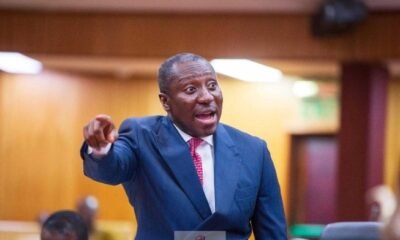




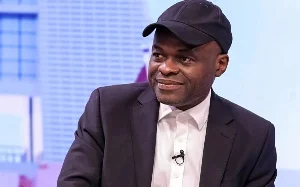
Private legal practitioner Martin Kpebu argues that the country has many capable people who deserve opportunities to lead, cautioning against keeping one person in power for an extended period.
Private legal practitioner Martin Luther Kpebu has questioned the rationale behind the proposed extension of Ghana’s presidential term from four to five years, arguing that the country has many talented individuals capable of occupying the highest office.
He believes Ghana should create opportunities for different people to lead rather than extend the period one individual remains in power.
Speaking on TV3’s Ghana Tonight on Wednesday, October 28, 2026, Mr Kpebu said Ghanaians generally have strong opinions about leadership and do not appear to favour being governed by one person for more than eight years.
He likened the country’s political culture to its football culture, where almost everyone considers themselves qualified to coach the national team.
“Ghana is a land of 34 million presidents, just like we say in football; Ghana is a land of about 34 million coaches,” he said.
According to him, the abundance of people who believe they can lead the country reflects the availability of potential presidential talents who should be given opportunities to serve.
Questions prolonged presidential tenure
Mr Kpebu maintained that Ghana should be cautious about increasing the number of years a president can remain in office, stressing that the country should not be moving towards prolonged leadership by one individual.
He cited the United Kingdom as an example, pointing to the turnover of prime ministers as a model Ghana could consider in ensuring that leaders who fail to deliver can be replaced.
“Look at the UK, in 10 years, they’ve had seven Prime Ministers. So the moment a PM comes he’s not getting it right, they check him out. So that’s what we should be striving for. Not increasing the number of years for one man,” he stated.
Debate over five-year term proposal
His comments come amid discussions over a Constitutional Review Committee recommendation to extend Ghana’s presidential term from four years to five.
The committee has argued that a longer term could provide presidents with more time to implement policies and pursue long-term development programmes.
Mr Kpebu has previously opposed the proposal, raising concerns about corruption and the implications of extending presidential tenure.
The proposal remains part of the wider national debate on constitutional reform, governance and the appropriate duration of presidential office.
Politics
NPP questions issuance of diplomatic, service passports to persons without official state positions
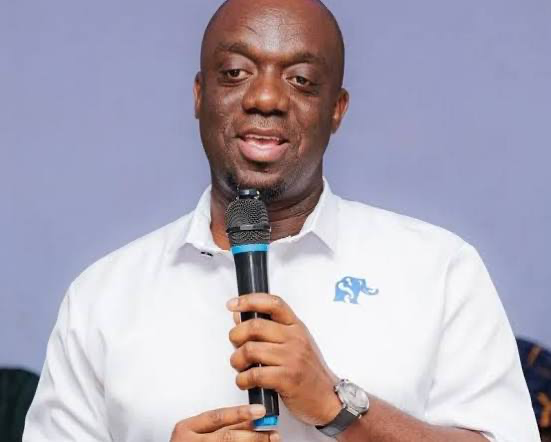
The opposition party has petitioned the US Embassy to suspend diplomatic courtesies for affected passport holders and called for an independent audit of documents issued since January 2025.
The New Patriotic Party (NPP) has raised concerns over the alleged issuance of Ghanaian diplomatic and service passports to individuals who do not occupy the official positions used to justify their applications.
In a petition dated October 30, 2026, and signed by its General Secretary, Justin Kodua Frimpong, the party asked the United States Embassy in Accra to suspend diplomatic courtesies for holders of the passports in question until their eligibility is independently verified.
The NPP cited two approval letters issued by the Ministry of Foreign Affairs on August 6 and 7, 2026, covering six individuals described as officials of the National Disaster Management Organisation (NADMO) and the Fisheries Commission.
The individuals named are Twumasi Francis Kwame, Shaibu Alhassan Abu, Gyabaah Anthony, Issah Ayisha, Bennor Yussif and Adom Emmanuel Kwabena.
According to the party, the positions attributed to the six beneficiaries were either occupied by other officers or did not exist within the institutions concerned.
NPP identifies alleged discrepancies
The party said the first approval letter listed three individuals as NADMO officials, describing them as Deputy Director of Climate Change, Director of Hydro and Director of Geology.
However, the NPP claimed those positions were held by other officers, whom it identified as Ebenezer Vandyke, Dr Bertha Kusimi and Bright Atama.
Regarding the Fisheries Commission, the party alleged that the designation of Deputy Director of Aquaculture Specialist did not exist, while the positions of Deputy Director of Information Technology and Assistant Finance Manager were also inaccurately represented.
The NPP argued that the alleged discrepancies raised questions about the basis on which the passports were approved, particularly because the Ministry’s letters reportedly stated that the documents were intended strictly for official use.
Calls for verification and audit
The party has asked the US Mission to subject Ghanaian diplomatic and service passports issued from January 7, 2025, to enhanced verification, including direct confirmation of holders’ official positions with the institutions they claim to represent.
It has also urged the Ghanaian government to suspend passports issued to ineligible persons, publish a comprehensive list of diplomatic and service passports issued since January 2025, and commission an independent audit led by the Auditor-General or another independent body.
The NPP further wants passports found to have been issued irregularly revoked and recovered, with anyone found culpable referred for investigation and possible prosecution.
The allegations have not, in the reports available, been independently established by the Ministry of Foreign Affairs or the institutions named.
The controversy comes against the background of a passport recall exercise announced by the Foreign Affairs Ministry in January 2025, which sought to retrieve official passports from persons no longer serving in qualifying state positions.
The NPP says its latest petition is intended to protect Ghana’s national interest while ensuring that legitimate state officials are not inconvenienced when travelling on official assignments.
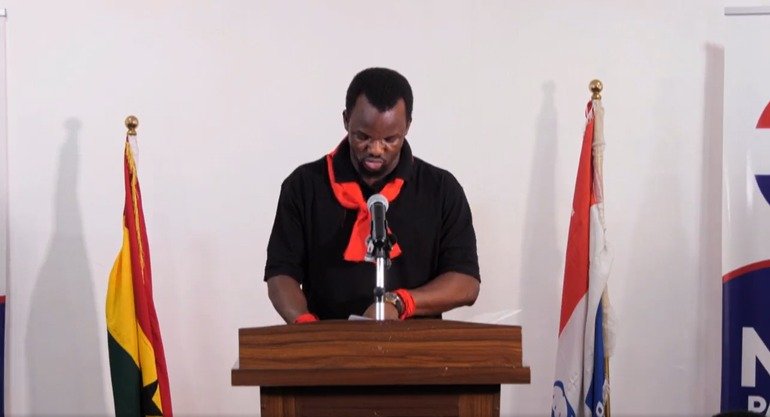
A New Patriotic Party (NPP) youth organiser has dismissed suggestions that the party’s criticism of Foreign Affairs Minister Samuel Okudzeto Ablakwa is driven by personal hatred, insisting that the concerns being raised are centred on accountability, transparency and responsible leadership.
The youth organiser maintained that the NPP’s position should not be misconstrued as a personal attack against Ablakwa, stressing that public officials must be prepared to answer questions about their actions and decisions while occupying positions of public trust.
According to the organiser, demanding explanations from a government appointee does not amount to hatred or political persecution but forms part of the democratic responsibility of opposition parties and citizens to hold those in authority accountable.
The organiser further argued that public office comes with enormous responsibilities and that no individual, regardless of political affiliation or position, should be shielded from scrutiny.
The comments come amid political exchanges between the NPP and the government over issues involving Ablakwa, with the opposition raising questions and demanding answers on matters it considers to be in the public interest.
The NPP youth organiser insisted that the party’s concerns should be addressed on their merits rather than dismissed as politically motivated attacks.
The organiser also underscored the importance of transparency in governance, arguing that public confidence in government institutions depends largely on the willingness of public officials to provide clear explanations when concerns are raised about their conduct.
The remarks reinforce the NPP’s position that accountability must remain a central pillar of democratic governance, regardless of which political party is in power.
“We don’t hate Ablakwa; we demand accountability” is the central message from the NPP youth organiser, as the political debate over the Foreign Affairs Minister continues.
Politics
NPP Fires Fresh Salvo at Mahama Over ECG Outages: ‘If There Is No Dumsor, Why the Constant Power Interruption Announcements?’
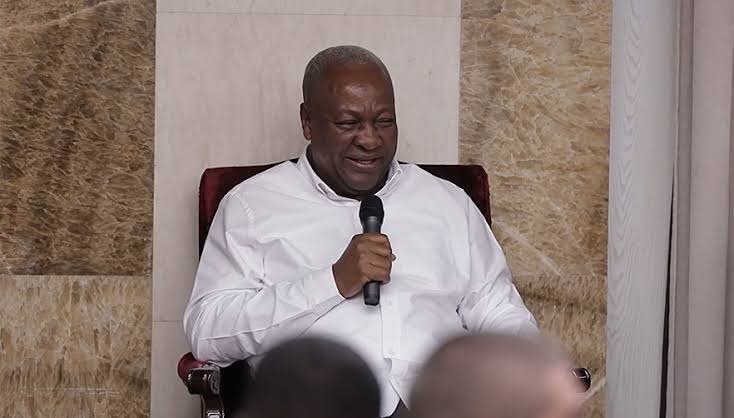
The New Patriotic Party (NPP) has challenged President John Dramani Mahama and his government to explain why the Electricity Company of Ghana (ECG) continues to announce scheduled power interruptions if the country is not experiencing a return of dumsor.
The party’s question has reignited the debate over Ghana’s electricity supply situation, with the opposition demanding clarity on the frequent power outage announcements and what they mean for households, businesses and industries.
The NPP argues that the repeated announcements by ECG for planned maintenance and other electricity-related interventions raise questions about the stability of power supply under the current administration.
The opposition has further questioned whether the distinction between scheduled maintenance and persistent power interruptions adequately addresses the concerns of consumers who continue to experience disruptions in electricity supply.
ECG’s frequent outage notices fuel public debate
ECG has, in recent weeks, published several notices announcing planned and emergency maintenance exercises across different parts of the country.
For instance, the company announced maintenance works across six regions between October 26 and 30, 2026, affecting selected communities in Greater Accra, Tema, Central, Volta and Ashanti regions. The interventions were intended to upgrade infrastructure, repair underground cables and improve electricity distribution.
The repeated announcements have become a major talking point amid public concerns about the reliability of electricity supply.
Mahama declares Ghana free from dumsor
The controversy follows President Mahama’s recent assertion that Ghana has sufficient electricity to meet national demand and is no longer experiencing the persistent power rationing commonly known as dumsor.
Speaking in Moscow, the President reportedly pointed to government’s efforts to address outstanding debts in the energy sector, including payments to independent power producers, as part of measures to stabilise electricity supply.
However, the NPP’s criticism suggests that the President’s assurance has not entirely settled public concerns about the frequency of power interruptions.
ECG maintains outages are linked to maintenance and network challenges
ECG has previously maintained that planned maintenance exercises should not be confused with a return of nationwide dumsor.
In February 2026, the company’s Director of Communications, William Boateng, explained that some interruptions were associated with localised faults, overloaded transformers and maintenance requirements. He said measures were being taken to strengthen the distribution network and improve reliability.
The distinction between nationwide power rationing, scheduled maintenance and unexpected network faults remains central to the ongoing debate.
Ghanaians demand answers
For households and businesses that depend on uninterrupted electricity, the central concern is not simply how the outages are described but how frequently they occur, how long they last and what is being done to prevent them.
Small businesses, including cold stores, hairdressing salons, welding shops and other electricity-dependent enterprises, are particularly vulnerable to prolonged interruptions.
The NPP is therefore demanding greater clarity from the Mahama administration on the country’s electricity situation.
As the political debate intensifies, many consumers will be looking to government and ECG for clear explanations, reliable supply and lasting solutions to the power challenges affecting their daily lives.
Ultimately, the question confronting the government is whether its assurance of adequate electricity generation is translating into the consistent and dependable power supply Ghanaians expect.
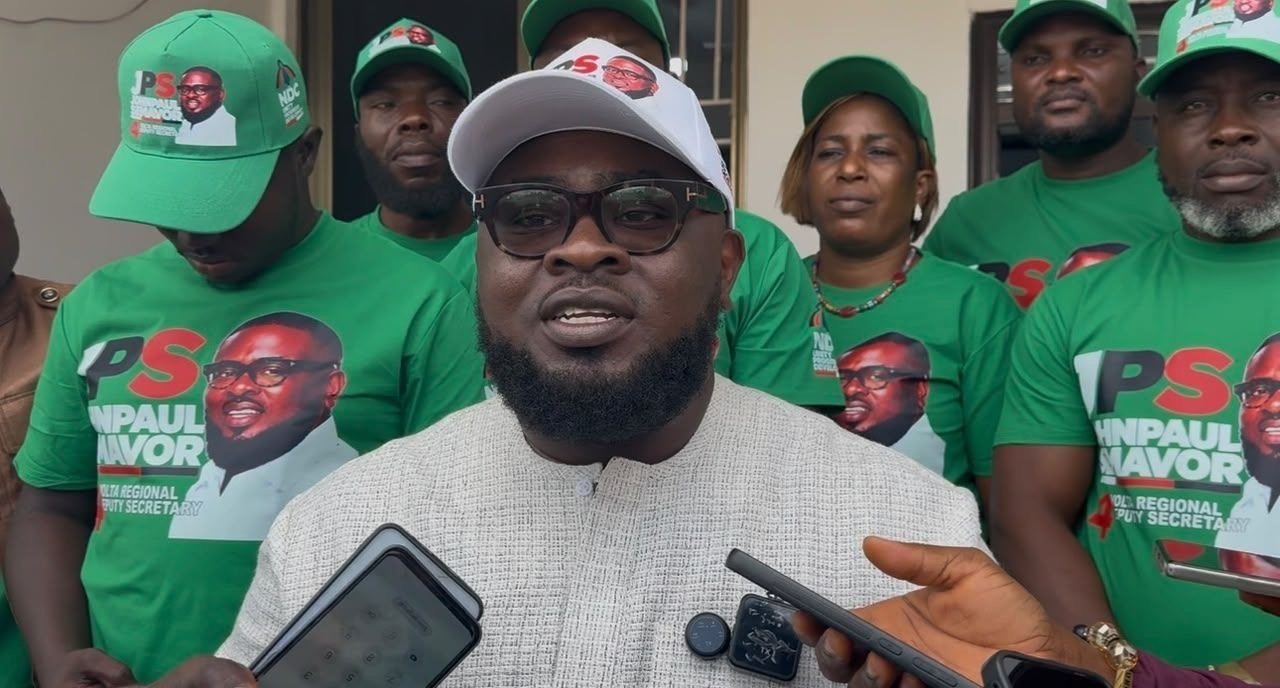
Volta NDC leadership faces renewed calls for stronger grassroots engagement as John Paul Semevor pledges to reconnect party leadership with the rank and file, strengthen internal communication and ensure that the concerns of ordinary members are heard.
John Paul Semevor has pledged to bridge what he describes as a leadership gap between the Volta Regional leadership of the National Democratic Congress (NDC) and its grassroots supporters, signalling his commitment to strengthening internal party structures and rebuilding closer relationships with members at the community level.
His pledge comes amid growing conversations about the need for stronger grassroots participation, effective communication and inclusive leadership within the party.
Semevor believes that the strength of the NDC must extend beyond its regional and constituency executives to include the ordinary party faithful whose dedication, mobilisation and commitment sustain the party at the grassroots.
According to him, effective party leadership must be accessible, responsive and connected to the concerns of members, rather than operating at a distance from the very people it is expected to serve.
BRIDGING THE DIVIDE BETWEEN LEADERSHIP AND THE GRASSROOTS
At the heart of Semevor’s commitment is the need to close the communication gap between party leadership and grassroots members.
He maintains that ordinary members must not be treated merely as political foot soldiers during election campaigns but as essential stakeholders whose contributions should inform party decisions.
The proposed approach places emphasis on regular engagement, stronger consultation and improved coordination between regional executives, constituency structures, electoral area coordinators and polling station executives.
For Semevor, building a united and functional party requires a leadership structure that listens as much as it directs.
GRASSROOTS MEMBERS MUST FEEL THE IMPACT OF LEADERSHIP
A major concern underpinning the pledge is the perception that the connection between party leadership and grassroots members can weaken when communication and engagement become inconsistent.
Semevor’s position highlights the importance of ensuring that party members at the community level feel recognised, included and adequately represented in the party’s decision-making processes.
He believes that strengthening the relationship between leadership and the grassroots is essential to maintaining internal cohesion and ensuring that party structures remain active beyond election periods.
UNITY, INCLUSION AND ACCOUNTABILITY
Beyond improving communication, the pledge also draws attention to the broader need for unity and accountability within the Volta NDC.
The region has historically played an important role in the NDC’s political fortunes, making effective internal organisation and grassroots participation significant issues for the party.
Semevor’s commitment therefore places renewed focus on how regional leadership can work more closely with constituency executives and ordinary members to address concerns, resolve internal misunderstandings and promote a shared sense of responsibility.
He is advocating a party environment in which members feel that their voices matter and that leadership remains accountable to the structures that sustain it.
A CALL FOR A MORE CONNECTED VOLTA NDC
As the NDC continues its political activities in the Volta Region, Semevor’s pledge has brought the question of grassroots engagement into focus.
Whether through improved consultation, regular interactions or stronger organisational coordination, the central message is that party leadership and grassroots members must operate as partners rather than separate entities.
Ultimately, his proposed commitment raises an important question for the Volta NDC: how can the party build a leadership structure that remains genuinely connected to its members at every level?
For Semevor, the answer begins with closing the gap, listening to the grassroots and ensuring that leadership is felt not only in regional offices but also in the communities where the party’s support is built.

Ghana has too many presidential talents to extend tenure to five years – Kpebu

Kofi Bentil warns against third-term presidential agenda

Ebola Outbreak Claims Over 5,000 Lives in DR Congo, Raising Regional Concerns

IRAWMA 2025: Shatta Wale Wins 3 Major Awards Including Best Music Video

Samini Secures Promotional Deal with Audiomack for Upcoming Album “THE ORIGIN8A”

AirtelTigo losing GH₵20m monthly; total debts exceed $200million – Sam George


-

 Entertainment2 weeks ago
Shatta Wale Cake Tells Story of Growth, Identity and African Dancehall Influence
-

 General News6 days ago
GTA Staff Demand Answers on World Cup Visa Slots, Staff Dismissals and Unpaid Allowances
-

 General News1 week ago
FOKLEX MEDIA AWARDS COMMENDS PRINCE KWAW GYIMAH AND OWASS FM TEAM FOR PROFESSIONALISM DURING KWAME DZOKOTO INCIDENT
-
 Entertainment2 weeks ago
Ghana Unveils December in GH 2026 Calendar With Over 150 Events Nationwide
-

 General News1 week ago
SAMMY GYAMFI’S “MINE WITHOUT LICENCE” REMARK SPARKS FRESH GALAMSEY DEBATE
-
 General News6 days ago
Nicki Minaj Throws Her Support Behind Trump Ahead of US Midterm Elections
-
 General News2 weeks ago
PROFOUND GRATITUDE FOR YOUR DECISIVE INTERVENTION IN FAST-TRACKING THE COMPLETION OF THE MUMFORD FISHING HARBOUR
-
 Politics2 weeks ago
OB UASI HEADMASTER IN SEXUAL MISCONDUCT CONTROVERSY EYES NDC CONSTITUENCY CHAIRMANSHIP