
Entertainment
Rocky Dawuni: The Ghanaian Reggae Star Who Took Afro Roots to the Grammy Stage

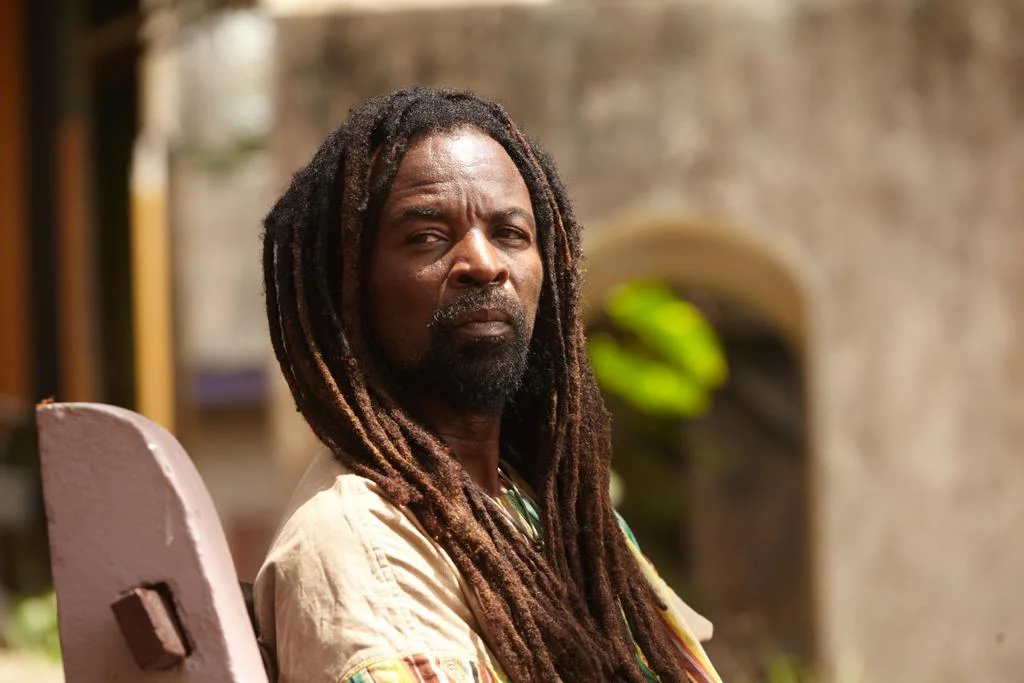
From growing up in a military barracks in Ghana to earning four Grammy nominations, Rocky Dawuni has built an international music career by combining reggae, highlife, Afrobeats and African rhythms with messages of unity, hope and social change. His journey has also extended beyond music into environmental advocacy, cultural diplomacy and youth empowerment.
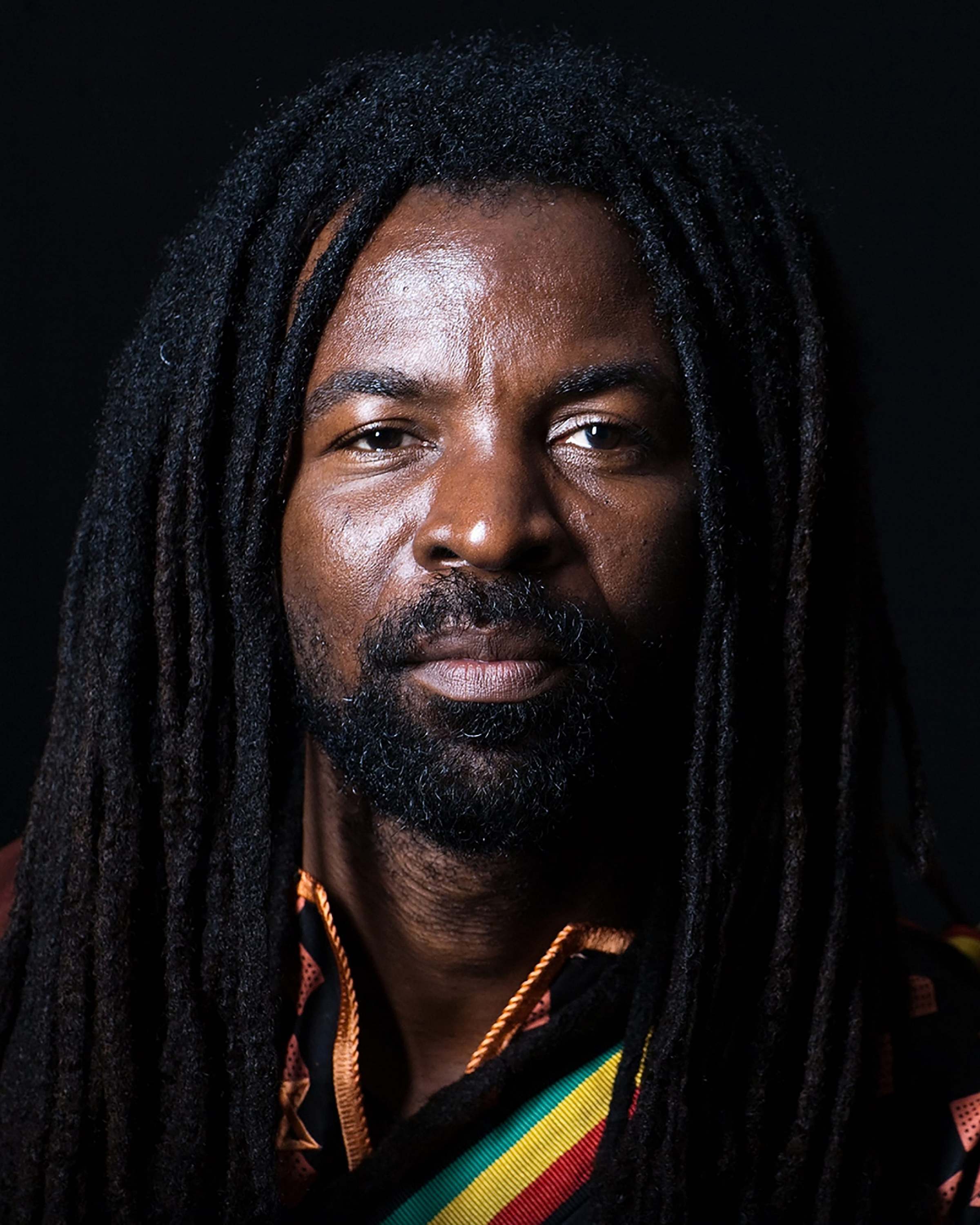
Ghanaian musician Rocky Dawuni has established himself as one of the country’s most internationally recognized reggae and Afro Roots performers, building a career that connects Ghanaian musical traditions with audiences across Africa, the Caribbean, Europe and the United States.
Known for songs that address social consciousness, African identity, love, resilience and unity, Dawuni has developed a distinctive sound that draws inspiration from reggae legend Bob Marley, Nigerian Afrobeat pioneer Fela Kuti and Ghana’s own musical heritage.

His achievements include becoming the first Ghanaian musician to receive a Grammy nomination, earning four nominations across different categories, performing on major international stages and serving in environmental and cultural advocacy roles.
Yet his journey to international recognition began far from the prestigious venues where he would later perform.
Rocky Dawuni grew up in Ghana in a family that placed considerable importance on education, discipline and cultural heritage.
His father, Koytaw Dawuni, worked as a cook for military personnel at Michel Camp, a military installation in Ghana. Through his father’s work, Rocky spent part of his childhood in a military-barracks environment where people from different ethnic and cultural backgrounds lived and interacted.
The environment exposed him to different musical traditions and gave him opportunities to encounter music performed by bands at the camp.

One group that particularly influenced his early interest in music was the Hot Barrels band. Dawuni has recalled being drawn to the band’s rehearsals and live performances, where he listened closely to the musicians and developed an appreciation for live instrumentation.
His interest in music grew during a period when reggae, highlife, Afrobeat and international popular music were reaching Ghanaian audiences through radio, records and live performances.
His father’s commitment to education also played an important role in his upbringing. Rocky was the second-born child in a family of eight siblings, and his father encouraged his children to pursue education while maintaining a connection to their cultural roots.
Although he grew up in a military environment, his family background also connected him to northern Ghana. His father was a member of the Konkomba royal family associated with Bunbon Nayili, a village in the Northern Region.
The family later returned to its ancestral home, giving Rocky a closer connection to the cultural traditions that would eventually influence his musical identity.
These experiences helped shape his interest in bringing together different sounds and perspectives rather than limiting himself to one musical tradition.

Education and the beginning of his musical journey
Dawuni later moved to Accra to pursue higher education at the University of Ghana, where he studied philosophy and psychology.
His time at the university exposed him to new ideas, different social experiences and a wider community of music enthusiasts.
He spent time listening to the records of friends and exploring the works of international musicians whose music combined entertainment with messages about society and humanity.
Among the influences that shaped his musical outlook were Bob Marley, Fela Kuti, Osibisa and Ghana’s African Brothers Band.

Marley’s reggae was particularly important because of its themes of unity, resistance, hope and social consciousness. Fela Kuti’s Afrobeat also demonstrated how music could be used to address political and social issues.
Dawuni began developing an approach that brought these influences together with Ghanaian rhythms and melodies.
While at university, he formed a band called Local Crisis with a group of friends. The group started with very limited equipment, relying on improvised instruments and a simple recording arrangement.
Despite those limitations, the musicians continued to perform their original songs and build confidence as a group.
Their early performances helped them attract attention among students and music lovers. One performance opportunity at a major Pan-African event in Accra became a turning point when the group was allowed to perform after the main concert had ended.
The audience’s response encouraged the young musicians and strengthened Dawuni’s determination to pursue music professionally.
The experience marked the beginning of a career that would eventually take him beyond Ghana.

1996: The breakthrough with The Movement
Rocky Dawuni began making a stronger impression on Ghana’s music scene with the release of his debut album, The Movement, in 1996.
The album featured members of Local Crisis and other Ghanaian reggae musicians, introducing listeners to his blend of reggae, African rhythms and socially conscious songwriting.
Songs including What Goes Around and Sugar helped the album gain attention in Ghana.
Rather than simply copying Jamaican reggae, Dawuni sought to incorporate African musical influences into the genre. His approach reflected his belief that African music could connect with international audiences while retaining its cultural identity.
The success of The Movement helped establish him as a musician with a distinct sound and a message that extended beyond entertainment.
His music explored themes of love, unity, social responsibility and the importance of understanding different cultures.
The album also set the foundation for his later international ambitions.
Building his career beyond Ghana
Following the release of his debut album, Dawuni continued to develop his music and seek opportunities to reach audiences outside Ghana.
His second album, Crusade, was released in 1998, followed by Awakening in 2001 and Book of Changes in 2005.
These releases helped him expand his repertoire and refine his Afro Roots approach.
His music also attracted attention through international compilations. In 1998, his song “In Ghana” appeared on Putumayo World’s Reggae Around the World, introducing his work to listeners who followed reggae and world music beyond the African continent.
Dawuni’s international career developed alongside his continued connection to Ghana. He has spent time in both Accra and Los Angeles, working with musicians and producers from different parts of the world.
Recording in different locations, including parts of Africa, Europe and the United States, gave him opportunities to explore new arrangements while maintaining a strong connection to African musical traditions.
His work gradually became associated with a sound he calls Afro Roots, combining elements of reggae, highlife, Afrobeats, soul and other global influences.
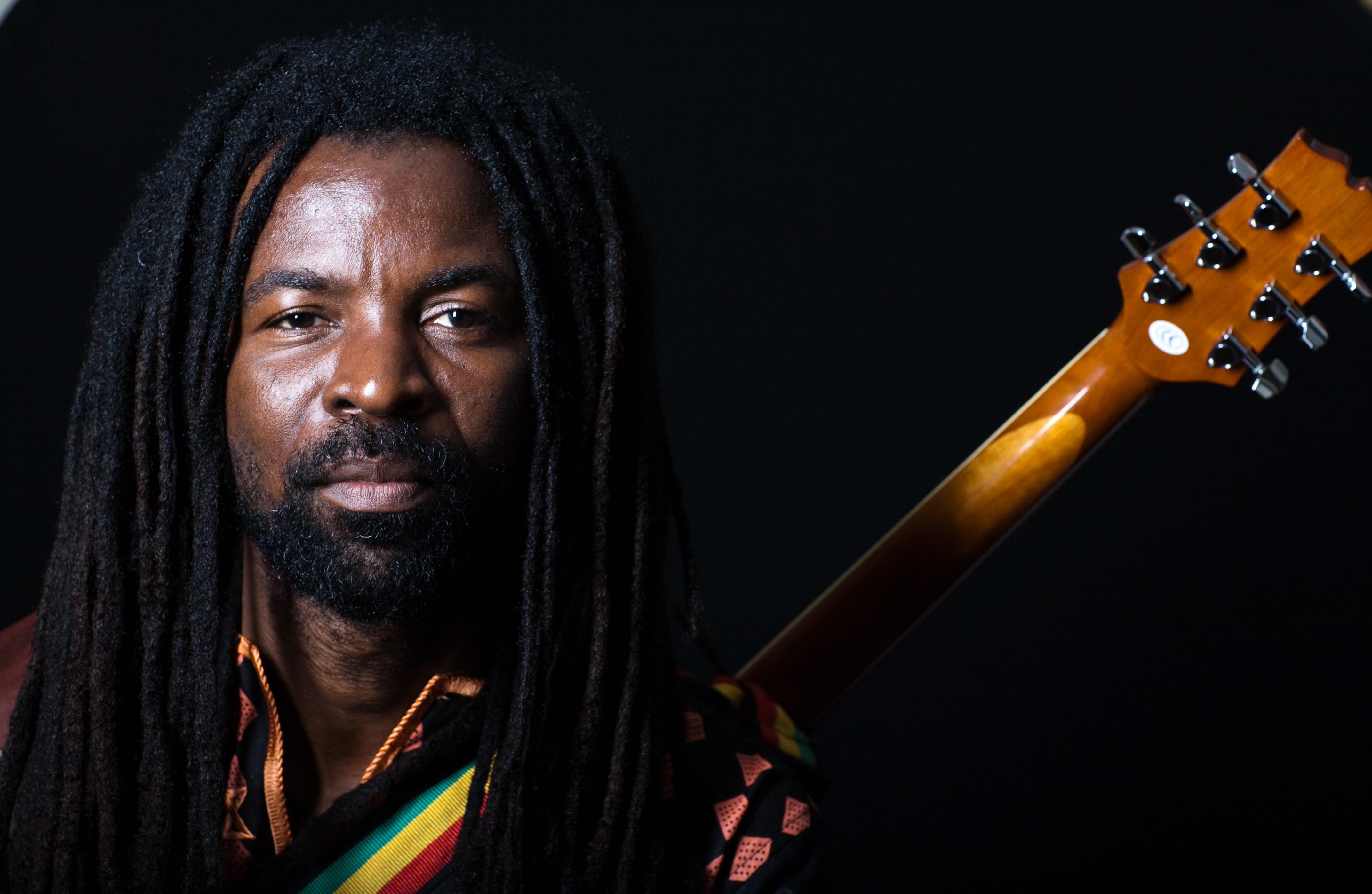
The songs that helped define Rocky Dawuni’s career
Throughout his career, Dawuni has released music that combines accessible melodies with messages about society, humanity and African identity.
Among his notable songs and projects are:
In Ghana — a song that helped introduce his work to international listeners through the Reggae Around the World compilation.
African Soccer Fever — a football-themed track that featured on the musical landscape surrounding the 2010 FIFA World Cup in South Africa.
African Thriller — associated with his album Branches of the Same Tree and his Afro-dancehall approach.
Shine a Light — a song that reflects the uplifting and socially conscious character of his music.
Beautiful People — a song connected to his Ghana-focused Voice of Bunbon, Vol. 1 project.
Woara — a love song performed in Twi that draws on palm-wine highlife and call-and-response traditions.
Neva Bow Down — a collaboration with Blvk H3ro that earned a Grammy nomination.
Africa Till I Die — a collaboration with Ghanaian highlife musician Kyekyeku.
Praise — a collaboration with Ghanaian musician Kweku Flick.
Shade Tree — a global roots song accompanied by a music video filmed in Brazil.
Rise — a song about resilience and hope that received a Grammy nomination.
I Got a Song— a collaboration with Cedella Marley, daughter of reggae legend Bob Marley and Rita Marley.
These songs demonstrate how Dawuni has moved between reggae, highlife, Afrobeat and contemporary global music without abandoning the themes that have defined his career.

2010: Music reaches a global sporting audience
One of the notable moments in Dawuni’s international journey came through “African Soccer Fever”, which featured on the tracklist associated with the 2010 FIFA World Cup in South Africa.
The World Cup brought global attention to Africa, and the tournament created opportunities for African music to reach audiences following the competition.
The inclusion of Dawuni’s music in this wider football-related musical landscape helped connect his work with an international audience beyond the usual reggae and world-music communities.
The development also reflected the relationship between music, sport and cultural identity, particularly during a tournament that placed African culture in the global spotlight.
For Dawuni, international exposure did not mean abandoning the African influences that had shaped his music. Instead, it reinforced his effort to present African sounds as part of a wider global musical conversation.

2015–2016: Historic Grammy recognition
One of the defining achievements of Dawuni’s career came with the release of his sixth album, Branches of the Same Tree, in 2015.
The album was released internationally and received attention for its combination of reggae, African rhythms and uplifting messages.
It also featured the song and video African Thriller, which reflected his interest in combining African musical traditions with contemporary dance sounds.
In February 2016, the album earned a nomination in the Best Reggae Album category at the 58th Annual Grammy Awards.
The nomination made Dawuni the first Ghanaian musician to receive a Grammy nomination, marking an important moment in Ghana’s international music history.
He was nominated alongside established reggae musicians, including Luciano, Barrington Levy, Jah Cure and Morgan Heritage.
Although he did not win the award, the nomination strengthened his international profile and demonstrated that music rooted in Ghanaian and wider African traditions could compete for recognition on one of the world’s most prominent music platforms.
The album also received recognition from Songlines magazine, which included it among its list of essential reggae albums.
The Grammy achievement became a major reference point in discussions about Ghanaian musicians seeking international recognition.

2019: Beats of Zion and collaborations with Ghanaian stars
Dawuni continued expanding his sound with the release of Beats of Zion in 2019.
The project brought together his Afro Roots influences and contemporary production, while collaborations connected him with other Ghanaian musicians.
The album featured contributions from artistes including Stonebwoy, Sarkodie and Wiyaala.
These collaborations demonstrated his willingness to work with musicians from different generations and musical backgrounds.
By combining reggae with contemporary Ghanaian sounds, Dawuni created opportunities for his music to reach listeners who might be more familiar with hiplife, Afrobeats and dancehall.
The project also reinforced his position as a musician whose career could move between traditional influences and modern popular music.
Rather than treating Ghanaian music as a single genre, his work draws attention to the connections between highlife, reggae, Afrobeat and the newer sounds emerging from the country.

2021–2022: Voice of Bunbon, Vol. 1 and another Grammy nomination
Dawuni’s connection to his cultural roots became particularly prominent with Voice of Bunbon, Vol. 1, a project focused on Ghana and his ancestral community.
The EP reflected his interest in preserving cultural identity while presenting African music to an international audience.
Its accompanying videos included Ghost Town, filmed in Los Angeles, and Beautiful People, filmed in Bunbon, his family’s home village in northern Ghana.
Another track, Woara, explored love through Twi lyrics and a musical arrangement influenced by palm-wine highlife.
The project earned a nomination in the Best Global Music Album category at the 64th Annual Grammy Awards in 2022.
The nomination was significant because it demonstrated that Dawuni’s work could gain recognition across different Grammy categories. His first nomination had been in reggae, while the later recognition highlighted the broader global-music character of his recordings.
The project also showed how his personal connection to Ghana could become a central part of an international musical production.

2022–2023: Neva Bow Down and continued international recognition
In 2022, Dawuni released Neva Bow Down, featuring Jamaican artiste Blvk H3ro.
The song received a nomination in the Best Global Music Performance category at the 65th Annual Grammy Awards in 2023.
Its defiant, uplifting message reflected the themes of resilience and determination that have appeared throughout Dawuni’s career.
He also continued collaborating with musicians from Ghana and other countries.
In 2023, he worked with Jamaican reggae group Morgan Heritage on Afreeca the Future, which also featured Senegalese musician Lord Alhajiam.
The track brought together artists associated with different African and Caribbean musical traditions.
That same year, Dawuni collaborated with Ghanaian highlife musician Kyekyeku on Africa Till I Die and worked with Kweku Flick on Praise.
He also released Shade Tree, accompanied by a video filmed in Brazil.
These collaborations illustrated his continued commitment to building musical relationships across countries and generations.
2024–2025: Rise, Cedella Marley and a fourth Grammy nomination
Dawuni released Rise in late 2024 through AQUARIAN Records and Tuff Gong International.
The song, which celebrates resilience and hope, earned him a nomination in the Best Global Music Performance category at the 67th Annual Grammy Awards in 2025.
It became his fourth Grammy nomination, following recognition for Branches of the Same Tree, Voice of Bunbon, Vol. 1 and Neva Bow Down.
The song’s accompanying video was filmed at the former Tuff Gong Africa Studios in Ghana, a facility established by Rita Marley in honour of Bob Marley.
Dawuni has been involved in efforts to restore the site and develop it into a cultural and creative hub associated with the Sankofa Africa Centre.
In July 2025, he released I Got a Song, a collaboration with Cedella Marley. The song’s accompanying video was filmed in Ghana and Miami, further connecting his African roots with international musical influences.
He also released They Know, featuring Tony Succar, Wouter Kellerman and Matt B, while appearing on D-Black’s Happiness and a reimagined version of Extraordinary Woman with the Ira B. Liss Big Band Jazz Machine.
In 2025, Ghana’s Ministry of Foreign Affairs awarded Dawuni a diplomatic passport as part of efforts to strengthen the country’s cultural diplomacy and international engagement.
The recognition reflected how his career had developed beyond recording and performing into a wider role promoting Ghanaian culture internationally.

Rocky Dawuni’s albums through the years
Dawuni’s discography documents the evolution of his sound from early reggae recordings to more expansive global-music productions.
His principal albums and projects include:
The Movement — 1996
Crusade — 1998
Awakening — 2001
Book of Changes — 2005
Hymns for the Rebel Soul — 2010
Branches of the Same Tree — 2015
Beats of Zion — 2019
Voice of Bunbon, Vol. 1 — released as an EP in 2021 and nominated for a Grammy in 2022
His more recent singles, including Shade Tree, Rise, I Got a Song and They Know, have continued to develop his musical identity.
Across these releases, the central elements of his work have remained recognisable: African musical influences, reggae rhythms, international collaborations and lyrics that frequently address unity, hope and social responsibility.

Dawuni’s career has taken him to prominent international venues and festivals.
He has shared stages with internationally recognised musicians including Stevie Wonder, John Legend, Angélique Kidjo, Alpha Blondy and Janelle Monáe.
His performances have included appearances at venues such as the Kennedy Center in Washington, D.C., Lincoln Center in New York and the Hollywood Bowl in Los Angeles.
CNN also named him among Africa’s top 10 global stars, adding to his international visibility.
His music has attracted audiences interested in reggae, world music and contemporary African sounds.
For Ghana, his career represents one way musicians can build international recognition while retaining a strong connection to their cultural origins.

Dawuni’s public work extends beyond the entertainment industry.
He serves as a Goodwill Ambassador for the United Nations Environment Programme for Africa and as an ambassador for the UN Foundation’s Clean Cooking Alliance.
Through these roles, he uses his public profile to promote environmental awareness, sustainability and the need for communities to respond to environmental challenges.
His advocacy has included participation in international events, public discussions, performances and forums focused on climate change and sustainable development.
He has also participated in events connected to the United Nations climate process, including a performance at the United Nations Framework Convention on Climate Change in Warsaw, Poland, in 2013.
Dawuni’s environmental work is consistent with his belief that music can reach people emotionally and help communicate messages that extend beyond political or geographical boundaries.
Rather than separating his artistic career from his activism, he has incorporated social and environmental concerns into his public identity.

Dawuni has also pursued community-based work through the Rocky Dawuni Foundation, which focuses on youth, culture and the planet.
The foundation’s work reflects his interest in providing opportunities for young people, supporting cultural preservation and promoting environmental responsibility.
One of the major initiatives associated with this vision is the Sankofa Africa Centre, planned around the former Tuff Gong Africa Studios in Ghana.
The centre is intended to develop into a cultural and creative hub with activities linked to music, the arts, innovation, education and youth empowerment.
The project also carries historical significance because of the site’s connection to Rita Marley and the legacy of Bob Marley.
By working to restore and repurpose the facility, Dawuni seeks to connect the history of reggae and African-Caribbean cultural exchange with opportunities for a new generation of African creatives.
The vision reflects his broader interest in ensuring that African cultural heritage remains active and relevant rather than being preserved only as history.

Dawuni’s international profile has also created opportunities for him to represent Ghana in cultural and diplomatic settings.
His work as a cultural ambassador and his 2025 diplomatic passport recognition reflect the growing role of musicians in promoting countries through music, tourism, cultural exchange and international partnerships.
For Dawuni, representing Ghana is closely linked to the musical philosophy behind his Afro Roots sound: African traditions can be shared with the world without losing their original meaning.
His career has helped bring Ghanaian musical influences into conversations about reggae, global music and the wider African creative industry.
He has also used public speaking engagements to discuss music as a means of connecting people across cultures and encouraging young people to participate in social change.
Rocky Dawuni’s career stands apart because of the way he has combined musical achievement with cultural advocacy.
He is not known solely for one hit song or a particular period of popularity. Instead, his career has developed over decades through albums, international performances, collaborations and work on social and environmental issues.
His four Grammy nominations remain a major part of his story. They include the 2016 nomination for Branches of the Same Tree, the 2022 nomination for Voice of Bunbon, Vol. 1, the 2023 nomination for Neva Bow Down and the 2025 nomination for Rise.
Although he has not won a Grammy, the nominations demonstrate sustained international recognition across reggae and global music.

His influence also lies in his determination to connect African musical traditions with international audiences. By blending reggae with highlife, Afrobeat, Afrobeats and soul, he has developed a sound that reflects Ghana’s cultural heritage while remaining open to global influences.
Beyond music, his environmental work, foundation and cultural-centre vision demonstrate his commitment to using his platform for purposes beyond entertainment.
From the military-barracks environment of his childhood to the international stages where he performs today, Rocky Dawuni’s journey illustrates how Ghanaian musicians can build careers that connect local identity with global recognition.

His story remains an important chapter in the history of Ghanaian music, particularly for younger artistes seeking to create work that is commercially appealing, culturally rooted and socially meaningful.















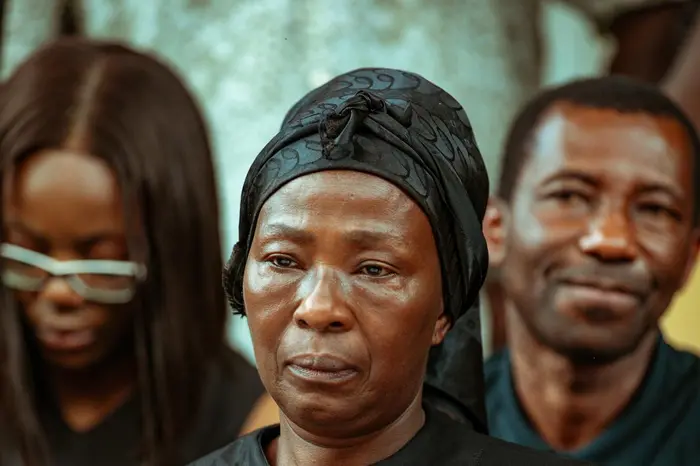
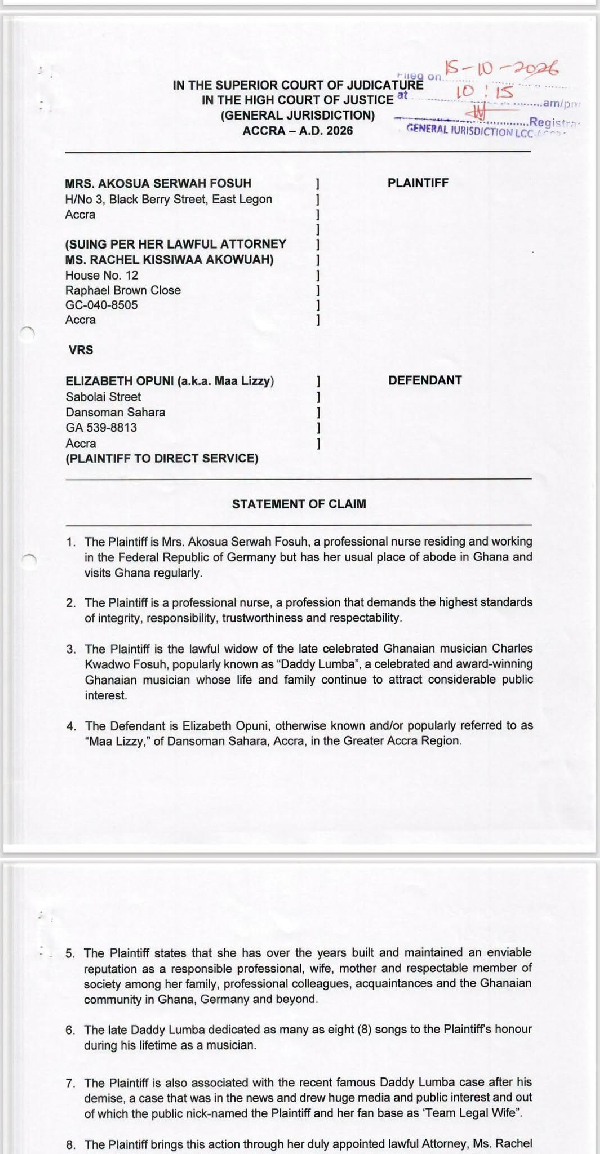
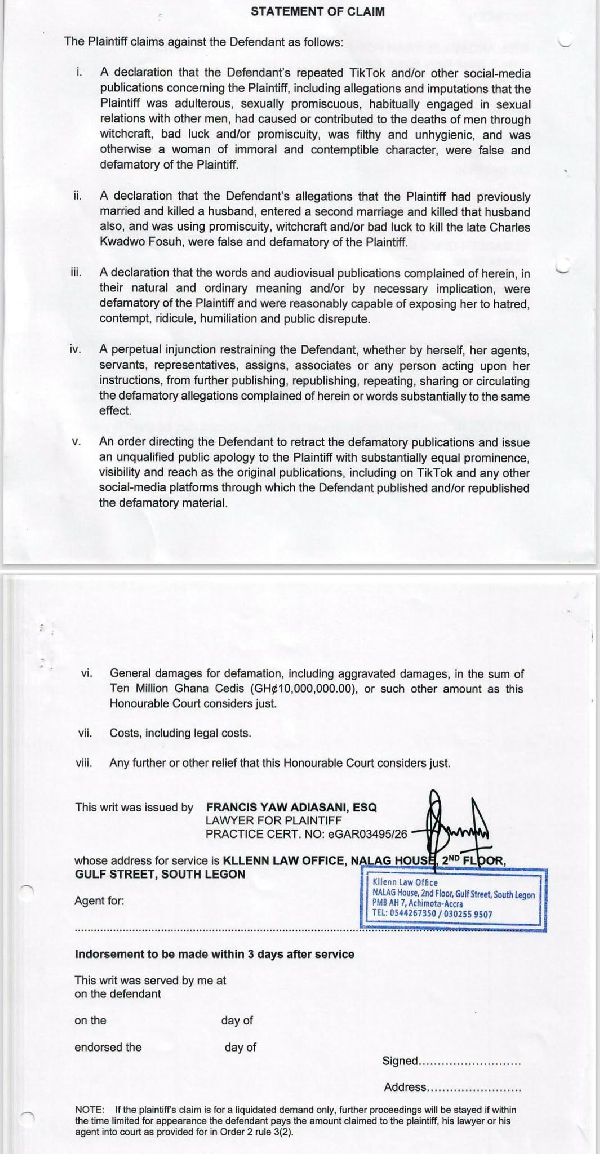
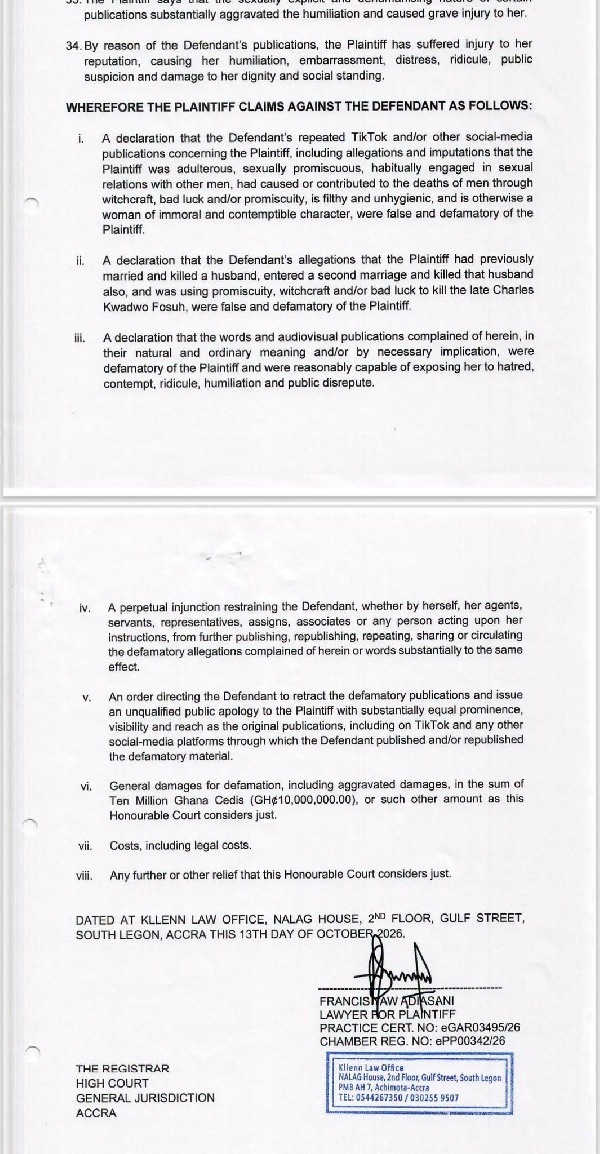
Akosua Serwah Fosu, widow of late Ghanaian highlife legend Daddy Lumba, has dragged TikTok personality Elizabeth Opuni, popularly known as Maa Lizzy, to court, demanding GH¢10 million in damages over alleged defamatory publications.
The professional nurse, who is based in Germany, accuses the social media commentator of making and circulating a series of false and damaging allegations about her following the death of her husband, Charles Kwadwo Fosu.
The suit was filed at the High Court in Accra on October 15, 2026, under suit number GJ/0050/2027.
Court documents indicate that Fosu is pursuing the action through her lawful attorney, Rachel Kissiwaa Akwuah, with legal representation from Kliemn Law Office, led by Francis Yaw Adiasani.
In her statement of claim, the plaintiff maintains that she has established a respectable reputation as a professional, wife, mother and member of society in Ghana, Germany and beyond.
She contends that the publications attributed to Maa Lizzy have injured her dignity, family standing and professional reputation.
Fosu further points out that she has become widely identified as the “Team Legal Wife” amid public discussions and controversies surrounding Daddy Lumba’s death and family.
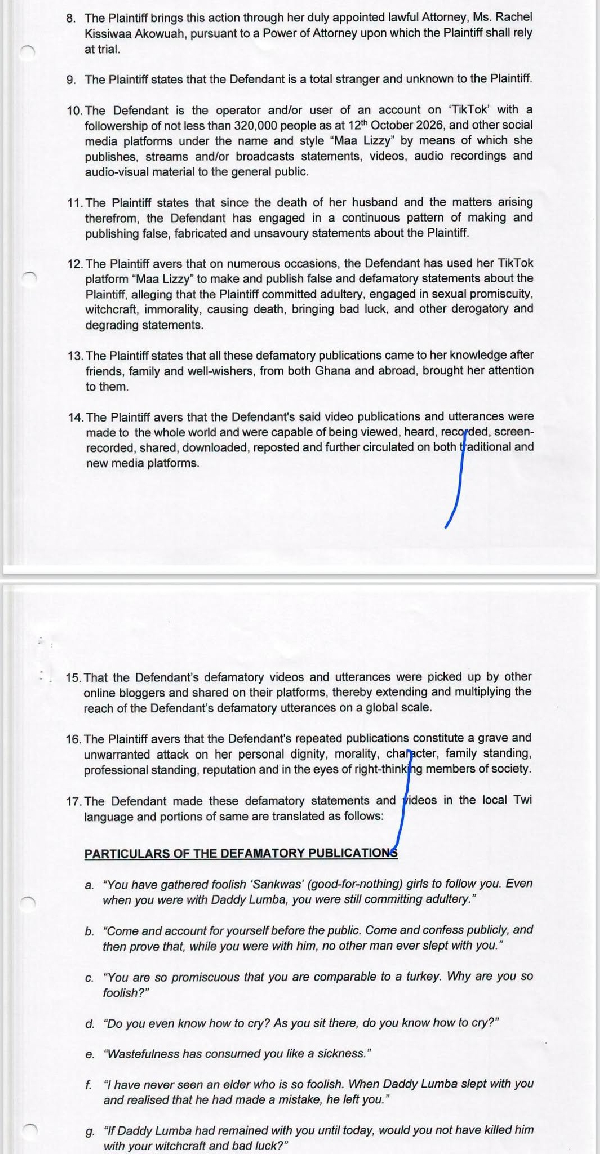
The defendant is described in the court documents as the operator of a TikTok account bearing the name Maa Lizzy, which allegedly had more than 320,000 followers as of October 12, 2026.
According to the plaintiff, the defendant embarked on a sustained campaign of publishing offensive and fabricated claims about her. She alleges that some of the videos were subsequently shared by other bloggers, extending their reach to audiences in Ghana and abroad.
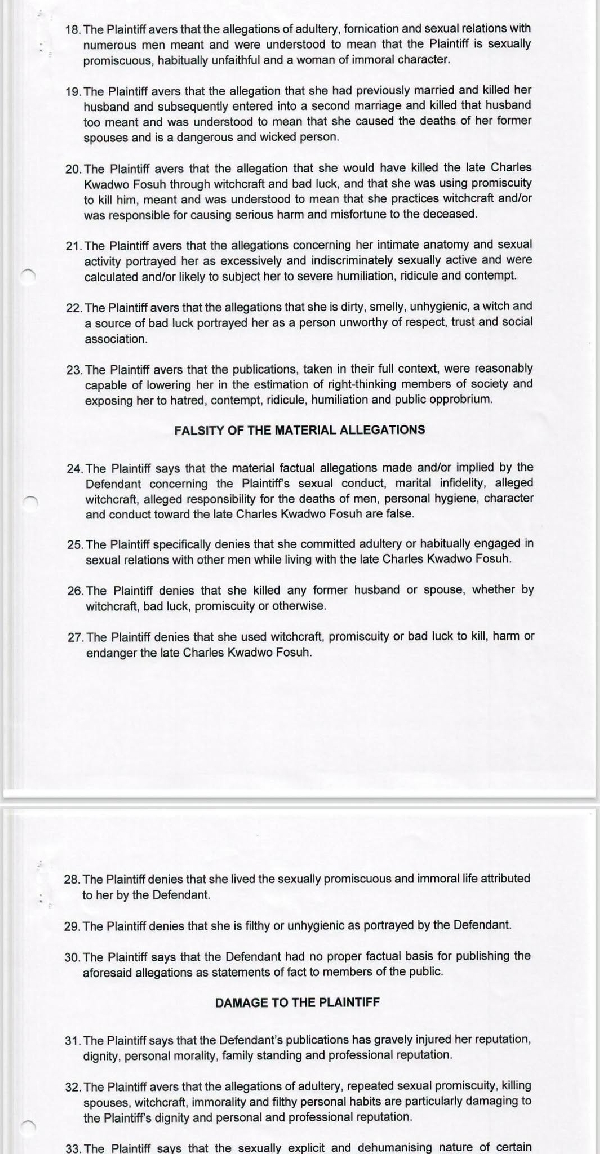
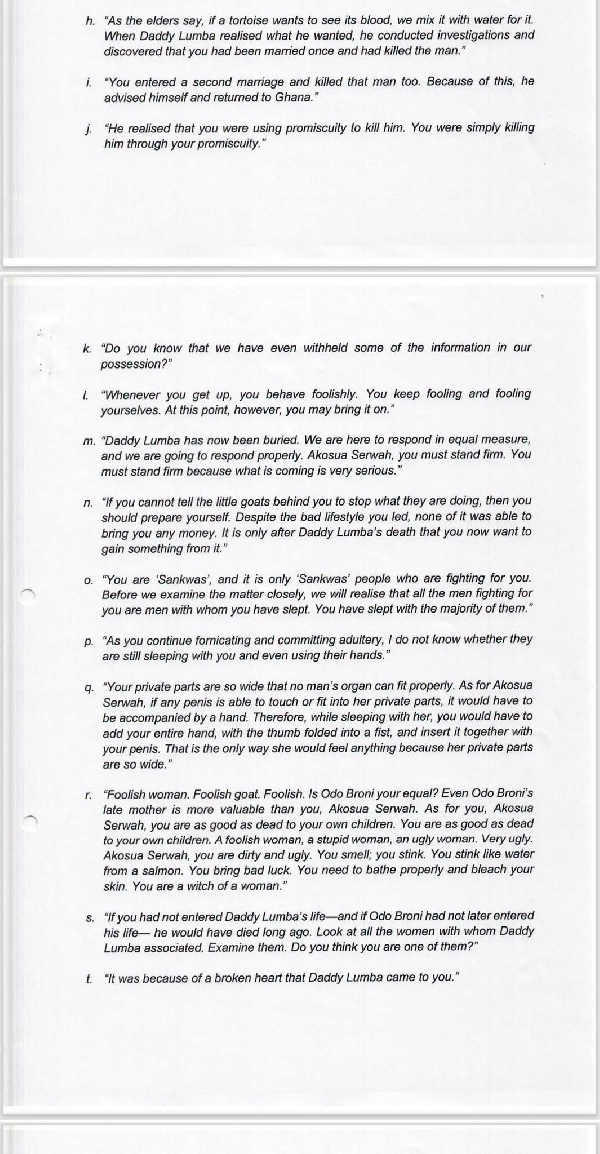
Among the statements outlined in the lawsuit are allegations relating to Fosu’s sexual conduct, personal character and previous relationships.
The court documents also attribute to the defendant claims that the widow was connected to the deaths of previous husbands and that she employed witchcraft and promiscuity against the late musician.
Fosu has denied the allegations, describing them as entirely false and defamatory.
She is asking the court to declare that the publications are defamatory and capable of exposing her to hatred, ridicule, humiliation and public disrepute.
Beyond the GH¢10 million compensation, the widow is seeking a perpetual injunction restraining Maa Lizzy, her agents and assigns from publishing the disputed statements or making further similar allegations against her.
She also wants the court to compel the defendant to retract the publications and issue an unqualified public apology. The apology, she argues, should receive prominence and visibility comparable to the original content published on TikTok and other platforms.
The GH¢10 million claim includes general and aggravated damages, alongside legal costs and any additional relief the court may consider appropriate.
The writ of summons further directs Maa Lizzy to enter an appearance within eight days of being served with the court documents. Failure to comply could allow the court to proceed with the case and enter judgment in her absence.
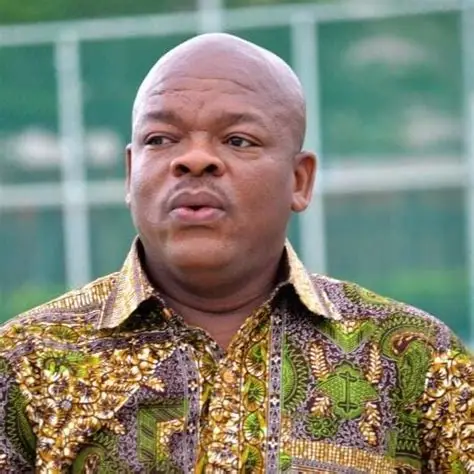
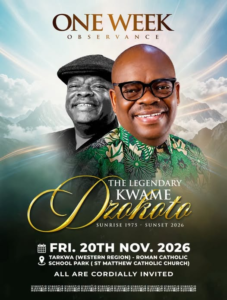
The family of late Ghanaian actor and broadcaster Seth Kwame Dzokoto has announced November 20, 2026, for his one-week observation.
The ceremony, which will take place nearly a month after his death on October 22, will be held at the Roman Catholic School Park, close to St. Matthew Catholic Church in Tarkwa, in the Western Region.
Dzokoto, aged 51, reportedly collapsed after suffering a medical emergency while taking part in a live morning radio discussion on Owass FM in Tarkwa. His sudden passing left many in the entertainment and political circles mourning the loss.
He became a household name through his role as Judge Koboo in the popular television series Efiewura, where his humorous performances and distinctive delivery endeared him to viewers.
He also made significant contributions to broadcasting, notably as the presenter of TV3’s food programme Edziban, which focused on Ghanaian cuisine and promoted the country’s diverse food traditions.
Aside from his work in the media and entertainment industry, Dzokoto ventured into politics, building a public profile that extended beyond the creative arts.
His death sparked an outpouring of tributes from colleagues, fans and well-wishers, many of whom acknowledged his impact on Ghana’s entertainment and broadcasting landscape.
The one-week observation will bring together relatives, friends, colleagues and sympathisers to pay their respects and celebrate the life and legacy of the late entertainer.

Ghanaian broadcaster and political commentator Kwabena Bobie Ansah has publicly apologised to dancehall musician Stonebwoy following comments he made about his preference between the Jejereje hitmaker and his long-time industry rival, Shatta Wale.
In an apology message shared on his official Facebook page, Bobie Ansah expressed regret over his earlier remarks, insisting that he never intended to take a swipe at Stonebwoy or disrespect his contribution to the Ghanaian music industry.
Addressing the musician as bruv, he acknowledged Stonebwoy’s achievements and described him as a legend in his own right, adding that he would not deliberately undermine or disrespect him.
“Hi bruv, I send you my sincere apologies concerning comments I made with respect to my choice between you and Shatta. Respectfully, I did not intend to take a swipe at your person,” he wrote.
Bobie Ansah stressed that his apology was not prompted by insults from Stonebwoy’s fanbase, popularly known as the Bhim Nation, but rather by his desire to address the musician’s displeasure over the comments.
He further referenced his personal experiences confronting a political party and former President Nana Akufo-Addo, claiming that he had endured years of insults, spiritual attacks and even physical threats without backing down.

According to him, his earlier comments were based on what he considered a genuine observation and were not intended to create hostility between the two entertainers.
The broadcaster also disclosed that he rarely listens to Ghanaian music, mentioning Black Sherif and Kofi Kinaata among the few local musicians he regularly listens to. He further made it clear that he is a fan of Black Sherif.
Despite this, Bobie Ansah assured Stonebwoy of his continued support, saying he was ready to support the musician at any time.
He concluded his message by appealing for forgiveness and emphasising the need for unity rather than hostility.
“It takes you and I to make Ghana a better place; practically, we cannot live under the roof of hostility,” he added.
Entertainment
Ghana Urged to Establish Convention Bureau, Build 20,000-Capacity Facility to Boost MICE Tourism
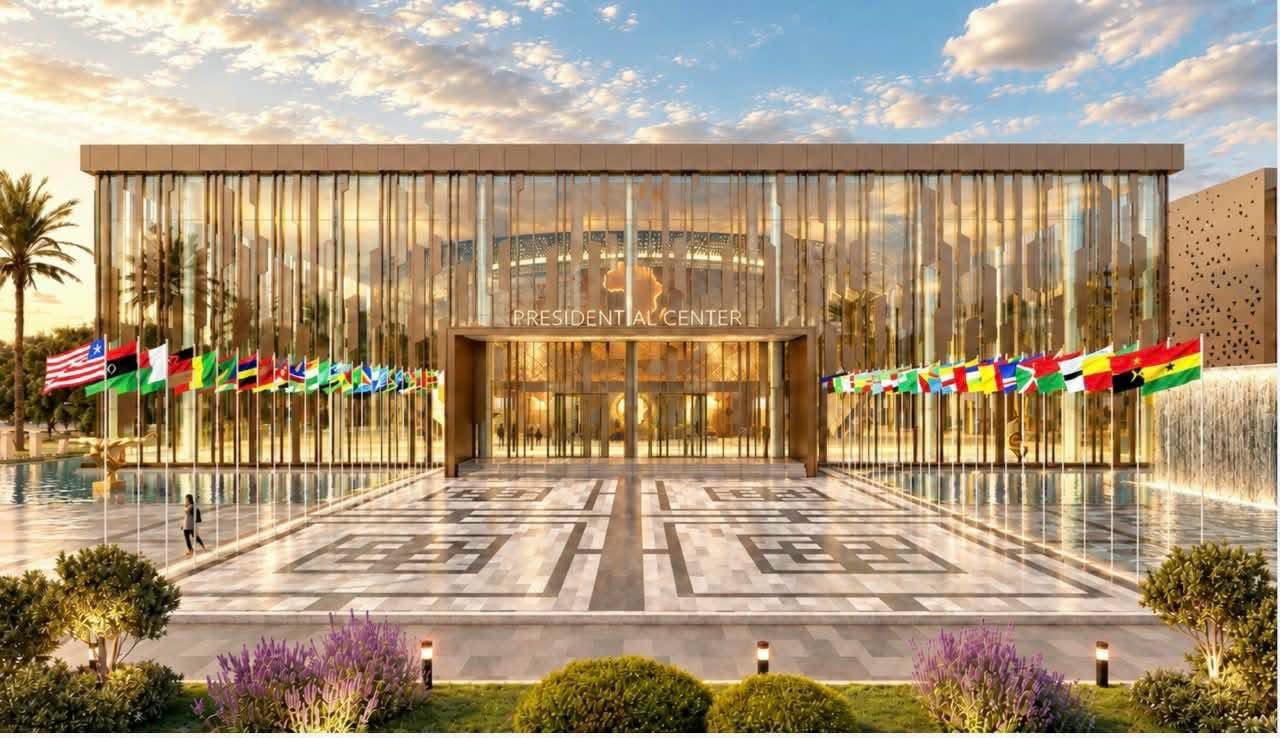
Ghana has been urged to establish a fully operational national Convention Bureau and invest in a world-class convention facility with a minimum capacity of 20,000 participants as part of efforts to position the country as one of Africa’s leading destinations for business events.
The call was made by Architect Ekow Sampson in an article titled A Case for MICE Tourism in Ghana: From Hosting Conferences to Becoming Africa’s Leading Business Events Destination, in which he argued that Ghana must move beyond relying on its traditional tourism attractions and take advantage of the growing global Meetings, Incentives, Conferences and Exhibitions (MICE) tourism market.
According to him, MICE tourism presents a major opportunity to increase tourism revenue, create employment, attract foreign exchange and stimulate economic activities across several sectors.
He noted that MICE tourism is no longer a niche segment but has become a significant component of the global travel economy.
Citing estimates from the Global Business Travel Association (GBTA), Sampson said global business travel spending reached approximately US$1.47 trillion in 2024 and is projected to exceed US$2 trillion by 2028.
He also referenced the 2024 WTM Global Travel Report, which found that international business visits increased by approximately 19 per cent in 2024, compared with about 11 per cent growth in leisure visits.
The report further projects that international business visits could grow by around 50 per cent between 2024 and 2030, significantly outpacing leisure travel.
Sampson believes these developments present an opportunity for Ghana to strengthen its position in the international tourism market.
He pointed to figures from the Ghana Tourism Authority’s (GTA) 2025 Tourism Report, which recorded 1,306,962 international arrivals, with business travel accounting for 31 per cent of the total arrivals.
He further noted that the entertainment and conference segment recorded 14.3 per cent growth, indicating increasing demand for conferences and related events in the country.
According to him, these figures demonstrate that business travel is already a major contributor to Ghana’s international tourism and should be treated as a strategic area for further investment.
He cited events such as the Global Assemblies of God Conference and the 2026 Call to the Ghana Bar ceremony at the IGCC Auditorium as examples of Ghana’s ability to host significant gatherings.
However, he stressed that such achievements should not remain isolated events, arguing that the country must develop a deliberate strategy to attract and compete for major international conferences, conventions and exhibitions.
Explaining the economic importance of the sector, Sampson said the benefits of MICE tourism extend beyond the venues where conferences and exhibitions are organised.
He explained that business visitors spend money on accommodation, international air travel, ground transportation, restaurants, entertainment, shopping and other tourism experiences.
Citing GBTA estimates, he said a business traveller spends an average of approximately US$834 per trip.
This includes about US$312 on accommodation, US$176 on air travel, US$153 on food and beverages, and US$103 on ground transportation.
He said attracting major international conferences could therefore generate economic opportunities for hotels, airlines, restaurants, transport operators, event management companies, tour operators, retailers and local communities.
Sampson also highlighted the potential of what is known as bleisure tourism, a concept in which business travellers extend their trips to enjoy leisure activities.
He observed that Ghana could use international conferences and business events to encourage visitors to explore the country’s cultural heritage, cuisine, festivals, natural attractions and creative industries.
Sampson identified political stability, democratic credentials, international air connectivity, rich cultural heritage, hospitality, strong diaspora connections and the presence of the African Continental Free Trade Area (AfCFTA) Secretariat in Accra as some of Ghana’s major advantages in developing its MICE tourism industry.
He also acknowledged the foundation established by the Ghana Tourism Authority, which is a professional member of the International Congress and Convention Association (ICCA).
However, he argued that Ghana must move beyond participating in international industry platforms and position itself as a leader in attracting major business events to the continent.
One of his major recommendations is the establishment of a fully operational Ghana Convention Bureau to coordinate the country’s efforts to attract international conferences, conventions and exhibitions.
He explained that the proposed institution should be responsible for identifying international events, preparing competitive bids, coordinating hotels, airlines and conference venues, supporting event organisers and promoting Ghana as a business-events destination.
The Bureau would also be expected to measure the economic impact of events hosted in the country.
Sampson said it should work closely with the Ghana Tourism Authority, relevant government institutions, local authorities and private-sector stakeholders to develop a coordinated national business-events strategy.
Beyond institutional arrangements, Sampson called for significant investment in modern infrastructure to enable Ghana to compete for large international gatherings.
He proposed the development of a world-class convention facility with a minimum seating capacity of 20,000 participants.
He also called for the accelerated redevelopment of the Accra International Trade Fair Centre into a modern hub for conventions, exhibitions and international trade events.
According to him, such facilities would enable Ghana to compete for major international congresses, religious conventions, professional association meetings, exhibitions and corporate events that may exceed the capacity of existing venues.
He stressed that institutional capacity must be supported by the necessary infrastructure if Ghana intends to attract larger and more prestigious international events.
Sampson also commended President John Dramani Mahama’s vision to develop an Accra Convention Centre, describing it as a step in the right direction towards strengthening Ghana’s position in the international business-events industry.
He, however, urged the government to translate the vision into concrete action by establishing the proposed national Convention Bureau, developing a world-class convention facility with a minimum capacity of 20,000 participants rather than the proposed 3,000-capacity facility, and accelerating the redevelopment of the Accra International Trade Fair Centre.
He maintained that Ghana could no longer afford to treat MICE tourism as a peripheral activity, particularly when business travel already accounts for 31 per cent of international arrivals.
Sampson argued that the 14.3 per cent growth recorded in the entertainment and conference segment in 2025 further reinforces the need for a more deliberate national approach.
He called for aggressive international marketing, modern convention infrastructure and strong public-private partnerships to help Ghana attract a greater share of the growing global business-events market.
He concluded that Ghana must shift its focus from simply hosting conferences to actively competing for them, insisting that MICE tourism could become a powerful engine for tourism growth, employment generation, foreign exchange earnings and national development.

Ghanaian rapper EL has identified inadequate financial investment as one of the major obstacles preventing Ghanaian musicians from making significant breakthroughs on international music charts such as Billboard.
The award-winning musician believes Ghana has enough talented artistes capable of competing on the global stage, but the financial commitment required to achieve that level of success remains a major challenge.
Speaking in an interview shared on social media by Ameyaw Debrah, EL explained that the country’s music industry was growing but needed to move at a faster pace to maximise its potential.
“I don’t think anything is lacking. I think it’s growing at its own pace,” he said, adding that greater financial support could help accelerate the industry’s development.
Addressing suggestions that musicians need approximately $1 million to push their songs onto major international charts, EL indicated that such an amount could significantly improve an artiste’s chances of achieving the feat.
“If you have a million, you will definitely end up on the Billboard. Yeah, if you want it to,” he remarked.
Beyond financial investment, EL also expressed concern about the growing emphasis on branding, publicity and the entertainment side of the music business.
He argued that the industry has increasingly shifted towards image-building and marketing, sometimes placing less attention on the actual musical contribution of artistes.
“These days it’s become a lot more smoke and mirrors. It’s become a lot more about the showbiz aspects as opposed to what the talent is bringing to the table,” he explained.
Meanwhile, EL revealed that Bow Legge, a song from his collaborative project Dancing Machine with rapper D-Black, is currently his favourite track.
He also spoke about efforts to revive Azonto, explaining that although the popular Ghanaian music genre never completely disappeared, he and D-Black were working to bring it back on a bigger scale.
On his personal music preferences, EL mentioned legendary American entertainer Michael Jackson and British singer Sam Smith as two artists he enjoys listening to.

Talensi Assembly explains GH¢181,170 cash payments for meeting refreshments

Make vote-buying costly in party elections — Bernard Mornah

La Dadekotopon NDC chairman pledges best-administered constituency

IRAWMA 2025: Shatta Wale Wins 3 Major Awards Including Best Music Video

Samini Secures Promotional Deal with Audiomack for Upcoming Album “THE ORIGIN8A”

AirtelTigo losing GH₵20m monthly; total debts exceed $200million – Sam George


-
 Entertainment1 week ago
Shatta Wale Cake Tells Story of Growth, Identity and African Dancehall Influence
-

 General News5 days ago
GTA Staff Demand Answers on World Cup Visa Slots, Staff Dismissals and Unpaid Allowances
-

 General News1 week ago
FOKLEX MEDIA AWARDS COMMENDS PRINCE KWAW GYIMAH AND OWASS FM TEAM FOR PROFESSIONALISM DURING KWAME DZOKOTO INCIDENT
-

 Politics1 week ago
OB UASI HEADMASTER IN SEXUAL MISCONDUCT CONTROVERSY EYES NDC CONSTITUENCY CHAIRMANSHIP
-
 Entertainment1 week ago
Ghana Unveils December in GH 2026 Calendar With Over 150 Events Nationwide
-
 General News1 week ago
PROFOUND GRATITUDE FOR YOUR DECISIVE INTERVENTION IN FAST-TRACKING THE COMPLETION OF THE MUMFORD FISHING HARBOUR
-

 General News5 days ago
Nicki Minaj Throws Her Support Behind Trump Ahead of US Midterm Elections
-

 General News1 week ago
SAMMY GYAMFI’S “MINE WITHOUT LICENCE” REMARK SPARKS FRESH GALAMSEY DEBATE