Connect with us

Politics

Coalition Of Civil Society Organizations Calls For Fail Trail On Adu Boahen Ghc 49b Case

Published

on

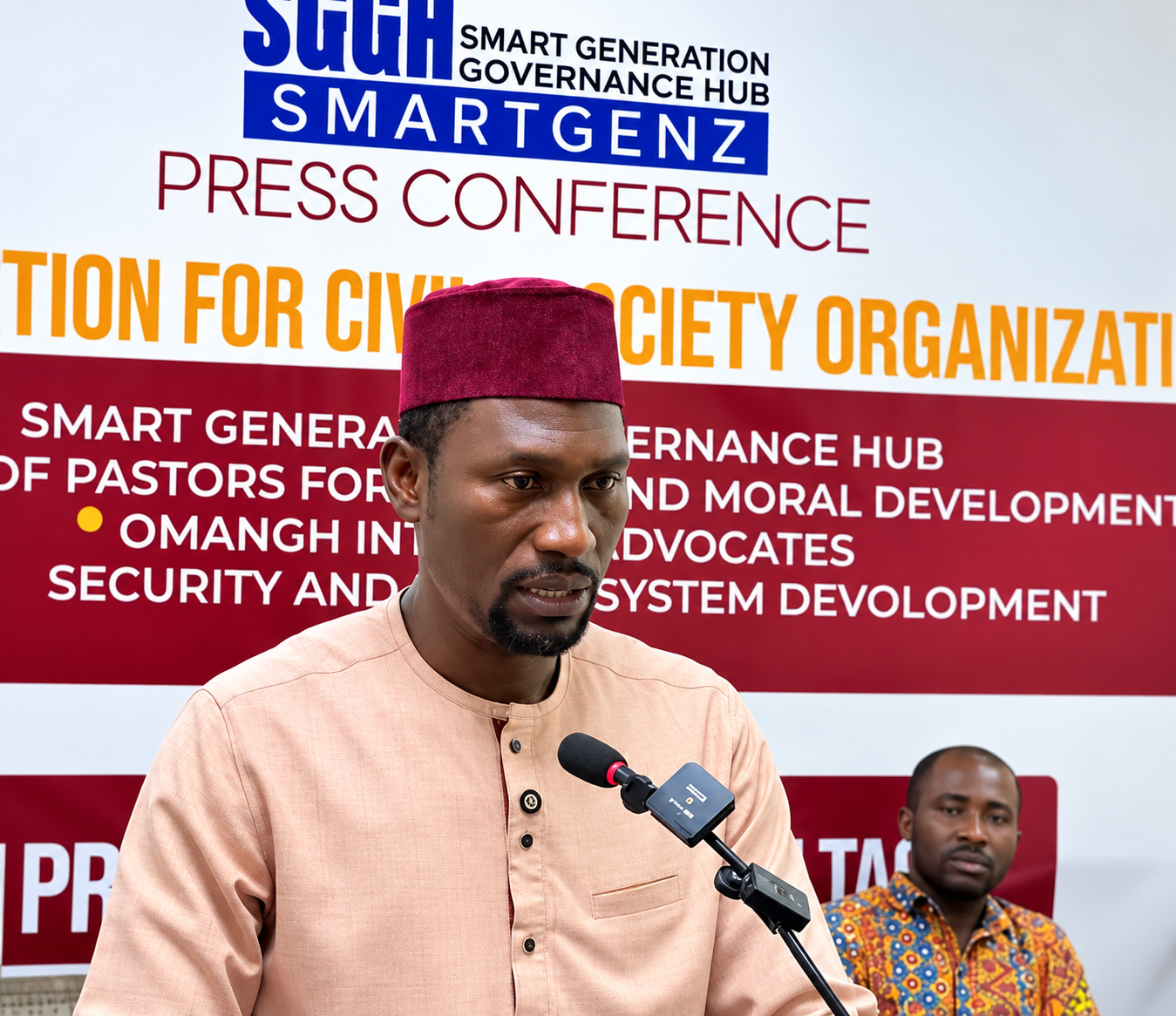
The Convener of the Coalition of Civil Society Organisations, Rev. DK Odei-Appiah, has called for the protection of judicial independence in the ongoing criminal proceedings involving former National Signals Bureau Director-General, Kwabena Adu-Boahene and two other accused persons, insisting that the trial judge, Justice Francis Apangabuno Achibonga, must be allowed to perform his judicial responsibilities without political pressure, intimidation, public coercion or improper influence from any quarter.on October 27, 2026, on behalf of the coalition, which comprises SMART Generation Governance Hub (SMARTGENZ), OmanGh Interest Advocates, Alliance of Pastors for Social and Moral Development, and Agenda for Security and Social Systems.

Ghanalegal services

The coalition said its intervention was motivated by concerns about judicial independence, the presumption of innocence, prosecutorial responsibility and public confidence in Ghana’s criminal justice system as the case proceeds before the Accra High Court, Specialised Jurisdiction Division.

According to Rev. DK Odei-Appiah, the coalition’s position is not intended to undermine the prosecution or defence, pronounce the accused persons guilty or innocent, or influence the court towards a predetermined outcome.

“Our interest is justice, not a predetermined outcome,” Rev. DK Odei-Appiah stated, stressing that the determination of criminal liability rests exclusively with the courts exercising their constitutional jurisdiction.


He said the prosecution must prove its case with credible evidence, the defence must enjoy every protection guaranteed under the law, and the trial judge must determine the matter strictly on the evidence and the applicable legal principles.

Rev. DK Odei-Appiah maintained that the seriousness of the allegations in the case, including claims concerning financial impropriety involving a national security institution, must not become a substitute for the evidence required to establish criminal responsibility.

He further stated that nobody should be above the law and nobody should be denied the protection of the law.

Rev. DK Odei-Appiah expressed concern about the circumstances surrounding the public presentation of allegations against Adu-Boahene and his wife at a press conference by the Attorney-General in March 2025.


He recalled that the public had been informed of allegations that Adu-Boahene had acquired more than 50 houses in locations including Accra, Oyarifa, Kumasi and London, alongside claims that approximately GH¢49.1 million had gone missing from the Bureau of National Communications.


BuyMaps

According to Rev. DK Odei-Appiah, while the allegations were serious and understandably attracted public attention, their magnitude did not relieve the prosecution of its responsibility to prove them in court.

He argued that public statements by officials before the conclusion of criminal proceedings must be handled with restraint to avoid creating the impression that an accused person’s guilt has already been determined.

“A criminal prosecution must not become a public conviction before it becomes a judicial determination,” Rev. DK Odei-Appiah stated.

He urged public officials to exercise caution in their commentary on pending cases, emphasising that the constitutional presumption of innocence must be respected regardless of the nature of the allegations or the public interest they generate.

The coalition drew attention to the ongoing legal proceedings following the conclusion of the prosecution’s case and the accused persons’ submission of no case to answer.

Rev. DK Odei-Appiah said the accused persons had challenged the sufficiency of the evidence presented by the prosecution, while the prosecution had filed its response for consideration by the court.

He stressed that the coalition was not seeking to determine whether the prosecution had established a sufficient case but wanted the court to examine the evidence impartially and apply the appropriate legal standards.

Among the issues identified by Rev. DK Odei-Appiah were reports concerning whether an official of the National Security establishment had testified to lodging a complaint about the alleged loss of funds.

He said that, if the court record confirmed the reported absence of such testimony, the circumstances in which the alleged loss was identified and the evidential basis for the claim would require careful judicial consideration.


Rev. DK Odei-Appiah also referred to reported testimony from the Head of Finance, who was said to have indicated that she would have known if funds had gone missing.


He further cited reported testimony concerning the department’s budget of GH¢13.8 million in 2020 and the absence of an audit report indicating the alleged loss.

According to Rev. DK Odei-Appiah, these matters raise questions about the institution’s financial administration, the monitoring of its accounts and the evidential basis for attributing the alleged loss to the accused persons.

He emphasised, however, that these observations should not be interpreted as judicial findings that the prosecution’s case had failed.

“The prosecution must be judged by the evidence it has presented, not by the seriousness of the allegations it announced at the beginning of the case,” Rev. DK Odei-Appiah stated.

He added that the court must carefully assess whether the evidence establishes the alleged unlawful diversion of public funds, connects each accused person to the alleged transactions and demonstrates the criminal character of the conduct charged.

Rev. DK Odei-Appiah further argued that the existence of an account, the movement of funds through it, the legal character of the funds and proof of unlawful appropriation are separate matters that must be established through evidence.

He also pointed to the reported absence of a demonstrated link between any of the houses allegedly acquired and the GH¢49.1 million said to have gone missing, urging the court to assess the relevant evidence on its merits.

Rev. DK Odei-Appiah expressed particular concern about a defence application reportedly challenging portions of the prosecution’s written submissions opposing the no-case submission.


According to him, counsel for the accused persons, Samuel Atta Akyea, Esq., had questioned whether certain statements attributed to prosecution witnesses in the prosecution’s submissions were actually reflected in the court record.


He said the defence had reportedly asked the prosecution to identify where the disputed statements appeared in the proceedings and was seeking orders to have the challenged portions expunged from the submissions.

Rev. DK Odei-Appiah noted that the State Attorney representing the Attorney-General’s Department had informed the court that the prosecution did not intend to file an affidavit in opposition and would instead argue on points of law.

He added that the court had adjourned the application to Thursday, October 29, 2026.


The convener cautioned that the defence’s allegations remained unproven and that the application must be determined by the court on its merits.

He nevertheless maintained that the accurate presentation of witness testimony was fundamental to the integrity of criminal proceedings.

Rev. DK Odei-Appiah said written submissions should analyse and interpret the evidence on record without misrepresenting what witnesses had said or attributing statements to them without a proper basis.

He added that if the court established that testimony had been improperly attributed to witnesses, the matter would raise serious questions about professional responsibility, prosecutorial ethics and the integrity of the judicial process.

He stressed that any appropriate response must follow the law and the applicable disciplinary procedures.


“Our appeal is therefore directed to the judicial process itself: let the record speak for itself, let the parties address the issues fully, and let the court determine the application independently on its merits,” Rev. DK Odei-Appiah stated.


The coalition also warned against drawing conclusions about the entire National Security establishment from allegations against individual officials.

Rev. DK Odei-Appiah acknowledged that accountability within national security institutions was essential and that such institutions must not be used as shields for corruption, financial misconduct or abuse of office.

However, he argued that allegations against an individual should not automatically translate into a presumption of institutional wrongdoing.

According to Rev. DK Odei-Appiah, attributing criminal responsibility to an individual requires evidence establishing that person’s alleged conduct and connection to the offence, rather than reliance solely on institutional association.


He warned that unjustified conclusions could undermine public confidence in national security institutions, affect the morale of personnel who perform their duties lawfully and weaken the credibility of legitimate security operations.

He maintained that the integrity of national security depended on both accountability for wrongdoing and protection against unsupported allegations.

“Ghana’s security institutions must be subject to the law, but they must not be condemned by association,” Rev. DK Odei-Appiah stated.

Central to the coalition’s statement was a call for the protection of Justice Francis Apangabuno Achibonga from any form of improper influence as he considers the issues before the court.

Rev. DK Odei-Appiah invoked Articles 125 and 127 of the 1992 Constitution of Ghana, which establish the constitutional position of judicial power and safeguard the independence of the Judiciary.


He said these constitutional protections were essential to ensuring that judicial decisions were based on the law and evidence rather than political interests or public pressure.

Rev. DK Odei-Appiah urged political actors, public officeholders and all interested parties to refrain from conduct that could compromise the actual or perceived independence of the trial judge.

He also called on the public to distinguish between legitimate scrutiny of the justice system and attempts to dictate the outcome of a pending criminal case.

According to Rev. DK Odei-Appiah, judicial independence does not place judges beyond public accountability but ensures that their decisions are guided by the Constitution, the law and the evidence properly presented before them.

He stressed that the trial judge owed no allegiance to either the prosecution or the defence and that his responsibility was to uphold the Constitution and the law.

“The public interest is not served by a conviction secured at any cost, nor by an acquittal unsupported by the law. It is served when the judicial process is fair, impartial and credible,” Rev. DK Odei-Appiah stated.

The Coalition of Civil Society Organisations outlined a series of demands aimed at safeguarding the integrity of the proceedings and reinforcing public confidence in the administration of justice.

First, Rev. DK Odei-Appiah called on Justice Apangabuno Achibonga to discharge his constitutional mandate with courage, independence and fidelity to the law.

He urged the judge to determine every application and issue strictly on the evidence and applicable law, resisting improper influence from political, institutional or public sources.

Second, he called on the President, members of the Executive, political party officials and all public officeholders to respect judicial independence and refrain from actions or statements that could influence, or appear to influence, the outcome of the trial.

Third, Rev. DK Odei-Appiah demanded that the case be determined without regard to the political affiliation, party membership or public popularity of the accused persons.

He argued that every accused person was entitled to equal protection of the law and a fair hearing before an independent and impartial court.

Fourth, he urged the court to consider the evidence presented by the prosecution and the submissions of both parties before applying the appropriate legal standards to the no-case submission and other matters before it.

Rev. DK Odei-Appiah said the court must act in accordance with the law if the evidence satisfied the applicable threshold and must equally give effect to the law if that threshold was not met.

Fifth, he called for the transparent and judicial resolution of the dispute over the alleged attribution of statements to prosecution witnesses.

He urged the court to determine the defence application by reference to the record of proceedings and the applicable law, ensuring that both parties had a fair opportunity to present their arguments.

Sixth, Rev. DK Odei-Appiah called on the Attorney-General’s Department to uphold the highest standards of prosecutorial responsibility by ensuring that its submissions accurately reflected the evidence on record.

He maintained that the prosecution’s responsibility extended beyond securing convictions to assisting in the proper administration of justice.

Finally, he urged public officials, political parties, media organisations and commentators to avoid presenting allegations as established guilt or making pronouncements that could prejudice the fair determination of the case.

He said public discussion of judicial proceedings was legitimate, but it must not become an attempt to replace judicial determination with public opinion.

Rev. DK Odei-Appiah said the Republic v. Kwabena Adu-Boahene & Others proceedings represented an important test of public confidence in the fairness, impartiality and independence of Ghana’s criminal justice system.

Ghanalegal services

He reiterated that the coalition was not asking the court to acquit or convict the accused persons but was calling for the constitutional principles of judicial independence, due process and equal protection of the law to be respected.

“Our message to the Government is clear: respect the judicial process. Our message to the prosecution is clear: let the evidence speak. Our message to the Judiciary is clear: determine the matter independently, in accordance with the law,” Rev. DK Odei-Appiah stated.

He added that the rule of law was protected not when courts delivered verdicts that satisfied particular interests but when judges were free to deliver the decisions required by the law.

Rev. DK Odei-Appiah maintained that Ghana deserved a justice system in which every accused person received a fair hearing, every prosecutor was accountable for the accuracy of the case presented, every judge was protected from improper influence, and every judgment was grounded in the law.

He said the coalition would continue to defend these principles in the interest of constitutional democracy, accountability, transparency and good governance.


Continue Reading
Click to comment

Leave a Reply

Your email address will not be published. Required fields are marked *

Politics

I wonder what campaign message the NPP will use in 2028

Published

on

As Ghana moves towards the 2028 general elections, one question worth asking is what message the New Patriotic Party (NPP) will present to convince voters to give it another opportunity to govern.

The party, led into the next election by former Vice President Dr Mahamudu Bawumia, faces the challenge of turning its criticism of the governing National Democratic Congress (NDC) into a convincing vision for Ghana’s future.

Will the NPP campaign on the economy, job creation, the cost of living, corruption, illegal mining or what it considers the government’s broken promises? Or will it focus on explaining what it has learnt from its own time in office and why Ghanaians should trust it again?

The party has already signalled some priorities. Minority Chief Whip Frank Annoh-Dompreh has said the fight against illegal mining, popularly known as galamsey, will form a central part of its 2028 campaign narrative.

Dr Bawumia has also criticised the NDC government’s proposed 24-hour economy, arguing that it has not delivered the promised jobs. He has indicated that the NPP intends to campaign on practical, costed ideas that it believes it can implement.

But identifying issues to campaign on is only part of the challenge. The bigger question is whether the party can present a coherent message that addresses voters’ concerns while convincingly explaining its own record in government.

Ghanaians will likely want more than accusations against the NDC. They will want clear answers on how the NPP plans to create jobs, improve incomes, strengthen public services, tackle illegal mining and manage the economy differently.

The party must also demonstrate that it has learnt lessons from its 2024 electoral defeat and can offer credible solutions rather than simply promise a return to power.

For Dr Bawumia and the NPP, the task is therefore not merely to identify the government’s weaknesses. It is to persuade voters that the party has a better plan, a credible team and the discipline to deliver on its promises.

So, what exactly will the NPP’s campaign message be in 2028? Will it be a campaign built around the government’s shortcomings, or one centred on a clear alternative vision for Ghana?

That is a question the party’s leadership must answer convincingly long before the campaign reaches its peak.

Continue Reading

Politics

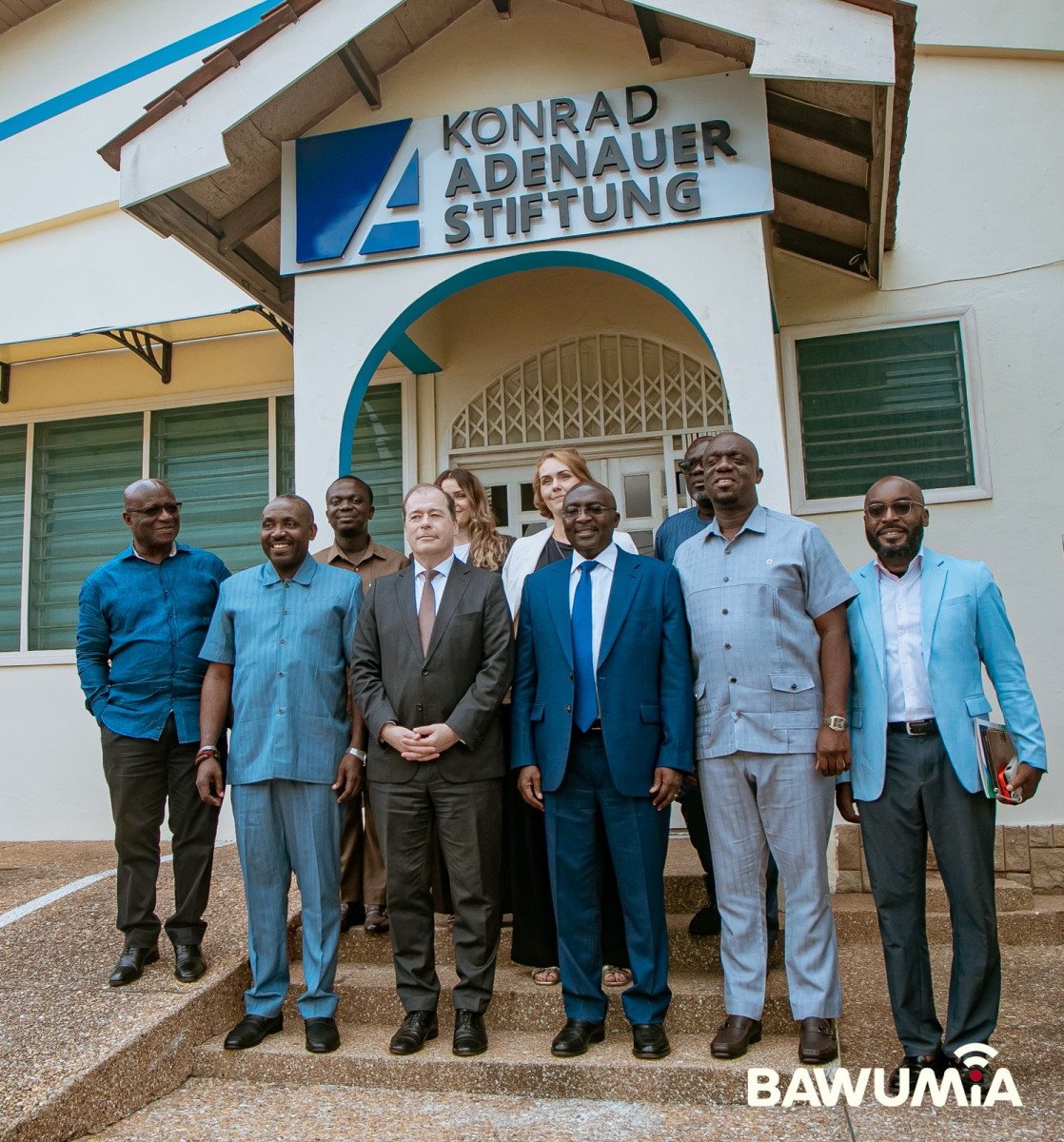
Bawumia confers with KAS Secretary-General; discusses Ghana’s future and NPP reorganisation

Published

on

Former Vice President engages German political foundation on Ghana’s political and economic direction, party restructuring, leadership development and policy formulation ahead of the 2028 elections.

Former Vice President and New Patriotic Party (NPP) presidential candidate, Dr Mahamudu Bawumia, has held discussions with the Secretary-General of the Konrad-Adenauer-Stiftung (KAS), Dr Mark Speich, on Ghana’s future and efforts to reorganise the opposition party.

The meeting took place in Accra on Thursday, October 29, 2026, at the KAS Ghana office, with discussions focusing on Ghana’s political landscape, the NPP’s internal restructuring and opportunities to strengthen cooperation with the German political foundation.

Following the meeting, Dr Bawumia reiterated his commitment to rebuilding the NPP and making it more responsive to the concerns and aspirations of Ghanaians.

He said deliberate efforts had been undertaken over the past two years to strengthen the party’s internal structures as it prepares for the 2028 general elections.

The former Vice President also briefed Dr Speich on two major initiatives central to his vision for the party: the Patriotic Institute and the NPP Policy Unit.

Focus on leadership and policy development

Dr Bawumia described the two initiatives as important to the party’s long-term development, particularly in preparing future political leaders and expanding opportunities for young people to participate in public service.

The Patriotic Institute is intended to support leadership development, while the Policy Unit is expected to strengthen the formulation of policies grounded in evidence and designed to be financially sustainable and practical to implement.

According to Dr Bawumia, the broader objective is to build a more inclusive and ideas-driven party with the capacity to develop workable solutions to Ghana’s challenges.

He stressed the importance of strengthening the NPP’s intellectual and policy foundations as part of its efforts to regain political power.

The initiatives are expected to contribute to the party’s institutional development beyond electoral campaigning, with an emphasis on leadership training, policy research and effective governance.

Strengthening cooperation with KAS

Dr Bawumia also acknowledged KAS’s longstanding relationship with the NPP and expressed interest in deepening the partnership.

KAS is a German political foundation affiliated with the Christian Democratic Union (CDU). It has worked with the NPP over the years on programmes involving democratic governance, institutional strengthening and policy development.

The engagement forms part of Dr Bawumia’s broader consultations with international partners and local stakeholders as the party pursues its reorganisation ahead of the next general election.

The discussions come as the NPP seeks to consolidate its structures, improve internal coordination and prepare its policy agenda for the 2028 polls.

Dr Bawumia’s emphasis on leadership development and evidence-based policymaking signals an effort to position the party as an organisation focused not only on winning elections but also on developing practical proposals for Ghana’s sustainable development.

Continue Reading

Politics

NPP is desperately using Ablakwa to revive its political fortunes – Sinare

Published

on

NDC stalwart Said Sinare accuses the opposition of turning allegations against the Foreign Affairs Minister into a political strategy as controversy over Ghana’s South Africa evacuation continues.

A former National Vice Chairman of the National Democratic Congress (NDC), Alhaji Said Sinare, has accused the New Patriotic Party (NPP) of exploiting controversies surrounding Foreign Affairs Minister Samuel Okudzeto Ablakwa in an attempt to revive its political fortunes.

Mr Sinare’s position comes amid escalating exchanges between the NPP and the governing NDC over allegations of financial irregularities in Ghana’s evacuation of citizens from South Africa.

The NPP has demanded Mr Ablakwa’s resignation and called for an independent audit of the expenditure, arguing that discrepancies in records relating to the exercise require further investigation.

The minister, however, has denied wrongdoing and insisted that all evacuees received their entitlements.

Mr Sinare’s criticism reflects the growing political tension surrounding the matter, with the NDC accusing the opposition of using the controversy to undermine the minister’s reputation and damage the government’s public image.

Dispute over evacuation expenditure

The controversy centres on the reported GH¢49.72 million spent on evacuating 1,964 Ghanaians from South Africa following renewed xenophobic attacks and threats against foreign nationals.

The NPP has demanded the publication of supporting documents, including charter-flight invoices, payment vouchers and records showing payments made to individual evacuees.

It has also called for an independent audit and threatened further parliamentary action if its concerns are not adequately addressed.

The Minority in Parliament has separately called for Mr Ablakwa’s resignation and indicated that it could pursue a vote of censure against him under Article 82 of the 1992 Constitution.

Mr Ablakwa has rejected allegations that public funds are missing, maintaining that the evacuation was conducted to protect Ghanaians in distress and that the expenditure can be accounted for.

The competing claims have intensified debate over public accountability, the handling of humanitarian operations and the role of political parties in scrutinising government expenditure.

Political implications

Mr Sinare’s remarks come as both the NDC and NPP position themselves ahead of the 2028 general elections.

The NPP has made the evacuation expenditure a major issue in its criticism of the Foreign Affairs Ministry, while NDC figures have questioned the opposition’s motives and the consistency of its allegations.

The dispute has also expanded beyond the evacuation exercise, with the NPP announcing plans for a November 3 demonstration over the controversy and other issues relating to diplomatic and service passports.

However, the allegations against Mr Ablakwa have not been conclusively established, and the calls for an audit underscore the need for the relevant records to be examined independently.

The controversy is likely to remain a source of political contention as both parties seek to shape public opinion over accountability and governance ahead of the next general election.

Continue Reading

Politics

NPP opens parliamentary race registration with GH¢5,000 declaration of interest fee

Published

on

Prospective candidates, including sitting MPs, have until November 10 to declare their intention to contest the party’s parliamentary primaries ahead of the 2028 general elections.

The New Patriotic Party (NPP) has announced a GH¢5,000 fee for members seeking to contest its parliamentary primaries ahead of the 2028 general elections, as it introduces a new registration process for prospective candidates.

The party’s General Secretary, Justin Kodua Frimpong, announced on Thursday, October 29, 2026, that an online portal would open from November 1 to November 10 for interested members to formally declare their intention to contest.

The exercise will apply to all prospective parliamentary candidates, including sitting Members of Parliament seeking re-election on the party’s ticket.

According to Mr Kodua Frimpong, the declaration of interest is an initial step in the candidate selection process and does not constitute the formal opening of nominations.

Prospective candidates are expected to register through the party’s designated online portal, ppc.nppghana.org, and pay the non-refundable fee of GH¢5,000.

Eligibility checks and capacity building

Mr Kodua Frimpong said the new process was intended to help the party assess the eligibility of prospective candidates before formal nominations begin.

He explained that the party would examine whether applicants meet the requirements of the NPP constitution and the relevant laws of Ghana governing parliamentary candidacy.

The party also plans to organise training and capacity-building workshops for prospective candidates to prepare them for the responsibilities associated with parliamentary office.

The initiative forms part of the NPP’s preparations to select candidates for all 276 constituencies ahead of the 2028 elections.

The party says the process is designed to promote transparency, fairness and orderly competition among aspirants while strengthening its internal structures.

Campaigning remains prohibited

The General Secretary cautioned prospective candidates against interpreting the registration exercise as permission to begin campaigning in their constituencies.

He stressed that the party’s existing directive prohibiting campaign activities by aspirants, their agents and supporters remained in force.

“We have still not opened nominations, and we have still not asked people to go around to campaign,” Mr Kodua Frimpong said, explaining that the declaration of interest was only the first stage of the process.

The party has warned that aspirants who violate its campaign restrictions could face sanctions under its constitution and regulations.

The declaration period will be followed by further stages, including eligibility screening, formal nominations and vetting, before the NPP selects its parliamentary candidates.

The new arrangement is expected to shape competition within the party as sitting MPs and potential challengers position themselves for the opportunity to represent the NPP in the 2028 general elections.

Continue Reading

Politics

NPP Ashanti executives petition National Steering Committee to cancel COKA’s appointments

Published

on

Regional First Vice Chairman Amofa Jantuah leads calls for the cancellation of appointments to four newly created executive positions, citing alleged breaches of party guidelines.

A group of elected executives of the New Patriotic Party (NPP) in the Ashanti Region has petitioned the party’s National Steering Committee to cancel appointments made by Regional Chairman Odeneho Kwaku Appiah, popularly known as Chairman COKA, to newly created regional executive positions.

The petitioners allege that the appointments were made in violation of the party’s constitution and guidelines issued for filling the new positions.

The petition, dated October 28, 2026, was signed by the Regional First Vice Chairman, Amofa Jantuah, and calls on the National Steering Committee, National Council and National Executive Committee (NEC) to intervene and supervise a fresh appointment process.

The disputed positions are two Deputy Regional Vice Chairpersons, a Deputy Regional Communications Officer and a Regional IT Officer.

According to the petition, the appointments followed the adoption of Motions 2, 3, 4 and 5 at the NPP’s 2026 National Delegates Conference. The party’s General Secretary subsequently issued guidelines on October 16, 2026, for filling newly created regional and constituency executive positions.

The petitioners contend that the guidelines require elected regional officers to consult the NEC through the General Secretary and ensure that appointments are made through a transparent and inclusive process.

However, they allege that Chairman COKA failed to comply with those requirements.

Dispute over consultation

One of the major concerns raised in the petition is the alleged involvement of appointed officers in the selection process.

The petitioners claim that the regional chairman involved officers such as the Financial Secretary, Special Duties Officer, Research Officer, Electoral Officer and Legal Officer, alongside deputy officers, in selecting the new executives.

They argue that the guidelines place the responsibility for consultation on elected regional officers and that the participation of appointed officers undermined the fairness of the process.

The petition further alleges that Mr Jantuah cautioned the regional chairman against proceeding with what he considered an improper procedure.

According to the document, Chairman COKA rejected the caution and invoked what the petition describes as a “veto power”, prompting the first vice chairman to walk out of the meeting in protest.

The petitioners also claim that most elected regional executives opposed the procedure, but the appointments proceeded despite their objections.

Calls for cancellation

The group is asking the party’s national leadership to cancel all appointments to the four positions and prevent the appointees from assuming office or acting in those roles while the petition remains unresolved.

It has also requested that the national leadership supervise a fresh process in accordance with the party’s constitution and the General Secretary’s guidelines.

The petitioners say their action is intended to promote unity, restore confidence in the regional leadership and strengthen the party ahead of the 2028 general elections.

As of the time of reporting, the petition did not indicate whether the National Steering Committee or Chairman COKA had formally responded to the allegations.

Continue Reading

Trending