
General News
Two Convicted Over $580,000 Theft at South African President’s Farm

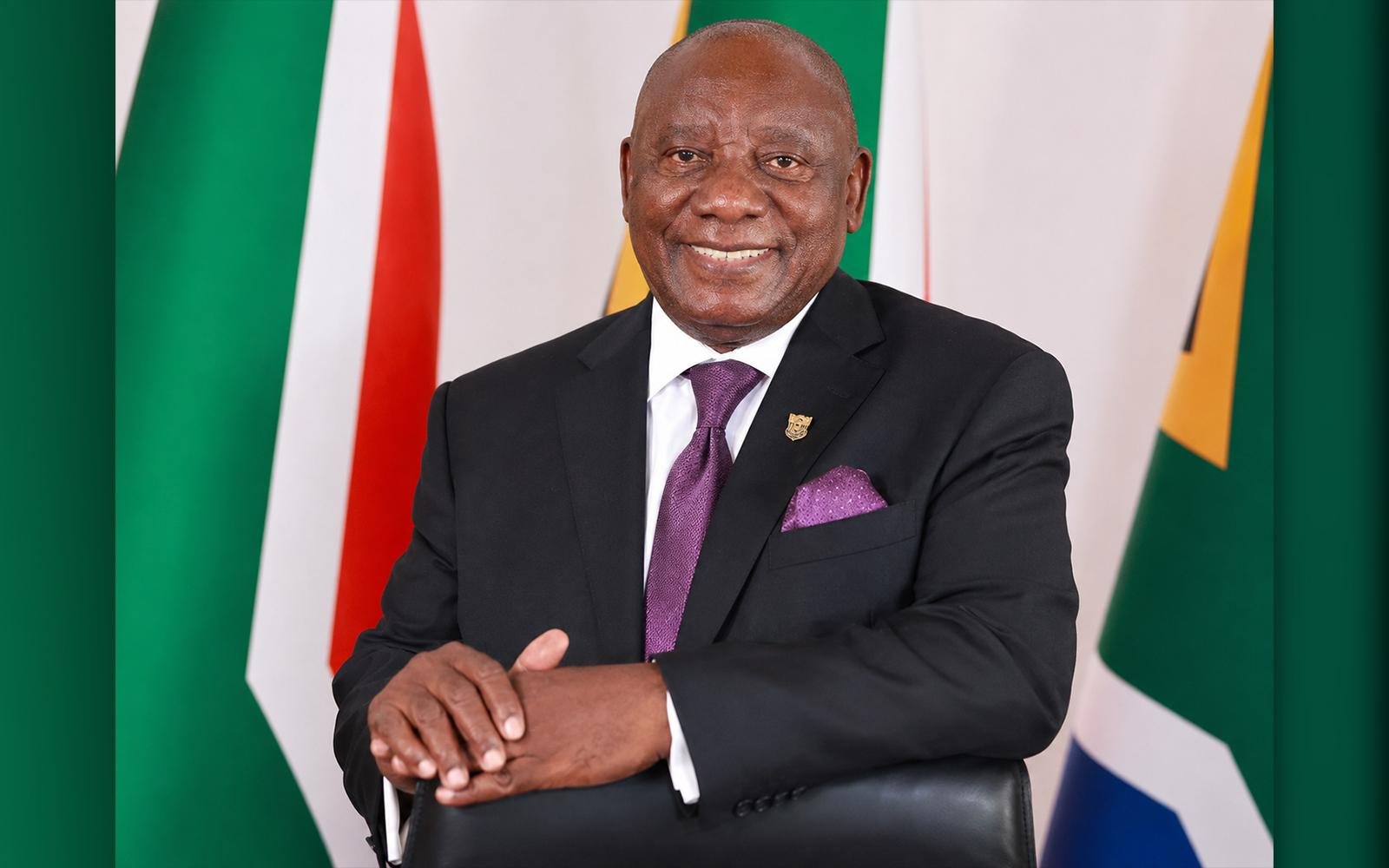
A South African court has convicted two people over the theft of approximately US$580,000 from Phala Phala, a private farm owned by President Cyril Ramaphosa, bringing a major development in a case that has attracted considerable political attention.
The Modimolle Regional Court in Limpopo delivered its verdict on Monday, November 2, 2026, finding Imanuwela David guilty of charges including theft, housebreaking, conspiracy to commit housebreaking and money laundering.
His co-accused, Froliana Joseph, a former cleaner at the property, was found guilty of conspiracy to commit housebreaking with intent to steal. Her brother, Ndilinasho Joseph, who was also standing trial, was acquitted of all charges.
The case relates to a burglary at Phala Phala farm in February 2020, when approximately US$580,000 in cash was stolen from a sofa on the property.

Inside the Farm at the Centre of South Africa’s Farmgate Scandal
Prosecutors alleged that David played a central role in the operation after Joseph discovered the money while working at the farm. The court relied on evidence presented during the trial, including financial transactions and communications between the accused.
David reportedly spent substantial amounts of money following the incident, purchasing several luxury vehicles, including Mercedes-Benz and Porsche cars, as well as expensive watches and a house. His explanation that the money came from legitimate business activities involving diamonds and Bitcoin was rejected by the court.

Court Delivers Verdict in $580,000 Farm Theft Case
The theft became a major national controversy in June 2022 after former intelligence chief Arthur Fraser publicly raised allegations that the burglary had not been properly reported to law enforcement.
The controversy, widely referred to as the Farmgate scandal, placed Ramaphosa under intense political pressure and raised questions about the circumstances surrounding the cash stored at his property.
Ramaphosa has acknowledged that the theft occurred but has denied wrongdoing. He has maintained that the money originated from the sale of buffaloes and defended his conduct amid the controversy.
The court proceedings have now established criminal responsibility for two of the accused, although the broader political questions surrounding the incident have continued to generate debate in South Africa.
The matter has been postponed to November 13, 2026, for pre-sentencing proceedings.
The convictions mark a significant development in one of the most politically sensitive criminal cases associated with Ramaphosa’s presidency.

















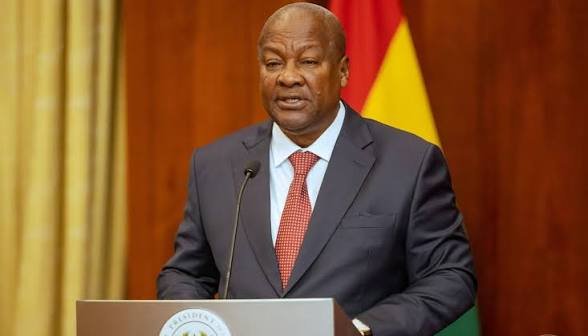
President John Dramani Mahama has defended Ghana’s automated traffic enforcement system, urging drivers to observe the 50km/h speed limit in towns while directing authorities to install warning signs at speed camera locations.
President John Dramani Mahama has told motorists concerned about the cost of fines under Ghana’s new TraffiTech-GH system that they can avoid penalties by obeying prescribed speed limits.
“If it is too expensive, then do not speed, and so there is a solution to that. The maximum speed in town is 50km/h. However good the road is, you do the 50km/h. If you do that, you are fine, and you will not have to pay anything,” he said.
The President made the remarks in an interview with 1957 News on the sidelines of the 2026 Commonwealth Heads of Government Meeting (CHOGM) in Antigua and Barbuda on Thursday, November 5.
Mahama rejects calls to fix roads first
His comments come amid growing public debate over the rollout of TraffiTech-GH, with some motorists and transport operators questioning the introduction of automated enforcement while roads, traffic lights and road signage remain inadequate in some areas.
Mahama rejected arguments that road infrastructure must be fully repaired before the system can be enforced. He maintained that road improvements and traffic law enforcement should proceed simultaneously.
Drawing comparisons with the United Kingdom, he argued that speed cameras are used there despite imperfections in the road network.
The President said the system’s initial phase focuses on speeding violations, while other offences, including running red lights and illegal parking, are expected to be incorporated later.
Police directed to install warning signs
Despite defending the system, Mahama called on the police and agencies responsible for its implementation to install clear signs warning motorists when they are approaching areas monitored by speed cameras.
He said transparency was important when introducing technology-driven enforcement and stressed that drivers should be adequately informed about camera locations.
The directive comes as concerns about the implementation of TraffiTech-GH continue to feature in public discussions.
Road safety at the centre of the debate
Mahama also cited the number of schoolchildren knocked down by speeding vehicles as a reason for strengthening traffic enforcement.
He said some children returning from school were killed or left with permanent injuries after being struck by vehicles, underscoring the need to address excessive speeding.
TraffiTech-GH was introduced by the Ghana Police Service’s Motor Traffic and Transport Department, with automated cameras initially targeting motorists who exceed speed limits.
While the government presents the system as a road safety measure, debate continues over penalties, road conditions and the need for clear public information about its operation.
General News
CEMSE warns petroleum prices could be lower by up to 60 pesewas per litre if Ghana builds alternative mooring facility


The energy policy think tank says delays in developing additional petroleum discharge infrastructure have contributed to costly demurrage charges, supply-chain risks and avoidable expenses for consumers.
The Centre for Environmental Management and Sustainable Energy (CEMSE) has warned that Ghanaian petroleum consumers could be paying less for fuel if the country develops an alternative mooring facility to ease pressure on existing petroleum discharge infrastructure.
In a press statement dated November 5, 2026, the organisation said the prolonged delay in establishing an alternative facility since 2016 had raised concerns about investment, regulatory policy, infrastructure diversification and national energy security.
CEMSE estimates that demurrage costs associated with inefficiencies in the petroleum import and discharge chain translate into an additional cost of between GH¢0.47 and GH¢0.60 per litre of petroleum products, equivalent to approximately 2.63 to 3.35 per cent of the retail pump price.
The organisation argues that improving discharge capacity and operational efficiency could help reduce these avoidable costs and ease the financial burden on consumers.
Demurrage costs reach US$46.73 million in 2026
According to CEMSE, the petroleum sector recorded approximately US$61.6 million in cumulative demurrage exposure in 2025, compared with a historical annual estimate of about US$35 million.
It further reported that demurrage costs for the first half of 2025 stood at approximately US$21.6 million, while average daily charges were estimated at US$45,000.
For 2026, the organisation said approximately US$46.73 million had already been incurred in demurrage costs year-to-date.
Rising petroleum imports, limited infrastructure
CEMSE noted that petroleum product inflows increased from 3.53 million metric tonnes in 2015 to 6.09 million metric tonnes in 2025, representing an increase of about 73 per cent.
Over the same period, the number of Bulk Oil Distribution and Export Companies rose from 37 to 53, while the organisation also reported a 40 per cent increase in transit petroleum products supplied from Ghana to neighbouring northern countries.
Despite this growth, CEMSE said mooring infrastructure had not expanded, leaving the country heavily dependent on Tema, where approximately 75 per cent of petroleum products are reportedly discharged.
Call for policy review
The organisation is urging government to review the existing exclusivity arrangement for a petroleum discharge facility, assess regulatory barriers and establish a clear framework to attract credible private-sector investment.
It also wants alternative discharge infrastructure incorporated into Ghana’s long-term petroleum and energy security plans, with defined investment priorities, timelines and regulatory oversight.
CEMSE says decisive action is needed to reduce avoidable costs, strengthen supply-chain resilience and improve efficiency in the downstream petroleum sector.

The body of 24-year-old Joseph Owusu, a church organist in the Bronx, was reportedly discovered at a dumpsite, deepening grief among Ghanaians in the United States.
The Ghanaian community in New York has been plunged into fresh mourning following the reported discovery of the body of a 24-year-old Ghanaian man, Joseph Owusu, at a dumpsite in the Bronx, about two weeks after he went missing.
Owusu, a member and organist of the Ghana United Methodist Church in the Bronx, was reportedly found among refuse by a scrap collector.
News of his death emerged on Tuesday, November 3, 2026, bringing an end to the uncertainty surrounding his whereabouts since he was reported missing.
Members of his church community remembered him as a dedicated musician whose commitment to serving the congregation through music and his warm personality made him well-liked.
The circumstances surrounding his disappearance and death remain unclear, with further details about how his body came to be at the dumpsite still awaited.
Fresh grief for Ghanaian community
Owusu’s death comes just days after another Ghanaian, 15-year-old Javits Badu Nkansah Frimpong, was shot dead in the same New York borough.
Frimpong was killed on October 29, 2026, while on his way to school near Crotona Park in the Bronx. He was reportedly chased before being shot and later died at a hospital.
The teenager’s killing has attracted attention in both Ghana and the United States, with officials and members of the community calling for justice.
Questions remain over circumstances of death
While reports have confirmed the discovery of Owusu’s body, details about the circumstances leading to his death have not been publicly established.
There has also been no confirmed information indicating whether foul play was involved or whether anyone has been arrested in connection with the case.
The two deaths have heightened concern and sorrow among Ghanaians in New York, particularly within the Bronx community.
Owusu’s death has left members of his church and the wider Ghanaian community mourning a young man remembered for his contribution to church life, while questions remain about what happened during the two weeks he was missing.
BY: Daniel Sasu
General News
Police arrest three suspects over series of robberies targeting bank customers in Kumasi

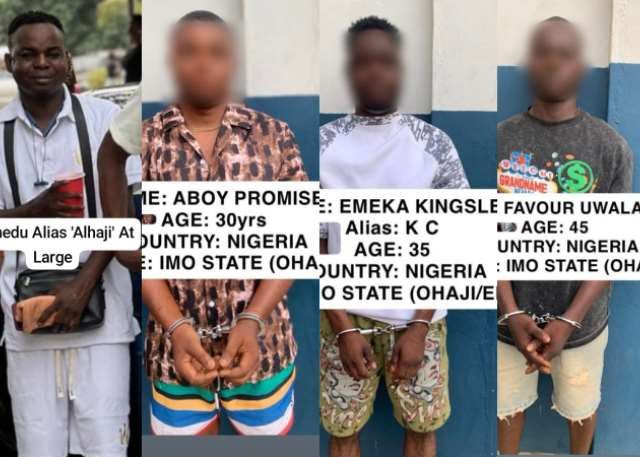
The Ashanti Regional Police Command says two Nigerian nationals and a third suspect have been arrested in connection with robberies involving customers who withdraw large sums of money from banks in Kumasi and surrounding communities.
The Ashanti Regional Police Command has arrested three suspected members of a criminal syndicate believed to be behind a series of robberies targeting bank customers in Kumasi and its environs.
In a press statement dated November 3, 2026, and signed by Superintendent Godwin Ahianyo, Head of the Public Affairs Unit, the Command said the arrests followed an intelligence-led operation conducted by a special team of the Inspector-General of Police on October 31.
The team, made up of personnel from the Anti-Armed Robbery Unit of the Criminal Investigations Department (CID) Headquarters and the Accra Regional Police Intelligence Directorate, arrested two Nigerian nationals, identified as Aboy Promise, 30, and Favour Uwalaka, 45, at a hotel in Moshie Zongo.
A search of their rooms led to the recovery of GH¢1,600, assorted mobile phones, a Royal motorbike and a master key allegedly used to gain unauthorised access to victims’ vehicles.
Suspects allegedly targeted bank customers
According to preliminary police investigations, the syndicate monitored banking premises, identified customers who withdrew substantial amounts of money and trailed them before attacking and robbing them.
The suspects also allegedly used a master key to break into unattended vehicles belonging to bank customers and steal cash kept inside.
During interrogation, the two arrested men reportedly admitted involvement in the robberies and mentioned two alleged accomplices: Chinedu, also known as Alhaji, and Kingsley, known as KC.
Police said the suspects subsequently led investigators to another hotel at Dechemso, where Kingsley, 35, was arrested. Chinedu remains at large.
Suspects linked to GH¢15,000 robbery.
The Command said the three suspects admitted to robbing a victim of GH¢15,000 at Asokore Mampong on October 27, after the victim had withdrawn money from Kwamang Rural Bank.
They also reportedly admitted to similar robberies at the Atonsu branch of Fidelity Bank, the Ahodwo branch of Access Bank and other locations within Kumasi.
The three arrested suspects have been handed over to the Ashanti Regional Police Command, which is assisting with the investigation.
Police have appealed to the public to provide credible information that could lead to the arrest of the remaining suspect, Chinedu. People can report information to the nearest police station or through emergency numbers 191, 112, and 18555.
The Command has urged bank customers to remain vigilant around banking premises and avoid leaving cash or valuables unattended in vehicles.
By: Daniel Sasu.
General News
TraffiTech-GH Fines: Radiant Media Questions Revenue Allocation, Demands Dedicated Road Safety Fund

The Radiant Media and Intelligence Hub has raised concerns about how revenue generated from Ghana’s newly introduced TraffiTech-GH traffic enforcement system will be managed, questioning whether the money will be channelled into a dedicated Road Safety Fund or absorbed into the government’s Consolidated Fund.
In an analysis authored by its Executive Director, Emmanuel Duah, the organisation argues that although the technology-driven enforcement system is expected to help curb indiscipline on Ghana’s roads, the absence of a dedicated account for road safety revenue raises questions about how the proceeds will contribute to improving road infrastructure and protecting motorists.
TraffiTech-GH became operational between November 1 and 2, 2026, following earlier postponements from September 29 and October 1.
The system is designed to detect traffic violations electronically and strengthen enforcement by the Motor Traffic and Transport Department (MTTD).
According to the analysis, the enforcement infrastructure includes fixed cameras installed at approximately 34 high-risk junctions across the country, 20 cameras mounted in vehicles, 30 handheld laser and tripod cameras, as well as Personal Digital Assistants (PDAs).
The process begins when the cameras and other devices capture suspected traffic violations. The evidence is subsequently transmitted to the MTTD’s regional back offices, where officers review and validate the violations before an Electronic Notice of Violation (ENV) is issued to the offender.
The notice is sent through an SMS from GPS-MTTD, informing the motorist of the offence and the applicable penalty.
The analysis explains that the penalties are guided by Regulation 242 of the Road Traffic Regulations, 2026 (L.I. 2519), which establishes fines based on the number of offences committed.
Under the regulation, the first, second and third offences attract a fine of GH¢120 each, equivalent to 10 penalty units, with one penalty unit valued at GH¢12.
The penalties increase progressively, with a fourth offence attracting GH¢180 and a fifth offence attracting GH¢240.
A motorist who commits a sixth offence within 24 months may face court proceedings and suspension of their driving licence.
Speeding offences attract a fine of GH¢240 for every 5km/h above the permitted speed limit, representing 20 penalty units. Other traffic violations could attract penalties of up to GH¢2,400, in addition to possible imprisonment.
Motorists have 14 days to pay their fines through the Ghana.gov platform, mobile money or the *222# option 6 service.
However, those who fail to settle their fines within the stipulated period face an additional surcharge of one per cent per day.
The analysis notes that no maximum limit for the daily surcharge has been published, raising concerns about how much the accumulated penalties could eventually become.
It further states that motorists with unpaid fines could be prevented from accessing certain services at the Driver and Vehicle Licensing Authority (DVLA).
One of the major issues highlighted by Emmanuel Duah is the revenue-sharing arrangement under the public-private partnership (PPP) governing the TraffiTech-GH system.
According to the analysis, revenue generated from traffic fines is divided between the government and the private operator, Nationwide Traffic Management and Enforcement Limited (NTMEL).
Under the arrangement, the private company receives 40 per cent of the revenue, while the government receives the remaining 60 per cent.
The analysis says this arrangement is reflected in the government’s 2022 PPP report and an assessment of the contract by Bright Simons.
It further explains that the government’s 60 per cent share is paid through the Ghana.gov platform into the Consolidated Fund.
Under Ghana’s public financial arrangements, payments made through Ghana.gov are generally transferred into the Consolidated Fund unless an Act of Parliament makes specific provisions for the revenue to be earmarked for another purpose.
However, the analysis argues that L.I. 2519 did not establish a dedicated Road Safety Fund or an escrow account to receive and manage revenue generated from TraffiTech-GH fines.
This means that the government’s share is currently treated as general government revenue rather than money specifically reserved for road safety interventions.
The organisation warns that without a legally established ring-fenced account, there is no guarantee that the revenue will be directly reinvested in road safety projects such as road markings, traffic camera maintenance, street lighting, emergency response services and compensation for accident victims.
It therefore questions whether a system introduced primarily to improve road safety should operate without a clear mechanism to ensure that part of the money collected supports the same objective.
The organisation has also drawn attention to the potential financial returns from the enforcement system, citing figures recorded during its one-week test run.
According to the analysis, the MTTD captured more than 10,000 traffic violations during the period.
Using an assumed minimum fine of GH¢300 per violation, Emmanuel Duah estimates that the offences could generate approximately GH¢3 million in fines within one week.
Based on the same figures, the analysis projects potential revenue of GH¢12 million monthly and more than GH¢144 million annually if the rate of violations and collections remains consistent.
The organisation cautions that such significant revenue could become a major source of government income without necessarily translating into visible improvements in road safety.
It argues that if the proceeds are absorbed into the Consolidated Fund, funding for road safety interventions will have to compete with other government spending priorities.
According to the analysis, this could defeat part of the purpose of introducing the technology if motorists continue to experience poorly marked roads, inadequate street lighting, limited emergency response services and other road safety challenges despite the fines being collected.
In making its case for a dedicated fund, the Radiant Media and Intelligence Hub points to the United Kingdom, particularly London boroughs, as an example of how revenue generated through traffic enforcement can support transport improvements.
The analysis cites approximately £1 billion generated by London boroughs and argues that legal requirements for reinvesting such revenue in transport provide a useful model for Ghana.
It recommends that Ghana adopt a similar approach by ensuring that a defined portion of the government’s share of TraffiTech-GH fines is committed to improving road safety rather than being treated entirely as general revenue.
Fraud concerns and public confidence
The analysis also raises concerns about the possibility of fraudulent payment demands targeting motorists using the TraffiTech-GH system.
It refers to an incident in February 2026 when seven people were reportedly arrested over fake TraffiTech-GH SMS messages demanding payments through private mobile money numbers.
The incident prompted the police to issue a warning to the public against making payments into suspicious private accounts.
Although the organisation acknowledges that the use of Ghana.gov as the central payment platform helps reduce the risk of fraud, it insists that transparency and accountability remain essential to maintaining public confidence.
It argues that motorists must be able to identify legitimate payment notices, verify the offences recorded against them and obtain official receipts for every payment made.
The organisation further insists that payments should only be made through officially approved channels, including Ghana.gov and the authorised GPS-MTTD system, rather than private mobile money accounts.
Four recommendations to government
To address the concerns surrounding the management of TraffiTech-GH revenue, the Radiant Media and Intelligence Hub has proposed four measures for consideration by the government and Parliament.
Establish a Road Safety and Emergency Response Fund
The organisation is calling on Parliament to amend L.I. 2519 to establish a dedicated Road Safety and Emergency Response Fund.
It recommends that at least 50 per cent of the government’s 60 per cent share of revenue generated from traffic fines should be earmarked for the proposed fund.
The money would be used to finance road signs and markings, street lighting, ambulance posts, MTTD regional back-office capacity and compensation for victims of road accidents.
Publish monthly revenue reports
The organisation wants the government to establish a publicly accessible dashboard showing the monthly revenue generated through TraffiTech-GH.
The dashboard should also disclose how the money is divided between the government and Nationwide Traffic Management and Enforcement Limited.
According to the analysis, regular publication of the figures would allow motorists and the general public to monitor collections and understand how the revenue is being managed.
Introduce a cap on daily surcharges and clarify appeals
The organisation is also calling for a limit on the one per cent daily surcharge imposed on motorists who fail to pay within 14 days.
It wants the authorities to clearly explain the appeal process to ensure that motorists who dispute violations have an accessible mechanism to challenge the notices and avoid excessive accumulation of penalties.
Maintain transparent and publicly supervised enforcement
The fourth recommendation is for the government to ensure that the enforcement and payment processes remain transparent and subject to public oversight.
The organisation insists that official payment receipts should clearly identify authorised channels, particularly Ghana.gov and GPS-MTTD.
It also warns against directing motorists to make payments into private mobile money accounts, stressing the need for a reliable and verifiable payment system.
Concluding its argument, the Radiant Media and Intelligence Hub maintains that the introduction of camera-based traffic enforcement is a positive development because technology can help reduce opportunities for bribery and improve compliance with road traffic regulations.
However, it argues that the success of TraffiTech-GH should not be measured only by the number of violations detected or the amount of money collected from motorists.
The organisation maintains that the revenue generated must contribute to safer roads, improved emergency response systems and better protection for road users.
It warns that although the cameras may help eliminate direct human interference in traffic enforcement, motorists could eventually view the system as another means of taxation if the money collected does not translate into visible road safety improvements.
The organisation’s position is that traffic indiscipline must be punished, but the financial proceeds from that punishment should also help build safer roads and strengthen the country’s road safety infrastructure.

Ghana’s Economic Recovery Faces New Risks – IMF

Ampem Darkoa Ladies Snatch Late Winner to Beat Kawempe Muslim 2-1 in CAF Women’s Champions League

Emotional Ronaldo bids farewell to Portugal: ‘The time has come’

IRAWMA 2025: Shatta Wale Wins 3 Major Awards Including Best Music Video

Samini Secures Promotional Deal with Audiomack for Upcoming Album “THE ORIGIN8A”

AirtelTigo losing GH₵20m monthly; total debts exceed $200million – Sam George


-

 General News1 week ago
GTA Staff Demand Answers on World Cup Visa Slots, Staff Dismissals and Unpaid Allowances
-

 General News2 weeks ago
SAMMY GYAMFI’S “MINE WITHOUT LICENCE” REMARK SPARKS FRESH GALAMSEY DEBATE
-

 General News2 weeks ago
FOKLEX MEDIA AWARDS COMMENDS PRINCE KWAW GYIMAH AND OWASS FM TEAM FOR PROFESSIONALISM DURING KWAME DZOKOTO INCIDENT
-

 Entertainment3 days ago
NADFFA 2027: Ghana to Host Pan-African Film and Food Festival in March
-

 General News1 week ago
Nicki Minaj Throws Her Support Behind Trump Ahead of US Midterm Elections
-

 Entertainment1 week ago
GTA Targets Taxi Drivers in ‘Know Ghana’ Campaign to Boost Tourism
-

 Lifestyle2 weeks ago
One More Video Until 2 AM: Why We Keep Stealing Sleep from Ourselves
-

 Education1 week ago
Can Students Solve Disagreements Without Fighting? Why Schools Should Teach Conflict Resolution