
Entertainment
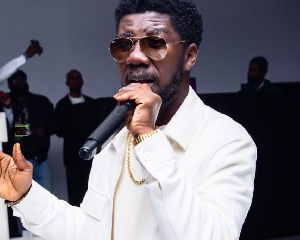
Davido’s Short Performance: Osama Still Owes Us Money – Sabi Boii Alleges

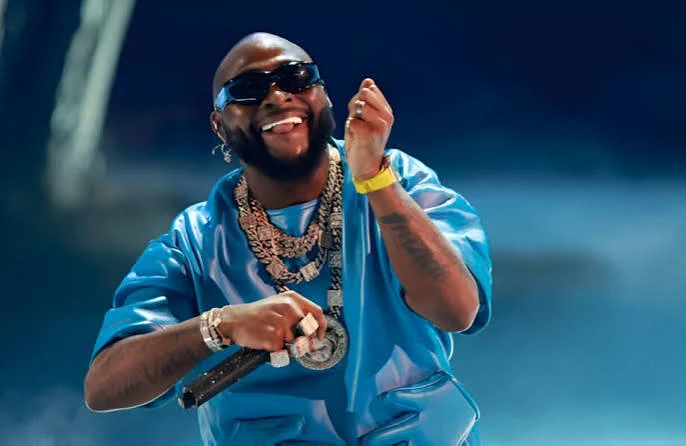
According to Sabi Boii, the organisers had agreed to make an initial payment before Davido’s arrival and settle the outstanding amount before the musician mounted the stage. However, he alleged that Great Osama failed to honour the arrangement.
Speaking during a TikTok live session, Sabi Boii dismissed suggestions that the organiser had fully paid Davido for the performance, insisting that a substantial amount remained outstanding.
“Osama owes us money. Don’t make it look like he gave a million dollars or two million dollars; that man owes us money. Yes, he owes us money,” he stated.
Explaining the financial arrangement, Sabi Boii disclosed that both parties had agreed on a payment structure that required the organiser to settle the remaining amount before Davido began his performance.
“The deal was that Osama paid some amount of money to us and the deal was, when we get there we would take the rest of the payment before he gets on stage,” he explained.
He further alleged that part of the outstanding payment was supposed to be made in gold equivalent to the amount owed. However, he claimed that what the organiser presented did not match their agreement.
“Osama is supposed to give us a certain amount of gold equivalent to the money he owes us. But what he brought is like, that is not what he was supposed to give us. What he brought was like he was trying to cheat us or something,” Sabi Boii alleged.
The representative maintained that the disagreement over the payment directly affected Davido’s performance, resulting in the musician delivering only a few songs before leaving the stage.
“That’s why the whole thing was that Davido had to perform a few songs and just leave because we had a deal and he didn’t keep up to the deal,” he added.
Beyond the financial disagreement, Sabi Boii also responded to reports suggesting that Great Osama was unhappy because he did not get an opportunity to take a photograph with Davido during the event.
He alleged that the organiser failed to make himself available to interact with the musician despite being responsible for bringing him to the event.
According to him, Great Osama was still occupied with ticket sales when Davido appeared on stage, leaving little opportunity for the two to meet.
“When Davido got on stage, I think Osama was still at the gate selling tickets. He didn’t even make time for the guest that he brought. I mean, stay with him and have a little chat, like have some low business chat or introduce yourself, like do something, brother,” he said.
Sabi Boii suggested that the lack of interaction between the organiser and the artiste was the main reason they couldn’t take a photo together.
“That’s why he didn’t have a photo, and he’s pissed at that. Yes, Osama is pissed; that’s why he’s granting interviews left and right,” he alleged.
His allegations come amid growing public discussions surrounding Davido’s appearance at Great Osama’s event, particularly reports that the musician received $600,000 for the performance despite spending only a short time on stage.
The controversy has sparked debate over the financial arrangements, the event organiser’s expectations, and the circumstances behind Davido’s decision to end his performance early.
The allegations remain claims made by Sabi Boii, and the account provided does not establish whether Great Osama has responded to these specific accusations.














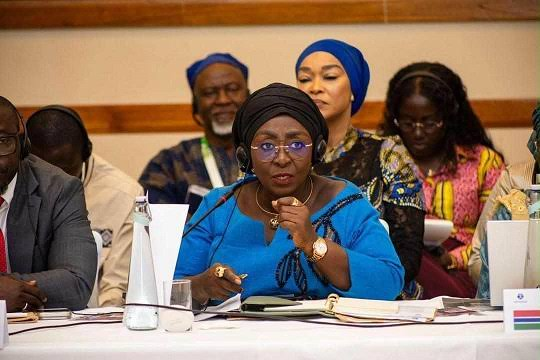
The country polled 19 votes against Argentina’s 14 during a competitive election held at the 127th Session of the UN Tourism Executive Council in Abu Dhabi, securing the coveted leadership position.
The successful bid was led by the Minister for Tourism, Culture and Creative Arts, Abla Dzifa Gomashie, who headed Ghana’s delegation to the international gathering.
The victory marks a significant milestone in Ghana’s efforts to strengthen its influence in international tourism governance and position itself as a key player in shaping policies and decisions affecting the global tourism industry.
Deputy Chief Executive Officer of the Ghana Tourism Authority (GTA), Abeiku Santana, celebrated the achievement in a post on X, describing it as a landmark diplomatic triumph for the country.
“This remarkable achievement positions Ghana at the forefront of global tourism leadership, reinforcing the country’s growing influence in international tourism diplomacy,” he wrote.
Ghana’s election to the chairmanship comes amid renewed efforts by the country to expand its presence in the global tourism industry and contribute more actively to discussions on tourism development, international cooperation and policy direction.
The latest victory also follows Ghana’s successful bid in July 2026 to host the 70th United Nations Tourism Commission for Africa (CAF) Meeting in 2027.
The hosting of the continental meeting is expected to bring tourism stakeholders, policymakers and industry leaders from across Africa together to deliberate on issues affecting the sector and explore opportunities for growth, investment and collaboration.
With Ghana set to chair the UN Tourism Executive Council and host the Commission for Africa meeting in 2027, the country is expected to occupy a prominent position in international and continental tourism discussions.

The upcoming attempt is scheduled to begin on July 27, 2027, in Ontario, Canada, as she continues her pursuit of the record after her previous attempts in Ghana.
In a statement announcing the new challenge, Afua Asantewaa expressed excitement about the upcoming singing marathon, describing it as another opportunity to push her limits and pursue her dream.
“It is with great pleasure that I announce my third singing marathon attempt, scheduled for July 27, 2027, here in Canada. The journey has been challenging, but as Osibisa’s iconic song Woyaya reminds us, we will get there,” she said.
According to her, the Canada edition will feature a broader international repertoire, with music from different cultures and generations. The initiative is expected to celebrate the diversity of music while highlighting its ability to unite people across geographical and cultural boundaries.
Audiences can look forward to performances of several iconic songs, including Three Little Birds by Bob Marley and the Wailers, Remember Me by Lucky Dube, Soul Makossa and Ghanaian classics.
Afua Asantewaa also expressed gratitude to her supporters, particularly members of the media, for their continued encouragement and support throughout her journey.
The forthcoming singing marathon is being organised in partnership with The ACE Foundation and Bee Connected Academy in Canada.
She explained that the initiative is also intended to inspire individuals, particularly young people, to overcome adversity, recognise their potential and pursue their ambitions with courage, determination and perseverance.
“Through this initiative, she hopes to inspire individuals, particularly young people, to rise above adversity, embrace their potential and pursue their aspirations with courage and determination,” the statement added.
The announcement comes after her previous singing marathon attempts at Akwaba Village in Accra in 2023 and Heroes Park in Kumasi in 2024.
Despite the challenges associated with her earlier attempts, Afua Asantewaa remains committed to pursuing the Guinness World Records title, with the upcoming Canada attempt marking another chapter in her journey to achieve the feat.
Entertainment
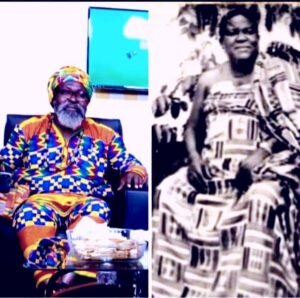
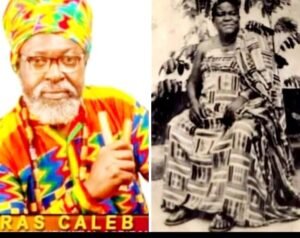
Ras Caleb Appiah-Levi honours late father Cofie Essah Appiah, recounts his life, family and legacy
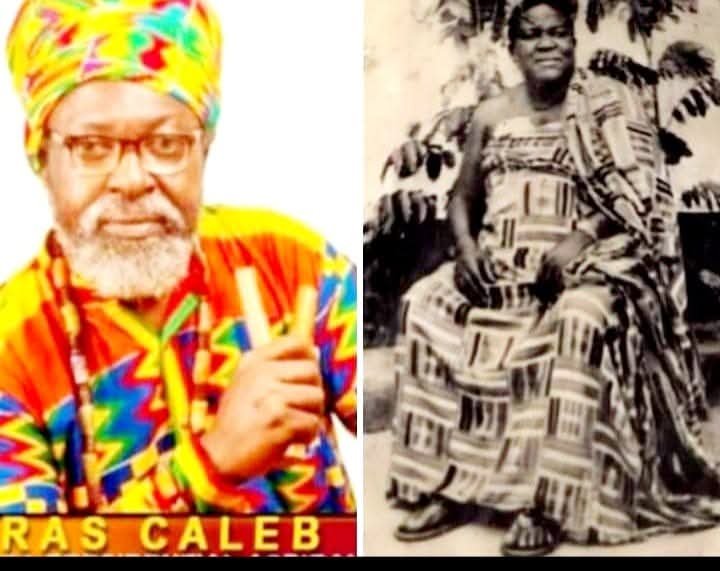
In a detailed tribute titled “Honouring My Noble Father, Cofie Essah Appiah, a Native of Boso-Gua, and of Blessed Memory,” Ras Caleb reflected on the remarkable life of his father, whose influence extended through his family, professional career, religious activities, political affiliation and investments in farming and property.
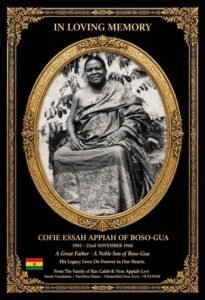
Opanyin Cofie Essah Appiah was born in 1902 to Nenye Kofi Essah of Boso-Gua, near Anum, and Dora Abena Asamaniwaa of Anum, both of blessed memory.
He was the third of three boys born to his parents. However, his two elder brothers died during infancy, leaving him as the only surviving child of his parents.
At a very young age, he was relocated to Suhum, where he began his education at Suhum Anglican School. His time at the school played a significant role in shaping his Christian faith and devotion to the Anglican Church, values he carried throughout his life.
Opanyin Cofie Essah Appiah began his working life with the United Africa Company (U.A.C.) in Suhum before being transferred to Koforidua.
He subsequently joined the Ghana Cocoa Marketing Board (CMB), where his career took him to Akim Oda, serving as a Cocoa Buyer.
Despite his employment, he remained committed to farming and was described by his son as a very industrious and hardworking farmer who invested in agricultural land and property in several communities.
While working in Akim Oda, he acquired farmlands at Akokoaso, where he built a house and named it Boso Villa.
In 1927, at the age of 25, he expanded his investments by acquiring farms and forest lands at various locations, including Adonkwanta, Ateibu, Abobri, Mameneso, Adobenso near Suhum in the Abuakwa District, Nnam, Abirem, Asuom and Ayirebi, in the Akim Kotoku State.
According to Ras Caleb, his father had a habit of building or purchasing houses wherever he went, leaving behind properties in several parts of the country.
These included Akokoaso, Kwae, near the Ghana Oil Palm Development Company Limited, Akim Oda, Koforidua, Accra and Boso, near Anum, opposite the Boso Anglican Church.
His investments in farmlands, forest lands and residential properties reflected his determination to build a lasting economic foundation for himself and his family.
Beyond his professional and business activities, Opanyin Cofie Essah Appiah was a committed Pan-Africanist and staunch member of the Convention People’s Party (CPP), founded by Ghana’s first President, Osagyefo Dr Kwame Nkrumah.
His political beliefs and admiration for the ideals of Dr Nkrumah influenced his son’s early participation in organised youth activities.
Ras Caleb disclosed that his father assisted him, Emmanuel Obiri, to join the Ghana Young Pioneer Movement in 1963.
The Ghana Young Pioneer Movement was a national youth organisation initiated in 1960 and formally established with parliamentary backing in 1961 under Dr Kwame Nkrumah’s leadership.
The organisation was created to instil patriotism, discipline, civic responsibility and national consciousness in young Ghanaians.
Its membership was structured into age groups, including the African Personality grouping for children aged four to eight, Young Pioneers for those aged nine to 16, and Nkrumah Youth for members between 17 and 25 years.
Activities under the movement included classroom instruction, civic and ideological education, physical drills, marching and recreational activities. Members also wore uniforms featuring light-coloured shirts with shoulder patches, dark trousers and neckerchiefs, and participated in daily flag-raising ceremonies.
The movement’s members were guided by a 12-point code of discipline that emphasised love of country, discipline, honesty, punctuality, protection of state property, reliability, secrecy, comradeship, forbearance, love of work, selflessness and the pursuit of faultlessness.
The Ghana Young Pioneer Movement was abolished in 1966 following the overthrow of Dr Nkrumah’s government.
Opanyin Cofie Essah Appiah’s ambition to raise a large family resulted in 17 children, all of whom he reportedly raised under his roof.
His children, as listed by Ras Caleb, are: Dora Asamaniwaa, Janet Ansaah, George Essah, Edward Appiah, popularly known as Lawyer Appiah of Tamale, Adelaide Asamaniwaa, Felix Essah, Ebenezer Asamani, Edith Biamah, Paul Afum, Gifty Okyerebea, Joyce Okyerebea, Rebecca Ansaah, Margaret Latebea, Emmanuel Obiri, also known as Ras Caleb Appiah-Levi, Emmanuel Abrokwa, Joseph Mireku, Benjamin Hadjor
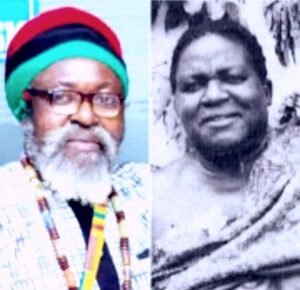
Among his children is Janet Ansaah, who is the biological grandmother of Samuel Kofi Atta Mills, the son of the late former President of Ghana, Prof. John Evans Atta Mills.
Ras Caleb said his father placed enormous importance on education and was determined to provide his children with quality schooling, encouraging them to pursue education to the highest possible level.
His efforts produced children who went on to become lawyers, teachers, engineers, nurses, bankers, traders, farmers and musicians, reflecting the diversity of professional paths taken by his descendants.
Opanyin Cofie Essah Appiah’s faith in Jesus Christ as his personal Saviour and his commitment to the Anglican Church were evident in his contributions to the establishment and development of the church in Boso.
He co-founded the Anglican Church in Boso and made significant contributions to securing a permanent place of worship for the congregation.
Ras Caleb said his father purchased an unfinished structure and donated it to the church to be converted into a church building.
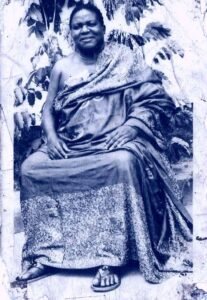
He also donated an organ to the church, which he personally played every Sunday and during other church occasions.
His commitment to the church also influenced his children, with Ras Caleb himself serving as a Mass Server and Bell Boy at the church during his childhood.
The family’s connection to the Anglican Church in Boso remains a significant part of his father’s religious legacy.
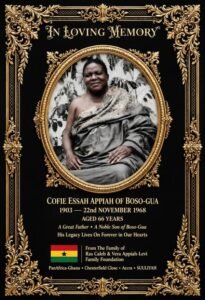
Opanyin Cofie Essah Appiah died on November 22, 1968, leaving behind a family whose numbers and achievements have continued to grow over the decades.
According to Ras Caleb, his father is survived by his last eight children, comprising four females and four males, 63 grandchildren, 108 great-grandchildren and seven great-great-grandchildren.
In honouring his father, Ras Caleb reflected on a life that combined professional service, farming, property ownership, political commitment, Christian devotion and the raising of a large family.
His tribute celebrates not only the life of a man born more than a century ago but also the values of hard work, education, faith, discipline, selflessness and family responsibility that he passed on to generations of descendants.
Entertainment
He Understood Me Without Words – Uche Edochie’s Heartbreaking Tribute to Late Father Pete Edochie
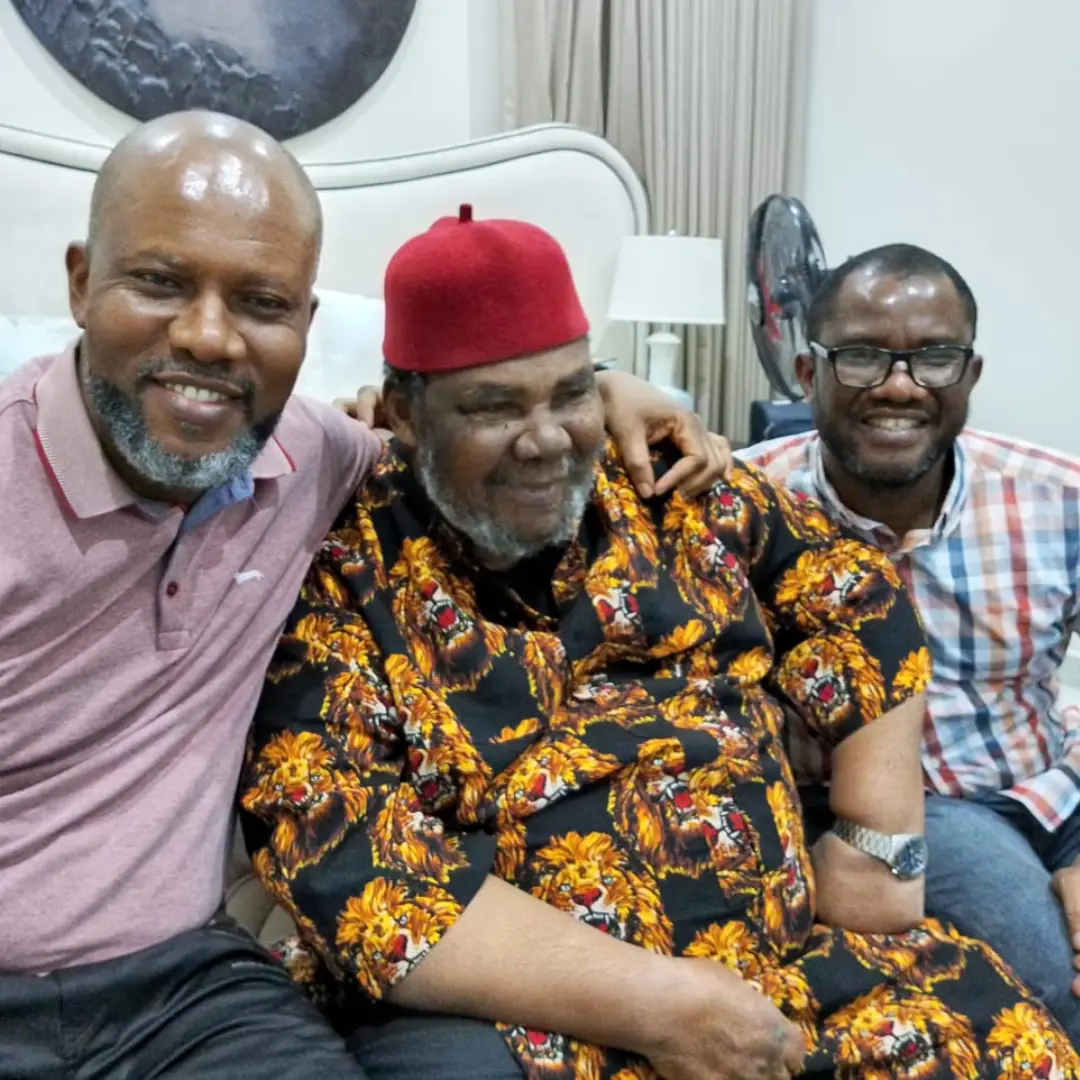
In an emotional tribute, Uche described his father as a kind, warm-hearted man whose real-life personality was completely different from the tough and intimidating characters he portrayed in movies.
He said he was struggling to process the loss, describing himself as feeling lost and uncoordinated as his phone continued buzzing with calls and messages from people expressing their condolences.
Uche said many people knew and loved his father because of his remarkable performances on screen, but to the family, he was much more than an actor.
“Many of you knew my father from the movie screen and loved him. We loved him too. More than you can imagine. Not as an actor but as a dad, a friend and a really good person,” he wrote.
Recalling his father’s personality, Uche said kindness and warmth were the first qualities that came to mind whenever he thought about him, stressing that Pete Edochie was the complete opposite of the scary and tough characters he played in films.
He also revealed that his father had a deep love for classical music, recalling how, for several years, whenever he asked what gift he should buy for him, the veteran actor would request classical music.
Uche said he wished he could have played some of his father’s favourite music for him as he lay in his hospital bed drifting away, but following the news of his death, farewell music began playing uncontrollably in his head.
Describing the depth of their relationship, he said he loved his father more than words could express and recalled how Pete Edochie understood him in ways no one else could, particularly during difficult moments in his life.
He recounted how he would sometimes call his father when he was going through challenges, only for the veteran actor to tell him that he already knew what was happening even before Uche had explained himself.
When he asked his father how he knew what he was going through, Pete Edochie would tell him that he felt what his son was feeling.
Uche described the late actor as more than a father, saying he was his best friend and guardian angel, adding that the family would miss him deeply.
He also shared what he described as the last photograph he and his brother Gene Edochie took with their father in December 2025, saying the picture was how he wanted to remember him.
“Rest in peace, Dad. You lived in full,” he wrote.
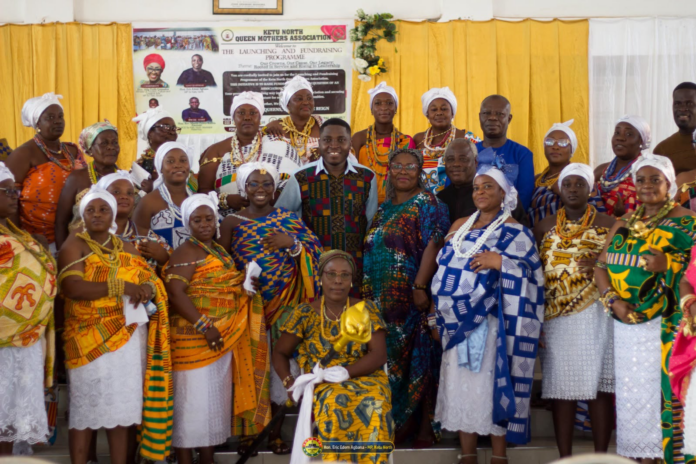
Tourism, Culture and Creative Arts Minister Abla Dzifa Gomashie has called on queen mothers across Ghana to take an active role in preserving the country’s cultural heritage and ensuring that traditions, languages, customs and values are passed on to future generations.
The call was made on her behalf by Delassie Mabel Awuku, Head of Public Relations at the Ministry, during the launch of the Ketu North Queen Mothers Association in Dzodze.
She stressed that cultural preservation goes beyond speaking about traditions, explaining that Ghana’s heritage must be deliberately nurtured, practised and transferred from one generation to another.
According to her, queen mothers play a significant role in this process because of their influence in traditional leadership and their position as custodians of Ghanaian identity, culture and heritage.
The launch was held under the theme, “Our Crown, Our Cause, Our Legacy: Rooted in Service, Rising in Leadership,” which highlighted the contribution of women to traditional leadership while reinforcing the need for unity, cultural preservation and community development.
The newly established association is also seeking to strengthen its operations and improve its capacity through the construction of an office and training complex, as well as the acquisition of an official bus.
The proposed facilities are expected to provide a dedicated space for coordinating the activities of queen mothers, strengthening their leadership skills and supporting their participation in development initiatives across their communities.
The Minister’s message underscored the importance of active involvement by traditional leaders in safeguarding Ghana’s cultural identity and ensuring that the country’s heritage remains alive for generations to come.


Ghana Defeats Argentina to Secure UN Tourism Executive Council Chairmanship for 2027

Afua Asantewaa Announces Third Singing Marathon Attempt in Canada for 2027

Ras Caleb Appiah-Levi honours late father Cofie Essah Appiah, recounts his life, family and legacy

Ghana’s Forgotten Treasure: The Mystery and History of the Nalerigu Defence Wall

Are Students Growing Up Without Knowing Their Own History? Why Local History Matters in Schools

NADFFA 2027: Ghana to Host Pan-African Film and Food Festival in March

Ghana Faces Very Strong El Niño Threat as GMet Warns of Extreme Heat, Drought and Possible Flooding

Avoid excessive taxation that prevents entrepreneurs from creating wealth – Kufuor to Ghana’s leaders

NADFFA 2027 launched in Accra to celebrate African cinema, cuisine and culture

In Ghana, Everyone Wants to Be Called Boss — But Who Is Doing the Actual Work?

Illinois’ financial crisis could bring the state to a halt
The final 6 ‘Game of Thrones’ episodes might feel like a full season
New Season 8 Walking Dead trailer flashes forward in time
Mod turns ‘Counter-Strike’ into a ‘Tekken’ clone with fighting chickens
Meet Superman’s grandfather in new trailer for Krypton

-

 Business23 hours ago
US Jury Finds Huawei Guilty of Stealing Trade Secrets, Rejects Racketeering Allegations
-

 Business23 hours ago
Bond Market Activity Declines 16% Amid Shifting Investor Positions
-

 Business22 hours ago
BoG Encourages Banks and Financial Institutions to Explore Carbon Markets
-
 Culture24 hours ago
Ghana’s Forgotten Tourist Attractions: The Hidden Beauty of the Tongo Hills and Tengzug Shrine
-
 Business21 hours ago
France Applauds Ghana’s Economic Recovery and Growth Efforts
-

 Business22 hours ago
South Africa Pushes for Stronger Trade and Industrial Partnership with Ghana
-
 Business22 hours ago
Recruitment Underway as Ghana’s Women’s Development Bank Prepares for Take-Off
-
 Business21 hours ago
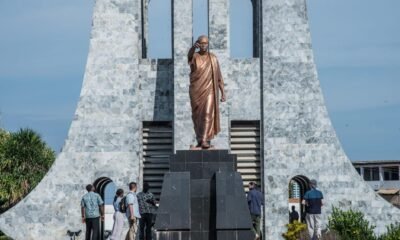
Nkrumah Memorial Park Initiative Gets Support from Kantanka Group