
Education
Are Students Growing Up Without Knowing Their Own History? Why Local History Matters in Schools


A student may be able to name several European kings, explain historical events from other continents and answer questions about ancient civilisations but struggle to explain the history of their own hometown, traditional area or community.
They may know about famous historical figures from other countries but have little knowledge of the people who established their community, the traditional leaders who shaped its development, the historical buildings around them or the events that influenced the area they live in today.
This raises an important question about education: Are students learning enough about the history of the places they call home?
History is often taught through textbooks, dates, major political events and national developments. While these are important, the stories of towns, villages, neighbourhoods, families, traditional institutions and local communities also form part of a country’s historical identity.
In Ghana, where communities have rich histories, diverse traditions and different experiences of migration, settlement, trade, leadership and cultural development, local history could offer students a more personal connection to what they learn in school.
Should students be encouraged to understand the history of their own communities before leaving school?
Why Local History Matters
Local history helps people understand how their communities developed, why certain traditions exist and how past events influenced the present.
A town may have been established through migration, farming, trade, conflict, religious activities, the construction of a railway, the development of a market or the arrival of an educational institution.
These stories can help students understand that the communities they live in were not created overnight. They were shaped by the decisions, experiences and contributions of people who lived before them.
Learning local history can also help young people develop a stronger sense of belonging. When students understand the origins of their communities, they may become more interested in preserving important historical sites, traditions, stories and cultural practices.
It gives them an opportunity to see history not only as something that happened far away or centuries ago but as something connected to the streets, buildings, landmarks and people they encounter every day.
Are Students Losing Touch With Their Roots?
Modern education, technology, urbanisation and changing lifestyles have influenced how young people interact with their communities.
Some students grow up in towns where traditional stories are rarely discussed at home. Others may have parents or grandparents from different regions but have limited knowledge of their ancestral communities.
The increasing use of digital entertainment and social media can also influence the interests of young people, exposing them to cultures and histories from around the world while local stories receive less attention.
This does not mean young people should be discouraged from learning about foreign cultures. Understanding other societies is valuable in an increasingly connected world.
However, knowledge of other cultures should not necessarily come at the expense of understanding one’s own surroundings.
A student who understands the history of their community can appreciate its contribution to national development while remaining open to learning about other societies.
Across Ghana, communities have histories connected to migration, traditional leadership, agriculture, trade, religious activities, education, colonial administration and political developments.
Some towns became important because of markets, cocoa farming, mining, fishing, transport routes or educational institutions.
Others are associated with historical events, traditional festivals, royal families, cultural practices or important personalities.
Many of these stories are preserved through oral history, family accounts, traditional authorities, community elders, historical records and cultural institutions.
However, some stories may gradually disappear when older generations pass away without having their experiences properly documented.
Students could play an important role in preserving these histories by interviewing older residents, researching community landmarks and documenting stories with the guidance of teachers.
Such activities could help create records that future generations may also benefit from.
When communities lose knowledge of their history, important information about their identity, traditions and development may disappear.
Historical buildings may be demolished without residents fully appreciating their significance. Traditional practices may become misunderstood, while stories about important community figures may remain unknown to younger generations.
In some cases, historical sites may be neglected because people do not recognise their cultural, educational or tourism value.
Understanding local history can encourage students and communities to pay greater attention to heritage preservation.
For example, learning that an old building once served as an important educational institution, trading centre, meeting place or historical landmark could change how residents view it.
History can therefore help communities recognise the value of places that might otherwise be regarded as ordinary or outdated.
Schools could introduce more practical approaches to teaching local history rather than relying entirely on textbooks and classroom explanations.
Students could visit historical landmarks, traditional palaces, old schools, museums, community centres and other places with historical significance.
Teachers could encourage learners to interview elders, traditional leaders, local historians and long-time residents about how their communities have changed over the years.
Students could also research the origins of local names, historical markets, festivals, important roads, old buildings and community institutions.
For example, learners could investigate why a particular town has its name, how its population developed, what economic activities shaped it and which individuals contributed to its growth.
The information gathered could be presented through essays, photographs, exhibitions, documentaries, maps or classroom presentations.
These activities would make history more interactive and help students connect academic learning with their immediate surroundings.
In many Ghanaian communities, important historical information has been passed down through storytelling and oral tradition.
Older people may remember how towns developed, how markets operated, how schools were established, how roads were constructed or how major events affected residents.
Oral history can provide valuable insight into experiences that may not appear in official documents.
However, oral accounts should also be handled carefully. Different people may remember events differently, and some stories may contain inaccuracies, exaggerations or conflicting interpretations.
Students should therefore learn how to compare accounts, ask questions respectfully and distinguish between personal memories, documented evidence and traditional narratives.
Teachers can encourage learners to consult different sources, including books, archives, newspapers, photographs, official records and knowledgeable community members.
This approach would teach students not only history but also research, critical thinking and responsible documentation.
Understanding the history of one’s community can contribute to a broader understanding of Ghana’s national history.
The experiences of different towns, ethnic groups, traditional authorities, traders, farmers, workers, religious communities and historical personalities have contributed to the development of the country.
When students learn about their local communities, they can begin to understand how individual communities fit into the wider national story.
This can also encourage appreciation of Ghana’s diversity.
Students from different regions may discover that their communities experienced similar historical developments while maintaining unique traditions and identities.
Local history can therefore promote cultural understanding rather than division, provided it is taught accurately, inclusively and without presenting one community as superior to another.
One challenge is the lack of teaching materials about some communities.
While certain towns have documented histories, others may have limited written information available to teachers and students.
Schools may need to work with local historians, traditional authorities, museums, universities, cultural organisations and community members to gather reliable information.
Another challenge is the risk of presenting local history through only one perspective.
Historical accounts can sometimes involve disagreements over land, leadership, migration, ownership, political developments or traditional authority.
Teachers must approach these issues carefully, encouraging evidence-based learning and respectful discussion rather than promoting unverified claims.
There may also be logistical challenges associated with organising excursions and research activities, particularly for schools with limited financial resources.
However, some local history activities can be conducted without expensive trips. Students can research their immediate neighbourhoods, interview family members and examine photographs or documents available within their communities.
Parents, grandparents and community leaders can help preserve local history by sharing stories and encouraging young people to ask questions about their roots.
Traditional authorities, historians, cultural groups and local institutions can also support schools by providing access to historical information and organising educational activities.
Communities could establish local history exhibitions, storytelling sessions, heritage walks and documentation projects that involve students.
Older residents who have witnessed significant changes in their communities could be invited to share their experiences with learners.
These interactions may help students appreciate the knowledge older generations possess while creating opportunities for historical information to be preserved.
There is a strong argument for making local history a more visible part of education, particularly at the basic and secondary school levels.
Students do not necessarily need an entirely separate examination subject. Local history could be incorporated into social studies, history, cultural education, project work and extracurricular activities.
Schools could encourage students to complete research projects about their towns, traditional areas or neighbourhoods.
The objective should be to ensure that learners develop a basic understanding of the historical communities in which they live and the people who contributed to their development.
Such knowledge can help young people appreciate their roots, preserve cultural heritage and develop a stronger connection to their surroundings.
History is not only about distant civilisations, famous leaders or events recorded in textbooks. It is also about the communities people live in, the families they come from, the landmarks they pass every day and the stories that shaped their surroundings.
Ghana’s communities possess valuable histories that deserve to be documented, taught and preserved for future generations.
Students who understand where their communities came from may become more interested in protecting the historical places, traditions and stories that form part of their identity.
As education continues to prepare young people for an increasingly globalised world, perhaps greater attention should also be given to helping them understand the history of the places they call home.
Should Ghanaian schools teach students more about the history of their hometowns, communities and traditional areas, or is the current approach to history education enough?




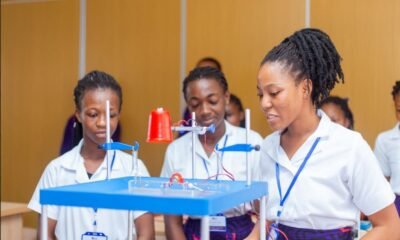













Education
Ghana Must Replace High-Stakes Basic Education Exams With Centralised Online Cumulative Assessment System


Ghana must reconsider its reliance on high-stakes examinations at the basic education level and move towards a centralised online cumulative assessment system that tracks pupils’ academic progress throughout their years in school, rather than judging their abilities through a single examination.
The current examination-driven system places enormous pressure on pupils, teachers, parents and schools, often making academic success appear dependent on performance during a limited period of testing rather than a learner’s overall development.
A centralised cumulative assessment system could provide a more comprehensive picture of pupils’ strengths, weaknesses, learning patterns and progress over time, helping educators identify struggling learners early and introduce targeted interventions before gaps become difficult to address.
Under such a system, pupils could be assessed periodically through digital platforms, with their scores, competencies and learning progress recorded in a central database accessible to authorised education officials, teachers and relevant stakeholders.
Instead of waiting until pupils sit for major examinations, schools would have access to continuous assessment data that could help determine whether learners are improving in literacy, numeracy, science and other essential subjects.
The proposed approach would also reduce the pressure associated with examinations such as the Basic Education Certificate Examination (BECE), where pupils are often made to believe that a single examination could determine their academic future.
A cumulative assessment system would allow learners to demonstrate their knowledge and abilities across multiple assessments over time, making the process less dependent on examination-day anxiety, illness, personal circumstances or other factors that could affect performance.
The centralised nature of the system could also strengthen accountability within the education sector. Education authorities would be able to monitor learning outcomes across schools, districts and regions, identify areas where pupils are falling behind and determine whether educational interventions are producing measurable improvements.
Teachers could equally benefit from reliable assessment data to guide lesson planning, while parents would have a clearer understanding of their children’s academic development instead of relying solely on end-of-term reports or final examination results.
However, implementing such a system would require significant investment in digital infrastructure, reliable internet connectivity, teacher training, data protection and equitable access to devices, particularly for schools in rural and underserved communities.
The transition would also need to be carefully designed to ensure that online assessments do not create new inequalities between pupils who have access to technology and those who do not.
Ghana’s basic education system should ultimately prioritise genuine learning, understanding and the development of skills rather than excessive preparation for examinations.
Replacing high-stakes testing with a well-designed centralised online cumulative assessment system could represent an important step towards building a more inclusive, data-driven and learner-centred education system, where every child’s progress matters throughout the educational journey.
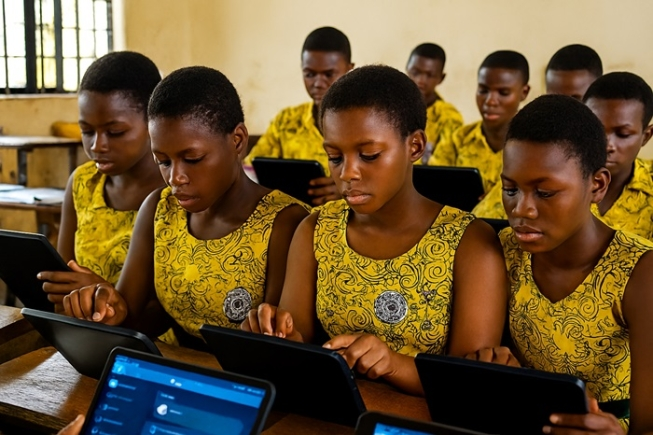
Imagine two students sitting in the same classroom. One consistently scores high marks in mathematics, English and science, while the other struggles to achieve average grades.
The first student receives praise, awards and recognition for academic excellence. The second is often reminded to study harder, improve their grades and follow the example of their more academically successful classmates.
But what if the second student is an excellent artist, a gifted footballer, a talented musician or someone who can repair electronic devices without formal training?
Does performing poorly in examinations mean that such a student is less intelligent or has a limited future?
For years, academic performance has remained one of the most visible measures of student achievement. Examination results influence educational progression, recognition and, in some cases, how children perceive their abilities.
However, students possess different strengths, interests and talents that may not always be reflected in their examination scores.
This raises an important question: Are schools doing enough to discover and develop the talents of students who may not perform exceptionally well academically?
What Does It Mean to Identify a Student’s Talent?
Identifying a student’s talent involves recognising their interests, abilities and potential in different areas of learning and activity.
Some students demonstrate strong abilities in mathematics, science or languages. Others may show promise in music, drawing, storytelling, sports, leadership, technology, practical problem-solving or creative activities.
Talents may become visible through classroom participation, extracurricular activities, personal projects or interactions with other students.
However, identifying talent should not mean permanently labelling children according to what they appear good at during a particular stage of development.
Students can discover new interests, improve existing skills and develop abilities through practice, exposure and encouragement.
Schools should therefore create opportunities for learners to explore different activities before making decisions about their future.
Examinations are important because they help assess students’ understanding of particular subjects and identify areas where additional support may be needed.
However, examination results do not measure every ability a student possesses.
A learner who struggles with written examinations may demonstrate exceptional creativity during practical activities.
Another student may find classroom learning difficult but show strong organisational skills when coordinating a school programme.
Some students may also perform below their potential because of language barriers, limited learning resources, personal difficulties or a lack of suitable academic support.
This does not mean academic performance should be ignored. Rather, it suggests that schools should consider a broader picture when assessing students’ development.
Why Schools Should Pay Attention to Hidden Talents
Every student deserves an opportunity to discover their strengths
Children do not all develop the same abilities at the same pace.
A student who has never been exposed to musical instruments may not know they have an interest in music.
Similarly, a learner who has never participated in coding, athletics, photography or creative writing may remain unaware of their potential in those areas.
Schools can help students discover their interests by introducing them to different activities and allowing them to explore without unnecessary pressure.
Early exposure can help young people make more informed decisions about the skills they want to develop.
It can improve students’ confidence
Students who repeatedly receive poor grades may begin to believe that they are incapable of succeeding.
This perception can affect their willingness to participate in classroom activities or pursue new opportunities.
Recognising a student’s strengths outside traditional academic subjects can help them develop a more balanced understanding of their abilities.
For example, a student who struggles with mathematics but excels in drawing may gain confidence when their artwork is appreciated.
That confidence may also encourage them to approach other learning challenges with greater determination.
However, recognition should not replace academic support. Students still need assistance in subjects where they are experiencing difficulties.
It encourages creativity and innovation
Creativity is useful in many areas, including business, technology, engineering, entertainment and community development.
Students who enjoy designing, building, experimenting or creating new ideas need opportunities to develop those interests.
Schools can encourage innovation through practical projects, exhibitions, science activities, arts programmes and student-led initiatives.
A learner who enjoys creating objects from discarded materials, for example, could be encouraged to explore design, environmental innovation or technical skills.
Such opportunities help students connect classroom learning with practical applications.
It can support better career decisions
Some young people choose academic programmes or careers mainly because of family expectations, social pressure or the prestige associated with particular professions.
While guidance from adults can be valuable, students also need opportunities to understand their own interests and abilities.
A learner who enjoys working with machines may benefit from exploring engineering or technical training.
Another who demonstrates strong writing and communication skills may become interested in journalism, law, education or other communication-related fields.
Recognising strengths early can support career exploration, although students should not be restricted to a particular career simply because they show promise in one area.
It promotes a broader understanding of success
In many school environments, students who achieve the highest examination marks receive the greatest public recognition.
Academic excellence deserves celebration, but other achievements can also contribute to a student’s development.
Schools can recognise creativity, teamwork, sportsmanship, leadership, community service and practical achievements alongside academic performance.
This approach can help students appreciate that success takes different forms and that people contribute to society through different abilities.
Labels such as “weak student,” “dull child” or “not academically gifted” can influence how children view themselves.
When such descriptions are repeated by teachers, parents or classmates, students may become discouraged.
A learner who struggles with a subject may begin to avoid asking questions because they fear being embarrassed.
Schools should distinguish between a student’s current academic performance and their overall potential.
Instead of describing a child as unintelligent, teachers can identify the specific areas where the learner needs additional support.
For example, a student who struggles with reading comprehension may require targeted assistance rather than negative comparisons with classmates.
Every learner should have the opportunity to improve academically while exploring other abilities.
How Can Schools Discover Students’ Hidden Talents?
Identifying students’ strengths requires more than organising an annual talent show.
Schools can create regular opportunities for learners to participate in different activities.
These may include: Creative arts and music programmes, Sports and athletics competitions, Science and innovation exhibitions, Coding and technology clubs, Drama, storytelling and creative writing, Technical and practical projects, debates and leadership activities, Entrepreneurship and design challenges, Community service projects, Photography and media production.
Teachers can observe students’ interests, encourage participation and provide constructive feedback.
Schools should also make activities accessible to learners who may lack the financial resources to purchase equipment or pay participation fees.
Talent development should not become an opportunity available only to students from wealthier households.
Ghana has produced successful individuals in sports, music, entertainment, technology, business, education and many other fields.
These different sectors demonstrate the value of diverse abilities in national development.
Within Ghanaian schools, students participate in activities such as inter-school sports, cultural performances, debates, science competitions and creative arts programmes.
However, opportunities may vary depending on school resources, location and available facilities.
Some schools may have well-equipped laboratories, sports facilities and extracurricular clubs, while others may struggle to provide basic learning materials.
Students in less-resourced schools may therefore have fewer opportunities to explore and develop certain talents.
Improving access to practical learning and extracurricular activities could help more students discover their abilities.
The Ghana Education Service, school administrators, teachers, parents and other education stakeholders can contribute by supporting programmes that recognise different forms of student achievement.
Should Talents Influence School Placement and Career Guidance?
Career guidance should consider students’ interests, abilities, academic performance and future aspirations.
However, talent identification should not become another rigid system that limits children’s opportunities.
For example, a student who demonstrates exceptional sporting ability should not automatically be discouraged from pursuing science or mathematics.
Similarly, a student who excels academically should still have opportunities to explore music, sports and creative activities.
Students should be encouraged to develop multiple abilities and make informed choices as their interests evolve.
Guidance should help learners understand their options rather than decide their future for them.
Parents and guardians have a significant influence on how children develop their interests.
Some may encourage academic achievement while paying less attention to creative or practical abilities.
Others may recognise their children’s interests but lack the resources needed to support them.
Parents can help by observing what their children enjoy, asking questions and encouraging them to explore different activities.
For example, a child who enjoys drawing could be given opportunities to practise and learn more about visual arts.
A student interested in technology could be encouraged to participate in suitable educational projects.
Parents should also avoid comparing siblings or forcing children to pursue careers solely because those professions are considered prestigious.
Supporting a child’s interests does not mean ignoring education. Academic learning and talent development can complement each other.
The Challenge of Limited Resources
One major obstacle to talent development is the availability of facilities, equipment and trained instructors.
Schools may struggle to provide musical instruments, art materials, sports equipment, technology resources or suitable spaces for practical activities.
In some communities, students may also face financial barriers that prevent them from participating in extracurricular programmes.
Addressing these challenges requires cooperation between schools, families, communities, government institutions and development partners.
Partnerships with local artists, sports organisations, technical professionals and businesses could create additional opportunities for students.
Schools can also begin with affordable activities that make use of available resources.
The goal should be to ensure that talent development is not treated as a luxury reserved for a few schools.
Recognising academic excellence is important because it encourages students to work hard and develop strong learning habits.
However, schools could also celebrate achievements in creativity, leadership, innovation, sportsmanship and service.
For example, a student who develops a useful invention or demonstrates outstanding teamwork may deserve recognition even if they are not among the highest academic performers.
Awards should be based on clear and fair criteria to avoid favouritism.
Recognition should also encourage improvement and participation rather than create unnecessary competition among students.
When schools celebrate different achievements, more learners may feel that their contributions are valued.
Having a talent does not automatically guarantee career success.
Developing an ability often requires discipline, training, practice, access to opportunities and, in some cases, financial support.
A talented footballer may need professional coaching, while a gifted musician may require instruction and opportunities to perform.
Students should therefore understand that talent is a starting point rather than a substitute for effort.
Schools can help learners develop realistic expectations by teaching them how to improve their skills and explore related educational or career opportunities.
Should Talent Identification Become Part of School Education?
There is a strong argument for making talent exploration a regular part of students’ educational experiences.
Rather than waiting until learners complete school to discover their interests, institutions could provide structured opportunities for exploration throughout their education.
This does not necessarily require a separate examination subject.
Schools could integrate talent development into extracurricular programmes, practical projects, career guidance and classroom activities.
The most important consideration is ensuring that every student has a reasonable opportunity to participate.
Examination results remain an important part of education, but they do not provide a complete picture of a student’s abilities.
Some children demonstrate their strengths through academic work, while others discover their potential through creativity, sports, leadership or practical activities.
Schools should help learners improve academically without overlooking the different abilities they bring into the classroom.
A child who does not come first in class may still have valuable talents that deserve recognition, encouragement and development.
If education is meant to prepare every child for a meaningful future, should schools focus only on academic excellence, or should discovering hidden talents become an equally important priority?
Can a student who performs poorly in examinations still be considered brilliant because of their talents and abilities?
Education
Poor Students Are Suffering! – Andy Kankam Slams Exorbitant University Hostel Fees, Demands Government Intervention


Andy Kankam, Managing Editor of Informer Newspaper, has raised serious concerns over the continuous increase in hostel fees at universities in Ghana, warning that exorbitant accommodation charges are threatening the education of students from less privileged backgrounds.
Speaking on the issue on Kessben Maakye show in Accra, Kankam criticised the justification of hostel fee hikes on exchange rate fluctuations and inflation, arguing that these factors have stabilised and, in some cases, improved, making further increases difficult to justify.
He expressed concern over the financial burden placed on students, particularly those from rural communities and low-income families who are struggling to afford accommodation while pursuing higher education.
“I am looking at a poor boy from some village struggling to pay exorbitant hostel fees at the detriment of his education,” he lamented.
Touching on the University of Ghana’s controversial loan arrangement with Africa Integras, Kankam said he was pleased with efforts to address the issue, claiming he had previously warned university authorities about the agreement.
He further alleged that the university entered into the arrangement against legal advice and without the consent of its governing board.
Meanwhile, Kankam praised Frederick Opoku’s performance in rent control, describing the institution as increasingly vibrant under his leadership.
He called for the Rent Control Department to be equipped with technical personnel and decentralised to improve its effectiveness nationwide.
Kankam also urged authorities to strengthen the institution and consider making Frederick Opoku a substantive Rent Control Commissioner, arguing that his performance deserves recognition.
He maintained that effective rent regulation, including enforcement of the 10% tax obligation on rental income to the state, could benefit society while protecting tenants from exploitation
Education
Remember When Children Spent Their Holidays in the Village? A Ghanaian Childhood Tradition That Is Fading
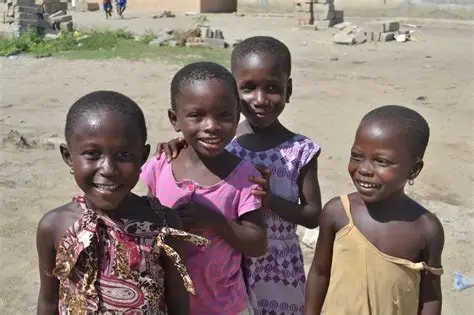
For many Ghanaians who grew up in the 1980s, 1990s and early 2000s, school holidays meant more than sleeping late, watching television or playing with friends. It was also a time to pack a small bag, leave the busy city behind and travel to the hometown to spend time with grandparents, aunties, uncles and other relatives.
For some children, the journey itself was an adventure. They looked forward to travelling in a bus or private car, watching the scenery change along the way and wondering what awaited them when they arrived.
Others could hardly contain their excitement because they knew their grandparents would be waiting, sometimes with food already prepared and stories ready to be told.
In the village, the days often followed a different rhythm. Children woke up to the sounds of roosters, helped with simple household activities, played with cousins, visited relatives and discovered a way of life that was different from what they knew in the city.
For many, those holidays created some of the happiest childhood memories.
Today, however, the tradition of sending children to spend extended school holidays with grandparents and relatives in their hometowns appears less common in some families. Many children now spend their holidays at home, attend holiday classes, join organised activities or travel with their parents.
While these arrangements have their own benefits, they raise an interesting question: are younger generations missing out on an important part of growing up?
Long before the holiday officially began, some children were already making plans.
They knew which clothes they wanted to pack, which cousins they hoped to meet and which activities they wanted to enjoy. Some would remind their parents repeatedly about the journey, especially when the departure date was approaching.
For children living in Accra, Kumasi, Takoradi and other urban areas, travelling to a hometown could feel like entering a completely different world.
The journey might take several hours, depending on the destination. Along the way, children watched roadside sellers, lorry stations, farms, rivers, towns and villages pass by.
There was also the excitement of stopping to buy snacks, drinks or roasted plantain during the journey.
Upon arrival, relatives would often welcome the children with greetings, questions and excitement. Grandparents might ask about school, while cousins quickly began discussing what they would do together.
For some children, the hometown was where they felt they could enjoy a different kind of freedom, explore familiar surroundings and reconnect with relatives they rarely saw during the school term.
One of the most important parts of these holidays was the opportunity to spend time with grandparents.
For children who lived far away, the holidays provided an opportunity to develop relationships with older family members beyond occasional visits and telephone conversations.
Grandparents shared stories about their childhood, explained family history and talked about how life had changed over the years.
Some introduced their grandchildren to traditional foods, local expressions, family customs and the names of important relatives.
A grandmother might teach a child how to prepare a particular dish, while a grandfather could explain how the family acquired its land or why a particular family name carried special meaning.
These conversations were not always formal lessons. Sometimes, children learnt simply by sitting nearby, watching and listening.
They also became familiar with the personalities of their grandparents: the grandmother who insisted everyone ate before leaving the house, the grandfather who enjoyed telling long stories or the relative who always had something interesting to say.
For some children, these memories became especially precious after their grandparents passed away.
For children accustomed to urban life, spending holidays in the hometown often meant having more opportunities to explore outdoor spaces.
Depending on the community, they could play football with cousins, climb trees, visit farms, walk through footpaths, swim in designated safe areas or participate in traditional games.
Some children learnt how to identify different plants, recognise farm crops or distinguish between animals they had previously only seen in books or on television.
Others accompanied older relatives to the farm, market or nearby community gatherings.
Even ordinary activities could become exciting. Fetching water, collecting firewood, helping to arrange food or accompanying a relative on an errand offered experiences that were different from their usual routines.
Of course, village life was not always easy or comfortable. Some children struggled with mosquitoes, limited entertainment, unfamiliar sleeping arrangements or household responsibilities.
But those experiences often taught them to adjust to different environments and appreciate the resources available to them.
Spending holidays with grandparents and relatives also exposed children to practical lessons about responsibility.
They could be asked to sweep the compound, wash their plates, help arrange chairs, feed domestic animals or assist with other age-appropriate household activities.
These responsibilities helped children understand that maintaining a home required effort from everyone.
They also learnt how to interact with older relatives, greet visitors, show respect and participate in family activities.
In some households, children were encouraged to observe how food was prepared, how crops were planted or how certain household tasks were completed.
Such experiences could develop patience, independence and confidence.
However, it is important to distinguish between reasonable participation and excessive responsibilities. Children should be allowed to enjoy their holidays, rest and play without being burdened with work meant for adults.
At its best, the experience combined learning, recreation and family bonding.
For many people, one of the most unforgettable parts of spending holidays in the hometown was meeting cousins.
Children who rarely saw one another during the school term could spend weeks together during holidays.
They created games, shared snacks, explored the neighbourhood and sometimes formed friendships that continued into adulthood.
There were also the familiar disagreements over toys, football teams, sleeping arrangements and who would use a particular item.
But those little arguments were often followed by laughter and another round of play.
For children who were only children or had few siblings at home, the experience could be particularly meaningful.
They suddenly found themselves surrounded by other children with whom they could share everyday experiences.
These relationships also helped them understand that family extended beyond the people living under the same roof.
Today, some cousins maintain close relationships through social media and family gatherings, but others may grow up barely knowing one another.
Another important benefit of spending time in the hometown was exposure to local languages and family traditions.
Children who lived in cities sometimes had limited opportunities to practise the language spoken by their grandparents or other relatives.
During holidays, they could hear these languages throughout the day, learn familiar expressions and understand how certain words were used in everyday conversations.
They also had opportunities to learn about family histories, traditional leadership, festivals, naming customs and the origins of particular family practices.
An older relative might explain why the family celebrated a particular festival, how a traditional marriage was conducted or why certain customs were observed.
These lessons helped children understand their roots and develop a connection with their cultural background.
For children who grew up speaking mainly English or another dominant language at school, the experience could also improve their confidence in communicating with older family members.
As fewer children spend extended periods in their ancestral communities, families may need to find other ways to pass on this knowledge.
Several factors have contributed to the changing holiday experience.
One major reason is the changing nature of family life. Many parents now have demanding work schedules and may prefer to keep their children close during school breaks.
Some families are also concerned about safety, particularly when children are expected to travel long distances or stay in places where parents cannot supervise them directly.
Others may have grandparents who are elderly, unwell or no longer living in the family home.
Urbanisation has also changed family arrangements. Some parents grew up in towns and cities and may have limited connections to their ancestral communities. In such situations, there may be no familiar household available to receive children for an extended holiday.
Another factor is the increasing popularity of holiday programmes.
Children can now attend vacation classes, sports programmes, coding lessons, music training and other organised activities during school breaks.
These opportunities can be valuable, particularly when they help children develop skills and explore interests.
However, when every holiday is filled with structured activities, children may have fewer opportunities to experience the slower pace of family and community life.
Today’s children have access to entertainment that previous generations could hardly imagine.
Smartphones, tablets, gaming consoles, streaming platforms and social media allow them to remain connected to their friends and favourite activities wherever they are.
For some children, spending several weeks in a rural community without reliable internet or access to their usual entertainment can feel challenging.
Parents may also worry that their children will become bored or struggle to adjust to unfamiliar surroundings.
Yet, these differences do not mean that children cannot enjoy spending time in their hometowns.
Families can make the experience more interesting by combining outdoor activities, family visits, traditional games and appropriate access to technology.
The aim should not be to force children to live exactly as their parents did, but to give them opportunities to discover experiences beyond their screens.
A child’s relationship with their hometown can influence how they understand family identity and belonging.
When children regularly visit their ancestral communities, they may become familiar with relatives, family homes, important landmarks and local traditions.
They can understand where their parents or grandparents came from and develop personal memories connected to those places.
Without these experiences, some children may grow up knowing their hometown only by name or through occasional family discussions.
They may not know the people who live there, the history of their family or the significance of particular places.
This does not mean that children who grow up in cities lack cultural identity. Families can pass on their heritage in many different ways.
However, direct experiences can make family history more meaningful because children are not simply hearing about a place; they are developing their own connection to it.
The tradition does not have to return exactly as it existed decades ago.
Parents who want their children to experience life in their hometowns can begin with short, supervised visits during school holidays.
They can arrange for children to spend time with trusted relatives, visit family houses, attend local festivals and meet older members of the family.
Grandparents and other relatives can also make an effort to involve children in age-appropriate activities, share stories and introduce them to traditional dishes and customs.
Family reunions can provide another opportunity to bring different generations together.
For families whose hometowns are far away, regular visits may not always be possible. Nevertheless, photographs, video calls, family stories and visits from relatives can help children maintain a connection.
The important thing is to make family heritage something children experience, not merely something they hear about.
There was something special about spending school holidays in the hometown.
It was a chance to experience a different environment, meet relatives, learn family stories, play with cousins and understand aspects of life that were not always visible in the city.
Not every child’s experience was perfect, and modern holiday programmes offer opportunities that previous generations did not have.
But there is value in allowing children to experience both worlds: the opportunities of modern urban life and the family connections, cultural knowledge and everyday lessons that can come from spending time with older relatives.
As Ghanaian families continue to change, perhaps the goal should not be to recreate the past but to preserve the meaningful parts of it.
One day, today’s children may look back and realise that the holidays they spent with their grandparents were among the most valuable memories of their childhood.
Because sometimes, the greatest gift a family can give a child is not an expensive holiday or the latest gadget, but time with the people who know where their story began.

Aki-Ola Publications Company Limited has donated educational books valued at GH₵482,410 to the Ghana Education Trust Fund (GETFund) in a major move to strengthen teaching and learning across Ghanaian schools.
The donation supports GETFund’s Education Financing Partnership Initiative (EFPI), championed by its Administrator, Paul Adjei, to mobilise private-sector support for educational development.
The books were presented by Aki-Ola Publications’ Managing Director, Peter Asiedu, and received by GETFund Deputy Administrator, Alhassan Sualihu Dandaawa, on behalf of the Fund.
The initiative is expected to improve classroom instruction, promote independent learning and encourage reading habits among students while strengthening their academic foundations.
Peter Asiedu reaffirmed Aki-Ola Publications’ commitment to advancing quality education, stressing the importance of books in shaping students’ academic success.
The gesture highlights the growing importance of public-private partnerships in supporting Ghana’s education sector and complementing government investment.


‘Some NDC Executives Want to Take Over Mahama’s Government’ – Suhuyini

Ghana Must Replace High-Stakes Basic Education Exams With Centralised Online Cumulative Assessment System

‘Ablakwa’s House, Brother-in-Law in Charge’: NPP MP Alleges How South Africa Evacuees’ Money Was Shared

‘Cash Is Ready’ – Government Pays GH¢12.9bn to DDEP Bondholders in Early Redemption

Fort Kongenstein: The Forgotten Danish Fortress at Ada Foah That Was Swallowed by the Sea

NADFFA 2027: Ghana to Host Pan-African Film and Food Festival in March

Ghana Faces Very Strong El Niño Threat as GMet Warns of Extreme Heat, Drought and Possible Flooding

Avoid excessive taxation that prevents entrepreneurs from creating wealth – Kufuor to Ghana’s leaders

NADFFA 2027 launched in Accra to celebrate African cinema, cuisine and culture

From Sleeping on the Streets to Building a Media Empire: The Kojo Preko Dankwa Story

Illinois’ financial crisis could bring the state to a halt
The final 6 ‘Game of Thrones’ episodes might feel like a full season
New Season 8 Walking Dead trailer flashes forward in time
Mod turns ‘Counter-Strike’ into a ‘Tekken’ clone with fighting chickens
Meet Superman’s grandfather in new trailer for Krypton

-

 Entertainment23 hours ago
Tomi Thomas Says Ghanaians Have Made Him Feel Like One of Their Own
-

 General News20 hours ago
KMA Orders Immediate Vacation of Kejetia Phase II Lanes as Construction Resumes
-

 Entertainment23 hours ago
Lasmid: Building an Orphanage Would Make Me Feel I Have Made It in Life
-

 General News20 hours ago
EOCO, INTERPOL Move to Bust ‘Model Q’ Human Trafficking Network as West African Delegation Visits Malaysia
-
 Culture16 hours ago
Fort Kongenstein: The Forgotten Danish Fortress at Ada Foah That Was Swallowed by the Sea
-
 General News5 hours ago
‘Cash Is Ready’ – Government Pays GH¢12.9bn to DDEP Bondholders in Early Redemption
-
 Politics3 hours ago
‘Ablakwa’s House, Brother-in-Law in Charge’: NPP MP Alleges How South Africa Evacuees’ Money Was Shared
-
 Education3 hours ago
Ghana Must Replace High-Stakes Basic Education Exams With Centralised Online Cumulative Assessment System