
General News
Mahama Meets New ECOWAS Commission President Birame Diop, Discusses Regional Security and Development

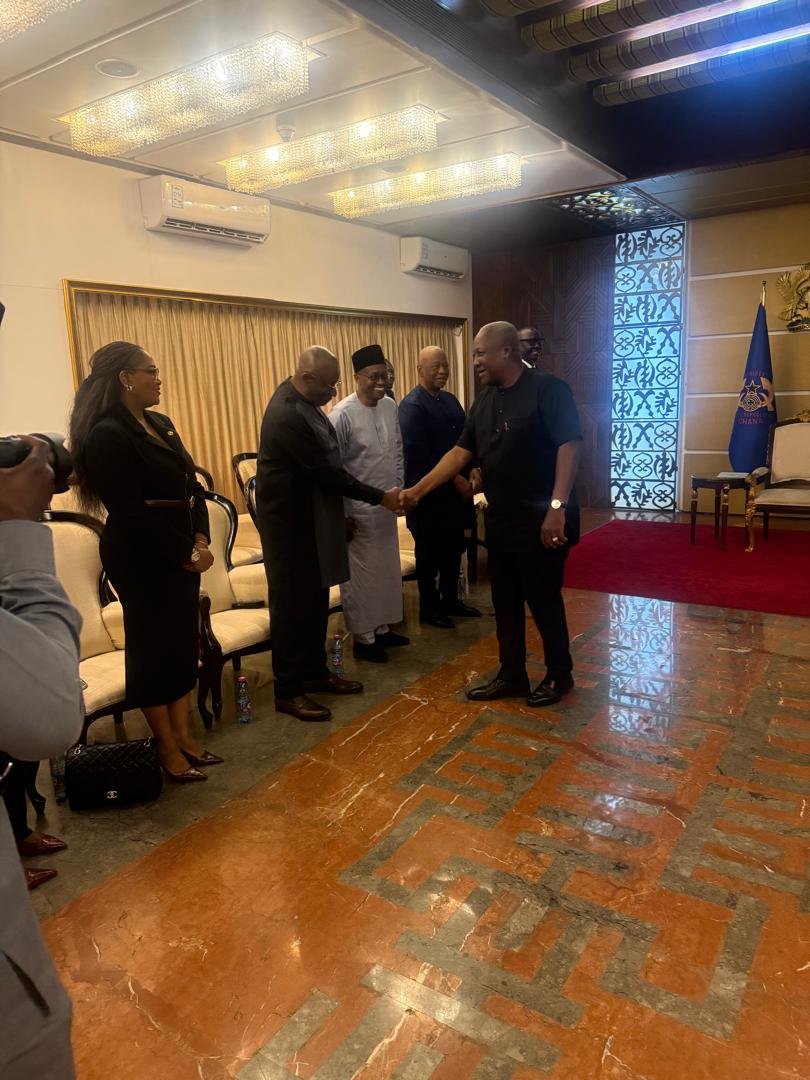
President John Dramani Mahama has met the newly appointed leadership of the Economic Community of West African States (ECOWAS) as the regional bloc begins a new four-year leadership term from 2026 to 2030.
The meeting took place on Wednesday, November 11, 2026, at the Flagstaff House in Kanda, Accra, during the maiden sub-regional tour of the new President of the ECOWAS Commission, General Birame Diop.
General Diop led a delegation comprising key officials of the regional organisation, including Honourable Amin Amidu Sulemani, Commissioner in charge of Infrastructure, Energy and Digitalisation; Ambassador Isabelle Sandra Folquet, Political and Diplomatic Affairs Advisor; Professor Priscilla Twumasi Baffuor, Economic Advisor; Ambassador Baba Kamara, Special Envoy on Counter Terrorism; and Ambassador Mohammed Lawan Gana, ECOWAS Resident Representative in Ghana.
The engagement provided an opportunity for the new ECOWAS leadership to interact with President Mahama on several issues affecting West Africa and the wider sub-region.
Discussions focused on elections, peace and security, national development, terrorism, youth-related challenges, gender-based violence and efforts to strengthen the core mandate of ECOWAS to respond effectively to emerging regional and global developments.
President Mahama congratulated General Diop on his assumption of office and the formation of his new leadership team.
He urged the new administration to remain committed and loyal to the responsibilities entrusted to them, stressing the importance of providing effective leadership to ensure that ECOWAS continues to move in the right and positive direction.
In his response, General Diop acknowledged the work of his predecessor, Dr Omar Alieu Touray of The Gambia, and commended him for his achievements during his tenure as President of the ECOWAS Commission.
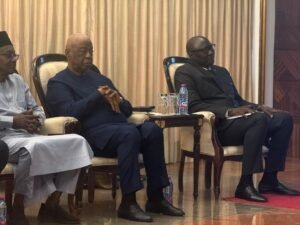
He pledged to give his best to the organisation, with the support of Heads of Government across the region, to strengthen existing ECOWAS protocols and embrace emerging norms and developments shaping contemporary society and humanity.
General Diop assumed office on August 31, 2026, and his appointment marks the beginning of a new leadership period for the regional organisation.
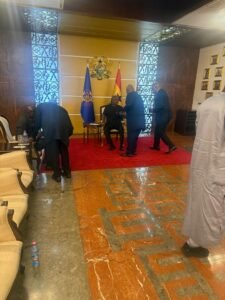
The delegation also paid a courtesy call on former President Nana Addo Dankwa Akufo-Addo to acknowledge and appreciate his contributions and support for ECOWAS during his eight-year presidency of Ghana.
The delegation particularly recognised his role as Chairman of the ECOWAS Authority of Heads of State and Government between September 2020 and July 2022.
One of the major responsibilities facing General Diop and his new team is the supervision of peaceful and credible elections in The Gambia, scheduled for December 5, 2026.
The election is expected to be an important early test of the new leadership’s commitment to promoting democracy, political stability and credible electoral processes across the West African sub-region.
General Birame Diop is a retired Senegalese Air Force General, diplomat and former government minister whose career spans more than 30 years in national defence, international peacekeeping and regional security governance.
His experience in military leadership, diplomacy and regional security is expected to play an important role as ECOWAS continues to confront security threats, political challenges and development concerns across West Africa.










General News
Ghana’s New Cedi Notes Reignite Founders’ Day Debate as Five Members of Big Six Disappear – Seth Afum A. Dankwah
Ghana’s newly unveiled Heritage Series banknotes have reignited the longstanding debate over who deserves recognition as the founder or founders of the country, following the removal of five members of the famous Big Six from the redesigned currency.
In an article examining the historical, political and symbolic implications of the new banknotes, Seth Afum A. Dankwah of J. G. Knol Technical Institute, Adukrom-Akuapem, Eastern Region, argues that the currency redesign goes beyond security improvements and has reopened Ghana’s unresolved debate over the country’s independence history.
President John Dramani Mahama unveiled the new banknotes at Bank Square in Accra on Thursday, November 12, 2026, under the theme, “The Cedi, Our Future: Secure, Designed to Last.”
Although the redesign introduces several technical improvements, including enhanced security features, reinforced cotton paper, QR codes, kente-inspired borders and tactile markings for visually impaired persons, Dankwah believes the selection of personalities has become an equally important part of the national conversation.
Of the six personalities collectively known as the Big Six, whose portraits have featured prominently on Ghanaian banknotes since 2007, only Dr Kwame Nkrumah has been retained.
The other five, Dr Joseph Boakye Danquah, Edward Akufo-Addo, William Ofori Atta, Emmanuel Obetsebi-Lamptey and Ebenezer Ako-Adjei, have been left out.
They have been replaced by a market woman, a Catholic Cardinal, an educationist, a female judge, a composer, the designer of Ghana’s national flag and former United Nations Secretary-General Kofi Annan.
According to Dankwah’s analysis, the decision has revived the political and historical disagreement over whether Ghana’s independence should be attributed primarily to one individual or recognised as the collective achievement of several personalities.
The new Heritage Series maintains the existing eight denominations, from GH¢1 to GH¢200, but introduces a different design concept that places one prominent personality on the front and a landmark associated with Ghana’s heritage on the reverse.
Each denomination also carries an Adinkra symbol and a specific national theme.
The GH¢1 note features Agnes Oforiwa Tagoe-Quarcoopome, a market trader, with market women represented on the reverse under the theme of Commerce.
The GH¢2 note honours Cardinal Peter Poreku Dery, Archbishop of Tamale, with the Larabanga Mosque appearing on the reverse. Its theme is Religious Freedom.
The GH¢5 note features Dr J.E.K. Aggrey, a renowned educationist, alongside Achimota School, representing Education.
The GH¢10 note celebrates Justice Annie Jiagge, recognised as Ghana’s first female judge, with the Supreme Court featured on the reverse under Justice and Equality.
The GH¢20 note honours Dr Ephraim Amu, a celebrated composer, with the National Theatre representing Arts and Entertainment.
The GH¢50 note features Theodosia Okoh, the designer of Ghana’s national flag, alongside Jubilee House under the theme of Nationalism.
The GH¢100 note celebrates Kofi Annan, former United Nations Secretary-General, with the Kofi Annan International Peacekeeping Training Centre (KAIPTC) representing Peace.
The GH¢200 note features Dr Kwame Nkrumah, Ghana’s first President, with the Kwame Nkrumah Memorial Park on the reverse under the theme of Sovereignty.
Dankwah identifies Nkrumah’s positioning as one of the most significant changes. While the former currency featured him alongside the other members of the Big Six on the GH¢2 denomination, the new arrangement places him alone on the highest denomination, the GH¢200 note.
The Big Six acquired their collective identity following the 1948 disturbances in Accra, which occurred after British colonial police shot ex-servicemen who had marched to present a petition over their welfare.
The colonial authorities subsequently arrested six prominent leaders of the independence movement.
They were Dr Kwame Nkrumah, Dr Joseph Boakye Danquah, Edward Akufo-Addo, William Ofori Atta, Emmanuel Obetsebi-Lamptey and Ebenezer Ako-Adjei.
Their collective image later became an important representation of Ghana’s struggle for independence.
However, different political traditions have continued to offer contrasting interpretations of their contributions.
The Danquah-Busia-Dombo tradition, associated with the New Patriotic Party (NPP), maintains that Ghana’s independence was the result of a collective movement that began with the formation of the United Gold Coast Convention (UGCC) in 1947.
On the other hand, the Nkrumahist tradition, associated with the National Democratic Congress (NDC), places particular emphasis on Nkrumah’s role in breaking away from the UGCC, establishing the Convention People’s Party (CPP), mobilising the masses and leading the country to independence on March 6, 1957.
Dankwah argues that both historical accounts contain important truths but also leave out aspects of the other side, contributing to Ghana’s longstanding disagreement over its founding story.
The disagreement has been most visible in Ghana’s annual public holiday arrangements.
In 2009, under the administration of the late President John Evans Atta Mills, with Mahama serving as Vice President, September 21, Nkrumah’s birthday, was designated as Founder’s Day.
The singular form was widely interpreted as recognition of Nkrumah as the central figure in Ghana’s founding.
However, under former President Nana Addo Dankwa Akufo-Addo, the arrangement was changed through the Public Holidays (Amendment) Act, 2019.
The law established August 4 as Founders’ Day, commemorating the formation of the UGCC in 1947, while September 21 was retained as Kwame Nkrumah Memorial Day.
The change reflected the position that Ghana’s independence should be recognised as the achievement of several individuals rather than one personality.
Dankwah links the latest currency redesign to this longstanding disagreement, arguing that the decision to retain Nkrumah while removing the other five members of the Big Six sends a significant symbolic message.
Although the Mahama administration has not formally restored the previous Founder’s Day arrangement, the new banknotes have brought the debate back into public discussion.
Beyond the political controversy, the Bank of Ghana has defended the redesign on technical and operational grounds.
Governor of the Bank of Ghana, Dr Johnson Asiama, announced the currency upgrade on September 24, 2026, explaining that the existing banknotes required modernisation after more than 20 years of circulation and improvements in counterfeiting technology.
The redesign introduces enhanced security threads, improved printing technology and additional features to help the public distinguish genuine banknotes from counterfeit ones.
The new notes are printed on reinforced cotton paper, which is expected to improve their durability and reduce the frequency of replacement.
Their smaller and more compact sizes are also intended to make them easier to handle, carry and store.
For visually impaired persons, the redesigned currency includes improved tactile markings and differences in denomination sizes to make identification easier.
The Bank of Ghana has also introduced a Cedi App, which can scan banknotes, announce their denominations aloud and assist users in checking their authenticity.
Another improvement is the enhanced compatibility of the notes with automated teller machines, cash deposit machines and currency-counting equipment.
The central bank has also developed Enterprise Currency Operations Management Software (ECOM) to improve the management of currency operations.
The return of the GH¢2 denomination as a banknote is another notable feature of the redesign, following its gradual disappearance from circulation and replacement by coins.
The Bank of Ghana has also indicated that there are no plans to introduce a GH¢500 note.
Dr Asiama has maintained that physical cash remains important despite the increasing use of mobile money and electronic payment platforms.
He explained that cash continues to serve as an important pillar of monetary resilience, particularly during cyberattacks, technical failures and natural disasters that could disrupt electronic payment systems.
The central bank is also preparing legislation to replace the Currency Act of 1964, with the aim of strengthening penalties for counterfeiting and the deliberate destruction of banknotes.
Despite the technical explanations, Dankwah raises questions about the criteria used to determine which historical personalities qualify for recognition on the new currency.
He argues that the removal of five members of the Big Six, particularly those associated with the Danquah-Busia-Dombo political tradition, raises concerns about the possibility of using national currency to promote a particular historical interpretation.
He also draws attention to earlier controversies over the representation of Ghana’s independence history.
In 2010, the Daily Guide newspaper reported allegations of a calculated attempt under an earlier NDC administration to remove the Danquah-Busia-Dombo tradition from the country’s historical narrative by replacing the Big Six with Nkrumah alone. The allegations were disputed at the time.
Dankwah further highlights a public appeal by the Kwame Nkrumah Memorial Park, a week before the unveiling, urging the Bank of Ghana to replace the Big Six portrait with the famous 1957 photograph of Nkrumah declaring Ghana’s independence.
The final design went further by featuring Nkrumah as the only member of the Big Six on the new banknotes.
The controversy has also revived memories of the period between 1967 and 1971, when Nkrumah’s portrait was removed from Ghana’s currency following the 1966 military coup that overthrew his government.
For Dankwah, these developments demonstrate how changes in political leadership have influenced the country’s currency designs and the historical figures represented on them.
The new Heritage Series banknotes are expected to enter circulation on December 1, 2026, and will circulate alongside the existing notes.
The Bank of Ghana has assured the public that the old notes will remain legal tender and will be withdrawn gradually through the banking system.
The redesign does not constitute a redenomination, and the value of the cedi remains unchanged. Members of the public are therefore not required to rush to exchange their existing banknotes.
However, Dankwah believes the decision to remove five members of the Big Six while retaining Nkrumah has opened another chapter in Ghana’s longstanding debate over national identity, historical recognition and political ownership of the independence struggle.
He questions whether future administrations will maintain the current design or introduce another change reflecting their own interpretation of Ghana’s history.
In his assessment, the Heritage Series deserves recognition for its improvements in security, accessibility and durability, as well as its recognition of women, religious leaders, artists and other prominent Ghanaians.
However, he maintains that the removal of five members of the Big Six has given the currency a political and historical significance that goes beyond its economic purpose.
He argues that Ghana needs a transparent and lasting approach to recognising the personalities who contributed to its independence, rather than allowing the country’s founding story to change with successive political administrations.
The article is written by Seth Afum A. Dankwah of J. G. Knol Technical Institute, Adukrom-Akuapem, Eastern Region.
General News
Transport Sector in Crisis as High Vehicle Costs, Spare Parts Prices and Terminal Charges Hit Operators Hard – GPRTU

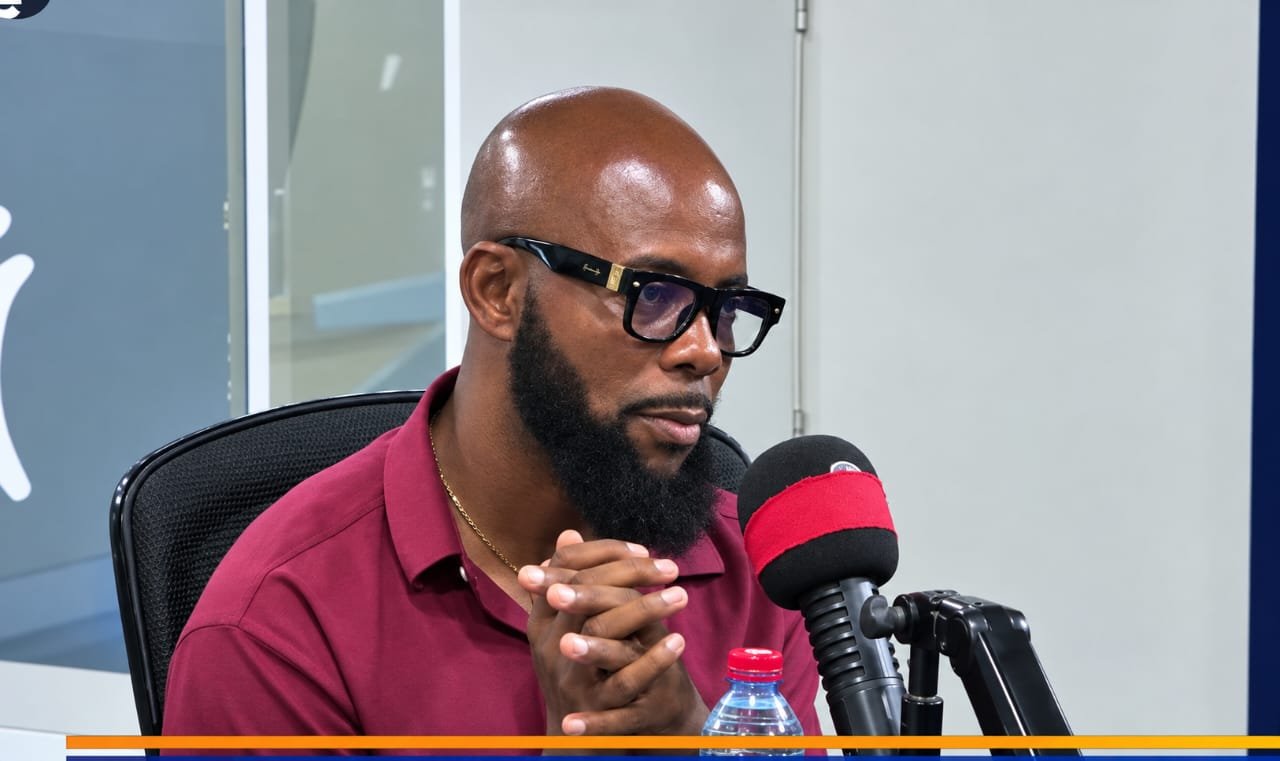
The Ghana Private Road Transport Union (GPRTU) has raised serious concerns over the rising cost of vehicles, spare parts and exorbitant charges at transport terminals, warning that the situation is putting enormous pressure on transport operators despite the relative stability of Ghana’s economy.
According to the Deputy Public Relations Officer of the GPRTU, Samuel Amoah, the transport sector plays a crucial role in Ghana’s economic development but continues to face challenges that threaten its operations.
He revealed in Kessben Maakye show in Accra, that engagements with spare parts dealers have exposed difficulties in importing vehicle components, leaving many commercial vehicles grounded at workshops because their owners cannot afford replacement parts.
Samuel Amoah also expressed concern over the increasing financial burden on commercial drivers, warning that allowing drivers to determine fares independently could create serious problems within the transport sector.
He further criticised the management of some transport terminals, alleging that facilities handed over to private operators are now attracting exorbitant charges, placing additional pressure on drivers and transport operators.
This he said most often than not compels many drivers to abandon the terminals leaving more passengers stranded.
The GPRTU Deputy PRO disclosed that the union has appealed to the government to support transport operators with new buses to improve their operations, but the request remains pending before the President.
He questioned why other transport operators, including Metro Mass Transit and Aayalolo BRT have been provided with new buses while the GPRTU continues to struggle with ageing vehicles and expensive spare parts.
Samuel Amoah called for urgent government intervention to address the challenges confronting commercial transport operators, stressing that the sector deserves greater attention because of its significant contribution to Ghana’s economy.
General News
Radiant Calls for Increased Government Machinery and Massive Capital Spending Ahead of 2027 Budget

Radiant Media and Intelligence Hub have called on the government to increase expenditure on productive government machinery and undertake a major capital investment programme in the 2027 Budget, arguing that Ghana must use its improving economic stability to drive job creation, expand production and prevent economic stagnation.
The proposal, presented by the organisation’s Executive Director, Emmanuel Duah, ahead of the Finance Minister Dr Cassiel Ato Forson’s presentation of the 2027 Budget to Parliament on Thursday, November 12, at 6:00 pm, challenges the conventional approach of reducing government machinery and capital expenditure to control public spending.
According to Radiant, Ghana’s economic recovery has reached a stage where the priority should no longer be limited to stabilising the economy but should focus on converting the gains into productive investments that directly benefit businesses, farmers and ordinary citizens.
In its 2027 Budget preview, titled “Why Radiant Proposes Increase in Government Machinery Expenditure and Huge Capital Build to Lock in Micro-Stability,” the organisation argued that the country must make deliberate investment decisions to protect the progress made in recent years.
Radiant pointed to improvements in several economic indicators as evidence that Ghana is gradually recovering from its recent economic difficulties.
Inflation, which stood at 54.1 per cent in December 2022, declined to 23.8 per cent in December 2024 and further to 5.4 per cent in December 2025.
It subsequently dropped to 5.2 per cent in September 2026 before rising slightly to 5.5 per cent in October 2026, remaining within the Bank of Ghana’s medium-term inflation target range of 6 to 10 per cent.
The organisation also highlighted Ghana’s economic growth performance, noting that the economy expanded by six per cent in 2025 and recorded six per cent growth in the second quarter of 2026.
The Composite Index of Economic Activity also recorded a 14.9 per cent increase in July 2026.
On the international financial front, Ghana completed its US$3 billion International Monetary Fund Extended Credit Facility programme in July 2026, receiving the final tranche of US$371 million.
The country has since moved to a 36-month non-financing Policy Coordination Instrument with the IMF.
Radiant further noted that the cedi recorded a 40.7 per cent appreciation in 2025, while its depreciation in 2026 has been estimated at between 9.5 and 11 per cent, with the currency trading at approximately GH¢11.55 to the US dollar.
The country’s international reserves were also estimated at US$12 billion, representing approximately four months of import cover.
On fiscal performance, the organisation cited a primary surplus of 1.4 per cent of GDP between January and July 2026, while the fiscal deficit stood at 0.2 per cent against a target of 1.9 per cent.
However, it attributed part of the improved fiscal position to expenditure remaining below planned levels.
Radiant cautioned that the current stability, supported by tight monetary policy, the Gold-for-Reserves programme and expenditure controls, could remain fragile if it is not accompanied by investments that expand the country’s productive capacity.
It noted that with the monetary policy rate still at 14 per cent, Ghana must move beyond simply holding its economic position.
The organisation referenced observations by SIC Brokerage that the country had “held ground, not gained new ground”, arguing that the 2027 Budget must address this gap.
A major concern raised by Radiant is the approaching repayment obligations associated with the Domestic Debt Exchange Programme (DDEP).
The organisation estimates that Ghana faces GH¢58.4 billion in DDEP repayments in 2027, comprising GH¢39.6 billion in principal and GH¢18.8 billion in interest.
This will be followed by another GH¢53 billion in 2028, bringing the combined repayment obligations for the two years to approximately GH¢111 billion.
Radiant warned that responding to these obligations by continuously reducing government machinery and capital expenditure could undermine economic growth.
It argued that Ghana risks stabilising the economy at the expense of development if resources are not allocated to investments capable of generating returns, creating employment and strengthening domestic production.
Consequently, it has proposed a four-pillar approach to the 2027 Budget.
Increase government machinery expenditure through productive investments
Radiant is advocating a strategic increase in government machinery expenditure, proposing a 30 per cent increase targeted at essential equipment and operational infrastructure.
The organisation stressed that the proposal is not intended to finance luxury vehicles or unnecessary government spending but to provide public institutions with the equipment needed to perform their duties effectively.
Among its recommendations are increased investment in Motor Traffic and Transport Department (MTTD) back-office operations to support the implementation of TraffiTech-GH.
It also wants the Ghana Meteorological Agency (GMet) to receive additional equipment to strengthen early-warning systems, particularly in preparation for the anticipated strong El Niño conditions between November 2026 and January 2027.
Radiant cited a 96 per cent probability of a very strong El Niño during the period, stressing the need for improved weather monitoring and preparedness.
Other proposed investments include modern audit equipment for the Ghana Revenue Authority (GRA) to improve monitoring of gold exports and reduce revenue leakages.
The organisation is also calling for increased investment in irrigation machinery, tractors, harvesters and water pumps to support agricultural production, particularly in northern Ghana and transition zones.
It further referenced the IMF’s Article IV assessment, which indicates that achieving the Sustainable Development Goals will require additional spending equivalent to 16 per cent of GDP by 2030.
According to Radiant, such ambitions cannot be achieved without properly equipped institutions and functional machinery.
Massive capital investment under the US$10 billion New Economy Programme
The second pillar focuses on what Radiant describes as a huge capital build, particularly through the proposed US$10 billion New Economy Programme covering 2027 to 2030.
The programme, expected to be unveiled by the Finance Minister, is built around seven pillars and is intended to focus on job creation, improved farmer incomes and increased local processing.
Radiant is urging the government to ring-fence funding for the programme to ensure that the resources allocated are used for their intended development objectives.
Among the priority projects identified is the proposed Accra-Kumasi Expressway, which is expected to begin in January 2027.
It has also highlighted the 27-kilometre Mpakadan-Boankra railway link under the Eastern Railway development project, as well as irrigation investments at Kpong Left Bank and Pwalugu.
The organisation further wants the GH¢1 billion Housing Fund directed by President John Dramani Mahama to be linked to local manufacturing.
It argued that the housing initiative should create demand for locally produced cement, iron rods and other construction materials rather than rely heavily on imported products.
Radiant also wants the pharmaceutical and agribusiness sectors to receive significant attention in the budget.
It referenced the US$2 billion investment pledge being demanded by the Association of Ghana Industries (AGI), insisting that such commitments must translate into actual factory working capital and productive investments rather than spending on conferences and related activities.
Financing capital projects without undermining economic stability
The third proposal focuses on how the government can finance major capital projects without creating fresh economic pressures.
Radiant is recommending what it describes as a Sinking Fund model, drawing inspiration from the country’s existing approach to building reserves for debt repayment.
It noted that as of July 22, 2026, the Sinking Fund held GH¢15.6 billion, with a target of GH¢30 billion by December 2026.
The fund’s accumulation strategy involves setting aside seven per cent of non-oil tax revenue monthly.
Radiant wants a similar disciplined approach to be adopted for financing selected development projects.
It is proposing that seven per cent of TraffiTech fines and gold royalties be channelled into a dedicated Safety and Irrigation Fund instead of being paid into the Consolidated Fund.
The organisation also recommends a hedging approach to the country’s GoldBod reserves.
Under the proposal, when gold prices reach US$4,500 per ounce, the government should save part of the proceeds.
Similarly, when Brent crude oil prices reach US$100 per barrel, resources should be released to support irrigation investments rather than consumption-related expenditure.
According to Radiant, this approach would help create a sustainable funding mechanism for development projects while protecting the country’s broader economic stability.
Turning economic stabilisation into jobs and improved living conditions
The fourth pillar focuses on ensuring that the benefits of economic recovery reach ordinary Ghanaians.
Radiant identified youth unemployment, estimated at 30 per cent in its assessment, as one of the major challenges the 2027 Budget must address.
It also expressed concern that although headline inflation has declined, services inflation remains at 9.4 per cent, with transportation fares, rent and food prices, particularly tomatoes, continuing to place pressure on households.
The organisation cited concerns among traders in Cape Coast, who argue that the positive economic growth figures are not yet translating into improved business conditions and stronger sales at the market level.
To address these concerns, Radiant wants the government to provide measurable targets showing how much employment the proposed US$10 billion New Economy Programme will generate.
It has proposed a target of 100,000 jobs annually and wants the budget to demonstrate how much employment can be created for every US$1 billion invested.
It also wants the government to explain how agricultural investments, particularly irrigation projects, will improve farmers’ incomes and reduce the cost of food.
Radiant believes improved irrigation infrastructure could help increase tomato production, reduce seasonal shortages and bring down prices.
It further argues that addressing the cost of essential services, including transportation and housing, must form part of efforts to make economic recovery meaningful to households.
The organisation’s proposals come amid calls for greater transparency regarding the financing of the proposed US$10 billion New Economy Programme.
It referenced concerns raised by the Minority’s Finance spokesperson, Dr Mohammed Amin Adam, who has demanded clarity on how the programme will be financed.
Radiant believes the Finance Minister must use the November 12 presentation to Parliament to explain how much of the proposed funding will come directly from the national budget, public-private partnerships (PPPs) and borrowing.
It insists that the programme must be supported by a clear, costed financing plan, with defined targets and accountability measures.
The organisation maintains that Ghana’s improving economic indicators provide an opportunity to move from stabilisation to sustainable development.
It is therefore urging the government to use the 2027 Budget to invest strategically in productive government machinery, major infrastructure, agriculture, local manufacturing and job creation.
For Radiant, the central test of the November 12 Budget will not simply be whether Ghana can maintain lower inflation and fiscal discipline, but whether the economic gains can translate into jobs, stronger businesses, improved farmer incomes and a better standard of living for citizens.

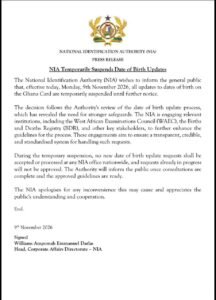
The National Identification Authority (NIA) has announced the suspension of all requests for date of birth changes on the Ghana Card until further notice.
In a statement issued on November 9, the Authority announced that the suspension will remain in force until further notice as it reviews and strengthens the procedures governing date of birth amendments.
According to the NIA, an internal review of its existing date of birth update process revealed the need to introduce stronger safeguards to ensure such requests are handled more effectively.
The Authority disclosed that it is engaging relevant institutions, including the West African Examinations Council (WAEC), the Births and Deaths Registry (BDR), and other key stakeholders, to develop stronger guidelines for processing date of birth changes.
The consultations are expected to establish a more transparent, credible and standardised system for handling applications involving amendments to dates of birth on the Ghana Card.
The NIA further clarified that no new applications for date of birth changes will be accepted or processed at any of its offices nationwide during the suspension period.
It added that applications already submitted and undergoing processing will also not be approved until further notice.
The Authority assured the public that it will communicate further once consultations have been completed and the revised guidelines are ready for implementation.
Meanwhile, the NIA has apologised for any inconvenience the temporary suspension may cause and appealed for the public’s understanding and cooperation.
The statement was signed by Williams Ampomah Emmanuel Darlas, Head of the Corporate Affairs Directorate of the National Identification Authority, and dated November 9, 2026.
In an industry where some voices are heard every morning, familiar faces appear on television screens, and certain journalists command large audiences, it is easy to associate visibility with excellence. But when the conversation turns to who deserves to be called Journalist of the Year, an important question emerges: what exactly are we measuring?
Is it the number of people who listen to a journalist? The popularity of their programme? Their ability to hold conversations, interview public figures and command attention in the studio? Or should the recognition go beyond these visible achievements?
Journalism is more than being behind a microphone or in front of a camera. It is a profession built on the responsibility to inform, investigate, question, verify and hold power accountable. While broadcasting provides an important platform for these responsibilities, occupying that platform does not automatically establish professional excellence.
A journalist’s contribution should be reflected in the quality of their work. Accuracy, originality, depth of research, fairness, ethical conduct and public impact are essential considerations. The ability to uncover stories that would otherwise remain untold, challenge misinformation, question institutional failures and give attention to overlooked communities is equally significant.
This does not diminish the work of broadcasters. A presenter who consistently asks difficult questions, challenges public officials, investigates public concerns and promotes meaningful discussions is making a valuable journalistic contribution. In fact, some of the most consequential journalism takes place through radio and television programmes.
However, popularity should not become the ultimate measure of professional achievement. A journalist may have an impressive audience and considerable public influence, but the more important question is what that influence achieves. Does it improve public understanding? Does it encourage accountability? Does it bring important issues to light? Does it provide information that people can trust?
There are also journalists whose work rarely attracts public applause. They spend time in communities, pursue difficult investigations, verify information and report stories that may never generate trending conversations. Their contributions may be less visible, but their work remains essential to the profession.
Ultimately, being Journalist of the Year should not simply be about who is the most recognised personality in the media. It should be about who demonstrates an exceptional commitment to the principles and responsibilities of journalism.
Perhaps the better question is not who speaks to the largest audience, but who uses their platform, skills and professional responsibility to make the greatest contribution to society.
Because journalism should not be measured merely by how many people hear your voice, but by the value of what that voice brings to the public.
Source: Benedicta Yaa Ohenewaa Asamoah

Hamamat Shea Butter Museum: The Ghanaian Heritage Centre Putting African Beauty, Culture and Women’s Craftsmanship on the World Map

Thomas Partey Receives Support From Black Stars Teammates, Former Footballers at Father’s Funeral

Ghana to Revamp Slave Trade Heritage Sites, Museums and Cultural Attractions Under US$1bn Tourism Plan

IRAWMA 2025: Shatta Wale Wins 3 Major Awards Including Best Music Video

AirtelTigo losing GH₵20m monthly; total debts exceed $200million – Sam George

Samini Secures Promotional Deal with Audiomack for Upcoming Album “THE ORIGIN8A”


-
 General News17 hours ago
Ghana’s New Cedi Notes Reignite Founders’ Day Debate as Five Members of Big Six Disappear – Seth Afum A. Dankwah
-

 Entertainment9 hours ago
Ghana’s US$1bn Tourism Investment: Who Really Benefits from the Government’s Big Ambition?
-

 Entertainment16 hours ago
Joe Mettle Releases 13-Track Live Album ‘The River (Live) Vol. 1’ With Artists From Three African Countries
-
 Lifestyle15 hours ago
Ghanaian Weddings Are Changing: Are We Losing the Traditions That Once Made Them Special?
-

 Politics20 hours ago
Two Suspects Remanded Over Murder of 39-Year-Old Woman in Oti Region
-
 Entertainment9 hours ago
Ghana to Revamp Slave Trade Heritage Sites, Museums and Cultural Attractions Under US$1bn Tourism Plan
-
 Culture8 hours ago
Hamamat Shea Butter Museum: The Ghanaian Heritage Centre Putting African Beauty, Culture and Women’s Craftsmanship on the World Map
-

 Entertainment10 hours ago
Empress Gifty Tells Married Female Gospel Singers: Don’t Build Your Brand Around Your Husbands’ Names