
General News
Beyond Free SHS and TVET: Why Parents Are Still Being Asked to Support Schools Through PTA Contributions

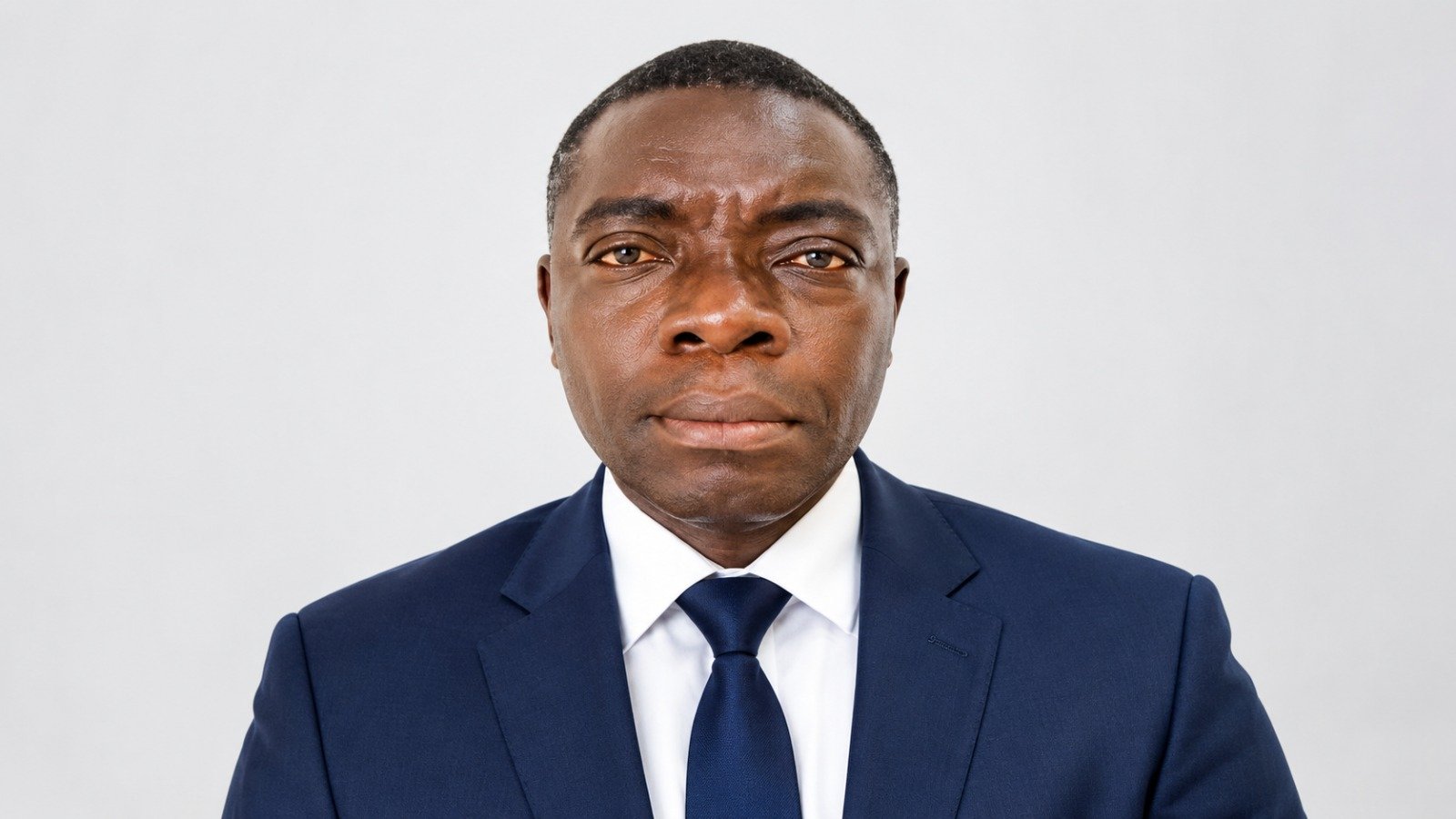
Ghana’s Free Senior High School (Free SHS) and Free Technical and Vocational Education and Training (Free TVET) policies have eased the financial burden on thousands of families, but concerns remain over the additional contributions parents are expected to make to support the effective running of schools.
An article authored by Seth Afum A. Dankwah of J. G. Knol Technical Institute in Adukrom, Akuapem, Eastern Region, has highlighted the often-unspoken partnership between schools and parents, arguing that government funding alone cannot meet every infrastructural and operational need of educational institutions.
In the article dated Sunday, October 25, 2026, Mr Dankwah explains that although the Free SHS and Free TVET policies have significantly improved access to second-cycle education, schools continue to face challenges involving inadequate classrooms, dormitories, furniture, laboratories, workshops and other essential facilities.
He notes that many parents become concerned when they receive admission letters for their wards only to be informed weeks later about PTA contributions, levies and other financial commitments.
According to him, such requests often leave parents questioning why they are being asked to make additional payments when the government has repeatedly described the education policies as free.
However, he believes the situation requires a broader understanding of what it takes to operate a school beyond providing tuition, textbooks and meals.
Mr Dankwah acknowledges that the government’s free education policies have provided significant relief to Ghanaian families.
He points out that the initiatives have removed tuition costs from parents, provided meals for students, supplied core textbooks and created opportunities for thousands of young people who might otherwise have been unable to continue their education because of financial difficulties.
For him, these achievements represent an important foundation for Ghana’s educational development.
However, he argues that providing access to education does not automatically guarantee that students will have the necessary facilities and comfortable learning environments.
He describes a school as a living community that requires continuous investment in infrastructure, maintenance and essential learning resources.
To illustrate the challenges confronting some schools, Mr Dankwah refers to reported conditions at Esiama Technical Senior High School in the Western Region.
He cites a situation where 641 female students are competing for only 240 dormitory beds, forcing some students to carry their mattresses into classrooms and the assembly hall at night before packing them away at dawn to allow academic activities to continue.
He also highlights the school’s furniture shortage, indicating that its entire student population of 1,642 shares fewer than 700 pieces of furniture.
According to the article, the situation reflects broader infrastructural challenges within Ghana’s second-cycle education system.
Mr Dankwah further points to concerns about inadequate furniture, overcrowded classrooms, insufficient laboratory equipment, poorly equipped technical workshops and inadequate washroom facilities.
He references figures from Africa Education Watch indicating that nearly 10,600 schools across the country continue to operate under trees, sheds or unapproved structures.
He also observes that enrolment in several senior high schools has increased significantly since the introduction of Free SHS, while the expansion of dormitories, laboratories, workshops and washrooms has not kept pace with the growing student population.
Mr Dankwah argues that Parent-Teacher Associations (PTAs) have become important partners in addressing some of the infrastructural and operational challenges facing schools.
He explains that parents, teachers, old students, churches, private companies and philanthropists have continued to support schools through contributions and donations.
These interventions, he notes, have helped provide classroom furniture, repair facilities, improve sanitation and support the construction of essential infrastructure.
As examples, he mentions Wesley Grammar School in Accra, where more than 3,000 tables and chairs were recently donated to ease congestion.
He also cites a private company’s donation of 400 mono desks to Esiama Technical SHS to help address the furniture shortage.
According to him, such interventions demonstrate how collective efforts can improve conditions in schools while government works towards addressing larger infrastructural gaps.
He maintains that PTA contributions, when properly managed and transparently accounted for, should not automatically be regarded as extortion.
Rather, he describes them as an important source of support that can help schools provide students with decent environments for learning and development.
The article also references an infrastructure intervention announced by the Minister of Education, Haruna Iddrisu.
Mr Dankwah points to a GH¢2.5 billion plan for second-cycle educational infrastructure between 2026 and 2027, with support from the World Bank.
The initiative is expected to target the construction and improvement of classrooms, science laboratories, ICT centres and libraries.
He argues that the government’s infrastructure plans demonstrate an acknowledgement of the challenges confronting schools, although the benefits may take time to reach every institution.
In the meantime, schools continue to require resources for routine maintenance and practical learning activities.
These include cement, wood, plumbing materials, laboratory chemicals, sewing machines, welding rods, electrical fittings, replacement of damaged desks and other materials needed by technical and vocational institutions.
He also identifies practical and departmental requirements as areas that may demand additional support to ensure students receive the necessary training.
While defending the importance of parental involvement, Mr Dankwah stresses that transparency and accountability must remain central to the collection and management of PTA contributions.
He argues that parents should be able to see how their contributions are being used, with clear records and visible improvements in school facilities.
He identifies completed dormitory blocks, adequate classroom furniture, functional laboratories and improved sanitation facilities as examples of the results parents should expect from properly managed contributions.
He further believes that schools should communicate their needs clearly to parents to prevent confusion, resentment and unnecessary disagreements.
According to him, the discussion should move beyond blaming parents or school authorities and focus instead on establishing a practical partnership that supports students.
He maintains that the government has an important responsibility to provide educational infrastructure, but parents, old students, communities and other stakeholders also have roles to play in supporting schools.
In concluding his argument, Mr Dankwah emphasises that Ghana’s educational ambitions should go beyond enrolling more children in schools.
He believes that access to education must be accompanied by quality facilities, adequate teaching and learning materials, and an environment that allows students to develop their full potential.
He argues that the ultimate beneficiaries of the education system are the children whose futures depend on the decisions and investments being made today.
He therefore calls for an honest conversation among parents, teachers, school authorities and government about the financial realities of running schools under the Free SHS and Free TVET programmes.
His central message is that government funding and community support should complement each other, provided that contributions are properly managed and do not become an unfair burden on parents.
He maintains that political administrations may change and educational policies may be reviewed, but the responsibility to provide children with a meaningful education remains a collective one.
The article was authored by Seth Afum A. Dankwah of J. G. Knol Technical Institute, Adukrom, Akuapem, in the Eastern Region.





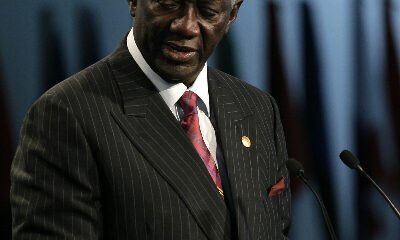




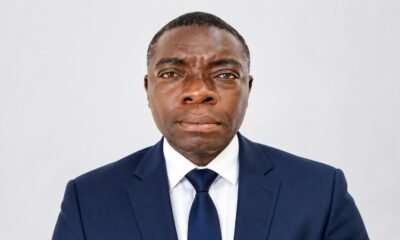




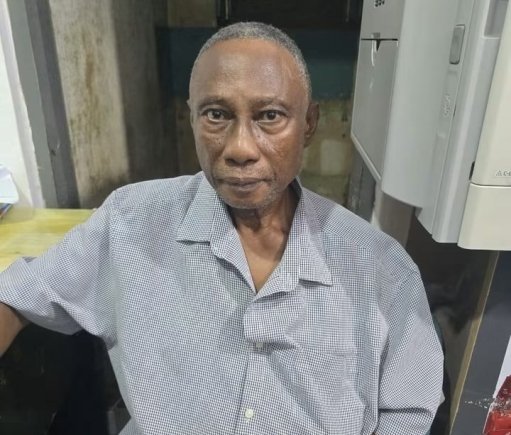
Samuel Christopher Osei Anto, 72, was arrested at Tikrom in the Ashanti Region, with police retrieving a pistol and seven rounds of ammunition during the operation.
The Ghana Police Service has arrested Samuel Christopher Osei Anto, the key suspect in the killing of two relatives at NTHC Estate, Sakumono, in the Greater Accra Region.
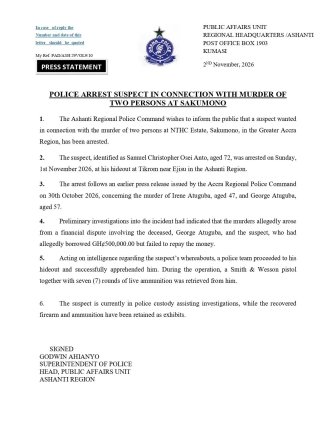
The 72-year-old suspect was picked up at his hideout at Tikrom, near Ejisu in the Ashanti Region, on Sunday, November 1, 2026, following an intelligence-led operation by the police.
In a statement issued on Monday, November 2, the Ashanti Regional Police Command confirmed the arrest and said officers retrieved a Smith & Wesson pistol and seven rounds of live ammunition from him.
The firearm and ammunition have been retained as exhibits, while the suspect remains in police custody assisting investigations.

Arrest follows double killing at Sakumono
The arrest follows the fatal shooting of Irene Atuguba, 47, and her uncle, George Atuguba, 57, at their residence in NTHC Estate, Sakumono, on Friday, October 30.
Preliminary police investigations indicate that the incident may have been triggered by a financial dispute involving the suspect and George Atuguba over an alleged GH¢500,000 debt.
Police said Osei Anto had reportedly visited the residence with a 47-year-old woman, Beatrice Mumuni, to demand repayment of the money. A misunderstanding allegedly ensued, during which the two victims were shot.
Mumuni was earlier arrested in connection with the incident, while Osei Anto was declared wanted. Police had also announced a GH¢100,000 reward for credible information leading to his arrest.
The Ashanti Regional Police Command said the arrest followed an earlier police communication issued by the Accra Regional Police Command on October 30 concerning the deaths.
The suspect is expected to assist investigators as they work to establish the full circumstances surrounding the killings.
Meanwhile, the family of George Atubiga has disputed the police account of the alleged GH¢500,000 debt, saying the deceased and the suspect were business partners in a money-lending venture. The family’s position introduces a competing account of the financial relationship, which remains part of the issues surrounding the case.
The police have not announced any court proceedings against the suspect as investigations continue.

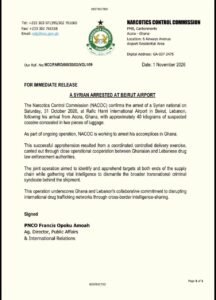
A Syrian national has been arrested at Rafic Hariri International Airport in Beirut, Lebanon, after arriving from Accra, Ghana, with approximately 40 kilograms of suspected cocaine concealed in two pieces of luggage.
The arrest was confirmed by the Narcotics Control Commission (NACOC) in a press release dated November 1, 2026.
According to the Commission, the suspect was apprehended on Saturday, October 31, 2026, following a coordinated anti-drug trafficking operation involving Ghanaian and Lebanese law enforcement authorities.
NACOC disclosed that the arrest was the result of a controlled delivery exercise undertaken through close operational cooperation between the two countries.
The operation was designed to identify and apprehend individuals at both ends of the drug supply chain while gathering crucial intelligence to dismantle the wider transnational criminal network believed to be behind the shipment.
The Commission further revealed that investigations are ongoing, with efforts underway to identify and arrest the suspect’s alleged accomplices in Ghana.
NACOC said the joint operation demonstrates the commitment of Ghana and Lebanon to combating international drug trafficking through cross-border intelligence-sharing and coordinated law enforcement activities.
The Commission noted that the successful arrest forms part of broader efforts to disrupt international narcotics trafficking networks and prevent the movement of illicit drugs across national borders.
The statement was signed by P/NCO Francis Opoku Amoah, Acting Director of Public Affairs and International Relations at NACOC.

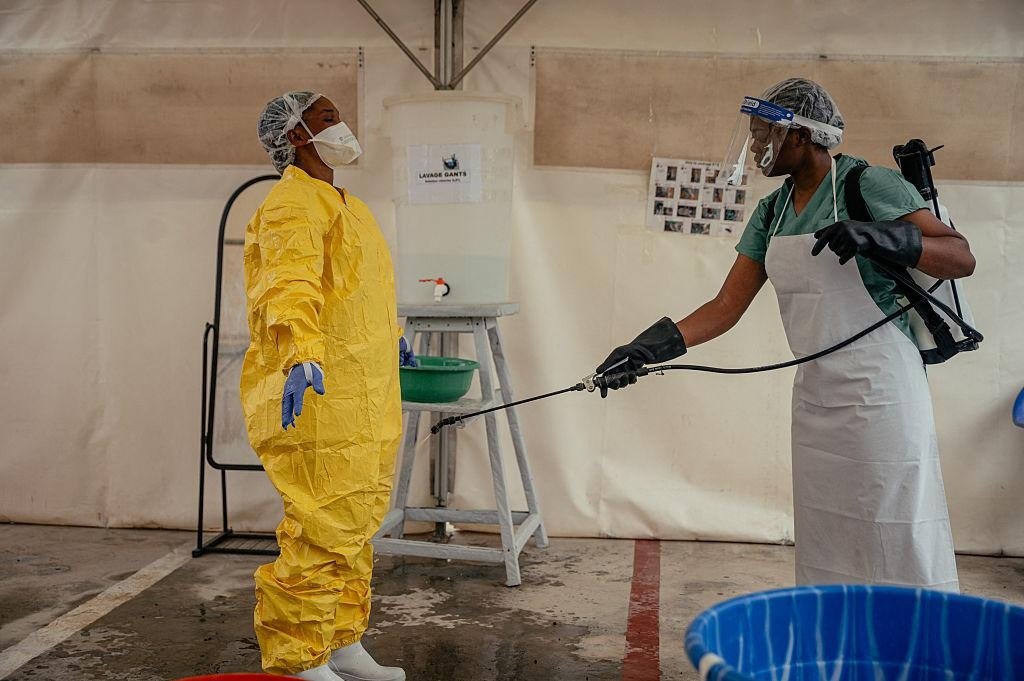
The Democratic Republic of Congo (DR Congo) is facing its deadliest Ebola outbreak in recorded history, with more than 5,000 people confirmed dead as health authorities struggle to contain the rapidly spreading disease.
According to figures reported on October 31, 2026, the outbreak has recorded approximately 10,351 confirmed infections and 5,026 deaths, representing a fatality rate of about 48.6 per cent.
The outbreak, caused by the Bundibugyo strain of the Ebola virus, has become the second-largest Ebola epidemic ever recorded globally, behind the devastating 2014–2016 West African outbreak.

Healthcare workers in protective equipment respond to the Ebola outbreak.
Eastern provinces remain at the centre of the crisis
The outbreak has particularly affected eastern DR Congo, with Ituri and North Kivu among the hardest-hit provinces.
Health authorities report that the disease has spread across 67 health zones in eight of the country’s 26 provinces, creating significant challenges for disease surveillance, emergency medical response and contact tracing.
The spread has also raised concerns beyond DR Congo’s borders, with cases reported in other African countries, including Uganda, Kenya and Nigeria.

Medical personnel work to provide care amid the growing health emergency.
Health workers face serious challenges
Efforts to contain the epidemic have been complicated by insecurity, limited resources and difficulties gaining access to affected communities.
Public health officials have also expressed concern about the number of infections occurring outside officially monitored contact networks. This makes it harder for response teams to identify transmission routes and reach people who may have been exposed.
Another major concern is delayed access to medical care, with reports indicating that some patients died before reaching treatment facilities.

Community outreach remains important in preventing further infections.
International concern grows
The outbreak has attracted growing international attention as the virus crosses national borders. Kenya confirmed eight cases and two deaths, while Nigeria reported one confirmed case. Uganda had also experienced cases earlier in the epidemic.
The World Health Organization and Africa Centres for Disease Control and Prevention have emphasised the importance of strengthening surveillance, improving access to healthcare and supporting frontline medical personnel.
Although 2,788 people have reportedly recovered, health authorities continue to face significant difficulties in slowing transmission.

Ituri province is among the areas most affected by the epidemic.
A difficult road ahead
The rising death toll highlights the urgency of a stronger and more coordinated response. Security challenges, public distrust and disruptions to healthcare services remain major obstacles.
For DR Congo, the immediate priority is to identify new infections quickly, improve access to treatment and prevent further transmission across communities and neighbouring countries.

The epidemic has expanded across multiple provinces.
The outbreak is a major public health concern for Africa, with international health organisations continuing to monitor developments and support containment efforts.

Cryptocurrency exchange Binance says it has replaced approximately 90% of the digital assets stolen in a reported $6.3 billion cyberattack, pledging to cover the remaining losses without passing the financial burden on to its customers.
Remaining losses present a challenge
The exchange said the remaining 10% consists of less-liquid digital tokens that may take longer to obtain in the quantities required. Less-liquid assets can be harder to purchase in large amounts without affecting market prices.
Binance has indicated that its recovery effort draws on several sources, including its Secure Asset Fund for Users (SAFU), its futures insurance fund and its corporate treasury. The company says it will bear the financial impact rather than its users.
FBI links attack to North Korean hacking unit
The incident has also drawn attention from US law enforcement. The Federal Bureau of Investigation (FBI) attributed the attack to TraderTraitor, a North Korean state-sponsored cyber unit.
According to reporting on the investigation, authorities observed stolen cryptocurrency being converted into other digital assets and warned that further attempts to move or conceal the funds could follow. The attribution comes amid broader international concerns about cyber operations used to generate revenue for North Korea.
Customer confidence and withdrawals remain key concerns
The breach has placed renewed focus on the security of cryptocurrency exchanges, the protection of customer holdings and the ability of major platforms to withstand sophisticated cyberattacks.
Binance said it had taken a new snapshot of assets held on its platform as part of its proof-of-reserves process. The exchange also indicated that withdrawals were expected to resume on November 1, although users should check its official announcements for the latest operational status.
Although replacing 90% of the stolen assets marks significant progress, the incident leaves important questions about cybersecurity safeguards, the tracing of stolen funds and the long-term resilience of digital-asset markets.
For customers and the wider cryptocurrency industry, the next test will be whether Binance can complete the remaining recovery effort while restoring confidence in its platform.
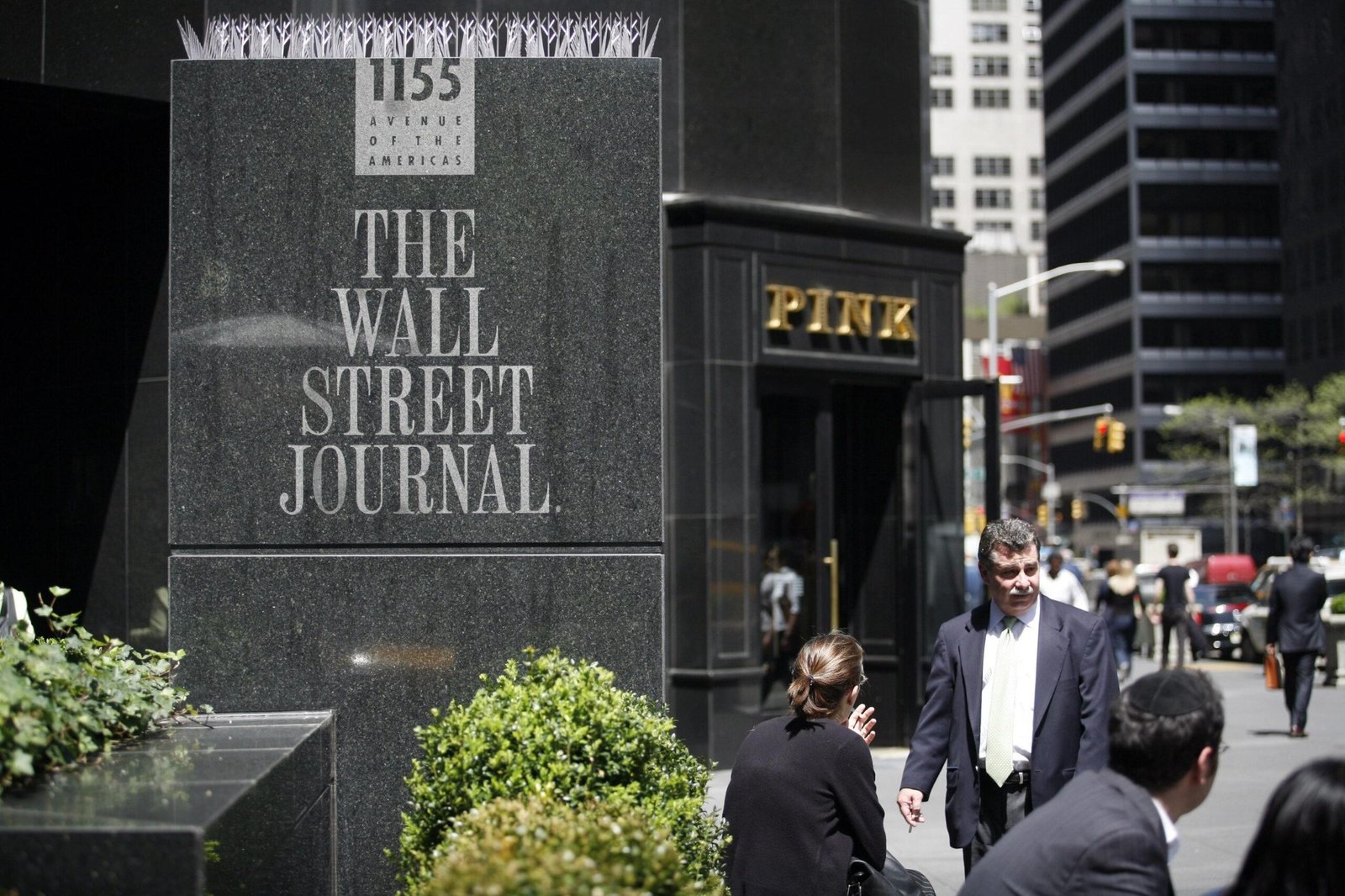
A federal judge in the United States has dismissed President Donald Trump’s defamation lawsuit against The Wall Street Journal and other defendants over the newspaper’s reporting on an alleged birthday letter linked to Jeffrey Epstein. The ruling marks a significant setback for Trump in his legal dispute with the media organisation.
Judge says Trump failed to meet legal standard
US District Judge Darrin Gayles, sitting in Miami, dismissed the lawsuit for a second time on Saturday, October 31, ruling that Trump’s amended complaint failed to adequately establish that the defendants acted with “actual malice.”
Under US defamation law, public figures generally must show that a publisher knowingly made a false statement or acted with reckless disregard for whether it was true. The judge concluded that Trump’s allegations did not meet this demanding legal threshold.
The case was dismissed with prejudice, meaning Trump cannot simply amend and refile the same lawsuit in the same court. The judge had previously dismissed the initial complaint in April 2026 but allowed the president to submit an amended version.
Dispute centres on alleged Epstein birthday letter
The legal battle began after the Wall Street Journal published a report in July 2025 about a birthday album prepared for Epstein’s 50th birthday in 2003. The newspaper reported that the album contained a letter bearing Trump’s name and featuring a suggestive drawing.
Trump denied writing the letter, described the reporting as false and defamatory, and pursued legal action against the newspaper’s publisher, Dow Jones, its parent company News Corp, media executive Rupert Murdoch and other individuals associated with the report.
The lawsuit sought billions of dollars in damages. The newspaper and its publisher defended their reporting and challenged the legal basis of Trump’s claims.
Newspaper welcomes ruling as Trump maintains his position
The judge’s decision represents a victory for the newspaper and its co-defendants in a high-profile dispute over press freedom, public accountability and the legal protections afforded to journalism.
Dow Jones welcomed the decision, while a spokesperson for Trump’s legal team said the president would continue pursuing his claims against those he believes misled the American public.
The case has attracted considerable attention because it involves a sitting US president, one of the country’s most influential media companies and reporting related to Epstein, whose associations with prominent figures have remained a subject of public scrutiny.
The ruling does not, by itself, establish whether the disputed letter was authentic. It addresses whether Trump’s complaint sufficiently alleged the legally required elements of defamation.

Zverev Stunned by De Minaur in Vienna Open Semi-Final Ahead of World No. 1 Takeover

Basel Setback Leaves Djokovic Facing Tough ATP Finals Qualification Battle

Antonelli Makes Formula 1 History as Youngest-Ever World Champion at 20

IRAWMA 2025: Shatta Wale Wins 3 Major Awards Including Best Music Video

Samini Secures Promotional Deal with Audiomack for Upcoming Album “THE ORIGIN8A”

AirtelTigo losing GH₵20m monthly; total debts exceed $200million – Sam George


-

 General News1 week ago
GTA Staff Demand Answers on World Cup Visa Slots, Staff Dismissals and Unpaid Allowances
-

 Entertainment2 weeks ago
Shatta Wale Cake Tells Story of Growth, Identity and African Dancehall Influence
-

 General News1 week ago
FOKLEX MEDIA AWARDS COMMENDS PRINCE KWAW GYIMAH AND OWASS FM TEAM FOR PROFESSIONALISM DURING KWAME DZOKOTO INCIDENT
-

 General News7 days ago
Nicki Minaj Throws Her Support Behind Trump Ahead of US Midterm Elections
-

 General News1 week ago
SAMMY GYAMFI’S “MINE WITHOUT LICENCE” REMARK SPARKS FRESH GALAMSEY DEBATE
-

 Entertainment2 weeks ago
Ghana Unveils December in GH 2026 Calendar With Over 150 Events Nationwide
-
 General News2 weeks ago
PROFOUND GRATITUDE FOR YOUR DECISIVE INTERVENTION IN FAST-TRACKING THE COMPLETION OF THE MUMFORD FISHING HARBOUR
-

 Politics2 weeks ago
OB UASI HEADMASTER IN SEXUAL MISCONDUCT CONTROVERSY EYES NDC CONSTITUENCY CHAIRMANSHIP