
Business
Ato Forson: New Economy will strengthen financial security for Ghanaians

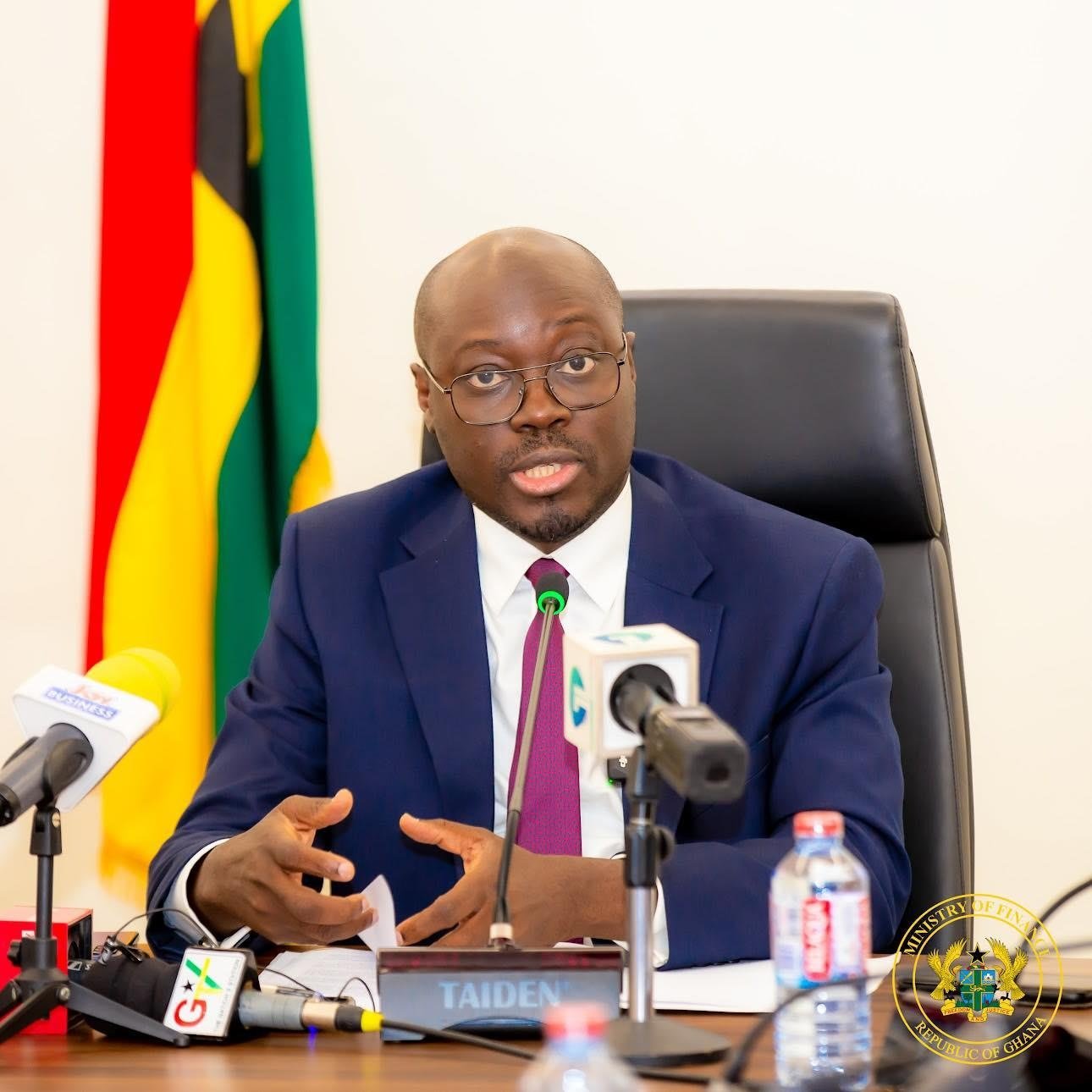
Ghana’s Finance Minister, Dr Cassiel Ato Forson, has emphasised that the country’s economic recovery must translate into improved living conditions and greater financial security for ordinary Ghanaians.
The minister said the government’s New Economy agenda was designed to ensure that a stronger national economy delivers tangible benefits to households, businesses and individuals.
Dr Forson made the remarks after hosting Queen Máxima of the Netherlands, whom he congratulated on her campaign to promote financial health.
He stressed that economic progress should go beyond improved national indicators and reflect positively on the financial wellbeing of citizens.
According to the Finance Minister, the government wants Ghanaians to have greater control over their personal finances, improved security for their families and increased confidence in the country’s economic future.
He explained that the New Economy agenda would focus on connecting economic growth with the everyday financial needs of the population, particularly the ability of households to manage money, meet their obligations and plan for the future.
From economic stability to improved livelihoods
The New Economy programme represents the government’s proposed next phase of economic transformation, shifting attention from stabilisation towards production, investment, employment creation and wealth generation.
President John Dramani Mahama previously announced a proposed US$10 billion investment programme covering seven strategic sectors over four years, from 2027 to 2030.
Agriculture and agro-processing are expected to receive a significant share of the investment, alongside other productive sectors intended to strengthen domestic manufacturing, create jobs and reduce dependence on imported goods.
The programme is expected to be outlined in greater detail by Dr Forson during the presentation of the 2027 Budget Statement and Economic Policy to Parliament on November 12, 2026.
Financial security remains a key test
While the government has highlighted improvements in economic stability, the ultimate test of the New Economy will be whether ordinary Ghanaians experience meaningful improvements in their financial circumstances.
Job opportunities, better household incomes, affordable financial services and stronger support for local businesses will be important in determining whether the programme achieves its objectives.
The Finance Minister’s latest remarks reinforce the government’s position that economic growth must ultimately improve the financial wellbeing and future prospects of citizens.

















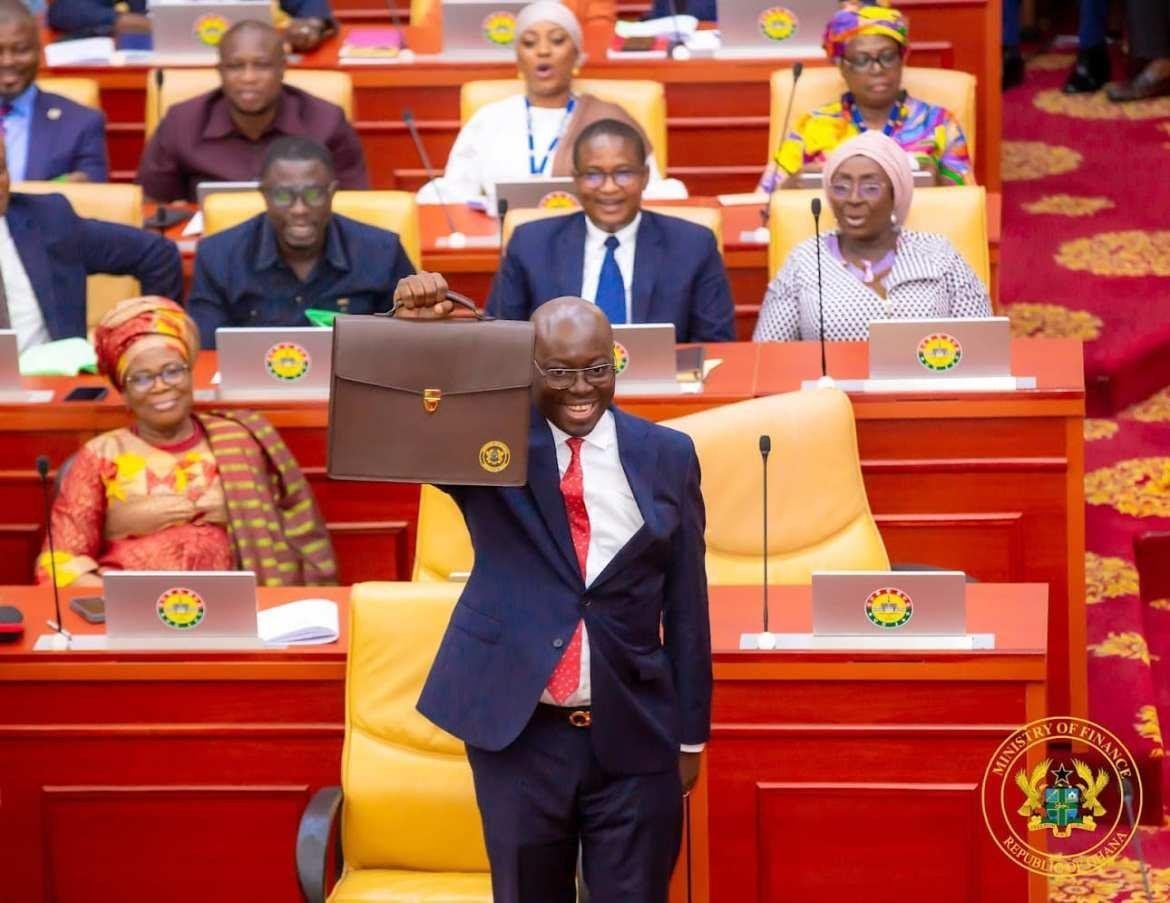
The International Monetary Fund (IMF) has expressed confidence in the foundations of Ghana’s 2027 national budget, describing its fiscal direction as consistent with the country’s economic reform programme.
The Fund says the proposed budget targets a primary surplus of 0.5 per cent of Gross Domestic Product (GDP) on a commitment basis, reflecting the government’s continued efforts to strengthen public finances and maintain economic stability.
According to the IMF mission team, the target will be supported by revenue-enhancing measures approved by Parliament in July 2026. The measures are expected to create additional fiscal space for government investment in key development priorities.
The IMF noted that resources generated through the fiscal strategy would be directed towards the government’s New Economy agenda, with particular emphasis on job creation, investment opportunities and addressing Ghana’s infrastructure deficit.
However, the Fund stressed that achieving these objectives will require strong financial discipline. It urged the government to ensure proper assessment of projects, competitive procurement processes and strict expenditure controls to guarantee value for money and protect the country’s debt sustainability.
On revenue mobilisation, the IMF expects Ghana’s non-oil revenue to increase further in 2027, building on stronger collections recorded in 2026.
The projected improvement is expected to be supported by the tax measures introduced in July, a review of customs and excise legislation, and reforms aimed at improving tax administration. These include the Integrated Tax Administration System and the deployment of electronic fiscal devices.
Despite its positive assessment, the Fund cautioned that Ghana remains exposed to economic risks, including fluctuations in international gold, cocoa and oil prices, geopolitical tensions and tighter global financial conditions.
Domestic challenges, particularly debt refinancing requirements and financial pressures in the energy, cocoa and gold sectors, also require continued attention.
The IMF’s assessment follows a mission to Accra led by Ruben Atoyan from October 22 to November 4, 2026, to review Ghana’s first programme assessment under its 36-month Policy Coordination Instrument (PCI).
The Fund and Ghanaian authorities have reached a staff-level agreement on the first review, although the agreement remains subject to approval by IMF Management and the Executive Board.
The 2027 Budget is expected to be presented to Parliament in November, where the government’s spending priorities and revenue projections will receive further scrutiny.
The IMF has reaffirmed its commitment to supporting Ghana’s efforts to preserve economic stability while pursuing stronger, inclusive and job-rich growth.

Ghana remains exposed to fluctuations in international gold, cocoa and crude oil prices, with the International Monetary Fund (IMF) warning that domestic economic challenges could also threaten the country’s financial stability.
The warning follows the IMF mission’s review of Ghana’s first Policy Coordination Instrument (PCI), which assessed the country’s economic performance, ongoing reforms and ability to withstand external economic pressures.
According to the Fund, although Ghana has made progress in stabilising its economy, significant vulnerabilities remain. These include geopolitical tensions, tighter global financial conditions and unpredictable movements in the prices of key export commodities.
The IMF noted that Ghana’s dependence on gold, cocoa and oil revenues leaves the economy vulnerable to developments in international markets. A substantial decline in the prices of these commodities could affect export earnings, government revenue, foreign exchange availability and the country’s ability to build stronger financial reserves.
Beyond external pressures, the Fund identified several domestic risks that could undermine the country’s economic recovery.
These include significant domestic debt rollover requirements, fiscal pressures within the energy, cocoa and gold sectors, as well as lingering weaknesses in the financial sector.
The concerns come despite improvements in some key economic indicators and progress under the government’s economic reform programme.
IMF highlights importance of stronger economic safeguards
To protect the country’s economic gains, the IMF has emphasised the need for prudent monetary policy, greater exchange rate flexibility and stronger foreign exchange reserve buffers.
It also recommended building a sinking fund to support the repayment of maturing government debt and reduce potential pressure on public finances.
The Fund further stressed that consistent implementation of ongoing reforms would be essential to maintaining investor confidence and protecting the economy against unexpected shocks.
Ghana’s economic reform programme makes progress
Despite the risks, the IMF described Ghana’s performance under the Policy Coordination Instrument as broadly satisfactory, noting that most quantitative targets under the latest review had been met.
The authorities have also introduced corrective measures in response to the recent decline in foreign exchange reserves. These include transferring foreign exchange intermediation from the Bank of Ghana to GoldBod and implementing higher gold sale requirements for large-scale mining companies.
Structural reforms are also progressing, including changes to the governance of the cocoa sector, quarterly electricity tariff adjustments and improvements to customs and excise legislation.
However, the IMF says outstanding reforms must be completed on schedule, including the delayed publication of the audit of the Electricity Company of Ghana’s collection accounts.
Governance and accountability remain critical
The Fund has also called for stronger governance, improved oversight of state-owned enterprises and the adoption of the Conduct of Public Officers Bill.
It believes that greater transparency and accountability, alongside the publication of the second National Ethics and Anti-Corruption Action Plan, would help strengthen public trust and encourage private investment.
The IMF’s latest warning highlights an important challenge facing Ghana: maintaining economic stability while reducing its exposure to commodity price fluctuations, domestic debt pressures and weaknesses in key economic sectors.
While recent reforms have helped improve the country’s economic outlook, the Fund says sustained policy discipline and stronger financial safeguards will be necessary to protect those gains.
Ghana is preparing to strengthen oversight of the virtual asset sector, with more than 3.1 million citizens reportedly using digital assets expected to come under a formal regulatory framework.
Communications Minister Samuel Nartey George says the growing number of Ghanaians participating in virtual asset activities makes regulation necessary to protect consumers, improve transparency and address potential financial risks.

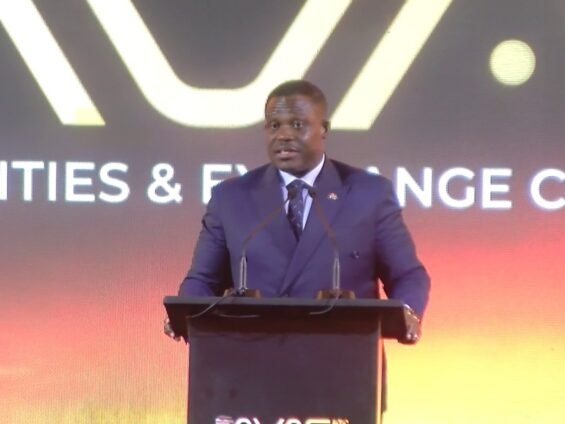
Communications Minister Sam George speaks about regulating Ghana’s growing virtual asset sector.
The development highlights the increasing popularity of digital financial activities, including cryptocurrency trading and other virtual asset transactions, among individuals and businesses in the country.
At the summit, Mr George pointed to Ghana’s position as the 29th-ranked country globally in cryptocurrency adoption, according to figures contained in the memorandum accompanying the Virtual Asset Service Providers Act, 2025 (Act 1154).

Cryptocurrency adoption continues to expand as Ghana strengthens oversight of digital assets.
The legislation, passed by Parliament in December 2025, establishes a legal framework for licensing and supervising companies that provide virtual asset services. It also introduces measures covering anti-money laundering and consumer protection.
The minister stressed that the government’s objective was not to ban cryptocurrency or discourage digital financial innovation, but to ensure that activities in the sector operate within the law.
He said the scale of adoption made it important for authorities to establish safeguards that would protect users while creating a more reliable environment for businesses operating in the digital asset industry.
Regulators to oversee growing digital asset market
The Bank of Ghana and the Securities and Exchange Commission are expected to play central roles in supervising the sector, including developing guidelines on cybersecurity, consumer protection, anti-money laundering requirements and prudential standards.
Mr George clarified that licensing virtual asset service providers does not fall under his ministry’s responsibility. Instead, that mandate rests with the Bank of Ghana and the SEC.

Regulators and industry stakeholders gather in Accra to discuss the future of virtual assets.
The Governor of the Bank of Ghana, Dr Johnson Asiama, also highlighted the potential of virtual assets to contribute to financial inclusion and help address challenges surrounding access to credit.
Meanwhile, SEC Deputy Director-General Mensah Thompson called on financial regulators to adopt innovative approaches as technological developments continue to reshape the virtual asset market.
Ghana’s challenge will be to balance the opportunities presented by digital finance with the need to protect consumers, prevent financial crime and maintain confidence in the country’s financial system.
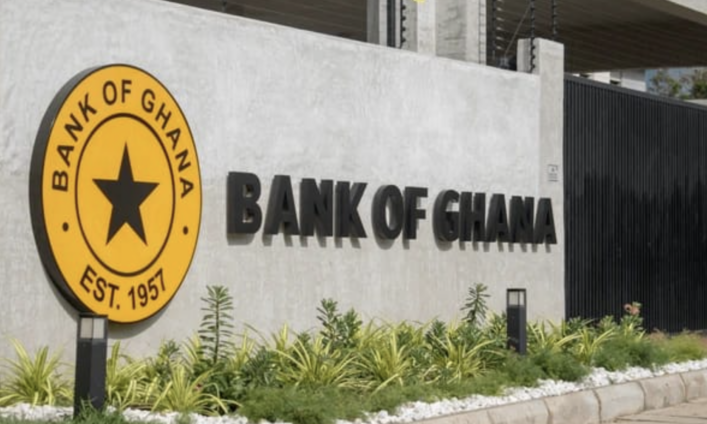
Ghana’s borrowing environment is showing further signs of easing following a decline in the Ghana Reference Rate (GRR) to 10.01%, a development that could offer additional relief to individuals and businesses seeking credit from commercial banks.

Bank of Ghana headquarters
The reduction signals continued improvement in benchmark lending conditions and raises expectations that commercial banks could gradually lower interest rates on selected loan facilities.

Customers at a commercial bank
The Ghana Reference Rate serves as an important benchmark for determining the interest rates charged by commercial banks on loans. It provides a common reference point for financial institutions when setting their lending rates.

Business owners and borrowing costs
A lower benchmark could benefit businesses seeking financing for expansion, working capital, equipment purchases and other investment activities. Households with loans linked to variable interest rates may also benefit if banks pass on the reduction.

Businesses anticipating cheaper credit
However, the decline does not automatically mean that every borrower will immediately enjoy cheaper credit. Banks consider additional factors, including customers’ creditworthiness, collateral, operating expenses and the cost of mobilising deposits, when determining their final lending rates.

Ghana’s government accepted approximately GH¢14.97 billion through Treasury bill auctions in October 2026, falling short of its overall borrowing target despite strong investor demand for short-term government securities.
Data from the October auction results indicate that investors submitted bids totalling approximately GH¢19.97 billion against a cumulative target of GH¢16.27 billion. However, the Treasury accepted only GH¢14.97 billion, leaving about GH¢5 billion in bids unaccepted.
The figures represent an oversubscription of approximately 22 per cent, suggesting that investor interest remained relatively strong throughout much of the month.
The government’s borrowing activities were conducted through three main Treasury bill instruments: the 91-day, 182-day and 364-day securities.
The 91-day Treasury bill attracted the largest share of investor interest, receiving bids worth approximately GH¢1.51 billion at the final October auction. The government accepted GH¢1.23 billion of those offers.
The 182-day instrument attracted GH¢423.74 million in bids, with GH¢395.74 million accepted, while the 364-day bill received GH¢613.83 million in bids, of which GH¢292.12 million was accepted.
Investor demand moderates towards month-end
Despite the strong cumulative demand recorded during October, investor appetite weakened at the final auction of the month.
Total bids declined by approximately 40 per cent week-on-week to GH¢2.55 billion, compared with the previous week’s figures.
Although bids exceeded the final auction target of GH¢2.45 billion by about four per cent, the Treasury accepted only GH¢1.92 billion, reflecting its selective approach to domestic borrowing.
Treasury bill yields continue to decline
Interest rates on all three Treasury bill maturities also recorded marginal declines during the final auction.
The 91-day bill yield dropped to 4.60 per cent, while the 182-day instrument declined to 6.26 per cent. The 364-day bill recorded a larger reduction, falling to 9.60 per cent.
The downward movement in yields suggests that the government was able to secure some domestic financing at lower interest rates, although future borrowing costs will depend on investor demand, market liquidity and broader economic conditions.
The October figures highlight the government’s continued reliance on the domestic debt market to meet its financing requirements, while its decision to reject a substantial portion of submitted bids reflects a cautious approach to managing borrowing costs.
Attention will now turn to subsequent Treasury bill auctions to determine whether investor demand and declining yields can be sustained.

Ato Forson: New Economy will strengthen financial security for Ghanaians

IMF Praises Ghana’s Budget Plans, Urges Strong Spending Controls

Ghana’s Economic Recovery Faces New Risks – IMF

IRAWMA 2025: Shatta Wale Wins 3 Major Awards Including Best Music Video

Samini Secures Promotional Deal with Audiomack for Upcoming Album “THE ORIGIN8A”

AirtelTigo losing GH₵20m monthly; total debts exceed $200million – Sam George


-

 General News1 week ago
GTA Staff Demand Answers on World Cup Visa Slots, Staff Dismissals and Unpaid Allowances
-

 General News2 weeks ago
SAMMY GYAMFI’S “MINE WITHOUT LICENCE” REMARK SPARKS FRESH GALAMSEY DEBATE
-

 General News2 weeks ago
FOKLEX MEDIA AWARDS COMMENDS PRINCE KWAW GYIMAH AND OWASS FM TEAM FOR PROFESSIONALISM DURING KWAME DZOKOTO INCIDENT
-

 Entertainment3 days ago
NADFFA 2027: Ghana to Host Pan-African Film and Food Festival in March
-

 General News1 week ago
Nicki Minaj Throws Her Support Behind Trump Ahead of US Midterm Elections
-

 Entertainment1 week ago
GTA Targets Taxi Drivers in ‘Know Ghana’ Campaign to Boost Tourism
-

 Lifestyle2 weeks ago
One More Video Until 2 AM: Why We Keep Stealing Sleep from Ourselves
-

 Education1 week ago
Can Students Solve Disagreements Without Fighting? Why Schools Should Teach Conflict Resolution