
General News
‘Cash Is Ready’ – Government Pays GH¢12.9bn to DDEP Bondholders in Early Redemption

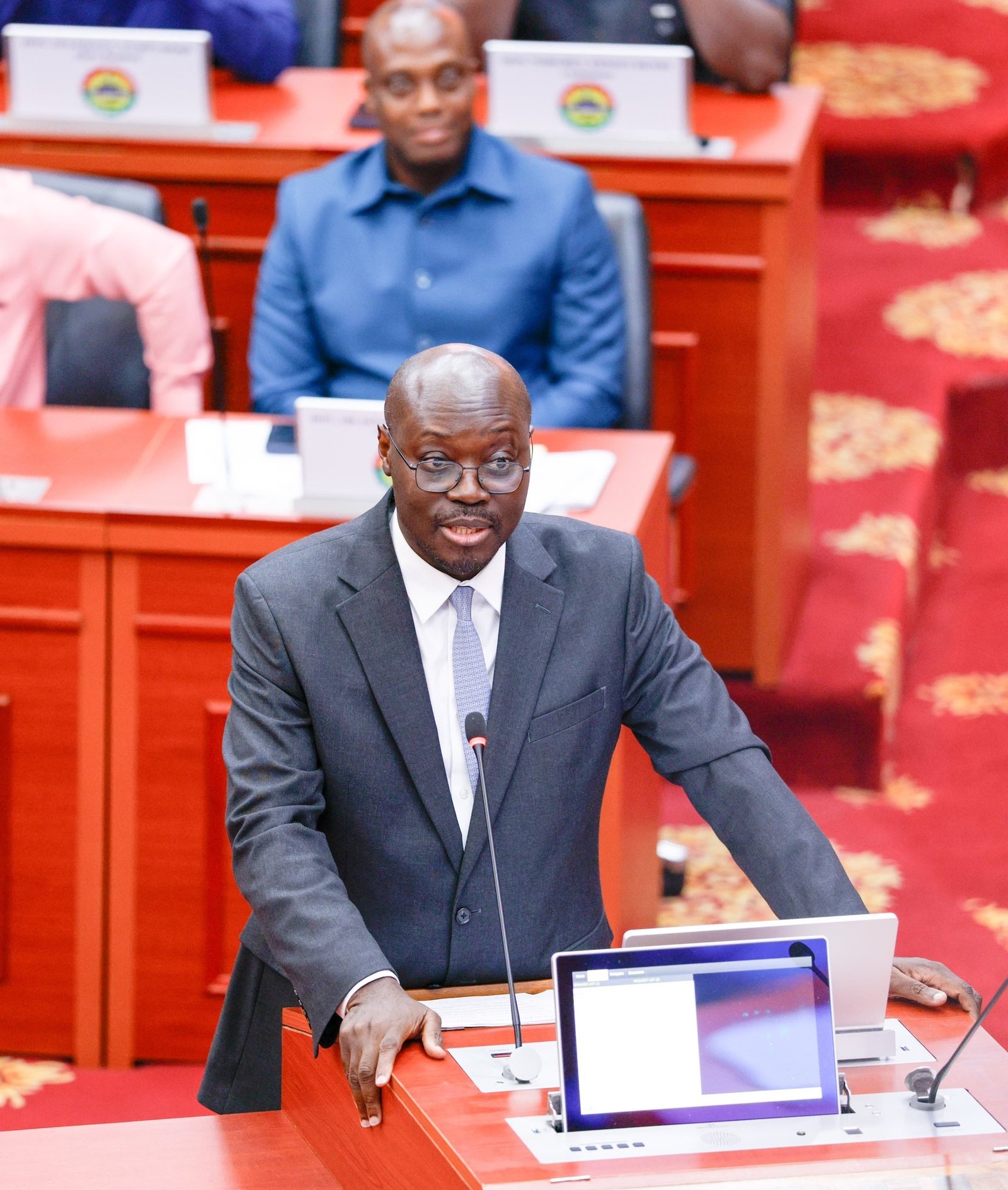
The government has paid approximately GH¢12.9 billion in cash to bondholders who accepted the early redemption offer for February 2027 Domestic Debt Exchange Programme (DDEP) bonds, marking a major step in its efforts to settle upcoming debt obligations.
Finance Minister Dr Cassiel Ato Forson announced that the settlement was completed at 11:15 a.m., 45 minutes ahead of the scheduled noon settlement time, with GH¢12.60 billion paid for the bond buyback.
The early redemption offer, which was announced during the presentation of the 2027 Budget, opened last Monday and closed on Thursday, with eligible bondholders given the opportunity to receive their money ahead of the original February 2027 maturity date.
According to the Finance Minister, all bondholders who tendered their bonds under the offer were paid in full, with no discounts or reductions applied to their principal.
“We paid every bondholder who tendered in full and in cash. No discount. No haircut,” Dr Forson stated.
In addition to the GH¢12.60 billion used for the bond buyback, the government paid GH¢289 million in accrued interest to the participating bondholders.
The two payments brought the total cash disbursement to approximately GH¢12.9 billion within the settlement period.
The development follows the government’s earlier assurance during the 2027 Budget presentation that funds had been secured to redeem the GH¢29 billion principal amount of DDEP bonds scheduled to mature in February 2027.
Dr Forson had urged affected bondholders to take advantage of the early redemption offer, insisting that the government had made adequate financial arrangements to honour the obligations.
The February 2027 DDEP bonds formed part of the domestic debt restructuring programme introduced to address Ghana’s economic and debt challenges.
The early redemption exercise is expected to ease some of the government’s upcoming repayment obligations while providing participating investors with access to their funds before the original maturity date.
The Finance Minister’s latest announcement also reinforces the government’s position that it remains committed to honouring its obligations to domestic bondholders following the debt restructuring exercise.
With the early redemption now completed for those who tendered, attention is expected to turn to the remaining February 2027 DDEP obligations and the government’s broader debt repayment schedule.
The government has maintained that it intends to meet its debt obligations while continuing efforts to strengthen public finances and restore confidence in the domestic debt market.










Education
Ghana Must Replace High-Stakes Basic Education Exams With Centralised Online Cumulative Assessment System

Ghana must reconsider its reliance on high-stakes examinations at the basic education level and move towards a centralised online cumulative assessment system that tracks pupils’ academic progress throughout their years in school, rather than judging their abilities through a single examination.
The current examination-driven system places enormous pressure on pupils, teachers, parents and schools, often making academic success appear dependent on performance during a limited period of testing rather than a learner’s overall development.
A centralised cumulative assessment system could provide a more comprehensive picture of pupils’ strengths, weaknesses, learning patterns and progress over time, helping educators identify struggling learners early and introduce targeted interventions before gaps become difficult to address.
Under such a system, pupils could be assessed periodically through digital platforms, with their scores, competencies and learning progress recorded in a central database accessible to authorised education officials, teachers and relevant stakeholders.
Instead of waiting until pupils sit for major examinations, schools would have access to continuous assessment data that could help determine whether learners are improving in literacy, numeracy, science and other essential subjects.
The proposed approach would also reduce the pressure associated with examinations such as the Basic Education Certificate Examination (BECE), where pupils are often made to believe that a single examination could determine their academic future.
A cumulative assessment system would allow learners to demonstrate their knowledge and abilities across multiple assessments over time, making the process less dependent on examination-day anxiety, illness, personal circumstances or other factors that could affect performance.
The centralised nature of the system could also strengthen accountability within the education sector. Education authorities would be able to monitor learning outcomes across schools, districts and regions, identify areas where pupils are falling behind and determine whether educational interventions are producing measurable improvements.
Teachers could equally benefit from reliable assessment data to guide lesson planning, while parents would have a clearer understanding of their children’s academic development instead of relying solely on end-of-term reports or final examination results.
However, implementing such a system would require significant investment in digital infrastructure, reliable internet connectivity, teacher training, data protection and equitable access to devices, particularly for schools in rural and underserved communities.
The transition would also need to be carefully designed to ensure that online assessments do not create new inequalities between pupils who have access to technology and those who do not.
Ghana’s basic education system should ultimately prioritise genuine learning, understanding and the development of skills rather than excessive preparation for examinations.
Replacing high-stakes testing with a well-designed centralised online cumulative assessment system could represent an important step towards building a more inclusive, data-driven and learner-centred education system, where every child’s progress matters throughout the educational journey.

The Kumasi Metropolitan Assembly (KMA) has ordered traders and other occupants operating along designated lanes of the Kejetia Redevelopment Project Phase II to vacate the affected areas immediately as construction works resume.
The directive affects traders, individuals with temporary structures and those who have placed goods along the designated construction lanes and adjoining areas, which the Assembly says must be cleared to allow contractors to work without obstruction.
In a notice, the KMA explained that the resumption of construction requires unrestricted access for the movement of equipment, building materials and personnel to the project site.
The Assembly has therefore urged all affected persons to remove their belongings and vacate the designated spaces without delay to facilitate the smooth continuation of the redevelopment project.
According to the KMA, keeping the construction lanes clear is critical to preventing disruptions to ongoing works, reducing the risk of accidents and protecting traders, pedestrians, construction workers and members of the general public.
The directive comes as efforts intensify to continue work on the Kejetia Redevelopment Project Phase II, a major infrastructure development expected to further transform commercial activities in Kumasi and improve trading conditions within the city’s central business district.
The Assembly has appealed to traders and other occupants to cooperate with contractors and the relevant authorities, stressing that their compliance is necessary to ensure the project progresses smoothly and within the expected timeframe.
It has also cautioned affected persons against returning to the cleared areas while construction remains ongoing, warning that measures will be taken to ensure compliance with the directive.
The KMA says allowing contractors access to the designated lanes is essential to maintaining construction progress and ensuring the safety of everyone around the project site.
The resumption of work on Phase II forms part of broader efforts to complete the Kejetia redevelopment project, which is expected to improve market infrastructure, enhance commercial activities and contribute to the development of Kumasi’s trading sector.
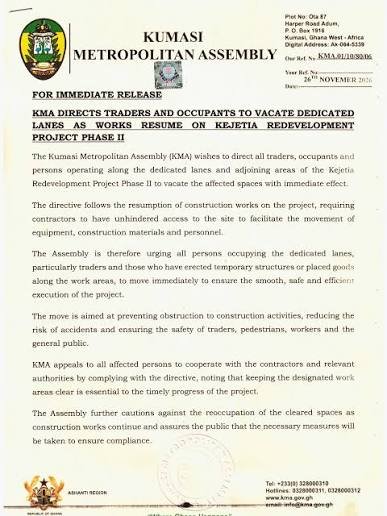
Traders and occupants in the affected areas are expected to comply with the directive immediately as contractors continue work on the project.
General News
EOCO, INTERPOL Move to Bust ‘Model Q’ Human Trafficking Network as West African Delegation Visits Malaysia
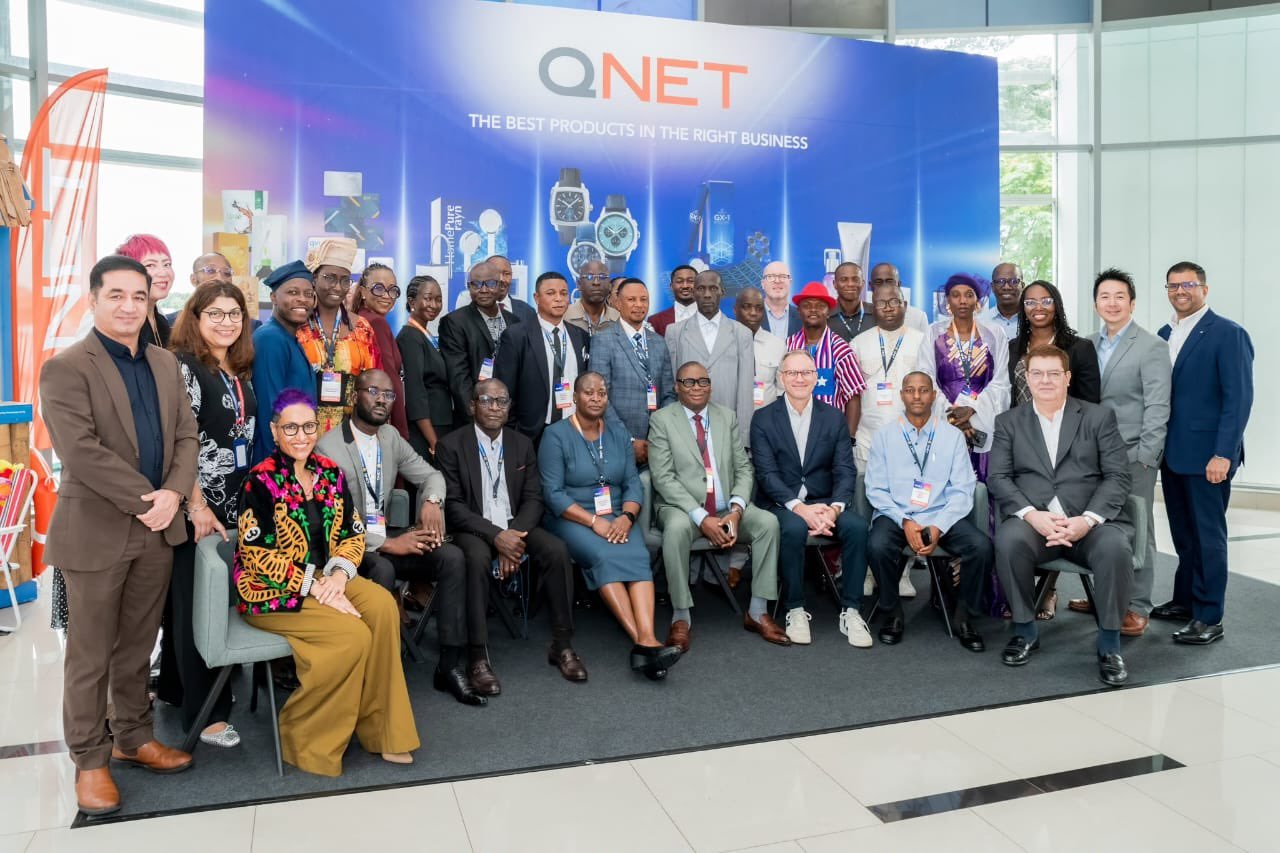
The Economic and Organised Crime Office (EOCO) has stepped up efforts to combat human trafficking and migrant smuggling in West and Central Africa, leading a delegation of law enforcement officials to Malaysia to investigate the operations of the so-called “Model Q” criminal network.
The fact-finding mission, undertaken in collaboration with the International Criminal Police Organisation (INTERPOL), took the delegation to Kuala Lumpur, Malaysia, as authorities seek to better understand the methods used by criminal networks to lure unsuspecting victims into trafficking, financial exploitation and fraudulent recruitment schemes.
According to EOCO, the mission follows a Regional Coordination and Case Resolution Workshop held in Accra from July 6 to 9, 2026, which brought together law enforcement agencies to address the growing threat posed by the “Model Q” modus operandi across the region.
The operation focuses on criminal networks allegedly exploiting recruitment narratives, marketing structures and business identities to attract vulnerable individuals, often through promises of lucrative employment opportunities, scholarships and better living conditions abroad.
The delegation comprised law enforcement representatives from 12 INTERPOL member countries, drawn from their respective National Central Bureaus, alongside officials from INTERPOL’s General Secretariat in Lyon, France.
During their visit to Malaysia, the officials received briefings from the QNet team to examine how direct-selling structures and legitimate business brands could allegedly be exploited by criminal syndicates to facilitate fraudulent activities.
The delegation was also presented with cases involving brand impersonation, including fake scholarship schemes and fraudulent employment offers falsely associated with Quest International University (QIU).
Authorities are concerned that unsuspecting victims may be recruited through convincing online advertisements, employment opportunities and educational offers, only to find themselves exposed to trafficking networks, financial deception or other forms of exploitation.
The mission also featured strategic roadmap sessions facilitated by INTERPOL, focusing on human trafficking, migrant smuggling and the growing connection between these criminal activities and online scam operations.
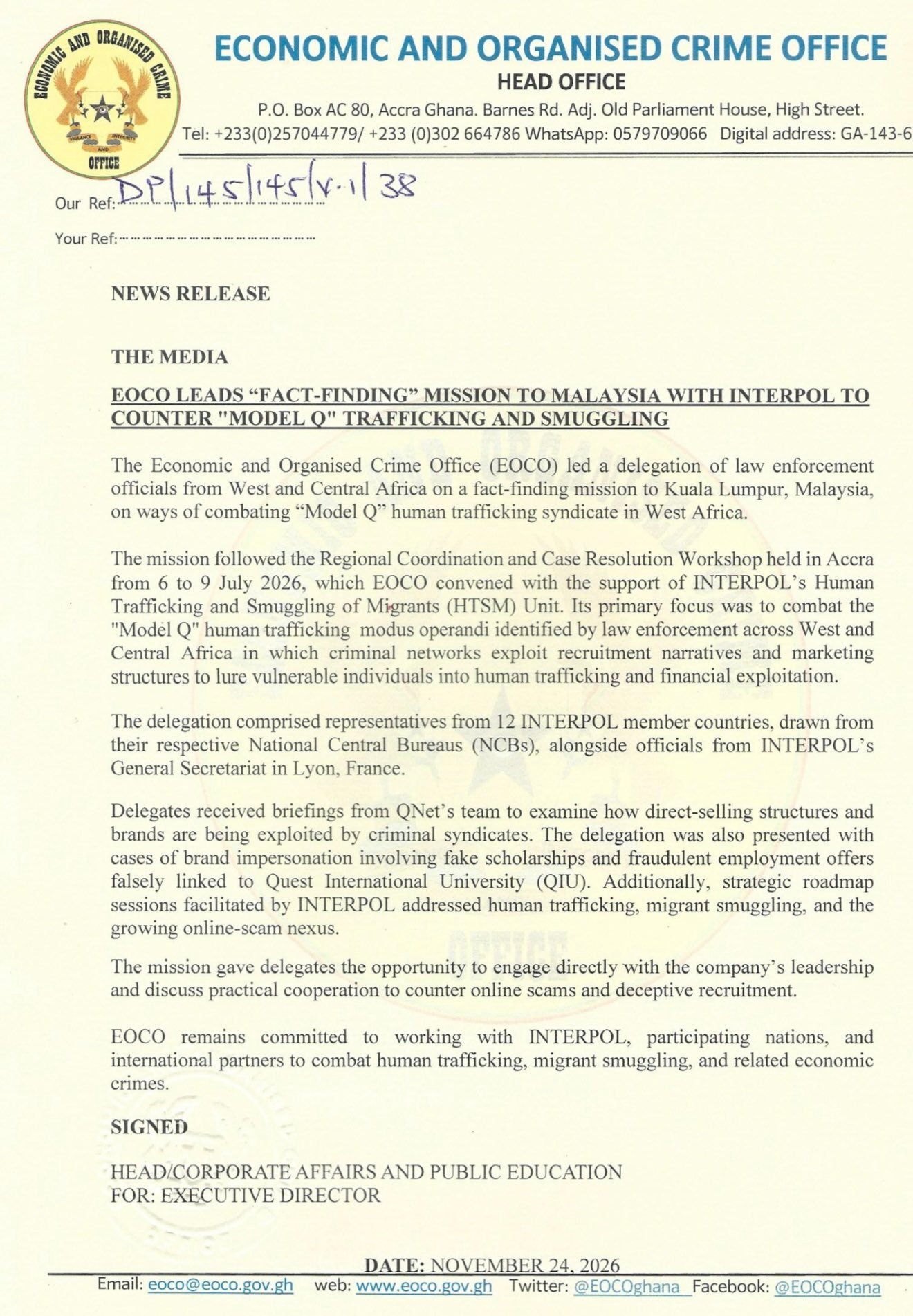
Officials further engaged with company leadership to explore practical areas of cooperation in addressing online fraud, deceptive recruitment practices and the misuse of business structures by criminal networks.
EOCO said the mission forms part of broader international efforts to strengthen intelligence-sharing, improve cross-border investigations and dismantle organised criminal networks operating across multiple jurisdictions.
The Office reaffirmed its commitment to working with INTERPOL, participating countries and other international partners to protect vulnerable people and combat human trafficking, migrant smuggling and related economic crimes.
The findings and engagements from the Malaysia mission are expected to contribute to a stronger regional response to the “Model Q” trafficking modus operandi, as law enforcement agencies intensify efforts to identify perpetrators and prevent more people from falling victim to deceptive recruitment schemes.
General News
Don’t Ban the Child, Fine the Parent – Seth Dankwah Challenges GES Two-Year Examination Ban


In an article dated Wednesday, November 25, 2026, titled “Don’t Ban the Child! Fine the Parent,” the writer argued that sanctions should target parents, headteachers, school proprietors and other individuals responsible for the premature registration of candidates rather than children who have little or no control over such decisions.
His concerns follow an announcement by the Minister for Education, Haruna Iddrisu, on November 23, 2026, during the launch of the 2026 National Education Week at the Ghana Tertiary Education Commission (GTEC).
According to the writer, the GES subsequently issued a directive with reference number GES/HQ/DG/746/2026, signed by its Director-General, Prof. Ernest Kofi Davis, instructing all Regional Directors of Education to strictly enforce the policy.
Under the directive, candidates who sit for BECE or WASSCE ahead of their officially scheduled examination period will be barred from taking the relevant examination for two years.
Dankwah acknowledged that premature examination registration has become a worrying practice within Ghana’s educational system, particularly among schools that register JHS 2 pupils for BECE and SHS 2 students for WASSCE.
Citing figures attributed to the West African Examinations Council (WAEC), he indicated that approximately 5,000 candidates are prematurely registered for BECE annually.
He explained that the practice undermines examination integrity, distorts enrolment and placement data, increases examination expenditure and creates unfair competition among educational institutions.
However, he maintained that although the GES is justified in addressing the irregularity, its approach to punishment is misplaced.
“Where the policy fails is not in its intention. It fails in its target, in its proportionality, and in its failure to make room for the exceptional child,” he stated.
The writer questioned why children should bear the consequences of decisions largely made by adults.
He explained that pupils aged 13 or 14 do not independently complete WAEC registration forms, prepare Continuous Assessment records, pay registration fees or determine when they should sit for external examinations.
According to him, such decisions are often influenced by parents seeking early academic progression for their children, headteachers seeking recognition and school proprietors attempting to attract enrolment through impressive academic achievements.
He added that some parents may also seek early examination registration to reduce the financial burden of keeping their children in school for an additional year.
“The child is only told: ‘You are writing this year.’ In many cases, the child is not even told that what is happening is irregular and against the law,” he noted.
Dankwah argued that punishing children under such circumstances amounts to holding them responsible for decisions they had no authority to make.
The writer further expressed concern about the potential social, psychological and educational consequences of the sanction.
He explained that affected students could experience emotional distress, loss of confidence, academic setbacks and difficulty reintegrating into the educational system.
He warned that children from economically disadvantaged households could be particularly vulnerable, as some parents may struggle to support them throughout the period of the ban.
According to him, prolonged interruption of education could expose some children to teenage pregnancy, early marriage, child labour, illegal mining, street life and permanent school dropout.
“No examination irregularity by an adult should cost a child two years of his education,” he stressed.
Drawing on a legal illustration by education advocate Kofi Asare, Dankwah argued that Ghana already has legal provisions under which adults involved in fraudulent examination registration could be sanctioned.
He cited a hypothetical situation in which a parent approaches a headteacher to register an academically gifted JHS 2 pupil for BECE, resulting in the fabrication of mandatory JHS 3 Continuous Assessment records.
According to the legal illustration referenced in his article, a headteacher involved in such conduct could face potential prosecution under Sections 249 and 250 of the Criminal Offences Act, 1960 (Act 29), as amended by Act 1034, relating to false certification and falsification of official documents.
He stated that the offences could attract prison sentences of between five and ten years upon conviction.
He also referenced Section 4(g) of the WAEC Act, 2006 (Act 719), which he said provides sanctions for falsification of examination records, including imprisonment of up to two years, a fine or both.
Additionally, Dankwah cited Sections 3.36(iii) and 3.36(iv) of the 2017 GES Code of Conduct for Staff, arguing that headteachers involved in dishonest conduct could face disciplinary action, including dismissal.
Parents who knowingly encourage or facilitate the fabrication of examination records, he added, could potentially face prosecution for abetment under Section 20 of Act 29.
Regarding students, he referenced Rule 10(3) of WAEC’s 2023 regulations on examination irregularities, which he said provides for the cancellation of examination results where candidates are found culpable following investigations.
He questioned why an administrative directive should impose an additional two-year ban on children when existing provisions already allow for the cancellation of irregular examination results and sanctions against responsible adults.
As an alternative to the two-year ban, Dankwah proposed financial, administrative and disciplinary measures against individuals and institutions responsible for premature examination registration.
He recommended that parents who knowingly pressure schools into registering ineligible candidates should be made to pay the full cost of the examination alongside an administrative penalty, subject to the necessary legal framework.
He stressed that penalties should distinguish between parents who deliberately facilitate irregularities and those who are misled by educational institutions.
He further proposed the following measures:
-
Suspension or withdrawal of the examination registration status of offending schools.
-
Disciplinary action against headteachers, including queries, demotion, interdiction or dismissal where appropriate.
-
Financial penalties against school proprietors and institutions involved in premature registration.
-
Cancellation of irregular examination results without preventing affected students from writing at the appropriate time.
-
Publication of the names of offending schools following investigations.
-
Recovery of public funds spent on registering ineligible candidates from responsible adults and institutions.
According to Dankwah, these measures would discourage examination irregularities while protecting children’s academic progression.
The writer also cited the academic journey of renowned Ghanaian lawyer Tsatsu Tsikata to demonstrate the importance of creating opportunities for exceptionally gifted students.
He recalled how Tsikata began schooling at an early age and was promoted from Year Two to Year Three at Accra Newtown Experimental School after his teachers recognised his exceptional academic abilities.
According to Dankwah, Tsikata subsequently secured a United Africa Company (UAC) scholarship in 1960 and entered Mfantsipim School at the age of nine.
He later gained admission to the University of Ghana at 16, obtained a First-Class Bachelor of Laws degree at 18 and continued his academic journey at Oxford University.
Dankwah argued that Tsikata’s achievements illustrate the importance of allowing educational systems to accommodate gifted learners through legitimate academic acceleration.
“He was not a cheat. He was not a product of a school trying to game the system. He was an exceptional child whose teachers recognised his ability and allowed the system to bend for him,” he stated.
He expressed concern that a blanket examination ban without clearly defined exceptions could prevent Ghana from identifying and nurturing exceptionally talented children.
Dankwah proposed the establishment of a formal Exceptional and Accelerated Learner Window to provide qualified students with a legitimate opportunity to advance academically without compromising examination integrity.
Under his proposed framework, schools would be required to submit applications before examination registration, with applications for BECE candidates beginning during the second term of JHS 2. A similar arrangement would apply to SHS 2 students seeking early WASSCE registration.
He suggested that applicants should demonstrate consistently outstanding academic performance, potentially achieving at least 85 per cent across core subjects in their internal examinations.
Candidates would also require recommendations from their headteachers, class teachers and District Guidance and Counselling Officers.
Furthermore, applicants would undergo an independent aptitude assessment administered by GES and WAEC to determine their academic ability and emotional readiness for accelerated progression.
Dankwah proposed the establishment of a District Accelerated Learner Committee comprising the District Director of Education, a headteacher representative, a WAEC officer and a psychologist or guidance officer.
The committee would assess applications and communicate its decisions in writing within 30 days.
To prevent abuse, he recommended limiting accelerated candidates to two per cent of a school’s JHS 2 population or a maximum of five pupils annually.
He maintained that parents’ perceptions of their children’s intelligence should not replace independent academic assessments or justify the fabrication of examination records.
The writer further appealed to the Ministry of Education and GES to establish a transparent and accessible appeals mechanism for students with exceptional circumstances.
He explained that some learners may have irregular academic records due to incorrect birth documentation, previous class promotions, administrative errors or other legitimate circumstances.
According to him, parents and school authorities should be permitted to present supporting evidence to district, regional or national education authorities and receive written decisions before examination registration.
He also called for extensive sensitisation of parents, headteachers and school proprietors before the next examination registration exercise, arguing that adequate public education would help prevent further violations.
Dankwah maintained that affected students should be allowed to return to their appropriate classes, complete the required academic programme and sit for their examinations when eligible.
“The policy is right in principle, but it is wrong in its punishment. And it is incomplete without a provision for the exceptional student. The time to correct it is now, before the first child is banned,” he stated.
“Don’t ban the child. Fine the parent. Punish the decision-maker.”

General News
GES Orders Strict Enforcement of Two-Year Ban on Candidates Who Sit for BECE and WASSCE Prematurely
The instruction follows a directive issued by the Minister for Education, Haruna Iddrisu, at the launch of the 2026 National Education Week at the Ghana Tertiary Education Commission (GTEC) on Monday, November 23, 2026.
In a letter dated November 23, 2026, with reference number GES/HQ/DG/746/2026, the management of GES outlined the sanctions applicable to candidates who disregard the approved examination schedule.
The letter, signed by the Director-General of GES, Prof. Ernest Kofi Davis, emphasised that candidates who participate in either examination prematurely would be barred from taking the respective examination for two years.
“In accordance with the directive, any candidate who sits for either the BECE or WASSCE ahead of the approved examination schedule shall be banned from taking the relevant examination for a period of two (2) years,” the statement indicated.
The directive means that students are required to adhere to their officially scheduled examination periods rather than register for and participate in the examinations ahead of time.
As part of measures to implement the directive nationwide, Regional Directors of Education have been tasked with ensuring strict compliance and communicating the instruction to all Metropolitan, Municipal and District Directors of Education.
Heads of schools and other relevant stakeholders within the various educational jurisdictions are also expected to be informed of the directive to ensure its effective implementation.
Management of the Ghana Education Service further appealed to regional education authorities for their cooperation in enforcing the Minister’s instruction.
The official correspondence was copied to the Minister for Education, the Deputy Minister for Education, the Chief Director of the Ministry of Education, the Chairman of the GES Council and the Head of the National Office of the West African Examinations Council (WAEC).
The Deputy Directors-General in charge of Quality and Access and Management Services, together with the Directors of the Schools and Instructions Divisions responsible for secondary and pre-secondary education, were also copied.
Although the directive explicitly outlines the punishment for offending candidates, it does not indicate whether parents, guardians, school administrators or other individuals who facilitate premature examination registration will face separate sanctions.
The letter also does not provide details on an appeal process or possible exemptions for affected candidates.


‘Some NDC Executives Want to Take Over Mahama’s Government’ – Suhuyini

Ghana Must Replace High-Stakes Basic Education Exams With Centralised Online Cumulative Assessment System

‘Ablakwa’s House, Brother-in-Law in Charge’: NPP MP Alleges How South Africa Evacuees’ Money Was Shared

‘Cash Is Ready’ – Government Pays GH¢12.9bn to DDEP Bondholders in Early Redemption

Fort Kongenstein: The Forgotten Danish Fortress at Ada Foah That Was Swallowed by the Sea

NADFFA 2027: Ghana to Host Pan-African Film and Food Festival in March

Ghana Faces Very Strong El Niño Threat as GMet Warns of Extreme Heat, Drought and Possible Flooding

Avoid excessive taxation that prevents entrepreneurs from creating wealth – Kufuor to Ghana’s leaders

NADFFA 2027 launched in Accra to celebrate African cinema, cuisine and culture

From Sleeping on the Streets to Building a Media Empire: The Kojo Preko Dankwa Story

Illinois’ financial crisis could bring the state to a halt
The final 6 ‘Game of Thrones’ episodes might feel like a full season
New Season 8 Walking Dead trailer flashes forward in time
Mod turns ‘Counter-Strike’ into a ‘Tekken’ clone with fighting chickens
Meet Superman’s grandfather in new trailer for Krypton

-

 Entertainment22 hours ago
Tomi Thomas Says Ghanaians Have Made Him Feel Like One of Their Own
-

 General News19 hours ago
KMA Orders Immediate Vacation of Kejetia Phase II Lanes as Construction Resumes
-

 General News19 hours ago
EOCO, INTERPOL Move to Bust ‘Model Q’ Human Trafficking Network as West African Delegation Visits Malaysia
-

 Entertainment22 hours ago
Lasmid: Building an Orphanage Would Make Me Feel I Have Made It in Life
-
 Culture15 hours ago
Fort Kongenstein: The Forgotten Danish Fortress at Ada Foah That Was Swallowed by the Sea
-
 Politics1 hour ago
‘Ablakwa’s House, Brother-in-Law in Charge’: NPP MP Alleges How South Africa Evacuees’ Money Was Shared
-
 Education1 hour ago
Ghana Must Replace High-Stakes Basic Education Exams With Centralised Online Cumulative Assessment System
-
 Politics27 minutes ago
‘Some NDC Executives Want to Take Over Mahama’s Government’ – Suhuyini