
Entertainment
Bisa Kdei Says He Sometimes Gets Surprised by His Own Songwriting Skills


The musician made the revelation during an interview, where he admitted that the creativity and depth of his lyrics occasionally leave him wondering how he managed to put such words together.
According to Bisa Kdei, there are moments when he listens to his own music and becomes impressed by the quality of his songwriting, even questioning whether he was truly responsible for creating the lyrics.
He cited his hit song Samina as an example, explaining that he sometimes struggles to fully understand the song’s meaning because of how he originally composed it.
“Yes, I do it a lot sometimes. Recently, I even said I am the best songwriter because sometimes I listen to myself and I am like, ‘Oh wow, so I really wrote this?’ A song like Samina, even I can’t really decode the song properly because I really wrote that song,” he said.
His comments followed an observation by the interviewer that many of his Twi songs contain deep metaphors and storytelling elements, often requiring listeners to pay closer attention to understand their intended meanings.
Responding to this, Bisa Kdei described himself as a storyteller but made an interesting revelation about his linguistic background, disclosing that he does not even speak Twi fluently despite being known for producing songs in the language.
The musician explained that he was born and raised in Labadi among the Ga people, something he believes many people are unaware of. He added that he speaks Ga very well and also learnt how to speak Larteh while growing up.
He further revealed that his mother frequently communicated with them in Ga, while his father insisted that they speak Larteh.
“I am a storyteller, but one thing too is that I don’t even speak Twi properly. I was born amongst the Ga; that is what people don’t know. I was born in Labadi, so I speak Ga very well, and I’m from Larteh because I was in the midst of the Ga people. I learned how to speak Ga properly. My mum used to speak Ga with us a lot. It was my dad who used to force us to speak Larteh,” he said.













From beautifully decorated cakes and glowing candles to surprise parties, gifts, music and heartfelt messages, birthdays have become some of the most recognised celebrations around the world. Every year, millions of people look forward to the day they were born, using the occasion to celebrate life, appreciate loved ones and reflect on how far they have come.
For children, birthdays often mean excitement, presents, games and the opportunity to spend time with friends. For adults, the occasion may represent another year of experiences, personal achievements, lessons and new opportunities. Some people celebrate with elaborate parties, while others prefer a quiet dinner, a visit to church or a simple gathering with family.
Today, celebrating birthdays appears to be a natural part of life. However, the tradition has a long and interesting history that stretches back thousands of years. The birthday celebrations people enjoy today did not emerge all at once. They developed through different civilisations, religious beliefs, cultural practices and social changes.
Interestingly, the earliest birthday celebrations were not necessarily about celebrating an ordinary person’s date of birth. In some ancient societies, they were connected to kings, rulers, religious figures and important events.
Where did birthday celebrations originate?
The history of birthday celebrations is more complicated than many people realise. Although ancient Egypt is frequently mentioned when discussing the origins of birthdays, historical evidence points to even earlier practices in ancient Mesopotamia.
According to research discussed by Live Science in February 2025, some of the earliest known documentary evidence of birthday celebrations comes from ancient Sumer, in the Mesopotamian region.
Cuneiform records from the third millennium BC, during the reign of King Lugalanda, mention celebrations connected to the births of members of the royal household. These occasions involved animal sacrifices and offerings shared with ancestors.
This suggests that marking the birth of important individuals was already practised thousands of years before modern birthday parties became popular.
Ancient Egypt also played a significant role in the history of birthday celebrations. However, the celebrations associated with Egyptian pharaohs were often connected to their coronation rather than their actual date of birth.
The coronation was considered a symbolic transformation through which the ruler became divine. It was therefore treated as a significant occasion worthy of celebrations, feasting and public recognition.
The Bible also contains an early written reference to a birthday celebration. Genesis 40:20 describes Pharaoh holding a feast on his birthday and bringing his officials together. This account is one of the oldest well-known written references to a ruler’s birthday celebration.
These historical accounts demonstrate that birthdays were initially associated largely with powerful and influential people rather than the general population.
How the Greeks and Romans influenced birthday traditions
Ancient Greece and Rome also contributed to the development of birthday celebrations.
In ancient Greece, birthdays were closely connected to religious beliefs and the worship of gods and goddesses. People made offerings and held ceremonies to honour their deities.
One popular historical explanation connects round cakes with the worship of Artemis, the Greek goddess associated with the moon and hunting. Cakes were reportedly offered to the goddess, with their round shape representing the moon.
Some accounts suggest that candles were used to create a glowing effect, although historians caution that there is no direct evidence proving that the Greeks placed birthday candles on cakes in the same way people do today.
The Romans later developed birthday celebrations into more recognisable social occasions. Birthdays of prominent individuals, including emperors and wealthy citizens, were marked with gatherings, food and entertainment.
Personal birthdays became more established among Roman men, while special celebrations were also organised for public figures and members of influential families.
Over time, these practices helped establish the idea that an individual’s birth anniversary could be recognised through a special gathering.
Why birthday celebrations were once discouraged
Although birthday celebrations existed in ancient societies, they were not universally accepted throughout history.
Some early Christians viewed birthday celebrations negatively because of their association with pagan religious practices and the glorification of individuals.
In certain Christian communities, greater importance was placed on the commemoration of saints and religious occasions than on personal birthdays.
The attitude towards birthdays gradually changed, particularly in Protestant parts of Europe, where personal milestones increasingly became recognised as occasions worth celebrating.
According to research by Friedrich-Alexander University Erlangen-Nürnberg, personal birthday celebrations developed differently across religious communities. In some Catholic communities, name days, which commemorate the saint after whom a person is named, traditionally held greater importance.
As society changed, birthday celebrations became increasingly accepted and eventually developed into the familiar family and social occasions people recognise today.
The origin of birthday cakes and candles
One of the most recognisable features of modern birthday celebrations is the birthday cake. Whether it is a simple homemade cake or an expensive customised creation, cutting a cake has become an important part of birthday parties in many countries.
The tradition of birthday cakes is strongly associated with Germany, particularly the children’s celebration known as Kinderfest.
During the 18th century, German families organised special birthday celebrations for children. These occasions included cakes decorated with candles, with the number of candles representing the child’s age. An additional candle, sometimes called the ‘light of life’, represented the hope of another year.
The tradition was different from what happens today. According to historical accounts, the candles could be left burning throughout the day until the evening meal. Their smoke was believed to carry the child’s wishes towards heaven.
The practice eventually spread beyond Germany, particularly through migration and cultural exchange. By the 19th and 20th centuries, birthday cakes and candles had become increasingly popular in Europe and North America.
The development of baking technology and the wider availability of sugar also made decorated cakes more accessible to ordinary families. What was once an expensive treat gradually became a familiar feature of birthday celebrations.
Why do people blow out candles and make wishes?
Have you ever wondered why someone celebrating a birthday is expected to close their eyes, make a wish and blow out the candles before cutting the cake?
The tradition has several historical explanations, although its exact origin remains uncertain.
One explanation connects the practice to ancient religious beliefs surrounding fire, candles and prayers. In some traditions, smoke was believed to carry prayers or wishes towards the heavens.
In medieval European folklore, candles were also associated with protection against evil spirits, particularly during important personal occasions.
The modern practice of making a silent wish and attempting to extinguish all the candles in one breath became associated with German birthday customs and later spread to other countries.
Today, many people participate in the ritual simply because it is an enjoyable part of the celebration. Children often become excited about making their wishes, while adults continue the tradition even when they no longer believe that blowing out the candles will make a wish come true.
Interestingly, the candle tradition was documented in Switzerland in 1881, when a birthday cake with candles representing the celebrant’s years was described in a publication of the period.
Who created the ‘Happy Birthday’ song?
Another important part of birthday celebrations is the familiar song Happy Birthday to You, which is sung in homes, schools, restaurants and at parties across the world.
The melody originated from a song called Good Morning to All, written by two American sisters, Patty Hill and Mildred J. Hill, in 1893.
Patty was a kindergarten teacher, while Mildred was a pianist and composer. They developed the original song as a simple greeting that teachers could sing to their pupils.
Over time, the melody became associated with birthday celebrations, and the familiar words ‘Happy Birthday to You’ gradually replaced the original lyrics.
The song became increasingly popular during the early 20th century and eventually turned into one of the most recognised birthday songs internationally.
Its popularity is remarkable because people in countries with different languages and musical traditions have adopted the melody, sometimes translating the lyrics into their own languages.
How birthday celebrations became popular around the world
Birthday celebrations have developed differently across cultures. Although the idea of recognising another year of life is widely understood, the customs surrounding the occasion are not the same everywhere.
In Germany, the Kinderfest helped establish the modern children’s birthday party, complete with cakes and candles.
In China, longevity is an important theme in birthday celebrations, particularly for older people. Long-life noodles are traditionally served as a symbol of longevity, with their length representing the hope for a long and healthy life.
In South Korea, a traditional seaweed soup known as miyeok-guk is commonly associated with birthdays. The soup is connected to the nourishment mothers receive after childbirth and serves as a reminder of the sacrifices made during pregnancy and childbirth.
In Mexico and several other Latin American communities, a girl’s 15th birthday may be marked with a quinceañera. This is an elaborate cultural celebration that recognises her transition from childhood into young womanhood.
In some Jewish communities, the bar mitzvah and bat mitzvah ceremonies mark important stages of religious maturity for boys and girls, respectively. Although they are not ordinary birthday parties, they demonstrate how age and important life milestones can carry cultural and religious significance.
These traditions show that birthdays are not simply about growing older. They can represent gratitude, family connections, religious beliefs, maturity and the celebration of life.
How birthdays became popular in Ghana
In Ghana, birthdays have become an important part of family, social and religious life. Celebrations range from simple gatherings at home to elaborate parties organised at hotels, restaurants, event centres and other venues.
For many Ghanaians, the occasion is closely connected to gratitude to God for the gift of life. It is common for people to begin their birthdays with prayers, attend church services or organise thanksgiving gatherings before proceeding with other celebrations.
Some families mark the birthdays of children with cake-cutting ceremonies, food, drinks, music, decorations and presents. Others organise surprise parties for parents, spouses, siblings and friends.
Milestone birthdays, particularly the 30th, 40th, 50th and 60th, are often treated as significant occasions. Families may organise larger celebrations to recognise the person’s journey, achievements and experiences.
Social media has also transformed how birthdays are celebrated in Ghana. Platforms such as Facebook, Instagram, TikTok and WhatsApp have become popular spaces for sharing birthday photographs, videos, messages and tributes.
It is now common to see people changing their profile pictures, uploading childhood photographs of loved ones, sharing appreciation messages and organising online birthday surprises.
Some people also use their birthdays to support charitable causes by donating to orphanages, visiting hospitals, providing food to vulnerable communities or helping people in need.
However, not every Ghanaian enjoys elaborate birthday celebrations. Some prefer spending the day quietly with family, visiting meaningful places, reflecting on their lives or simply thanking God for another year.
Birthday gifts, cards and the business of celebrating
Birthday celebrations have also developed into a major commercial activity.
The tradition of giving presents has become closely associated with birthdays, with gifts often serving as expressions of love, appreciation and friendship.
Popular gifts include clothing, shoes, jewellery, perfumes, books, electronic devices, flowers and personalised items. Some people also organise trips, special dinners or surprise experiences for their loved ones.
Birthday cards became increasingly popular during the 19th century as printing and postal services developed. They provided an opportunity for people to send personal messages and good wishes, even when they could not attend celebrations physically.
Today, digital birthday cards, online messages, customised gifts and professional photography have added new dimensions to the celebration industry.
The demand for birthday cakes, decorations, event planning, catering, photography and entertainment has also created business opportunities for individuals and companies.
In Ghana, many small businesses now specialise in customised cakes, gift packages, surprise arrangements and birthday decorations, particularly through social media.
Why birthdays mean different things to different people
Although birthdays are generally associated with happiness, not everyone experiences the occasion in the same way.
For some people, birthdays are among the happiest days of the year because they get to reunite with friends and family, receive presents and feel appreciated.
For others, the occasion can bring mixed emotions. Growing older may remind individuals of personal goals they have not achieved, opportunities they missed or loved ones who are no longer around.
Some people also experience what is commonly called birthday anxiety, where the approach of a new age creates pressure to measure personal progress against expectations or the achievements of others.
There are also people who prefer not to announce their birthdays publicly or celebrate them with large gatherings. Their decision does not necessarily mean they dislike the occasion; they may simply value privacy and personal reflection.
Ultimately, the meaning of a birthday is different for everyone. Some celebrate with hundreds of guests, while others find happiness in receiving a simple phone call from someone they love.
Birthdays: More than just another year
From ancient Mesopotamian royal celebrations to modern-day parties filled with cakes, candles, photographs and music, birthdays have undergone a remarkable transformation.
What was once largely an occasion associated with rulers and influential individuals has become a widely recognised way of celebrating people from different backgrounds and social classes.
Today, birthdays offer an opportunity to appreciate life, strengthen relationships, remember important experiences and look forward to the future.
Beyond the decorations, gifts and expensive celebrations, the occasion carries a simple but meaningful message: another year has passed, another chapter has begun, and there is an opportunity to appreciate the journey so far.
Perhaps that is why, despite the differences in how people celebrate, the tradition of marking the day we were born continues to hold such importance across generations and cultures.
The modern meaning of birthdays
Birthdays have gradually become more than occasions for parties and entertainment. For many people, they provide an opportunity to assess their lives, appreciate personal growth and set new goals.
A birthday can remind someone of how much they have overcome, the relationships they have built and the opportunities they have received. It can also be a moment to reconnect with people who have played important roles in their lives.
For parents, celebrating a child’s birthday can bring back memories of pregnancy, childbirth and the early stages of raising a family. For grandparents, it can be an opportunity to appreciate the growth of younger generations.
However, birthdays can also bring emotional challenges. Some people feel pressure when they reach a particular age, especially when they compare their achievements with those of their friends or relatives. Others use the occasion to remember loved ones who have passed away.
Regardless of how it is celebrated, a birthday remains a personal milestone that means different things to different people.
What makes birthdays special?
From ancient royal ceremonies to modern celebrations involving customised cakes, surprise parties and social media tributes, birthdays have travelled through centuries of human history.
The tradition has evolved alongside society, reflecting changes in religion, culture, technology and family life.
While the celebrations may differ from one country to another, the central idea remains the same: recognising another year of someone’s life.
Perhaps the most important part of a birthday is not the number of presents received, the size of the cake or the amount of money spent on a party. It is the opportunity to appreciate life, celebrate relationships and recognise the people who make the journey meaningful.
After all, growing older is something everyone experiences, but having another year to create memories, learn, grow and share moments with loved ones is something worth appreciating.

Ghanaian musician Kuami Eugene has suggested that some people criticise or dislike him because they are intimidated by his success, insisting that the negativity will not stop his growth in the music industry.
The award-winning singer made the remarks in response to a post by an X user who defended his music career, arguing that disliking his songs does not automatically make someone appear cool or earn them the tag of a “guy man”.
The user wrote: “You not liking Kuami Eugene doesn’t automatically make you guy o… Guyman no dey fake music taste.”
The comment appeared to challenge the tendency of some people to present their dislike for the singer as a way of appearing fashionable or impressing others.
Reacting to the post, Kuami Eugene suggested that some of the criticism directed at him was driven by jealousy or intimidation over his achievements.
“Ebe few people whey the success dey intimidate dem dey hate. But we’re getting bigger every day,” he responded.
His comments came after he confronted another X user over what many described as a backhanded compliment.
The user had praised his music while seemingly making a subtle dig at the singer. Kuami Eugene, however, did not appear pleased with the remark and responded: “Go away with your foolishness; it’s too hot.”
His latest response adds to the ongoing conversation about celebrity criticism, personal music preferences and the relationship between public figures and social media users.
While listeners are entitled to their individual musical tastes, the singer appears convinced that negative comments from some critics will not overshadow his progress, maintaining that he and his career are getting bigger every day.
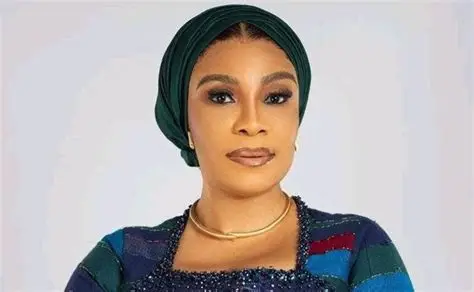
Founder of the REFFA Awards, Selassie Ibrahim, has called on Ghanaians to change their attitude towards locally produced films, arguing that negative perceptions and poor audience patronage are contributing significantly to the challenges facing the country’s movie industry.
Speaking in an interview with Kwame Dadzie on Joy FM’s Showbiz A-Z, the filmmaker said the struggles of Ghana’s film industry cannot be blamed solely on inadequate marketing strategies, insisting that many Ghanaians have developed a negative perception of local productions without taking the time to watch and assess their quality.
According to her, some audiences are quick to dismiss Ghanaian movies simply because they are locally produced, making it difficult for filmmakers to attract the support needed to sustain their work.
“It is not about failing to deploy the right tools to reach the Ghanaian consumer. My observation is that anything made in Ghana is often considered not good enough. People do not even take the time to watch and appreciate whether there has been improvement. They simply conclude that it is not good,” she said.
Selassie Ibrahim compared Ghana’s attitude towards its film industry with the level of support Nigerian audiences give to their local productions, noting that Nigerians demonstrate a stronger commitment to consuming and promoting their own content.
Drawing from her experience living and frequently working in Nigeria, she observed that Nigerian audiences are more willing to support homegrown productions, including films and television content available on DStv.
“I live in Nigeria and work there frequently. You will hardly find them turning away from their own content, even on DStv. They love their own and patronise it. No matter what, they want to support their own. But in Ghana, the opposite is often the case,” the filmmaker noted.
She therefore appealed to Ghanaians to make a conscious effort to support locally produced films by watching them, particularly those showing in cinemas.
She stressed that audience patronage is essential to the survival of the industry, explaining that producers who fail to recover their investments from previous projects often struggle to finance new productions.
“We are only pleading with Ghanaians to start watching our content. Go to the cinemas, watch our movies and encourage us to produce more. If I invest in a film and cannot recover even my initial investment, how do I go back on set to produce another one?” she asked.
According to Selassie, the inability to generate adequate returns from film investments creates a cycle that affects the quality and frequency of local productions.
She explained that when producers cannot recover the money invested in previous projects, they are left with limited resources to finance subsequent films and meet the expectations of audiences.
“You cannot give people the kind of content they want when you have not been able to sell your previous production or even recover your capital. You end up producing with whatever resources you have available, just to keep going,” she stated.
Despite the challenges, Selassie maintained that Ghana has the creative talent, storytelling ability and authentic stories needed to produce films that can compete with productions from other countries.
She rejected suggestions that Ghanaian filmmakers cannot create quality content, arguing instead that inadequate financial resources and irregular production activities affect their ability to maintain consistency and improve their craft.
“It is not that we cannot produce good content. Ghana has authentic stories to tell. We are intentional and detailed in our storytelling. But when you are not producing regularly, you become rusty. It is like acting, scriptwriting or driving; when you stop practising, you lose that sharpness,” she explained.
She noted that sustained film production is important for keeping filmmakers creative, experienced and connected to changing audience expectations.
However, while calling on the public to support Ghanaian movies, Selassie acknowledged that filmmakers also have responsibilities towards rebuilding the industry.
She urged producers and other industry players to improve their business practices, maintain proper financial records and adopt more professional approaches to film production and investment.
According to her, reviving the industry cannot be achieved by filmmakers alone but requires cooperation among producers, investors and the Ghanaian public.
“We also have a role to play. We must learn to put our books together and do things properly. It has to be a collective effort between filmmakers, investors and the Ghanaian public,” she added.
Her comments highlight the need for stronger local audience support, improved investment practices and greater collaboration among stakeholders to help Ghana’s film industry regain its strength and produce more consistently.
Source:myjoyonline
Entertainment
“Being a Famous Actress Couldn’t Feed Me” – Kyeiwaa Reveals Why She Left Ghana for Menial Jobs

Veteran Ghanaian actress Rose Mensah, popularly known as Kyeiwaa, has opened up about the financial difficulties that influenced her decision to leave Ghana for the United States in search of better opportunities.
The actress explained that despite her popularity and years of experience in the Ghanaian movie industry, acting was not providing her with enough money to meet her financial needs and live comfortably.
According to Kyeiwaa, her situation became so challenging that she feared falling into depression if she remained without another source of income.
In a social media post, she disclosed that she was unwilling to remain at home without earning money and was prepared to accept any available job to support herself.
“I realised that if I don’t find something to do or somewhere to be, I will just be miserable. I might even be because of the misery and pain, and nobody will understand what I am going through,” she said.
She added that she has always been willing to work whenever an opportunity presents itself because she does not enjoy being idle or financially stranded.
“Wherever there is work, I always go in for it because I know I don’t like being stranded. I will do whatever it takes to work,” she stated.
Kyeiwaa recalled an experience that made her seriously question her financial situation while she was still actively appearing in movies.
She revealed that she once travelled in a commercial vehicle, popularly known as a trotro, at a time when her movies were still being shown on television.
The actress said some passengers who recognised her were surprised to see her using public transport and struggling to secure a seat like other commuters.
“When everybody saw me, they were asking how an actress could be taking trotro and fighting for space in a public vehicle. They felt that because I was an actress, I wasn’t supposed to be doing that. When I got home, I was very sad,” she recalled.
She explained that the experience made her consider relocating abroad, where she believed she could find better opportunities to earn a living.
Kyeiwaa said she was prepared to undertake even the most difficult jobs if that was what it would take to improve her financial circumstances.
“That was how I thought about travelling outside the country to look for greener pastures. I thought that even if I had to carry salt or do any other work, I would do it because I needed to survive,” she disclosed.
The veteran actress also addressed the negative comments and ridicule she received after videos and reports of her working abroad, including carrying salt and washing chicken coops, became public.
She expressed disappointment that rather than appreciating her determination to earn an honest living, some people chose to mock her because of her status as an actress.
Kyeiwaa indicated that she initially ignored the criticism but later decided to explain the circumstances that pushed her into taking up different jobs abroad.
According to her, people should understand that financial difficulties can affect anyone, regardless of their social standing or profession.
“If I were in Ghana working and making enough money for myself, I wouldn’t have been doing all those things abroad. I am not the only person going through difficulties. People should understand that I was trying to help myself,” she added.
She further appealed to the public to stop looking down on people who accept different kinds of employment to earn a living, stressing that no honest job should be considered shameful.
Kyeiwaa questioned why people would ridicule someone for working hard to survive in a foreign country instead of recognising the effort and determination involved.
The actress maintained that being a popular personality does not automatically guarantee financial security, urging the public to show understanding and support for people experiencing economic difficulties.
She explained that her decision to relocate to the United States and accept various jobs was motivated by her desire to survive, become financially stable and build a better life for herself.

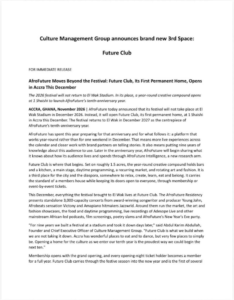
AfroFuture has announced plans to establish a permanent creative and cultural space in Accra, marking a major shift in its operations as it prepares to celebrate its 10th anniversary in 2027.
The cultural platform, formerly known as Afrochella, will open Future Club, a year-round creative compound at 1 Shaishi in Accra, in December 2026.
The announcement means the December 2026 AfroFuture festival will not take place at El Wak Stadium, where the annual event has traditionally been hosted. Instead, the organisation will use the new venue to deliver a series of concerts, cultural activities and entertainment experiences throughout the festive season.
AfroFuture, however, has confirmed that its festival will return to El Wak Stadium in December 2027 as the centrepiece of its 10th-anniversary celebrations.
In a statement issued in November 2026, the organisation explained that the move forms part of its transition from an annual festival into a year-round cultural platform that will create more opportunities for live entertainment, cultural exchange and partnerships.
According to AfroFuture, preparations for its 10th anniversary have involved developing a platform that goes beyond a single weekend of activities in December, allowing it to engage audiences throughout the year and work more closely with brand partners on cultural storytelling.
The organisation also plans to introduce AfroFuture Intelligence, a new research arm expected to share insights into the lifestyles, interests and spending habits of its audience.
Future Club will occupy approximately 1.5 acres and is designed to become a regular gathering place for residents of Accra and members of the African diaspora.
The creative compound will feature bars, a kitchen, a main stage, daytime programming, a recurring market and rotating art and fashion showcases.
It will provide a space where people can relax, create, learn, eat and connect while experiencing different aspects of African culture and creativity.
AfroFuture says the venue will operate to the standards of a members’ house while maintaining an open-door approach. Visitors will be able to access the space through membership or by purchasing tickets for specific events.
The organisation believes the new facility will provide a permanent home for the culture and creative experiences it has spent nine years building through its annual festival.
This December, Future Club will host several experiences that have previously formed part of the AfroFuture festival programme.
A major attraction will be the AfroFuture Residency, which will present standalone concerts with a capacity of 3,000 people.
The concerts will feature award-winning songwriter and music producer Young John, Afrobeats sensation Victony and Amapiano hitmakers Jazzwrld.
Beyond the musical performances, the programme will include recurring markets, art and fashion showcases, food experiences and daytime activities.
Future Club will also host live recordings of Adesope Live and other mainstream African-led podcasts, alongside film screenings, poetry slams and AfroFuture’s New Year’s Eve party.
The activities are expected to bring together music lovers, creatives, cultural enthusiasts and members of the African diaspora for a series of experiences during the festive season.
Founder and Chief Executive Officer of Culture Management Group, Abdul Karim Abdullah, described the launch of Future Club as an important development in the organisation’s journey.
He explained that after spending nine years building a festival that operated for a limited period before being dismantled, the organisation wanted to create something that could remain active throughout the year.
“For nine years we built a festival at a stadium and took it down days later,” he said.
“Future Club is what we build when we are not taking it down. Accra has wonderful places to eat and to dance, but very few places to simply be. Opening a home for the culture as we enter our tenth year is the proudest way we could begin the next ten.”
His comments reflect the organisation’s ambition to establish a permanent destination where African creativity and cultural experiences can thrive beyond the annual December festival.
Membership for Future Club will officially open alongside its grand opening in December.
As part of the launch arrangements, everyone who purchases an opening-night ticket will automatically receive a full year of membership to the facility.
The venue is expected to continue operating throughout the festive season and into the new year, providing a foundation for AfroFuture’s broader year-round activities.
The launch also represents the first of several developments the organisation plans to introduce as it approaches its 10th anniversary.
About AfroFuture
AfroFuture is a Pan-African cultural platform dedicated to celebrating African and diaspora creativity through music, entertainment, fashion, art and cultural experiences.
The organisation was established in Accra in 2017 under the name Afrochella before expanding into a broader cultural platform.
Over the years, it has organised events and editions in Accra, Detroit, Johannesburg and Zanzibar, as well as activations across the United States.
It has also welcomed audiences from dozens of countries and developed partnerships with international platforms and institutions.
With the introduction of Future Club, AfroFuture is positioning itself for a new phase of growth, moving beyond its traditional annual festival model to establish a permanent space for cultural engagement, entertainment and creative collaboration.
The festival is expected to return to El Wak Stadium in December 2027, coinciding with the organisation’s 10th-anniversary celebrations.

The History of Birthdays: How an Ancient Tradition Became a Worldwide Celebration

Bisa Kdei Says He Sometimes Gets Surprised by His Own Songwriting Skills

Before Smartphones Took Over, Ghanaian Families Gathered Around the Radio – A Tradition Worth Remembering

IRAWMA 2025: Shatta Wale Wins 3 Major Awards Including Best Music Video

AirtelTigo losing GH₵20m monthly; total debts exceed $200million – Sam George

Samini Secures Promotional Deal with Audiomack for Upcoming Album “THE ORIGIN8A”


-

 General News9 hours ago
Beyond the Fame: What Makes a Journalist of the Year?
-
 Culture8 hours ago
Ghana’s Rich Cultural Heritage: A Beautiful Blend of Tradition, Identity and Modern Life
-

 General News10 hours ago
Meet 5 Ghanaian Media Personalities Who Have Declared Parliamentary Ambitions Ahead of 2028 Elections
-

 General News9 hours ago
Importers and Exporters Association of Ghana Partners ICSG to Strengthen Cargo Insurance Claims Support
-
 Politics10 hours ago
NDC, NPP Do Not Want Independent Journalism to Thrive – Ashigbey
-

 Politics8 hours ago
Passport Scandal: NPP Lawyer K.K. Serbeh Accuses NDC Of Double Standard, Demands Truth Over Diplomatic Passports
-

 General News10 hours ago
GH¢10m Media Fund: ‘We Need Clear Rules to Prevent Political Interference’ – MFWA
-
 Lifestyle8 hours ago
Why Do We Take So Long to Leave the House? The Ghanaian Habit of Saying “I’m Coming” When We’re Not Ready