
Entertainment
Great Osama Exposes Who Really Took Davido’s $600,000 Performance Fee

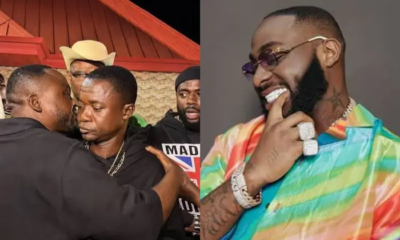
The controversy emerged after Davido reportedly performed for less than 20 minutes at the event, despite allegedly receiving about $600,000 from Great Osama and his team.
Following the performance, some individuals took to social media to accuse Ghanaian socialites Ascona and Showboy, who reportedly served as middlemen in the arrangement, of taking portions of the money without informing the Nigerian musician about the agreed duration of his performance.
However, Great Osama has dismissed the allegations, explaining that the payment did not pass through either Showboy or Ascona.
In a video shared online, the businessman explained how the arrangements for Davido’s appearance were made and clarified the roles played by the individuals involved.
According to him, Ascona was the person who introduced him to Showboy, after which he held a one-on-one conversation with Ascona regarding the arrangement.
“It was through Ascona that I got to know Showboy… I used to speak with Ascona one-on-one. And I can say for a fact that he didn’t even count some of the money when I was sending it,” he said.
Great Osama further stated that Ascona did not receive any portion of the money, insisting that the only assistance provided by him was helping to arrange a flight for Showboy to meet with him.
“I would be a liar if I said Ascona counted even GH¢1. The only thing we did for him was to book his flight for him to speak with Showboy,” he added.
While recounting how the transaction was handled, Great Osama identified Tokyo, a member of Davido’s team, as the person who supervised the financial arrangement.
He explained that Tokyo was the individual who received the money from his team, stressing that neither Showboy nor Ascona handled any part of the payment.
“The only person who took the money was Tokyo. It is a lie that Showboy and Ascona took the money,” he stated.
His clarification comes amid growing public discussions surrounding Davido’s reportedly short performance at Manso and questions about the handling of the money paid for the appearance.















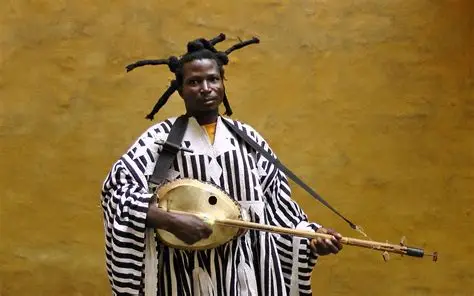
Ghanaian traditional musician King Ayisoba has earned international recognition after securing a nomination at the 2027 Grammy Awards with his song featuring legendary Ghanaian musician Rocky Dawuni.
The song, titled No Tradition, No Africa, was announced among the nominees in the Best African Music Performance category following a post shared by the official Grammy account on X on November 16, 2026.
The nomination marks another significant moment for Ghanaian music, particularly traditional music, as the two musicians receive recognition on one of the world’s biggest music platforms.
King Ayisoba and Rocky Dawuni are among the artistes competing in the category, which also features other notable African music acts. The nominees include Angélique Kidjo featuring Ayra Starr with Ave Kan, Tems with Big Daddy, and Asake featuring Wizkid with Jogodo.
The announcement has generated excitement among some Ghanaians, with several taking to social media to celebrate the nominations of King Ayisoba and Rocky Dawuni.
Many have described the recognition as another proud moment for Ghanaian music, highlighting the country’s contribution to the global music industry.
According to the announcement, the 2027 Grammy Awards are scheduled to take place on February 7, 2027. The ceremony will be streamed live on ABC, Disney+ and Hulu.
King Ayisoba, born Albert Apoozore, is a Ghanaian traditional musician widely recognised for his distinctive musical style and mastery of the kologo, a traditional two-stringed instrument.
He has been active in the music industry for almost two decades, having started producing traditional music in 2005.
Over the years, he has released approximately six studio albums, including Modern Ghanaians (2006), Africa (2008), Don’t Do The Bad Thing (2012), Wicked Leaders (2014), 1000 Can Die (2017) and Work Hard (2023).
His music is known for its strong traditional influences, cultural messages and distinctive sound, helping him maintain a presence in Ghana’s music industry while introducing traditional Ghanaian sounds to international audiences.
The latest Grammy nomination adds another important milestone to his music career.
Ghanaian businessman Great Osama has attracted considerable public attention following his decision to bring Nigerian Afrobeats superstar Davido to Manso Akwasiso in the Ashanti Region for an entertainment event marking the third anniversary of his hotel.
The businessman, popularly known as Great Osama or Chairman Osama, became a major talking point after videos emerged showing him expressing disappointment over Davido’s reportedly short performance at the event on Sunday, November 15, 2026.
While much of the attention has focused on the disagreement surrounding the singer’s appearance, questions have also emerged about the businessman himself, his background and the businesses that have made him a recognised personality in the Manso area.
Great Osama is identified as Kwaku Abonee, a Ghanaian businessman with interests in the hospitality and small-scale mining sectors.
He is the owner and Chief Executive Officer of New York City (NYC) Hotel, located at Manso Akwasiso in the Amansie South District of the Ashanti Region.
The hotel has become associated with entertainment activities in the area, providing a venue for events involving popular Ghanaian musicians and other personalities.
His decision to celebrate the hotel’s third anniversary with an appearance by Davido further brought his business and entertainment activities into the national spotlight.
Great Osama also serves as Chairman of the Amansie South Small-Scale Miners Association, connecting him to one of the major economic activities in the Manso area.
Although Manso Akwasiso is not traditionally regarded as one of Ghana’s major entertainment centres, Great Osama has demonstrated an interest in bringing popular musicians to the community.
His NYC Hotel has reportedly hosted performances involving well-known Ghanaian artistes, including Shatta Wale and Sarkodie.
These activities have helped attract attention to the establishment and its efforts to create entertainment opportunities outside Accra and Kumasi.
The decision to secure Davido for the hotel’s third-anniversary celebration was another major step in that direction.
The event, advertised as The Davido Experience, was scheduled for Sunday, November 15, 2026, and generated considerable excitement among fans.
Beyond his business interests, Great Osama has also been associated with charitable activities in the Manso community.
In January 2025, he reportedly donated a medical incubator valued at approximately GH¢10,000 to St. Martin’s Catholic Hospital at Manso Agroyesum.
The donation was intended to support the hospital’s neonatal care services and help improve healthcare for newborn babies.
The gesture attracted attention because of the importance of incubators in caring for premature and medically vulnerable newborns.
Great Osama also celebrated his 50th birthday in May 2026.
The occasion reportedly brought together family members, traditional leaders, entertainers and individuals from the business and mining communities.
The celebration further highlighted his growing public profile in the Ashanti Region.
The decision to bring Davido to Manso Akwasiso was significant because it offered residents and entertainment followers in the area an opportunity to experience an internationally recognised African music star without travelling to Accra or another major entertainment destination.
Before the event, promotional materials circulated online, while a video call between Great Osama and Davido helped generate excitement and anticipation.
The event was part of the activities marking NYC Hotel’s third anniversary.
However, the celebration later attracted controversy after reports emerged that Davido had performed for approximately 22 minutes before preparing to leave.
Videos subsequently showed Great Osama expressing disappointment and confronting members of the singer’s entourage.
Reports also circulated that the businessman had allegedly paid US$600,000 for the appearance, although the amount has not been independently confirmed.
Despite the controversy, Great Osama’s decision to bring Davido to Manso has placed both his hotel and the community at the centre of national entertainment discussions.
His activities have also raised interest in the growing role of private businesspeople in promoting entertainment and bringing major musical performances to communities outside Ghana’s traditional showbiz centres.
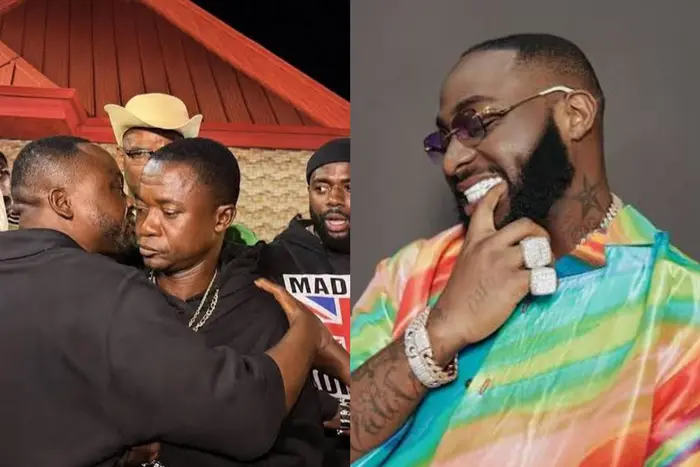
Nigerian Afrobeats superstar Davido has sparked conversations in Ghana after reportedly performing for approximately 22 minutes at an event organised by Ghanaian businessman Great Osama at Manso Akwasiso in the Ashanti Region.
The performance took place on Sunday, November 15, 2026, as part of activities marking the third anniversary of NYC Hotel, owned by the businessman.
The event, promoted as The Davido Experience, attracted considerable attention because of the decision to bring one of Africa’s biggest music stars to Manso Akwasiso, a community in the Amansie South District.
However, the excitement surrounding the appearance has been overshadowed by reports about the length of the musician’s performance and the reaction of the event organiser.
Videos circulating on social media show Great Osama approaching members of Davido’s entourage shortly after the performance as they prepared to leave the premises.
The businessman appeared visibly disappointed and complained about the short time the Nigerian musician had spent on stage.
Some reports put the performance at approximately 22 minutes, although other accounts have cited different durations. The exact performance time has not been independently established.
The situation reportedly escalated as Great Osama expressed his displeasure and appeared to question the singer’s team over the circumstances surrounding his departure.
The controversy has become even more intense following claims that Great Osama allegedly paid US$600,000 to secure Davido’s appearance.
The reported amount has generated debate among entertainment followers, with some questioning whether the businessman received value for his money.
The figure has also been linked to comments Davido reportedly made during a 2024 conversation with Zahir Jooma of Icebox, where he discussed charging approximately $600,000 for performances and limiting his appearances to about four shows monthly.
However, the exact amount paid for the Manso performance has not been publicly confirmed by Davido, his management or Great Osama.
The contractual arrangements between the parties, including the agreed performance duration, have also not been made public.
The incident has attracted reactions from political and entertainment personalities, including NPP Ashanti Regional Chairman Odeneho Kwaku Appiah, popularly known as COKA.
In a Facebook post on Monday, November 16, he expressed sympathy for Great Osama over the reported short performance.
He wrote:
“Mmmm, Davido! Just 22 minutes! I really wept for my brother Osama! But some people are saying that even though Davido has left, Manso has already hosted him, so mission accomplished! At this rate, next year we are bringing Jay-Z to Manso. Somebody should tell Beyoncé to start packing!”
His remarks, which combined humour and sarcasm, added another dimension to the growing public discussion.
The incident has also triggered conversations about the organisation of the event, with some social media users criticising aspects of the stage setup.
Others have questioned whether an international artiste of Davido’s standing should have performed for such a short period at an event that reportedly involved a substantial financial commitment.
Some supporters, however, have argued that bringing Davido to Manso was itself a major achievement, considering that the community is not among Ghana’s traditional entertainment centres.
Davido had earlier performed at the Tidal Rave Festival in Accra on Saturday, November 14, before travelling for the Manso appearance.
The controversy has left questions about the actual booking fee, the agreed performance time and what led to the apparent disagreement between Great Osama and the singer’s entourage.
Source: Graphic Online

Ghana’s evolving media landscape has brought renewed attention to the question of who gets invited to speak on radio, television, podcasts and other digital platforms, with concerns emerging over whether popularity is sometimes being prioritised over expertise and meaningful contributions.
In an article titled “Expertise or Popularity? Who Gets to Speak in Ghana’s Media Landscape?”, Benedicta Yaa Ohenewaa Asamoah examines the growing influence of social media personalities, entertainers, influencers and other public figures in discussions on issues ranging from relationships and mental health to education, governance and national development.
She observes that with the expansion of podcasts, YouTube interviews, livestreams and online talk shows, more people now have opportunities to participate in public conversations. While describing this development as positive, she argues that having access to a media platform does not necessarily mean someone has the knowledge or experience required to contribute meaningfully to every subject.
According to her, popularity has become an important consideration in today’s media environment, as familiar faces, personalities with substantial social media followings and individuals known for making headlines often attract large audiences.
Although entertainers, influencers and content creators can offer valuable perspectives, she raises concerns about whether their popularity sometimes receives more attention than their knowledge, professional experience or relevance to the subject being discussed.
She stresses that being widely recognised does not automatically make someone knowledgeable about every issue.
The article further highlights how social media has changed the way people gain public recognition. While some individuals build their audiences through useful information, creativity and expertise, others become popular through public disagreements, provocative statements, online confrontations and controversial opinions.
This development, she suggests, raises questions about whether becoming a subject of public discussion automatically qualifies someone to become a credible voice on other matters.
Asamoah, however, makes it clear that individuals with controversial backgrounds should not automatically be excluded from media discussions, noting that people can learn from their experiences, change and offer meaningful perspectives.
Rather, she argues that the substance of their contributions should matter more than the attention their names generate.
She questions whether audiences are genuinely interested in the opinions guests bring to discussions or are simply attracted by the reactions their appearances are likely to generate.
The writer also cautions against the assumption that only people with academic qualifications, professional titles or formal credentials deserve invitations to media programmes.
She points out that people from different backgrounds possess valuable knowledge and experiences that can enrich public discussions.
For instance, a farmer can provide firsthand insight into the realities of farming, while a teacher can explain challenges within the classroom. Similarly, someone who has lived with a particular health condition can help audiences understand the human experiences behind it.
However, she distinguishes between sharing personal experiences and providing professional advice, emphasising the importance of ensuring that a person’s knowledge, experience or perspective is relevant to the subject under discussion and presented responsibly.
The article places particular responsibility on media professionals, including producers, editors, programme managers and presenters, to exercise sound editorial judgement when selecting guests.
According to Asamoah, those responsible for organising discussions must consider the purpose of a programme, its target audience and the different perspectives needed to make a conversation meaningful.
She acknowledges that not every discussion requires a panel of professionals, as some subjects benefit more from firsthand experiences, while others demand specialist knowledge.
What matters, she argues, is identifying what a particular discussion requires and selecting voices that serve that purpose.
Presenters, she adds, must also take responsibility for asking relevant questions, seeking clarification and allowing different viewpoints to be examined rather than treating a popular guest’s opinions as unquestionable.
As Ghana’s traditional broadcasting industry increasingly shares the media space with digital creators and independent platforms, audience engagement has become an important measure of success. However, Asamoah maintains that attention should not be the only standard used to assess the value of a media discussion.
She notes that a programme can attract thousands of views without adequately addressing the important questions surrounding an issue, just as an entertaining guest may not necessarily provide useful information.
The writer therefore calls for a media environment that accommodates diverse voices, including professionals, researchers, practitioners, community members and individuals with lived experiences.
She maintains that each group has something different to contribute, but the challenge lies in ensuring that the right people are invited to the right conversations for the right reasons.
Asamoah concludes by encouraging media organisations and programme producers to reflect on the value guests bring to public discussions, particularly before inviting them onto radio programmes, television shows, podcasts and other online platforms.
She argues that having an audience is different from having something meaningful to offer that audience, stressing that the real issue should not simply be who gets a media platform, but what makes that platform worth listening to.
Entertainment
Mzbel Calls Childbirth a ‘Scam’, Says She Would Not Have Had Children If She Knew Better

Ghanaian musician Mzbel has opened up about her changing views on motherhood, admitting that if she had known earlier what she now understands about life and the difficulties of raising children, she might have chosen not to become a mother.
The mother of two made the revelation during an interview with media personality ZionFelix, where she described childbirth as a “scam”, citing the struggles and uncertainties children are likely to encounter as they grow up.
According to the singer, she finds it difficult to understand why people willingly bring children into a world where they must struggle to survive and work tirelessly to afford necessities such as food and shelter.
“Knowing what I know now, I wouldn’t have had children. Childbirth is the biggest scam. Why bring children into this world only for them to come and suffer? This world is nothing but a place of suffering,” she stated.
Mzbel further disclosed that she no longer encourages people to have children, explaining that life can take unexpected turns that may leave children in difficult circumstances, particularly when they lose a parent and are forced to navigate life without adequate support.
She noted that although parents could secure their children’s future by acquiring properties and saving money for them, financial security does not necessarily guarantee a comfortable life.
The musician argued that children, especially at a young age, still need proper guidance and responsible adults to help them make important decisions, adding that leaving behind wealth alone may not be enough to protect them from life’s challenges.
Despite her strong position, Mzbel clarified that her views were based on her personal experiences and perspective, stressing that she had no intention of judging people who genuinely enjoy raising children.
She acknowledged that motherhood could be a fulfilling experience for others, even if her own understanding of it had changed over time.
“But if it’s beautiful for you, it’s beautiful for you. You don’t have to follow what I follow. I may be crazy,” she added.
Recounting her journey to motherhood, Mzbel revealed that she was once very determined to have more children and made several attempts to conceive her second child.
She explained that she took various medications and underwent in vitro fertilisation (IVF), but the attempts did not produce the desired results.
The singer said she later received a recommendation to try herbal medication and became pregnant within three to four months, describing the development as an exciting moment in her life.
However, reflecting on her present-day views about childbirth and the responsibilities that come with raising children, Mzbel maintained that she would not be willing to go through the entire process again.

Ayew redeems penalty miss as Ghana defeat Somalia again

Klopp Calls for Infantino’s Removal, Says FIFA Has Worsened Under His Leadership

Sabalenka apologises over viral outburst, insists comments were not aimed at Svitolina

Zverev celebrates first victory as world number one after beating Jodar at ATP Finals

Dangote Challenges Ghana to Become West Africa’s Manufacturing Hub

NADFFA 2027: Ghana to Host Pan-African Film and Food Festival in March

GTA Staff Demand Answers on World Cup Visa Slots, Staff Dismissals and Unpaid Allowances

SAMMY GYAMFI’S “MINE WITHOUT LICENCE” REMARK SPARKS FRESH GALAMSEY DEBATE

Nicki Minaj Throws Her Support Behind Trump Ahead of US Midterm Elections

Shatta Wale Cake Tells Story of Growth, Identity and African Dancehall Influence

Illinois’ financial crisis could bring the state to a halt
The final 6 ‘Game of Thrones’ episodes might feel like a full season
New Season 8 Walking Dead trailer flashes forward in time
Mod turns ‘Counter-Strike’ into a ‘Tekken’ clone with fighting chickens
Meet Superman’s grandfather in new trailer for Krypton
-

 Entertainment13 hours ago
Expertise or Popularity? Who Gets to Speak in Ghana’s Media Landscape?
-
 Sports3 hours ago
Ayew redeems penalty miss as Ghana defeat Somalia again
-

 Lifestyle16 hours ago
Why Do We Keep Things We Never Use? The Strange Habit of Turning Our Homes Into Storage Rooms
-

 Entertainment17 hours ago
Mzbel Calls Childbirth a ‘Scam’, Says She Would Not Have Had Children If She Knew Better
-
 General News15 hours ago
Zanetor Demands Clear Funding Plan for $120bn Annual Climate Finance by 2035
-

 General News9 hours ago
Video: Ghana Welcomes New $60.68m Presidential Jet as Falcon 6X Arrives
-
 Sports3 hours ago
Zverev celebrates first victory as world number one after beating Jodar at ATP Finals
-

 Shorts17 hours ago
Fire razes Accra Tourist and information center