
General News
Franklin Cudjoe Thanks Ibrahim Mahama for Support During Parkinson’s Surgery in US

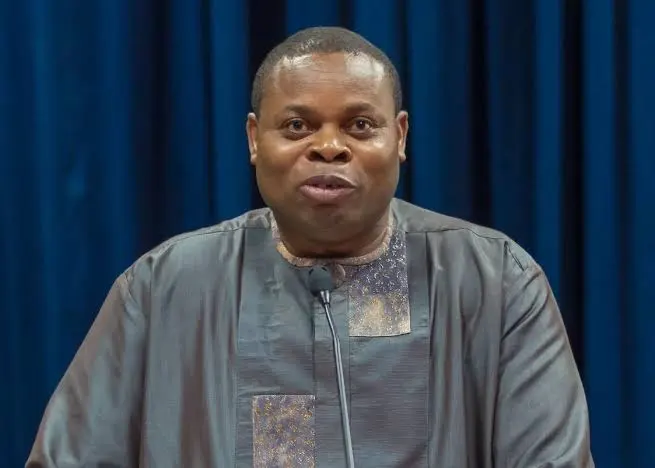
The Founding President of IMANI Africa, Franklin Cudjoe, has publicly expressed gratitude to businessman Ibrahim Mahama for his support during his recent medical journey to the United States for surgery related to Parkinson’s disease.
Cudjoe, who underwent surgery at RUSH University Medical Center in Chicago, acknowledged Mahama’s generosity in a series of updates about his treatment, highlighting the businessman’s contribution towards making his emergency medical trip possible.
The policy analyst had earlier disclosed that he was preparing for a major surgical procedure and appealed to Ghanaians and well-wishers to remember him in their prayers.
In a post ahead of the operation, he specifically thanked Mahama, describing him as a brother and indicating that his support would also make it possible for the public to watch a documentary documenting his preparations and journey from Ghana to the United States.
Cudjoe was subsequently discharged from hospital on November 6, 2026, and announced that he had returned to his apartment in Chicago to begin a two-week recovery period.
“Discharged and back in my apartment. Next 2 weeks of healing and then the magic will happen,” he wrote in an update shared on social media.
Cudjoe highlights cost of specialised treatment
Before travelling for the procedure, the IMANI Africa founder disclosed that the estimated cost of the surgery was approximately US$210,000, with an additional US$150,000 needed for travel, accommodation and aftercare.
He also raised concerns about Ghana’s limited capacity in specialised neurological treatment, revealing that the country had about 12 general neurologists, with none specialising in deep brain stimulation.
Cudjoe has indicated that he hopes to use his experience to draw attention to the challenges facing patients with neurological conditions in Ghana.
He has also expressed plans to host neurosurgeons and neurologists in the country after his surgery to explore ways of improving access to specialist doctors, medical equipment, medicines and treatment.
His public appreciation of Ibrahim Mahama has brought renewed attention to the role of private support in helping individuals access specialised medical treatment abroad, while also highlighting the need to strengthen Ghana’s healthcare system.










A controversy surrounding the newly introduced GH¢50 banknote has intensified following claims that the portrait identified by the Bank of Ghana (BoG) as that of Ghana’s celebrated flag designer, Theodosia Okoh, bears a striking resemblance to her younger sister, Dr Letitia Obeng.
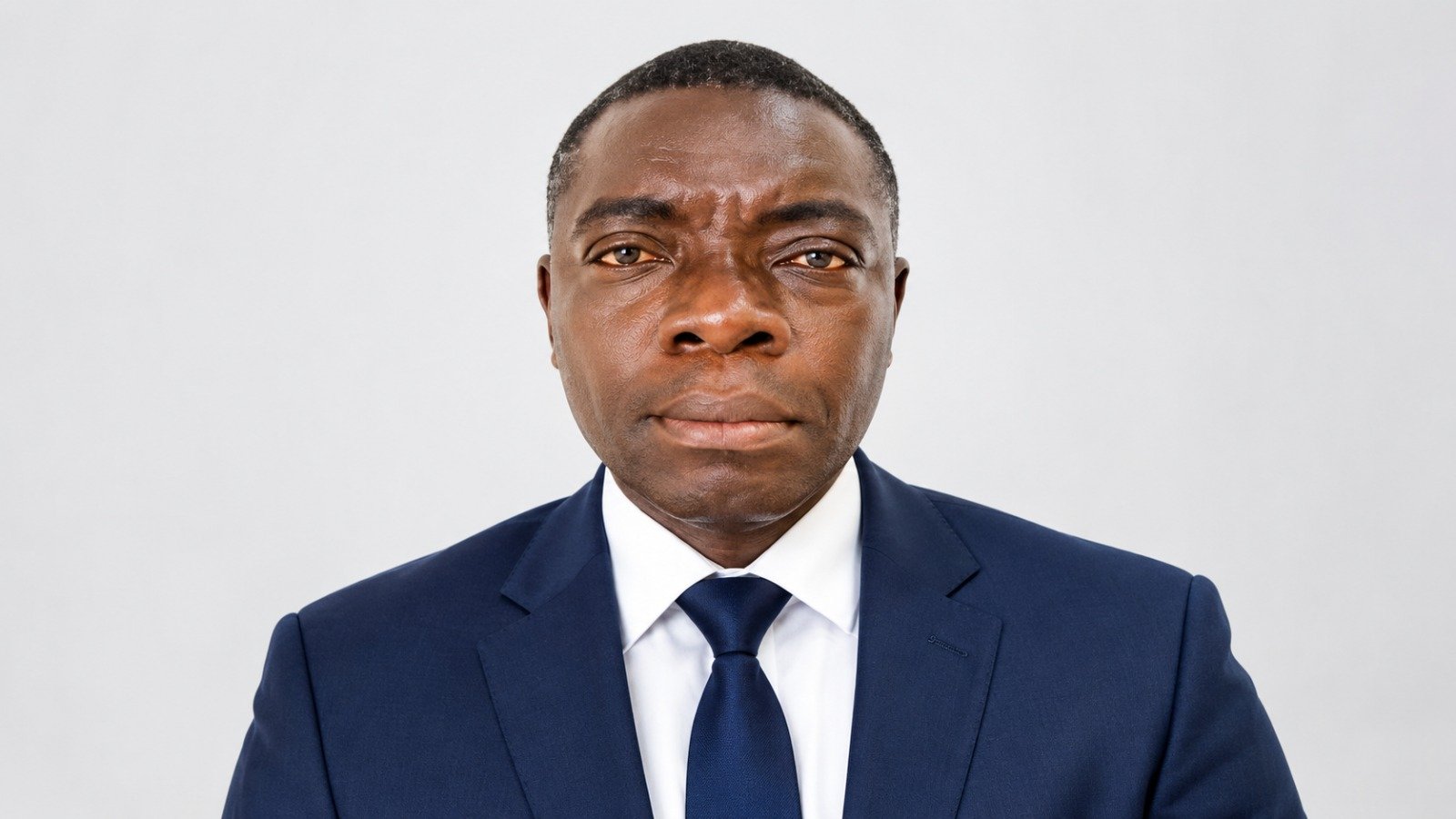
The concern was raised by Seth Afum A. Dankwah of J. G. Knol Technical Institute, Adukrom-Akuapem in the Eastern Region, in a commentary dated Saturday, November 14, 2026, questioning whether the Bank of Ghana correctly represented the late national icon on the new currency.
The controversy emerged barely 24 hours after President John Dramani Mahama and Bank of Ghana Governor Dr Johnson Asiama officially unveiled the redesigned cedi notes at Bank Square in Accra on Thursday, November 12, 2026.
The launch, held under the theme “The Cedi, Our Future: Secure, Designed to Last,” marked a major redesign of Ghana’s currency, introducing new portraits, landmarks and Adinkra symbols across the existing eight denominations.
Although the redesign was intended to celebrate Ghana’s national identity and recognise personalities who have contributed to the country’s development, the GH¢50 note quickly became the centre of public debate.
The question attracting attention is whether the woman depicted on the note is indeed Theodosia Okoh or her younger sister, Dr Letitia Eva Takyibea Obeng, a renowned Ghanaian zoologist and the first Ghanaian woman to obtain a PhD.
The controversy gained national attention after Professor Eddie Obeng, the son of Dr Letitia Obeng and nephew of Theodosia Okoh, questioned the identity of the woman featured on the new GH¢50 note.
In a LinkedIn post, Professor Obeng expressed surprise after discovering that the portrait he initially believed was intended to honour his aunt appeared to resemble his mother instead.
He wrote:
“I have a wry smile on my face that won’t go away, and occasionally I shake my head or giggle. So, I heard this morning that my aunt had been honoured in a new series of banknotes issued in Ghana – she’s famous there for designing the country’s flag after independence from Britain. I was very proud and began composing a message to my cousin. Imagine my surprise when I took a look and realised that they have used a picture of my mother instead – she’s famous for being the country’s first lady PhD. You can’t make it up.”
His comments generated widespread reactions, with several Ghanaians comparing available photographs of the two sisters with the portrait on the new currency.
Theodosia Salome Abena Kumea Asihene, popularly known as Theodosia Okoh, was born on June 13, 1922.
She became nationally recognised for designing Ghana’s national flag in 1957, following the country’s attainment of independence from British colonial rule.
The flag, which features red, gold and green horizontal stripes with a Black Star at the centre, remains one of Ghana’s most important national symbols.
The colours represent the bloodshed during the struggle for independence, the country’s mineral wealth and natural vegetation, while the Black Star symbolises African freedom and emancipation.
Okoh’s contribution to Ghana’s national identity has remained significant, with the flag prominently displayed at national celebrations, schools, sporting events and other important occasions.
She died in 2015.
On the new GH¢50 note, her portrait appears alongside Jubilee House, while the Adinkra symbol Fawohodie, representing independence, freedom and emancipation, is incorporated into the design.
Following the public backlash, the Bank of Ghana offered an explanation of how the portrait was developed.
In an initial Facebook clarification on November 12, 2026, Bank of Ghana Board Member and lawyer Beatrice Annan explained that the image was an engraved artistic representation rather than a direct reproduction of a single photograph.
According to her, the Bank worked with three authentic photographs of Theodosia Okoh, including two from her younger years and another from a later period, to create a composite image representing her as a mature woman.
She further explained that adjustments were made to the hairstyle to reflect the family’s preferred appearance and ensure that the portrait could be reproduced clearly on the banknote.
However, the explanation did little to end the debate, particularly among those who believed the image looked more like Dr Letitia Obeng.
In an official press statement issued on Friday, November 13, 2026, the Bank of Ghana maintained that the portrait was developed using photographs of Theodosia Okoh and not those of Dr Letitia Obeng.
The Bank acknowledged that certain artistic modifications were made during the design process to meet currency production requirements.
It stated:
“The portrait was developed from different photographs of Mrs Okoh and not from a photograph of Dr Letitia Obeng.”
The statement further explained that adjustments, including replacing Okoh’s familiar head-tie with a hairstyle associated with the period, were made to satisfy technical and security requirements.
However, the Bank admitted that these changes contributed to the public’s difficulty in recognising the woman depicted.
“Those adaptations unfortunately contributed to the perceived differences in her appearance, and to the image bearing a close likeness to Dr Letitia Obeng,” the statement added.
The Bank also disclosed that it was engaging members of Theodosia Okoh’s family to explain the design process and address their concerns.
It maintained its commitment to ensuring that distinguished personalities featured on Ghana’s currency are represented with dignity and respect.
The controversy has also attracted political attention, with Minority Leader Alexander Afenyo-Markin criticising the government over the redesign.
Speaking at a press conference on Thursday evening after Finance Minister Dr Cassiel Ato Forson presented the 2027 Budget Statement to Parliament, Afenyo-Markin accused the government of being in a hurry to remove the Big Six from Ghana’s currency.
He argued that the haste surrounding the redesign had resulted in the wrong portrait being placed on the GH¢50 note.
“In fact, they were in haste to erase the Big Six from our currency and our history. Out of their haste, we saw them adorning a new 50-cedi note bearing the name of Theodosia Okoh. But they got her picture wrong and placed on the 50-cedi note a different face,” he said.
He further questioned the government’s economic competence, arguing that an administration unable to correctly identify a national personality on its currency should be subjected to scrutiny over its management of the economy.
The Minority’s Ranking Member on the Economy, Kojo Oppong Nkrumah, also indicated that the caucus would demand that the Bank of Ghana appear before Parliament to explain the selection and approval process.
Among the issues expected to be raised are the photographs used, the due diligence conducted, the total cost of the redesign and the possible financial implications if the notes have to be reprinted.
Beyond the portrait controversy, the new currency has generated debate over the decision to remove five members of the historic Big Six from the previous banknote designs, leaving Kwame Nkrumah as the only member retained.
The redesigned notes feature personalities drawn from different sectors, including commerce, religion, education, justice, culture and diplomacy.
While supporters of the redesign consider it an opportunity to recognise more contributors to Ghana’s development, critics argue that removing the historical figures amounts to disregarding an important part of the country’s independence story.
Dankwah, in his commentary, described the development as a politically sensitive decision that has made the portrait controversy even more significant.
He argued that the redesign was not merely a currency exercise but also a decision about the personalities and historical contributions Ghana chooses to celebrate.
In his assessment, Dankwah identified identity and dignity, public trust in institutions, and the preservation of history as three major issues arising from the controversy.
He argued that currency is among the most widely circulated national symbols, making accuracy in the representation of historical personalities particularly important.
According to him, placing a questionable portrait on a banknote could undermine the dignity of the individual being honoured and create unnecessary confusion among future generations.
He also raised concerns about public confidence in the Bank of Ghana, noting that the institution’s responsibility goes beyond designing currency to safeguarding the credibility of the country’s monetary system.
The controversy, he suggested, could lead some Ghanaians to question the level of scrutiny applied to other aspects of the currency redesign.
On the historical front, Dankwah maintained that the removal of some members of the Big Six, combined with the disagreement over Theodosia Okoh’s portrait, has created room for political interpretations of the new Heritage Series.
With the controversy continuing, questions remain over whether the Bank of Ghana will consider changing the portrait or maintaining its current design.
As of November 14, 2026, the Bank had not announced plans to reprint the GH¢50 notes, insisting that the image was developed from authentic photographs of Theodosia Okoh.
There are also questions about whether Parliament will invite the Bank to explain the design process and disclose the cost of producing the new currency.
Another major issue is whether the Okoh family will accept the Bank’s explanation following its admission that the artistic modifications made the portrait resemble Dr Letitia Obeng.
The redesigned notes are expected to enter circulation on December 1, 2026.
Dankwah believes the coming days will be crucial in determining whether the controversy is resolved before the new notes reach the public.
He argues that the issue goes beyond whether the portrait meets the technical requirements of currency production, stressing that national personalities must be represented in ways that allow the public to recognise and appreciate their contributions.
The debate has consequently placed the Bank of Ghana under pressure to provide further clarity on a currency redesign that was initially presented as a celebration of Ghana’s history and national identity.
General News
Mahama Swears In Seven-Member National Labour Commission; Charges them to Restore Public Confidence

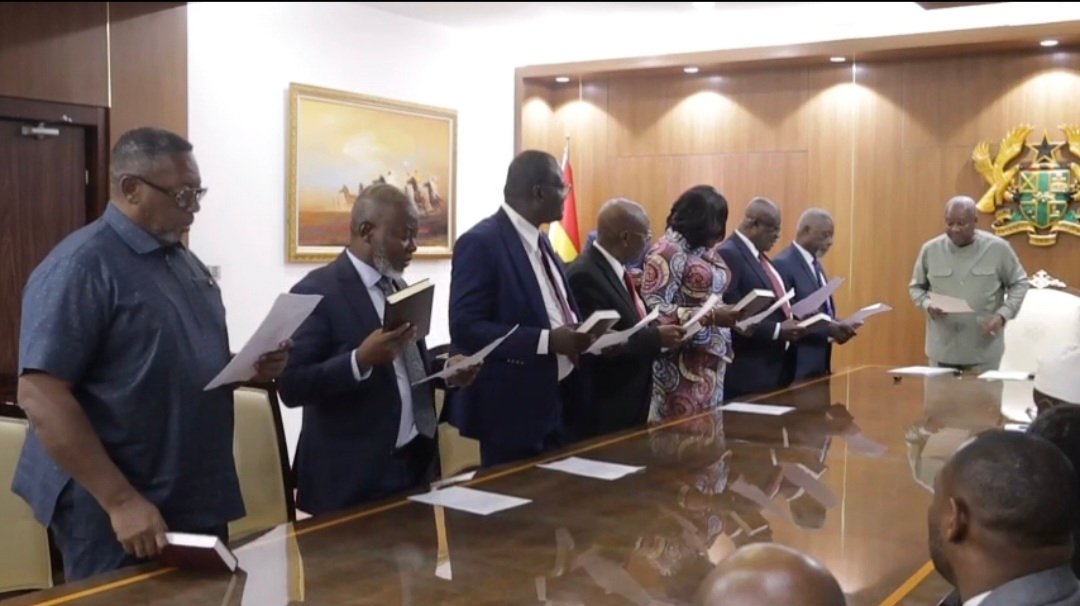
President John Dramani Mahama has sworn in a seven-member National Labour Commission (NLC), charging the newly appointed members to restore public confidence in Ghana’s labour dispute resolution system through fairness, consistency and the speedy adjudication of cases.
Speaking at the swearing-in ceremony at Jubilee House, President Mahama stressed that the Commission’s credibility was critical to maintaining industrial harmony and protecting the livelihoods of workers across the country.
He said both workers and employers must have confidence in the Commission’s ability to address their concerns fairly and without unnecessary delays.
“A worker with a grievance wants to know that somebody will hear it and deal with it fairly and expeditiously. An employer wants to know that the rules are clear and will be applied consistently. The National Labour Commission has a responsibility to do both,” the President stated.
He added that the Commission’s ability to earn the trust of workers and employers was essential to ensuring stable and fair workplaces.
President Mahama congratulated the new Chairperson and members on their appointments and expressed gratitude to their predecessors for their service to Ghana.
Recalling the establishment of the Commission under the Labour Act, 2003 (Act 651), the President said the legislation provided an independent institutional framework for preventing and resolving industrial disputes and investigating labour-related complaints, including unfair labour practices.
He urged the new leadership to prioritise early engagement between employers and organised labour to prevent disagreements from escalating into major industrial disruptions.
“Where a dispute is taking shape, bring the parties together promptly and make full use of mediation. When a case requires a decision, hear each side fairly, patiently, and give clear reasons and deal with it without undue delay,” he charged.
The President also emphasised the importance of public education, urging the Commission to make workers and employers more aware of their rights and responsibilities under the law.
He said young workers must know where to seek assistance when their grievances remain unresolved, while small business owners must understand the obligations that come with employing people.
President Mahama further called on public institutions to take workplace grievances seriously and use established channels to address them.
“Industrial peace grows when people see that their concerns receive a fair hearing, and that agreements are respected,” he said.
Labour Act review to address emerging workplace challenges
Touching on changes in the world of work, President Mahama said the ongoing review of the Labour Act must take into consideration the growing number of people earning their livelihoods through digital platforms.
He cited delivery riders who receive work through mobile applications, explaining that workers in such arrangements must have clear channels to address payment disputes and suspension of access to digital platforms.
“Think of a delivery rider who receives work through an app. If a payment is disputed or access to the app is suspended, the rider needs to know whom to contact and how to get a fair hearing. These are practical questions that our review of the Labour Act must address,” he noted.
He encouraged organised labour, employers, digital platform operators and platform workers to contribute to consultations on the proposed amendments to the Labour Act.
Justice Duose leads new Commission
The seven-member Commission is chaired by Justice Isaac Delali Duose, a retired Justice of the Court of Appeal.
The other members are Mr Joseph Kingsley Amuah and Mr Isaac Sackey, representing the Ghana Employers Association; Mr Prince William Ankrah and Mr Abdul-Samad Ali Gomdah, representing Organised Labour; and Madam Rosemond Freeman-Tettey and Mr Antwi-Boasiako Sekyere, presidential nominees.
The new Chairperson and members expressed appreciation to President Mahama for the confidence reposed in them and pledged to discharge their responsibilities with transparency, fairness and impartiality.
The Commission is expected to play a key role in resolving labour disputes, promoting constructive engagement between employers and workers, and strengthening industrial relations in Ghana.
Its ability to deliver timely and impartial decisions will be central to building confidence in the country’s labour dispute resolution system.
General News
Ghana’s New Cedi Notes Reignite Founders’ Day Debate as Five Members of Big Six Disappear – Seth Afum A. Dankwah

Ghana’s newly unveiled Heritage Series banknotes have reignited the longstanding debate over who deserves recognition as the founder or founders of the country, following the removal of five members of the famous Big Six from the redesigned currency.
In an article examining the historical, political and symbolic implications of the new banknotes, Seth Afum A. Dankwah of J. G. Knol Technical Institute, Adukrom-Akuapem, Eastern Region, argues that the currency redesign goes beyond security improvements and has reopened Ghana’s unresolved debate over the country’s independence history.
President John Dramani Mahama unveiled the new banknotes at Bank Square in Accra on Thursday, November 12, 2026, under the theme, “The Cedi, Our Future: Secure, Designed to Last.”
Although the redesign introduces several technical improvements, including enhanced security features, reinforced cotton paper, QR codes, kente-inspired borders and tactile markings for visually impaired persons, Dankwah believes the selection of personalities has become an equally important part of the national conversation.
Of the six personalities collectively known as the Big Six, whose portraits have featured prominently on Ghanaian banknotes since 2007, only Dr Kwame Nkrumah has been retained.
The other five, Dr Joseph Boakye Danquah, Edward Akufo-Addo, William Ofori Atta, Emmanuel Obetsebi-Lamptey and Ebenezer Ako-Adjei, have been left out.
They have been replaced by a market woman, a Catholic Cardinal, an educationist, a female judge, a composer, the designer of Ghana’s national flag and former United Nations Secretary-General Kofi Annan.
According to Dankwah’s analysis, the decision has revived the political and historical disagreement over whether Ghana’s independence should be attributed primarily to one individual or recognised as the collective achievement of several personalities.
The new Heritage Series maintains the existing eight denominations, from GH¢1 to GH¢200, but introduces a different design concept that places one prominent personality on the front and a landmark associated with Ghana’s heritage on the reverse.
Each denomination also carries an Adinkra symbol and a specific national theme.
The GH¢1 note features Agnes Oforiwa Tagoe-Quarcoopome, a market trader, with market women represented on the reverse under the theme of Commerce.
The GH¢2 note honours Cardinal Peter Poreku Dery, Archbishop of Tamale, with the Larabanga Mosque appearing on the reverse. Its theme is Religious Freedom.
The GH¢5 note features Dr J.E.K. Aggrey, a renowned educationist, alongside Achimota School, representing Education.
The GH¢10 note celebrates Justice Annie Jiagge, recognised as Ghana’s first female judge, with the Supreme Court featured on the reverse under Justice and Equality.
The GH¢20 note honours Dr Ephraim Amu, a celebrated composer, with the National Theatre representing Arts and Entertainment.
The GH¢50 note features Theodosia Okoh, the designer of Ghana’s national flag, alongside Jubilee House under the theme of Nationalism.
The GH¢100 note celebrates Kofi Annan, former United Nations Secretary-General, with the Kofi Annan International Peacekeeping Training Centre (KAIPTC) representing Peace.
The GH¢200 note features Dr Kwame Nkrumah, Ghana’s first President, with the Kwame Nkrumah Memorial Park on the reverse under the theme of Sovereignty.
Dankwah identifies Nkrumah’s positioning as one of the most significant changes. While the former currency featured him alongside the other members of the Big Six on the GH¢2 denomination, the new arrangement places him alone on the highest denomination, the GH¢200 note.
The Big Six acquired their collective identity following the 1948 disturbances in Accra, which occurred after British colonial police shot ex-servicemen who had marched to present a petition over their welfare.
The colonial authorities subsequently arrested six prominent leaders of the independence movement.
They were Dr Kwame Nkrumah, Dr Joseph Boakye Danquah, Edward Akufo-Addo, William Ofori Atta, Emmanuel Obetsebi-Lamptey and Ebenezer Ako-Adjei.
Their collective image later became an important representation of Ghana’s struggle for independence.
However, different political traditions have continued to offer contrasting interpretations of their contributions.
The Danquah-Busia-Dombo tradition, associated with the New Patriotic Party (NPP), maintains that Ghana’s independence was the result of a collective movement that began with the formation of the United Gold Coast Convention (UGCC) in 1947.
On the other hand, the Nkrumahist tradition, associated with the National Democratic Congress (NDC), places particular emphasis on Nkrumah’s role in breaking away from the UGCC, establishing the Convention People’s Party (CPP), mobilising the masses and leading the country to independence on March 6, 1957.
Dankwah argues that both historical accounts contain important truths but also leave out aspects of the other side, contributing to Ghana’s longstanding disagreement over its founding story.
The disagreement has been most visible in Ghana’s annual public holiday arrangements.
In 2009, under the administration of the late President John Evans Atta Mills, with Mahama serving as Vice President, September 21, Nkrumah’s birthday, was designated as Founder’s Day.
The singular form was widely interpreted as recognition of Nkrumah as the central figure in Ghana’s founding.
However, under former President Nana Addo Dankwa Akufo-Addo, the arrangement was changed through the Public Holidays (Amendment) Act, 2019.
The law established August 4 as Founders’ Day, commemorating the formation of the UGCC in 1947, while September 21 was retained as Kwame Nkrumah Memorial Day.
The change reflected the position that Ghana’s independence should be recognised as the achievement of several individuals rather than one personality.
Dankwah links the latest currency redesign to this longstanding disagreement, arguing that the decision to retain Nkrumah while removing the other five members of the Big Six sends a significant symbolic message.
Although the Mahama administration has not formally restored the previous Founder’s Day arrangement, the new banknotes have brought the debate back into public discussion.
Beyond the political controversy, the Bank of Ghana has defended the redesign on technical and operational grounds.
Governor of the Bank of Ghana, Dr Johnson Asiama, announced the currency upgrade on September 24, 2026, explaining that the existing banknotes required modernisation after more than 20 years of circulation and improvements in counterfeiting technology.
The redesign introduces enhanced security threads, improved printing technology and additional features to help the public distinguish genuine banknotes from counterfeit ones.
The new notes are printed on reinforced cotton paper, which is expected to improve their durability and reduce the frequency of replacement.
Their smaller and more compact sizes are also intended to make them easier to handle, carry and store.
For visually impaired persons, the redesigned currency includes improved tactile markings and differences in denomination sizes to make identification easier.
The Bank of Ghana has also introduced a Cedi App, which can scan banknotes, announce their denominations aloud and assist users in checking their authenticity.
Another improvement is the enhanced compatibility of the notes with automated teller machines, cash deposit machines and currency-counting equipment.
The central bank has also developed Enterprise Currency Operations Management Software (ECOM) to improve the management of currency operations.
The return of the GH¢2 denomination as a banknote is another notable feature of the redesign, following its gradual disappearance from circulation and replacement by coins.
The Bank of Ghana has also indicated that there are no plans to introduce a GH¢500 note.
Dr Asiama has maintained that physical cash remains important despite the increasing use of mobile money and electronic payment platforms.
He explained that cash continues to serve as an important pillar of monetary resilience, particularly during cyberattacks, technical failures and natural disasters that could disrupt electronic payment systems.
The central bank is also preparing legislation to replace the Currency Act of 1964, with the aim of strengthening penalties for counterfeiting and the deliberate destruction of banknotes.
Despite the technical explanations, Dankwah raises questions about the criteria used to determine which historical personalities qualify for recognition on the new currency.
He argues that the removal of five members of the Big Six, particularly those associated with the Danquah-Busia-Dombo political tradition, raises concerns about the possibility of using national currency to promote a particular historical interpretation.
He also draws attention to earlier controversies over the representation of Ghana’s independence history.
In 2010, the Daily Guide newspaper reported allegations of a calculated attempt under an earlier NDC administration to remove the Danquah-Busia-Dombo tradition from the country’s historical narrative by replacing the Big Six with Nkrumah alone. The allegations were disputed at the time.
Dankwah further highlights a public appeal by the Kwame Nkrumah Memorial Park, a week before the unveiling, urging the Bank of Ghana to replace the Big Six portrait with the famous 1957 photograph of Nkrumah declaring Ghana’s independence.
The final design went further by featuring Nkrumah as the only member of the Big Six on the new banknotes.
The controversy has also revived memories of the period between 1967 and 1971, when Nkrumah’s portrait was removed from Ghana’s currency following the 1966 military coup that overthrew his government.
For Dankwah, these developments demonstrate how changes in political leadership have influenced the country’s currency designs and the historical figures represented on them.
The new Heritage Series banknotes are expected to enter circulation on December 1, 2026, and will circulate alongside the existing notes.
The Bank of Ghana has assured the public that the old notes will remain legal tender and will be withdrawn gradually through the banking system.
The redesign does not constitute a redenomination, and the value of the cedi remains unchanged. Members of the public are therefore not required to rush to exchange their existing banknotes.
However, Dankwah believes the decision to remove five members of the Big Six while retaining Nkrumah has opened another chapter in Ghana’s longstanding debate over national identity, historical recognition and political ownership of the independence struggle.
He questions whether future administrations will maintain the current design or introduce another change reflecting their own interpretation of Ghana’s history.
In his assessment, the Heritage Series deserves recognition for its improvements in security, accessibility and durability, as well as its recognition of women, religious leaders, artists and other prominent Ghanaians.
However, he maintains that the removal of five members of the Big Six has given the currency a political and historical significance that goes beyond its economic purpose.
He argues that Ghana needs a transparent and lasting approach to recognising the personalities who contributed to its independence, rather than allowing the country’s founding story to change with successive political administrations.
The article is written by Seth Afum A. Dankwah of J. G. Knol Technical Institute, Adukrom-Akuapem, Eastern Region.
General News
Mahama Meets New ECOWAS Commission President Birame Diop, Discusses Regional Security and Development
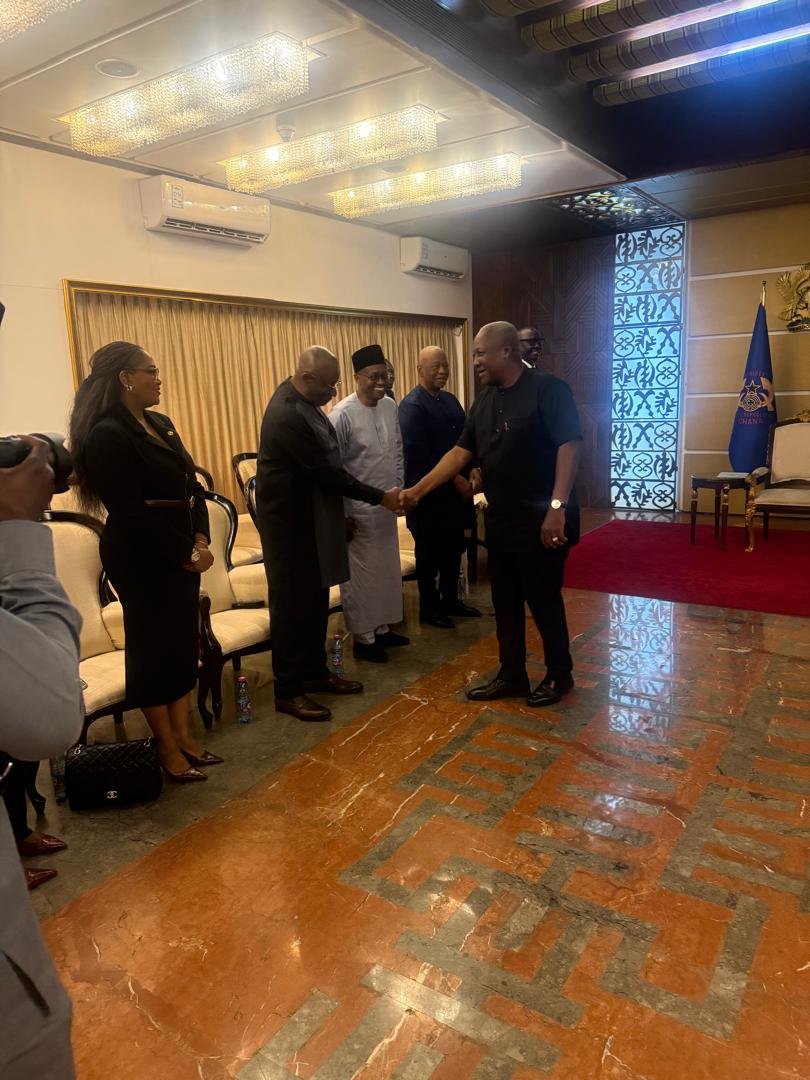
President John Dramani Mahama has met the newly appointed leadership of the Economic Community of West African States (ECOWAS) as the regional bloc begins a new four-year leadership term from 2026 to 2030.
The meeting took place on Wednesday, November 11, 2026, at the Flagstaff House in Kanda, Accra, during the maiden sub-regional tour of the new President of the ECOWAS Commission, General Birame Diop.
General Diop led a delegation comprising key officials of the regional organisation, including Honourable Amin Amidu Sulemani, Commissioner in charge of Infrastructure, Energy and Digitalisation; Ambassador Isabelle Sandra Folquet, Political and Diplomatic Affairs Advisor; Professor Priscilla Twumasi Baffuor, Economic Advisor; Ambassador Baba Kamara, Special Envoy on Counter Terrorism; and Ambassador Mohammed Lawan Gana, ECOWAS Resident Representative in Ghana.
The engagement provided an opportunity for the new ECOWAS leadership to interact with President Mahama on several issues affecting West Africa and the wider sub-region.
Discussions focused on elections, peace and security, national development, terrorism, youth-related challenges, gender-based violence and efforts to strengthen the core mandate of ECOWAS to respond effectively to emerging regional and global developments.
President Mahama congratulated General Diop on his assumption of office and the formation of his new leadership team.
He urged the new administration to remain committed and loyal to the responsibilities entrusted to them, stressing the importance of providing effective leadership to ensure that ECOWAS continues to move in the right and positive direction.
In his response, General Diop acknowledged the work of his predecessor, Dr Omar Alieu Touray of The Gambia, and commended him for his achievements during his tenure as President of the ECOWAS Commission.
He pledged to give his best to the organisation, with the support of Heads of Government across the region, to strengthen existing ECOWAS protocols and embrace emerging norms and developments shaping contemporary society and humanity.
General Diop assumed office on August 31, 2026, and his appointment marks the beginning of a new leadership period for the regional organisation.
The delegation also paid a courtesy call on former President Nana Addo Dankwa Akufo-Addo to acknowledge and appreciate his contributions and support for ECOWAS during his eight-year presidency of Ghana.
The delegation particularly recognised his role as Chairman of the ECOWAS Authority of Heads of State and Government between September 2020 and July 2022.
One of the major responsibilities facing General Diop and his new team is the supervision of peaceful and credible elections in The Gambia, scheduled for December 5, 2026.
The election is expected to be an important early test of the new leadership’s commitment to promoting democracy, political stability and credible electoral processes across the West African sub-region.
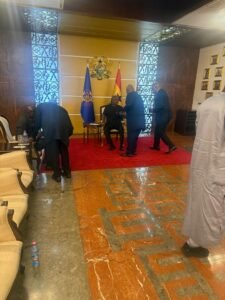
General Birame Diop is a retired Senegalese Air Force General, diplomat and former government minister whose career spans more than 30 years in national defence, international peacekeeping and regional security governance.
His experience in military leadership, diplomacy and regional security is expected to play an important role as ECOWAS continues to confront security threats, political challenges and development concerns across West Africa.
General News
Transport Sector in Crisis as High Vehicle Costs, Spare Parts Prices and Terminal Charges Hit Operators Hard – GPRTU

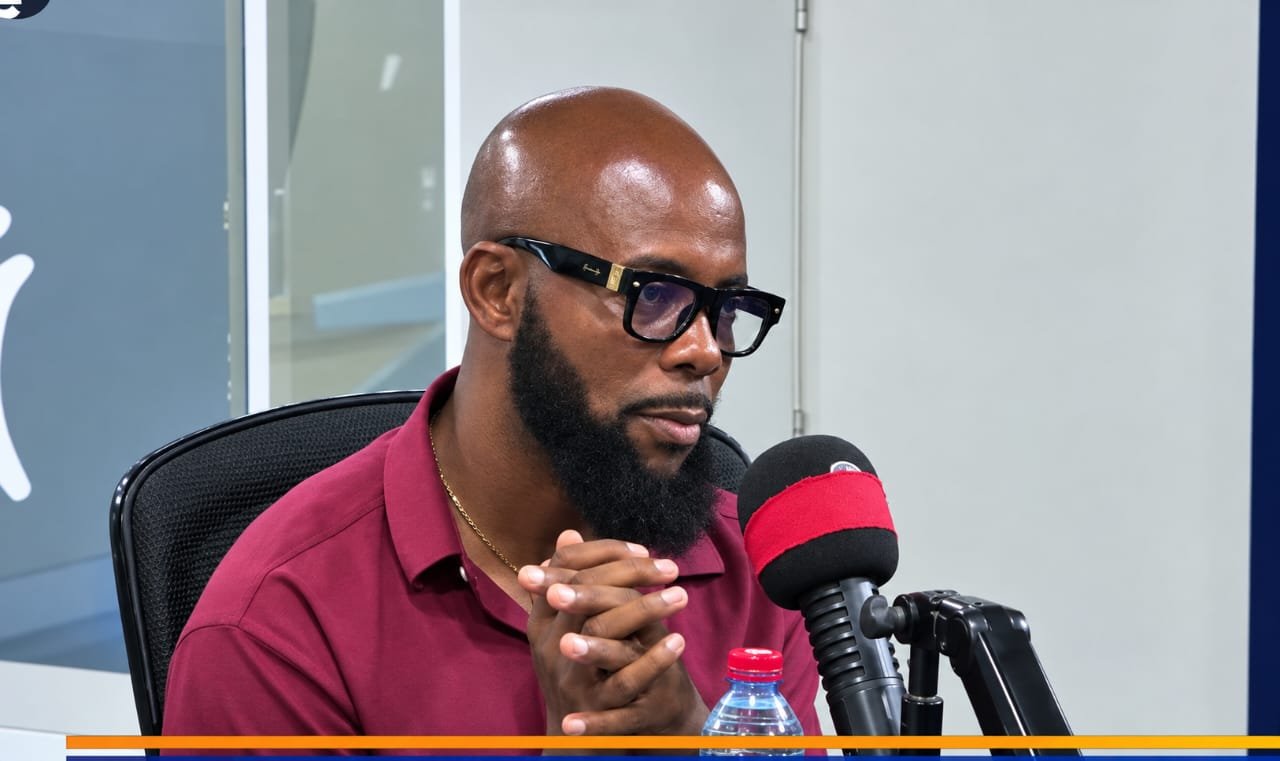
The Ghana Private Road Transport Union (GPRTU) has raised serious concerns over the rising cost of vehicles, spare parts and exorbitant charges at transport terminals, warning that the situation is putting enormous pressure on transport operators despite the relative stability of Ghana’s economy.
According to the Deputy Public Relations Officer of the GPRTU, Samuel Amoah, the transport sector plays a crucial role in Ghana’s economic development but continues to face challenges that threaten its operations.
He revealed in Kessben Maakye show in Accra, that engagements with spare parts dealers have exposed difficulties in importing vehicle components, leaving many commercial vehicles grounded at workshops because their owners cannot afford replacement parts.
Samuel Amoah also expressed concern over the increasing financial burden on commercial drivers, warning that allowing drivers to determine fares independently could create serious problems within the transport sector.
He further criticised the management of some transport terminals, alleging that facilities handed over to private operators are now attracting exorbitant charges, placing additional pressure on drivers and transport operators.
This he said most often than not compels many drivers to abandon the terminals leaving more passengers stranded.
The GPRTU Deputy PRO disclosed that the union has appealed to the government to support transport operators with new buses to improve their operations, but the request remains pending before the President.
He questioned why other transport operators, including Metro Mass Transit and Aayalolo BRT have been provided with new buses while the GPRTU continues to struggle with ageing vehicles and expensive spare parts.
Samuel Amoah called for urgent government intervention to address the challenges confronting commercial transport operators, stressing that the sector deserves greater attention because of its significant contribution to Ghana’s economy.

Mohamed Suleman Elected Communication Officer as Abdullah Abu Safiyyano Wins Deputy Position

‘For Sale’ Tag Around the Neck of the NDC: I Salute Kwame Agbodza for His Blunt Talk!

‘This Is Not Rawlings’ Party’ – Agbodza Blasts Vote-Buying in NDC Elections

Seth Afum A. Dankwah Questions Theodosia Okoh’s Portrait on New GH¢50 Note

Franklin Cudjoe Thanks Ibrahim Mahama for Support During Parkinson’s Surgery in US

NADFFA 2027: Ghana to Host Pan-African Film and Food Festival in March

GTA Staff Demand Answers on World Cup Visa Slots, Staff Dismissals and Unpaid Allowances

SAMMY GYAMFI’S “MINE WITHOUT LICENCE” REMARK SPARKS FRESH GALAMSEY DEBATE

Nicki Minaj Throws Her Support Behind Trump Ahead of US Midterm Elections

Shatta Wale Cake Tells Story of Growth, Identity and African Dancehall Influence

Illinois’ financial crisis could bring the state to a halt
The final 6 ‘Game of Thrones’ episodes might feel like a full season
New Season 8 Walking Dead trailer flashes forward in time
Mod turns ‘Counter-Strike’ into a ‘Tekken’ clone with fighting chickens
Meet Superman’s grandfather in new trailer for Krypton
-
 Culture11 hours ago
Kaba and Slit: The Timeless Ghanaian Outfit That Continues to Define African Elegance
-
 General News9 hours ago
Seth Afum A. Dankwah Questions Theodosia Okoh’s Portrait on New GH¢50 Note
-
 General News11 hours ago
Mahama Swears In Seven-Member National Labour Commission; Charges them to Restore Public Confidence
-
 Politics6 hours ago
‘This Is Not Rawlings’ Party’ – Agbodza Blasts Vote-Buying in NDC Elections
-
 Politics6 hours ago
‘For Sale’ Tag Around the Neck of the NDC: I Salute Kwame Agbodza for His Blunt Talk!
-
 Politics5 hours ago
Mohamed Suleman Elected Communication Officer as Abdullah Abu Safiyyano Wins Deputy Position